
Most gardeners wait all year for the fruit, but they are ignoring 90% of the tree’s daily value. Are you only growing mangoes for the fruit? You’re missing out on a backyard pharmacy and a high-performance ecosystem. From the medicinal properties of young leaves to the ultimate aromatic wood for your BBQ, here is why the fruit is actually the least interesting part of a mature tree.
When you plant a mango tree (Mangifera indica), you are not just planting a food source. You are installing a long-term resource that can provide shade, medicine, building materials, and fuel for decades. Many of us grew up climbing these trees, only thinking about the golden, juicy flesh of a ripe fruit. But as you spend more time in the garden, you realize that the “off-season” is where the tree really earns its keep.
Understanding the full utility of the tree changes how you prune it, how you fertilize it, and how you value it in your landscape. Instead of seeing a mess of fallen leaves or a pile of pruned branches, you start seeing a harvest that happens every single day of the year. Let’s look at how to unlock the hidden potential of this tropical powerhouse.
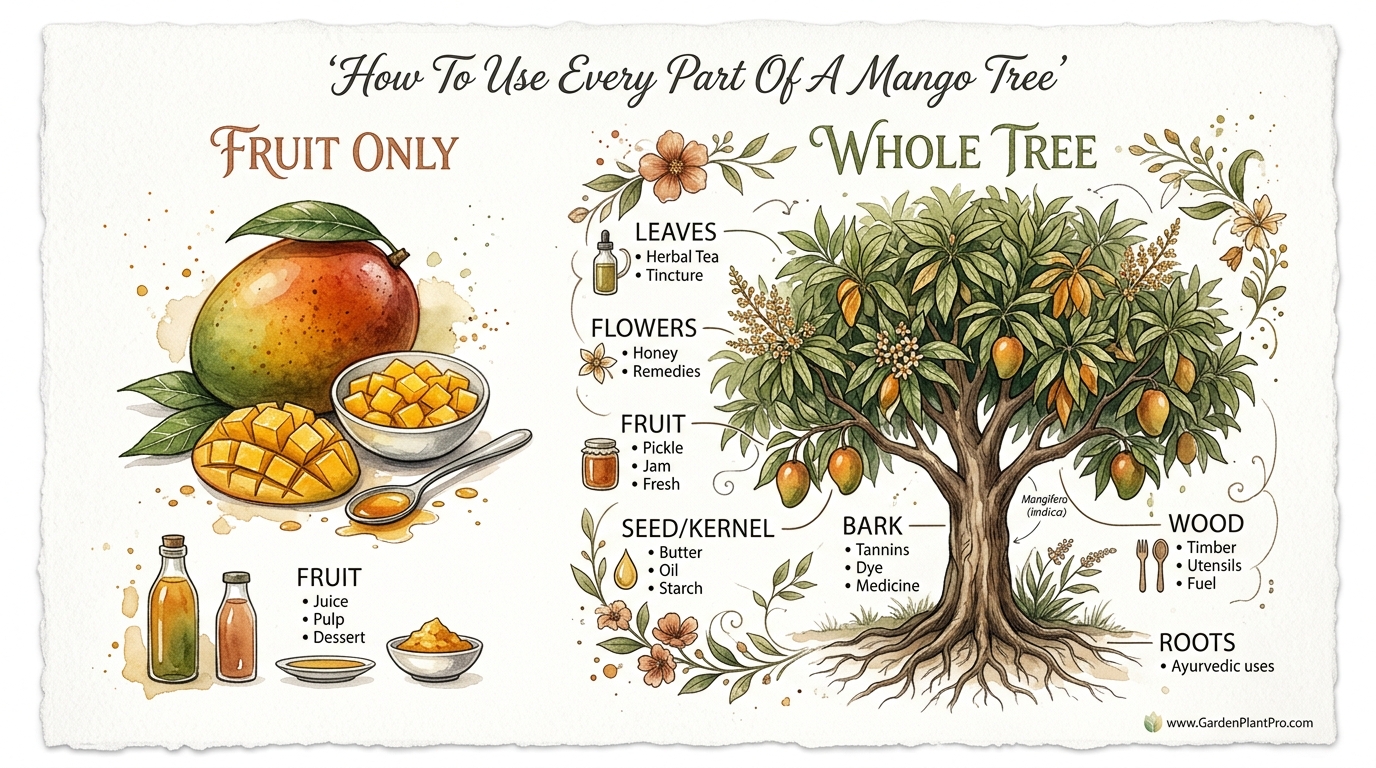
How To Use Every Part Of A Mango Tree
The mango tree is a member of the Anacardiaceae family, which makes it a distant relative to cashews and, surprisingly, poison ivy. This relationship explains why the tree is so chemically complex. Every part of the tree—the leaves, bark, resin, flowers, and even the seed—contains bioactive compounds like mangiferin, tannins, and flavonoids. These aren’t just scientific terms; they are the reasons why the tree has been used in traditional medicine for thousands of years.
In a practical backyard setting, using the whole tree means moving beyond the kitchen. It means using the leaves for tea or mulch, the wood for slow-smoking meats, and the bark for natural dyes or health tonics. It is about resource efficiency. In a permaculture-style garden, nothing goes to waste. If a branch breaks in a storm, it becomes firewood or a carving project. If the tree drops excess leaves, they become the foundation for your soil health.
This approach also helps you manage the tree better. When you know that the young, reddish-purple leaves are packed with nutrients, you stop seeing new growth as just a precursor to fruit and start seeing it as a harvestable crop in its own right. You begin to work with the tree’s natural cycles rather than just waiting for that one window of time when the fruit is ripe.
The Nutritional Power of Mango Leaves
Most people are shocked to learn that mango leaves are edible, though they are usually consumed as a tea or in very young, tender stages. The leaves are rich in vitamins A, B, and C. More importantly, they contain a high concentration of mangiferin, a polyphenol that has been studied for its antioxidant and anti-inflammatory properties. In many cultures, a tea made from dried mango leaves is a standard household remedy for respiratory issues or as a general health tonic.
To use them, look for the young “flushes” of growth. These leaves are often bronze or light pink before they turn a deep, waxy green. At this stage, they are soft and have a slightly floral, citrusy flavor. As they age, they become tough and fibrous, making them better suited for medicinal extractions or garden mulch rather than direct consumption.
Bark and Resin: The Tree’s Defense System
The bark of a mango tree is thick and rugged, designed to protect the tree from the intense tropical sun. This bark is astringent and full of tannins. Historically, it has been used to create natural dyes ranging from yellow to brown. More importantly, extracts from the bark have been used to treat skin conditions and digestive issues due to their antimicrobial properties.
Then there is the resin or sap. If you have ever picked a mango, you know the sticky, clear liquid that squirts from the stem. While this sap can be an irritant to some (causing “mango itch”), it has been used in traditional woodworking as a sealant and in folk medicine as a topical treatment for various fungi. However, you must handle the sap with care, as it is potent and can cause blistering on sensitive skin.
How to Harvest and Process Different Parts
Harvesting from your mango tree requires a bit more nuance than just pulling a fruit off a branch. Because the tree produces a caustic sap, you need to be intentional about how and when you cut. Always wear gloves if you have sensitive skin, and try to harvest during the cooler parts of the day when the sap pressure is lower.
For leaves, use sharp bypass pruners to take small clusters of the newest growth. If you are harvesting for tea, you can air-dry these leaves in a cool, dark place for about 7 to 10 days until they are brittle. Crushing them into a coarse powder allows for easy storage in airtight jars. One teaspoon of dried leaf per cup of hot water is the standard ratio for a daily tonic.
When it comes to wood, the best time to harvest is during your annual pruning cycle. Instead of hauling the branches to the curb, cut them into manageable logs. Mango wood is relatively soft when green but hardens significantly as it seasons. If you plan to use it for BBQ, you should let it season (dry) for at least six months. This reduces the moisture content and ensures a clean, sweet smoke rather than a bitter, acrid one.
Processing the Seed Kernel
The large pit inside a mango is actually a protective shell for a nutrient-dense kernel. This kernel is high in fats and proteins. In some regions, the kernels are dried and ground into a flour. This flour can be used as a thickener or mixed with other grains. The fat extracted from the kernel, known as mango butter, is a staple in the cosmetic industry for its moisturizing properties. To get to the kernel, you’ll need to carefully wedge a knife into the side of the dried husk to pop it open.
The Benefits of a Multi-Purpose Tree
Diversifying how you use your mango tree provides several practical advantages for the home gardener. It turns a seasonal crop into a year-round resource, which is essential for self-sufficiency and sustainable gardening.
- Soil Enrichment: Mango leaves are high in carbon and take a while to break down. This makes them an excellent long-term mulch that suppresses weeds and retains soil moisture during dry spells.
- Aromatic Fuel: Mango wood is one of the best-kept secrets in the world of smoking meats. It provides a mild, fruity smoke profile that is less aggressive than hickory or oak, making it perfect for poultry and fish.
- Natural Pharmacy: Having access to fresh leaves and bark means you have a source of antioxidants and anti-inflammatory compounds right in your backyard.
- Ecosystem Services: A mature mango tree is a massive carbon sink and provides a microclimate for shade-loving plants like gingers, turmeric, and ferns. The flowers are also a major draw for pollinators, including bees and hoverflies.
By utilizing the wood for your grill and the leaves for your tea, you are also reducing the “waste” you send to landfills. In a well-managed garden, the mango tree becomes a closed-loop system where the “waste” from one process becomes the “input” for another.
Common Mistakes to Avoid
One of the biggest errors gardeners make is ignoring the sap toxicity. The sap contains urushiol, the same oily organic compound found in poison ivy. If you are pruning a large tree, the “rain” of sap can cause a systemic rash on your skin or even respiratory irritation if you are burning green wood. Always let wood season before burning it, and never use mango wood in an indoor fireplace unless it is completely dry and the area is well-ventilated.
Another mistake is over-harvesting leaves from a young tree. A tree needs its canopy to photosynthesize and grow. If your tree is less than three years old, focus on its structural growth rather than harvesting leaves for tea. Wait until the tree is established and has a dense canopy before you start taking regular leaf harvests. Generally, you should never remove more than 10-15% of the foliage at any one time.
Finally, don’t ignore the “stone” or seed when composting. Mango seeds take a very long time to decompose in a standard compost pile. If you just toss them in, you will find them years later, still intact. It is better to crack the husk and compost the inner kernel separately, or use the husks as a bottom layer in a raised bed (hugelkultur style) where they can break down slowly over several years.
DIY PROJECT: Collect rainwater no matter where you live...
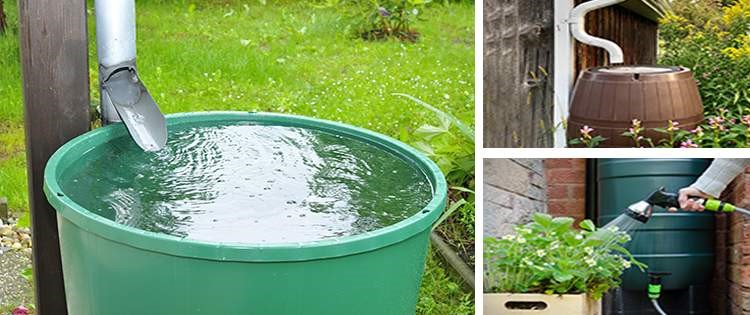
This DIY project is the best way to legally collect rainwater NO MATTER where you live. Get chlorine-free water, cut down on your water bills, and have enough for an emergency situation or to water your garden. Read More Here...
Limitations and Realistic Expectations
While the mango tree is incredibly versatile, there are limits to what it can do. For starters, the medicinal benefits of mango leaves are supportive, not a replacement for professional medical care. While mangiferin is potent, the concentration in a cup of tea varies wildly based on the tree’s health, the soil quality, and the time of harvest.
Climate is also a major factor. Mangoes are strictly tropical or subtropical trees. If you live in a region that sees hard frosts (below 30°F or -1°C), your tree will struggle to maintain the lush canopy needed for leaf and wood production. In cooler climates, gardeners often grow mangoes in large pots, which limits the tree’s size and, consequently, the amount of bark and wood you can sustainably harvest.
From a woodworking perspective, mango wood is beautiful but can be temperamental. It is prone to “spalting” (fungal discoloration), which some woodworkers love for the aesthetic, but it can weaken the wood if not dried properly. It is not a structural timber; don’t try to build a deck out of it. Keep it for furniture, bowls, and tool handles.
Comparing Fruit Focus vs. Whole Tree Utility
Most commercial orchards focus entirely on fruit yield. This leads to heavy chemical inputs and aggressive pruning that ignores the health of the leaves or the quality of the wood. For the home gardener, the “Whole Tree” approach is often more rewarding.
| Feature | Fruit-Only Focus | Whole-Tree Utility |
|---|---|---|
| Harvest Window | 2–3 months per year | 12 months per year |
| Resource Output | Sugar-rich fruit only | Medicine, mulch, fuel, and food |
| Pruning Strategy | Aggressive (max fruit) | Selective (balanced growth) |
| Waste Generation | High (leaves/branches discarded) | Low (everything is repurposed) |
Choosing the whole-tree approach means you might get slightly less fruit in favor of a healthier, more resilient tree that serves multiple roles in your landscape. For a backyard gardener, this balance is usually the better deal.
Practical Tips for Success
If you want to start using your mango tree more effectively, start with these simple practices. These are the things I’ve learned from years of trial and error in my own tropical patch.
- The “Tea Flush”: When your tree puts out a new flush of purple leaves, harvest just the tips (the top two leaves). This acts as a “pinch,” encouraging the branch to bifurcate (split in two), which eventually leads to a bushier tree and more fruit-bearing sites.
- Mulch Management: If you have issues with soil health or moisture retention, rake the fallen mango leaves directly under the drip line of the tree. They act as a slow-release fertilizer as they decay, returning the nutrients they took from the soil right back to the roots.
- Smoking Meat: Use mango wood for “low and slow” cooking. It pairs exceptionally well with pork shoulder or fatty fish. Ensure the bark is removed if the tree was recently treated for pests, as the bark can hold onto residues.
- Seed Starting: If you want to grow more trees for wood or leaves (rather than high-quality fruit), you can plant the kernels directly. These “seedling” trees are often heartier and faster-growing than grafted varieties, though their fruit may be stringy or less sweet.
Advanced Considerations: Mangiferin and Soil Science
For those who want to get serious, the quality of your leaf harvest depends heavily on your soil health. Trees grown in mineral-rich, organic soils produce leaves with higher concentrations of secondary metabolites. If you are using the leaves for health purposes, avoid synthetic high-nitrogen fertilizers which can lead to “watery” growth with diluted nutrient profiles. Instead, focus on compost and trace minerals like rock dust.
When considering the wood, be aware of “tension wood.” Mango trees are prone to leaning, and the wood on the leaning side develops different densities. If you are carving or doing fine woodworking, look for straight-growing branches or the main trunk of a removed tree for the most stable grain. The “heartwood” of an old mango tree can be surprisingly dark and beautiful, often mimicking the look of koa wood.
Example Scenario: The Storm Recovery
A few years ago, a heavy summer storm snapped a large limb off my mature ‘Kensington Pride’ mango tree. Most people would have seen a disaster. Instead, I saw a massive harvest. I spent the afternoon processing that one limb into three different streams of value.
The smaller twigs and green leaves went straight into the compost pile to provide nitrogen and bulk. The medium-sized branches were cut into 6-inch (15 cm) chunks, de-barked, and stacked in the shed to season for the BBQ. The main part of the limb, which was about 8 inches (20 cm) thick, was sliced into “cookies” or rounds. I used these as stepping stones in a shaded part of the garden where the soil was always muddy. They lasted three years before they finally broke down into the earth, improving the soil structure as they went.
By the time I was done, there was nothing left of that limb. No “green waste” went to the curb, and I had enough smoking wood to last me through two summers of grilling. That is the power of the whole-tree mindset.
Final Thoughts
The mango tree is so much more than a provider of summer sweets. It is a complex, generous organism that offers something for every season. Whether you are brewing a pot of leaf tea to settle a cough, using the wood to flavor a meal, or simply enjoying the deep shade on a 100-degree (38°C) day, the tree is constantly working for you.
If you have a mango tree in your yard, I encourage you to look at it differently tomorrow morning. Don’t just look for the flowers or the tiny nubbins of fruit. Look at the waxy strength of the leaves, the rugged texture of the bark, and the sturdy architecture of the branches. There is a whole pharmacy and hardware store sitting right there in your soil.
Start small—maybe try a cup of leaf tea or save a few branches from your next pruning. Once you start using the whole tree, you’ll realize that the fruit is just the “bonus” at the end of a long, productive year. If you’re interested in further maximizing your garden, consider looking into irrigation methods that can help these deep-rooted trees thrive or explore pest management techniques that keep your leaves pristine for harvest.