
The Romans grew more figs per acre without a single watt of electricity than we do with all our technology. We spend hundreds on smart sensors and liquid nutrients, but the ancients grew honey-sweet figs using nothing but stones and the sun. It’s time to stop over-engineering our fruit and start listening to the history books.
Growing a fig tree is less about what you can buy at a big-box garden center and more about how you manage the local physics of your backyard. When I first started out, I was obsessed with N-P-K ratios and automated drip lines. I thought a successful harvest meant outsmarting nature. Then I started looking into how the Mediterranean masters—folks like Cato the Elder and Columella—managed their orchards two thousand years ago. They didn’t have moisture meters, but they had a deep understanding of soil temperature and root behavior that would make a modern agronomist blush.
If you have ever stood in a sun-baked garden in late August and smelled that heady, coconut-and-honey aroma of a ripe fig, you know why this tree is worth the effort. It is a “keystone” plant that has sustained civilizations from the Neolithic era to the present day. These trees are built for survival, but if you want fruit that tastes like concentrated sunshine, you have to treat them like the “rock-breaking water warriors” they are.
Ancient Mediterranean Fig Growing Secrets
The fundamental secret of ancient fig cultivation lies in the relationship between the tree’s roots and the mineral world. In the ancient Mediterranean, the fig was not just a tree; it was a partner in a complex ecosystem. The Romans recognized that the *Ficus carica* thrived in environments that seemed hostile to other crops—craggy cliffs, limestone crevices, and bone-dry plains.
Ancient writers like Pliny the Elder and Columella documented that figs actually preferred “chalky, open soil” or ground rich in lime. They didn’t see rocks as an obstacle to be cleared; they saw them as a tool for success. Stones were used to create a “lithosphere” around the root zone, acting as a primitive but highly effective climate control system. This was the original “low-tech” high-performance agriculture.
Furthermore, the ancients understood the symbiotic relationship between the fig and a tiny insect known as the fig wasp. They practiced “caprification,” a method of hanging wild male figs in the branches of their domestic female trees to ensure pollination. While many modern backyard varieties are “common figs” that don’t need this help, the principle of working with natural cycles rather than fighting them remains the cornerstone of the ancient method.
The Thermal Mass Effect: Why Stones Matter
One of the most practical lessons I learned from old Roman texts was the use of stones as a “thermal mass.” If you place a ring of large, flat stones around the base of your fig tree, you are doing more than just suppressing weeds. You are creating a heat battery.
During the day, those stones absorb the intense energy of the sun. As the air temperature drops at night, the stones slowly release that stored heat back into the soil and the air immediately surrounding the trunk. This serves two vital purposes. First, it protects the sensitive roots from sudden temperature swings. Second, it can actually extend your growing season by a few weeks on either end, giving your late-season figs just enough “cook time” to reach peak sweetness before the first hard frost.
Stones also act as a permanent, breathable mulch. Unlike wood chips that eventually rot and can sometimes tie up nitrogen, stones stay put. They allow oxygen to reach the roots while preventing the sun from baking the moisture out of the top few inches of soil. In arid regions, I have even seen gardeners use “stone pits” where they plant the tree slightly below grade and fill the depression with gravel. At night, the temperature difference between the cooling stones and the warmer air causes moisture to condense on the rock surfaces and drip directly down to the roots. It is a self-watering system that doesn’t require a single battery.
Soil Architecture and the Lime Connection
Ancient Romans were very specific about where they planted their figs. Cato the Elder advised planting “mariscan” figs in chalky, open soil and reserving richer, manured ground for the “African” or “Herculean” varieties. The recurring theme is the presence of calcium and lime.
Figs are “calciphiles”—they love calcium. In fact, modern research has shown that some fig species actually perform a process called the “oxalate-carbonate pathway.” They take carbon dioxide from the air and turn it into calcium oxalate crystals in their wood. When the tree eventually sheds leaves or wood, bacteria turn those crystals into calcium carbonate—basically limestone—in the soil. The tree is literally “turning itself to stone” to improve its own environment.
By adding crushed limestone or agricultural lime to your planting area, you are mimicking the rocky, alkaline soils of the Mediterranean. This high pH environment (ideally between 6.0 and 8.0) makes nutrients more available to the tree and, more importantly, leads to firmer, sweeter fruit that is better suited for drying. If your soil is too acidic or “soft,” the figs often become watery and lack that intense, jammy concentration.
The Art of Caprification: The Wasp and the Fruit
While most of us in the backyard growing community choose “common” varieties like Brown Turkey or Celeste because they fruit without pollination, it is worth understanding the ancient process of caprification. This was the “secret sauce” for the famous Smyrna-type figs of the old world.
The process involves taking “profichi”—the spring crop of the wild male caprifig—and stringing them together like a necklace. These male figs are filled with the larvae of the *Blastophaga psenes* wasp. As the female wasps emerge, covered in pollen, they fly out in search of new figs to lay their eggs in. When they enter the “eye” (ostiole) of a female domestic fig, they realize the flowers are shaped differently and they can’t lay their eggs. However, in their struggle, they deposit the pollen they brought from the male tree.
This “stressful” encounter results in seeds developing within the female fig. To the ancients, a pollinated fig was vastly superior; it was larger, nuttier, and had a complex flavor profile that a seedless fig could never match. While you probably don’t want to manage a colony of wasps in your suburban backyard, knowing this history helps you appreciate the “open eye” of the fig and why we need to be careful with broad-spectrum insecticides that might kill off these beneficial (and largely invisible) partners.
Pruning for Performance: The Ancient Way
The Romans didn’t let their trees grow into unmanageable giants. They practiced a form of “restrained vigor.” A fig tree left to its own devices will put all its energy into leaves and wood, often “forgetting” to ripen its fruit before winter.
Ancient pruning techniques focused on two main goals:
- Opening the center: By removing the middle branches to create a “vase” or “goblet” shape, the Romans ensured that every single fig received direct sunlight. Sunlight is the engine of sugar production. A fig ripening in the shade will always be bland compared to one that has been “toasted” by the sun.
- Restricting the roots: Sometimes the ancients would plant figs in pits lined with stones or even old ceramic vessels. By physically limiting how far the roots could travel, they forced the tree’s energy upward into fruit production. This is a trick I still use today by planting in large “root bags” or bottomless pots buried in the ground.
In early spring, before the leaves emerge, I follow the old rule: prune back about one-third of the previous year’s growth. This encourages new “wood,” which is where your main crop of figs will grow. If you see long, lanky branches with no fruit, get rid of them. You want a stout, sturdy tree that looks like it could weather a Mediterranean gale.
Benefits of the Ancient Stone-and-Sun Method
Choosing to grow your figs using these ancestral techniques offers several measurable advantages over modern, high-input methods. It is not just about nostalgia; it is about efficiency and fruit quality.
DIY PROJECT: Collect rainwater no matter where you live...
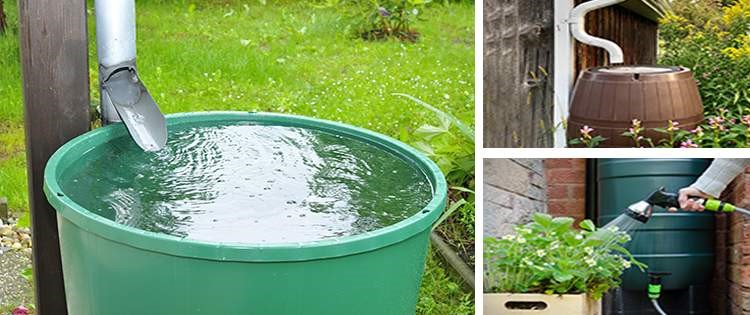
This DIY project is the best way to legally collect rainwater NO MATTER where you live. Get chlorine-free water, cut down on your water bills, and have enough for an emergency situation or to water your garden. Read More Here...
First, there is the reduction in water consumption. When you use stone mulch and encourage deep root growth, the tree becomes remarkably drought-tolerant. I have seen established fig trees survive three-month droughts without a drop of supplemental water, while the “pampered” trees in the neighborhood wilted and dropped their fruit. The stones act as a barrier to evaporation, keeping the “sweat” of the earth where it belongs.
Second, you get better fruit texture. High-nitrogen liquid fertilizers often cause “lush” growth—meaning the fruit cells are filled with water and the skin is thin and prone to splitting. When you rely on the natural minerals in the soil and the thermal mass of stones, the figs grow more slowly and develop a thicker, honey-like interior. They are less likely to burst open after a sudden rain.
Finally, there is the longevity of the system. Organic mulches like wood chips need to be replaced every year. Plastic mulches degrade and leach chemicals. Stones are forever. Once you set up your “thermal ring,” it will continue to benefit the tree for decades with zero maintenance.
Challenges and Common Mistakes
Even the Romans had their failures, and modern gardeners often fall into the same traps. The most common mistake is “the mulch volcano.” This is when people pile stones or organic mulch directly against the bark of the trunk.
The “neck” of the fig tree—where the trunk meets the roots—needs to breathe. If you pile stones right up against it, you create a damp, dark environment that invites fungal rot and borers. Always leave a “donut hole” of about four inches (10 cm) of bare earth around the base of the trunk. Let the stones start where the trunk ends.
Another frequent error is over-watering during ripening. The ancients knew that a “thirsty” tree in late summer produced the sweetest fruit. If you keep your drip lines running full blast while the figs are turning color, the fruit will take up too much water. This dilutes the sugars (Brix level) and causes the figs to “split” or “sour.” When you see the first figs starting to soften, dial back the water. Let the sun do the work of concentrating those sugars.
When This Method May Not Be Ideal
While the stone-and-sun approach is a miracle-worker in many climates, it does have its boundaries. If you live in an area with extremely high humidity and heavy summer rains (like the American Southeast or parts of Southeast Asia), stone mulch can sometimes backfire.
In very humid environments, the “cooling effect” under the stones can lead to excessive moisture retention that never dries out, potentially encouraging root rot or “fig rust” on the leaves. In these regions, a more breathable organic mulch like pine straw or even a ground cover of living clover might be better.
Also, if you are growing figs in containers on a balcony, be careful with the weight of large stones. A few inches of decorative pebbles are fine, but a full Roman stone ring might exceed the weight limit of your structure. For pot-grown figs, stick to “pot-shading”—simply placing a smaller pot inside a larger one to protect the roots from direct sun.
Ancient vs. Modern Fig Cultivation
| Feature | Modern High-Tech Approach | Ancient Stone-and-Sun Method |
|---|---|---|
| Nutrient Source | Liquid synthetic N-P-K fertilizers | Lime, minerals, and organic compost |
| Temperature Control | Electric heaters or greenhouse covers | Stone thermal mass (solar batteries) |
| Irrigation | Automated drip lines with timers | Deep-rooting and stone-condensate |
| Cost | High (ongoing equipment and chemicals) | Low (mostly setup labor and local rocks) |
| Flavor Profile | Variable (often watery if over-pushed) | Consistent, honey-sweet, and dense |
Practical Tips: Building Your Roman Fig Pit
If you want to try this yourself, you don’t need a degree in archaeology. You just need a shovel and some patience. Here is how I set up a “Roman-style” planting for a new fig cutting:
- Dig Deep: Dig a hole at least 3 feet (1 meter) wide and 2 feet (60 cm) deep. If you hit rocky soil, don’t complain—celebrate.
- Mineral Foundation: If your soil is heavy clay, put a layer of small stones or coarse gravel at the very bottom of the hole for drainage. Mix a handful of agricultural lime or crushed eggshells into the backfill soil.
- The Planting: Set your tree in the hole, making sure the roots are spread out and not “circling” the pot. Use the native soil for backfill. Don’t use too much store-bought potting mix; you want the tree to get used to the real earth.
- The Stone Ring: Once the tree is planted and watered in, gather flat stones. Arrange them in a circle extending at least 2 feet (60 cm) out from the trunk. Use the largest stones on the south-facing side to capture the most sun.
- The “Donut” Rule: Ensure there is a gap of a few inches between the stones and the bark of the tree. This prevents rot and allows you to easily check the soil moisture with your finger.
Advanced Considerations: Climate Resilience
For the serious practitioner, these ancient methods are more than just a way to get better fruit—they are a strategy for a changing climate. As summers get hotter and winters more unpredictable, the “thermal buffer” provided by stones becomes a literal lifesaver for your trees.
I have seen figs survive “Polar Vortex” events that killed off the neighboring trees because they were planted against a south-facing stone wall. The wall acted as a massive heat sink, keeping the wood just a few degrees above the “kill point.”
Furthermore, by encouraging your fig trees to grow in rocky, mineral-rich soil, you are helping them sequester carbon in a very stable form. The calcium carbonate they produce doesn’t rot away like compost; it stays in the soil for centuries. You are building a garden that isn’t just productive for you, but is actually restorative for the planet.
Examples and Scenarios
Consider my neighbor, let’s call him Dave. Dave loves his gadgets. Last year, he planted a fig tree in a plastic tub with a smart sensor and an automatic liquid feeder. His tree grew four feet in one summer—it was a lush, green monster. But when the fruit finally arrived in September, it was bland. Worse, when the first frost hit in October, the “soft” wood of his fast-growing tree froze solid and died back to the roots.
Meanwhile, I had a tree planted in a “waste” corner of my yard, surrounded by the limestone rocks I dug up during a patio renovation. My tree only grew about two feet, but the wood was “hardened” and brown by mid-summer. The figs were small, but they were so sweet they were sticky to the touch. When that same frost hit, the thermal mass of the stones kept my tree’s trunk warm enough to survive. Come spring, my tree started exactly where it left off, while Dave had to start over from the ground.
Final Thoughts
The wisdom of the ancients isn’t outdated; it’s refined. The Romans didn’t have the luxury of failure, so they focused on systems that worked with the fundamental laws of nature. By using stones, sun, and native minerals, they created a style of horticulture that was both sustainable and incredibly productive.
As you look at your own garden, I encourage you to put down the spray bottle and pick up a stone. Look for ways to create microclimates. Pay attention to how the sun hits your soil and how the heat lingers after the stars come out. Growing a fig tree is an invitation to join a lineage of gardeners that stretches back ten thousand years.
Do you have some charcoal in your house right now? We call charcoal a “miracle leftover” for anyone who wants to be a little more self-sufficient and cut costs. That’s because it can help you with so many different things around the house and garden. You can even use it to make an energy-free fridge. Read More Here...
Don’t be afraid to experiment. Maybe you don’t have a limestone cliff, but you probably have some old bricks or river rocks. Use them. Your fig tree is a “memory-bearing” plant—it remembers the heat of the Mediterranean and the craggy soils of its ancestors. When you provide those things, even in a small backyard, you aren’t just growing fruit. You are reviving a lost art.