
Your cactus isn’t a piece of furniture; keeping it in the same spot all year is the quickest way to stunt its natural life cycle. Cacti are survivors, but surviving isn’t thriving. A plant kept in a static indoor environment loses its ability to flower and grow strong spines. Introducing ‘Dynamic’ shifts—moving it outdoors for the summer and allowing it to feel the temperature drops at night—triggers the ancient survival mechanisms that lead to massive blooms.
I’ve spent many years watching these prickly friends on my windowsill. For a long time, I treated them like statues, only to wonder why they never grew that fierce, beautiful armor they have in the wild. It took a few seasons of “listening” to the soil and the sun to realize that a cactus needs the weather to tell it what time of year it is.
When we keep a cactus in a temperature-controlled living room, it essentially lives in a perpetual, lukewarm spring. It never gets the signal to rest, and it certainly never gets the high-octane sunlight it needs to fuel a flower show. Stepping outside the house for a few months changes the plant’s internal chemistry in ways a grow light simply cannot replicate.
Indoor Vs Outdoor Cactus Growth Comparison
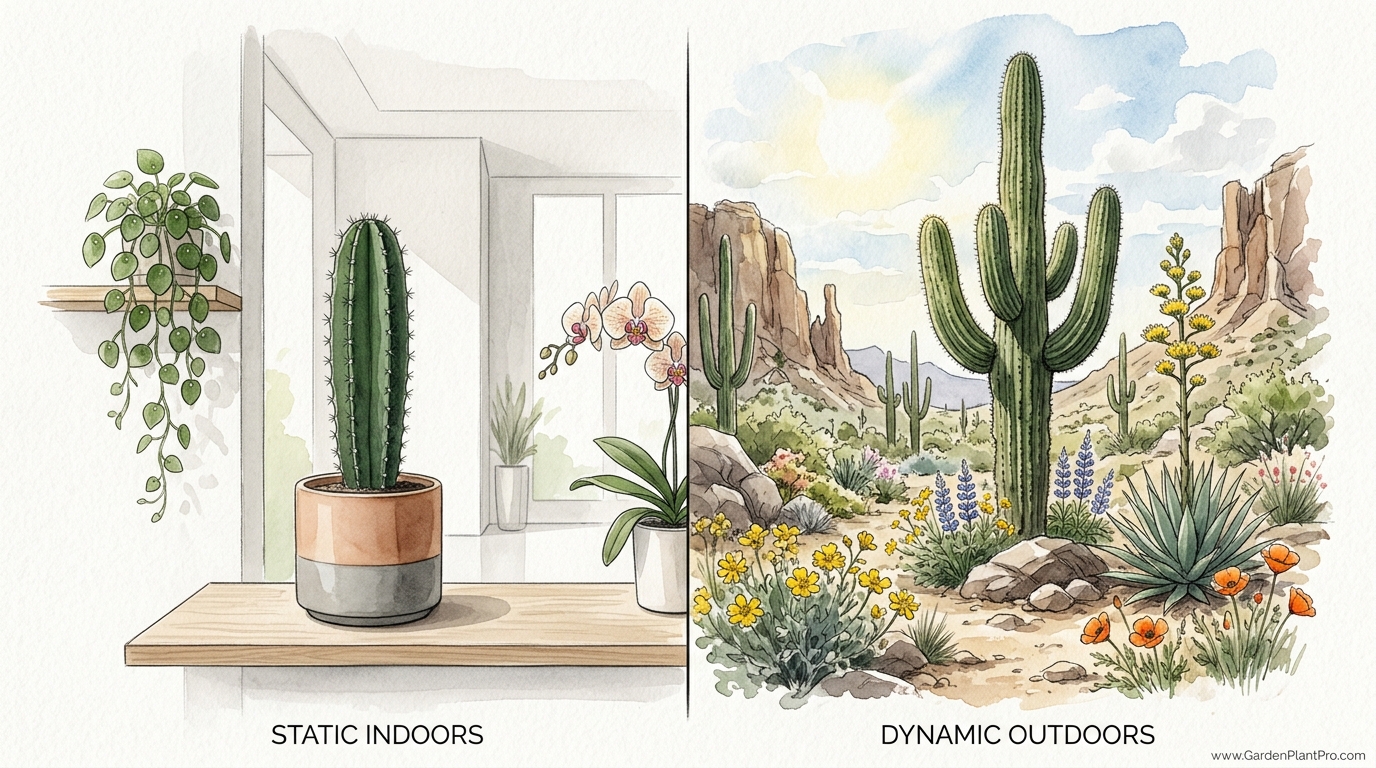
Indoor environments are essentially “static.” The temperature rarely fluctuates more than a few degrees, and the light is filtered through glass which strips away essential UV rays. While your cactus might look fine on the shelf, it is often just waiting. Indoor growth is frequently “etiolated,” a fancy word for when a plant stretches and becomes thin or pale because it is starving for light.
Outdoor growth is “dynamic.” In the open air, a cactus experiences the full spectrum of sunlight, including the UV radiation that encourages a thick, tough skin (epidermis). This environment also offers a vital “diurnal temperature swing,” which is the difference between a hot day and a cool night. Many desert species require this specific drop in temperature—often between 10°C and 15°C (18°F to 27°F)—to properly process nutrients and trigger dormancy.
In the real world, a cactus living outdoors for the summer will develop much denser, more colorful spines. These spines aren’t just for show; they act as a self-shading mechanism and a break for the wind. Indoors, without the threat of intense sun or wind, the plant “forgets” to produce them, leading to a naked, vulnerable-looking specimen.
How to Transition Your Cactus Outdoors
You cannot simply move a plant from a dim corner to the blazing sun in one afternoon. I learned this the hard way after “cooking” a prized Mammillaria several years back. The transition must be gradual to allow the plant’s cells to toughen up.
Start by placing your cactus in a spot with deep shade for the first week. Even in the shade, the ambient light outdoors is significantly higher than it is inside your home. This allows the plant to adjust to the fresh air and higher temperatures without the risk of UV shock.
Move the plant into a spot that gets early morning sun during the second week. Morning light is much gentler than the scorching afternoon rays. Watch the plant closely for any signs of “paling” or yellowing, which are early warnings of sunburn. If it looks healthy, you can slowly increase the exposure by an hour or two every few days until it can handle the full midday sun.
Check the weather forecast before you start this process. Wait until nighttime temperatures are consistently above 10°C (50°F) for desert species. Tropical “jungle” cacti, like the Christmas or Thanksgiving cactus, are more sensitive and prefer nights to stay above 15°C (60°F).
The Benefits of Seasonal Shifts
One of the most measurable benefits of moving your cactus outdoors is the development of flowers. Most desert cacti need a distinct rest period in the winter followed by a high-energy summer to produce buds. The intense light of a summer “vacation” provides the energy needed to fuel those vibrant, often fragrant blooms.
Stronger spine growth is another major advantage. When exposed to unfiltered UV light, a cactus will grow thicker, longer, and more colorful spines. These spines are the plant’s primary defense against the environment. You will notice that new growth produced outdoors looks much “fiercer” and more robust than the soft, weak growth produced in a living room.
Fresh air and wind play a role that many gardeners overlook. Moving air helps strengthen the plant’s structure and prevents the buildup of stagnant humidity around the base. This significantly reduces the risk of fungal infections and certain pests like mealybugs, which thrive in the still air of a windowsill.
Challenges and Common Mistakes
The most frequent error is assuming that because a plant is a “cactus,” it can handle immediate full sun. Indoor glass filters out most UV light, so your plant has no “tan.” Placing it directly in the sun will cause permanent, unsightly scarring. These burns look like white or tan patches and will never heal; the plant has to grow out of them over many years.
Another mistake is using the wrong kind of pot in high-heat areas. Plastic pots can absorb a tremendous amount of heat, literally cooking the roots if they are left in direct afternoon sun. Terracotta is a much better choice for outdoor use because it is porous, allowing the roots to “breathe” and keeping the soil slightly cooler through evaporation.
Forgetful watering can also be a pitfall. While cacti are drought-tolerant, they dry out much faster outdoors than they do inside. Wind and sun increase the rate of transpiration. You may find yourself watering every 7 to 10 days during a hot summer, compared to once a month indoors. Always poke your finger an inch (2.5 cm) into the soil to check for moisture before adding more.
Limitations and Environmental Constraints
Not every climate is suited for a full summer outdoors. If you live in an area with frequent, heavy rainfall, you must ensure your pots have excellent drainage. A cactus sitting in water for three days after a thunderstorm is a prime candidate for root rot. Consider a covered patio or a shelf with a transparent roof if your summers are particularly wet.
Humidity is another factor to watch. Desert cacti are adapted to dry air. If you live in a tropical or highly humid region, your cactus might struggle with fungal spotting or rot even if the temperatures are right. In these cases, it is better to keep the plant in the sunniest indoor spot you have or provide a very sheltered outdoor area with maximum airflow.
Size and weight can also be practical boundaries. As your collection grows, moving heavy ceramic pots in and out every season becomes a physical chore. Using a rolling plant stand or a sturdy wagon can save your back during “the great spring move.”
DIY PROJECT: Collect rainwater no matter where you live...
This DIY project is the best way to legally collect rainwater NO MATTER where you live. Get chlorine-free water, cut down on your water bills, and have enough for an emergency situation or to water your garden. Read More Here...
Practical Tips for Success
To get the most out of your cactus’s summer vacation, keep these experience-based tips in mind:
- Ditch the Saucers: Indoors, we use saucers to protect our furniture. Outdoors, they just trap rainwater and drown the roots. Take them off so the water can flow freely.
- Monitor the Night: If a sudden cold snap is predicted, bring the plants back inside or cover them with a frost cloth. A single night at 2°C (36°F) can turn a healthy cactus into a mushy mess.
- Watch for Pests: While the wind helps, you might pick up “hitchhikers” like slugs or grasshoppers. Check the nooks and crannies of your plants once a week.
- Rain is a Tonic: Natural rainwater contains trace minerals and is slightly acidic, which cacti love. Unless it is a week-long deluge, let them enjoy the rain.
Advanced Considerations for Flowering
If your goal is to see those legendary desert blooms, the “shift” doesn’t stop in the summer. The transition back indoors in the fall is just as important. To set buds, many species require a cold, dry dormancy period. When the temperatures start to dip in late autumn, let your cacti feel the chill—as long as they stay above freezing.
Stop watering almost entirely once you bring them back inside for the winter. Keep them in a cool room, ideally around 10°C to 13°C (50°F to 55°F). This “hard” winter rest, combined with the high-intensity light they received during the summer, is the secret recipe for a spring explosion of color.
You can also use a phosphorus-heavy fertilizer during the late spring as they move outdoors. Look for a “bloom booster” formula with a low first number (Nitrogen) and a high second number (Phosphorus), such as a 5-10-5 or 10-30-20. Apply this at half-strength every other watering during the peak growing months.
An Example Scenario: The Yearly Cycle
Imagine a gardener in a temperate climate. In mid-May, after the last frost, they move their barrel cactus to a covered porch. For 10 days, it sits in the shade. By June, it is sitting on the sun-drenched steps, soaking up 10 hours of light. The gardener waters it thoroughly whenever the soil feels like a dry “gravel pit.”
By August, the cactus has grown a crown of thick, red-tinted spines that weren’t there in April. In September, as the nights grow crisp (around 7°C or 45°F), the gardener brings the pot onto a cool, unheated sunroom. They stop watering. In February, tiny fuzzy buds appear. By April, the plant is covered in bright yellow flowers, a feat that would have been impossible if it had stayed on the kitchen counter all year.
Final Thoughts
Moving your cactus from a static indoor life to a dynamic outdoor one is the single best thing you can do for its health. It mimics the harsh, beautiful reality of the desert, forcing the plant to use its energy to build better spines and store resources for flowering. While it requires a bit of extra work to manage the transition and monitor the weather, the result is a plant that looks like a living piece of the wild rather than a struggling houseplant.
Don’t be afraid to experiment. Start with your hardiest species and see how they respond to the fresh air and sun. You will likely find that they grow faster, look more colorful, and eventually reward your effort with stunning blooms. Gardening is about participating in the seasons, and your cacti want to be part of that rhythm too.
If you find success with this seasonal shift, you might want to look into other ways to improve your plants’ environment, such as mixing your own specialized cactus soil or learning about local microclimates in your yard. Every little change brings you closer to being a master of these resilient desert dwellers.