
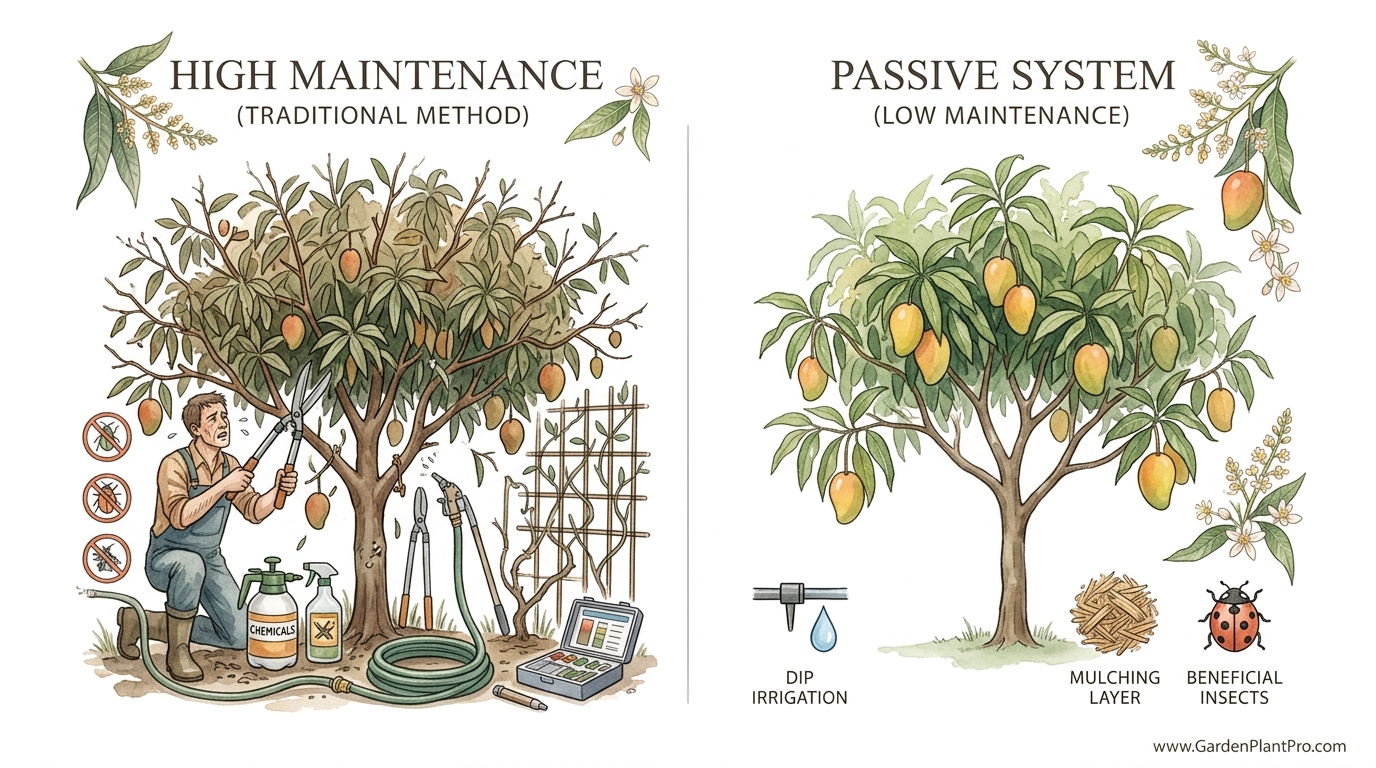
Why are you working harder than the tree to produce a single harvest?
In the wild, mango trees live for centuries without a single bag of store-bought fertilizer. Why are we breaking our backs in the backyard? Switching from active management to a passive ‘Mango Circle’ design allows you to turn your yard waste into a self-fueling nutrient engine that feeds your tree while you sleep.
Whether you are a seasoned grower or just starting out with your first sapling, this approach changes everything. Traditional gardening often feels like a constant battle against nature, but the passive system invites nature to do the heavy lifting for you.
Low Maintenance Mango Growing Guide
Low maintenance mango growing is a strategy centered on mimicry. Instead of treating a fruit tree like a delicate pet that needs a scheduled feeding of blue crystals, you treat it like the forest giant it was always meant to be. This method utilizes a “Mango Circle,” which is essentially a specialized permaculture basin designed to capture water and process organic matter right where the roots can reach it.
The primary goal here is to create a self-sustaining ecosystem. You build a central composting pit and plant your mango trees around the perimeter. This setup allows the trees to tap into a constant, slow-release reservoir of nutrients and moisture. In real-world terms, this means you spend less time hauling bags of mulch and more time watching the fruit ripen.
Homeowners often find this system perfect for corners of the yard that are hard to irrigate. It also solves the problem of what to do with fallen leaves, grass clippings, and kitchen scraps. Instead of sending these resources to a landfill, you feed them into the center of your circle to fuel your harvest.
How the Mango Circle System Works
Building a Mango Circle requires a bit of sweat upfront, but the long-term payoff is massive. Think of it as installing a biological battery that will power your trees for decades.
Step 1: The Basin Excavation
First, select a spot with full sun—at least six to eight hours a day. Dig a circular basin roughly 2 meters (6.6 feet) wide and about 0.5 to 1 meter (1.6 to 3.3 feet) deep. Pile the excavated soil around the rim to create a raised berm. This berm is where you will eventually plant your trees.
Step 2: Filling the Nutrient Engine
Fill the center of the pit with “brown” and “green” organic materials. Start with a base of thick logs or branches at the bottom to provide long-term carbon and improve aeration. Top this with layers of dried leaves, cardboard, grass clippings, and aged manure if you have it. This central mass acts as a massive sponge, holding onto rainwater and breaking down into rich humus over time.
Step 3: Planting on the Perimeter
Place your mango trees on the raised berm, not inside the pit. Planting on the mound ensures excellent drainage, which is critical because mangoes hate “wet feet” or standing water around their trunks. Space the trees about 1 to 1.5 meters (3.3 to 5 feet) away from the center of the pit. As the trees grow, their roots will naturally grow toward the nutrient-rich, moist center of the circle.
Step 4: Managing Water Flow
Direct any nearby gutter downspouts or greywater towards the circle if your local laws allow it. The basin will catch and hold this water, letting it soak slowly into the root zone. This passive irrigation reduces the need for frequent hose-watering, especially once the tree’s taproot finds the water table.
Benefits of a Passive Mango System
Moving away from high-maintenance schedules offers more than just extra free time. The health of the tree often improves when it isn’t subjected to the “boom and bust” cycle of synthetic fertilizing.
- Consistent Nutrient Delivery: Decomposing organic matter provides a steady stream of macronutrients and essential trace elements like Boron and Zinc.
- Superior Moisture Retention: The thick mulch in the central pit prevents evaporation, keeping the subsoil cool and moist even during peak summer heat.
- Reduced Waste: Your yard waste becomes a valuable resource rather than a chore to be hauled away.
- Soil Life Enhancement: The high organic content encourages beneficial fungi and earthworms, which naturally aerate the soil and protect roots from pathogens.
Common Challenges and Pitfalls
While the system is low maintenance, it is not “zero” maintenance. Beginners often make mistakes that can lead to disease or poor fruit sets.
A common error involves planting the tree too deep in the mound. The root flare should always be slightly visible at the soil surface. Covering the trunk with soil or piling mulch against the bark can lead to collar rot, a fungal infection that can kill a mature tree in a single season.
Another pitfall is failing to manage the “carbon to nitrogen” balance in the pit. If you only add dry wood and straw, the decomposition process might temporarily “lock up” nitrogen, leaving your mango leaves looking yellow and stunted. Always mix in some “greens” like fresh grass clippings or fruit scraps to keep the engine running smoothly.
Limitations of the Passive Method
Every system has its boundaries. The Mango Circle works best in subtropical and tropical climates (USDA Zones 9b-11) where mangoes can thrive outdoors year-round.
If you live in an area with heavy clay soil that doesn’t drain, a deep pit might act like a bucket and drown your trees. In these cases, you must build the “circle” entirely above ground by creating a large, ring-shaped raised bed. Additionally, this system requires a fair amount of horizontal space. If you only have a tiny balcony or a paved courtyard, you will likely need to stick to dwarf varieties in large containers.
Passive Circles vs. High Maintenance Management
Comparing these two approaches reveals a fundamental difference in philosophy. One relies on external inputs, while the other relies on internal cycles.
| Feature | High Maintenance System | Passive Mango Circle |
|---|---|---|
| Fertilizer Cost | High (Recurring costs for NPK) | Near Zero (Uses yard waste) |
| Water Usage | Higher (Needs frequent irrigation) | Lower (Captures/Stores rain) |
| Labor | Constant (Feeding, weeding, tilling) | Upfront (Setup, then minimal) |
| Tree Resilience | Moderate (Dependent on gardener) | High (Mimics wild forest floor) |
Practical Tips for Best Results
Success often hides in the small details. These adjustments can help you optimize your circle for maximum fruit production.
DIY PROJECT: Collect rainwater no matter where you live...
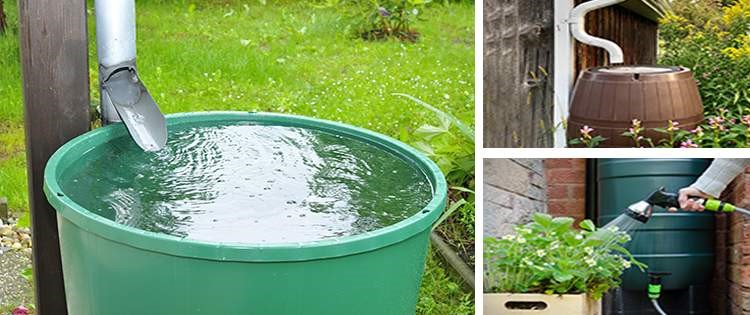
This DIY project is the best way to legally collect rainwater NO MATTER where you live. Get chlorine-free water, cut down on your water bills, and have enough for an emergency situation or to water your garden. Read More Here...
- Choose Grafted Varieties: Seedlings can take 10 years to fruit and often produce “stringy” mangoes. Grafted trees like ‘Pickering’ or ‘Nam Doc Mai’ fruit faster and stay at a manageable size.
- Monitor During Flowering: Mangoes need a dry spell to trigger flowering. Stop adding heavy amounts of water to the pit 2 months before your local flowering season starts.
- Sanitation is Key: Remove any fallen, diseased fruit from the area immediately. This simple act prevents pests like the mango fruit fly from completing their life cycle in your soil.
- Encourage Pollinators: Plant herbs like basil or cilantro near the edge of the circle. These attract the small flies and bees that mangoes need for successful pollination.
Advanced Considerations: The Fruit Tree Guild
Serious practitioners often take the Mango Circle a step further by creating a “guild.” This involves planting specific companion plants around the tree to perform different functions.
For instance, planting Pigeon Pea around the outer edge provides a “chop and drop” source of nitrogen. Comfrey is another favorite; its deep roots pull minerals up from the subsoil, which then become available to the mango tree when the comfrey leaves are trimmed and dropped as mulch. You might also include a groundcover like sweet potato to suppress weeds and keep the soil temperature stable. This multi-layered approach creates a dense “edible forest” that produces far more than just mangoes.
Real-World Example: The “Lazy” Harvest
Imagine a gardener in a sandy-soil region like Florida or parts of Australia. They dig a basin, fill it with palm fronds and kitchen waste, and plant three different mango varieties around it: an early-season ‘Glenn’, a mid-season ‘Valencia Pride’, and a late-season ‘Keitt’.
During the first two years, they water the saplings twice a week to ensure establishment. By the third year, the trees have found the central moisture reservoir. The gardener now only visits the circle to toss in more mulch or harvest the fruit. They notice that while their neighbor’s trees are yellowing during the dry season, their “Circle Mangoes” remain deep green and vibrant because of the subterranean moisture and steady nutrient release from the pit.
Final Thoughts
Nature has been growing perfect mangoes long before humans invented the first bag of fertilizer. The Mango Circle isn’t just a gardening technique; it is a return to a more logical, efficient way of working with the land.
By building a system that feeds itself, you reduce your workload and create a more resilient garden. You stop being the tree’s servant and start being its partner. The upfront effort of digging that first basin pays dividends for years in the form of heavy branches and sweet, sun-ripened fruit.
Start small if you need to, perhaps with just one tree and a modest mulch pile. Once you see the difference in growth and vigor, you will never want to go back to the old, high-maintenance way again. Experiment with different local organic materials and watch as your backyard transforms into a thriving, self-fueling food forest.