
The grocery store is selling you expensive water; your garden can give you infinite flavor. Stop being a consumer of plastic-wrapped, flavorless berries. Shifting your mindset from ‘row cropping’ to ‘living mulch’ turns your strawberry patch into a producer of both food and soil protection. These berries don’t have white centers because they weren’t forced to grow for a truck—they grew for the sun.
I remember standing in my garden twenty years ago, staring at a patch of bare, baked earth between my pepper plants and thinking how much work it was to keep the weeds out. Every time I turned my back, the crabgrass and dandelion were claiming that “wasted” space. That was the day I stopped fighting nature and started planting strawberries as a living mulch. It changed the way I look at every square inch of my soil.
Instead of buying bags of cedar chips or rolls of black plastic that eventually crumble into microplastics, we can use the strawberry plant—a vigorous, low-growing perennial—to do the work for us. This method treats the strawberry not just as a crop to be harvested in neat, tidy rows, but as a functional part of the garden ecosystem that protects the soil, feeds the microbes, and provides a sweet reward at the end of the day.
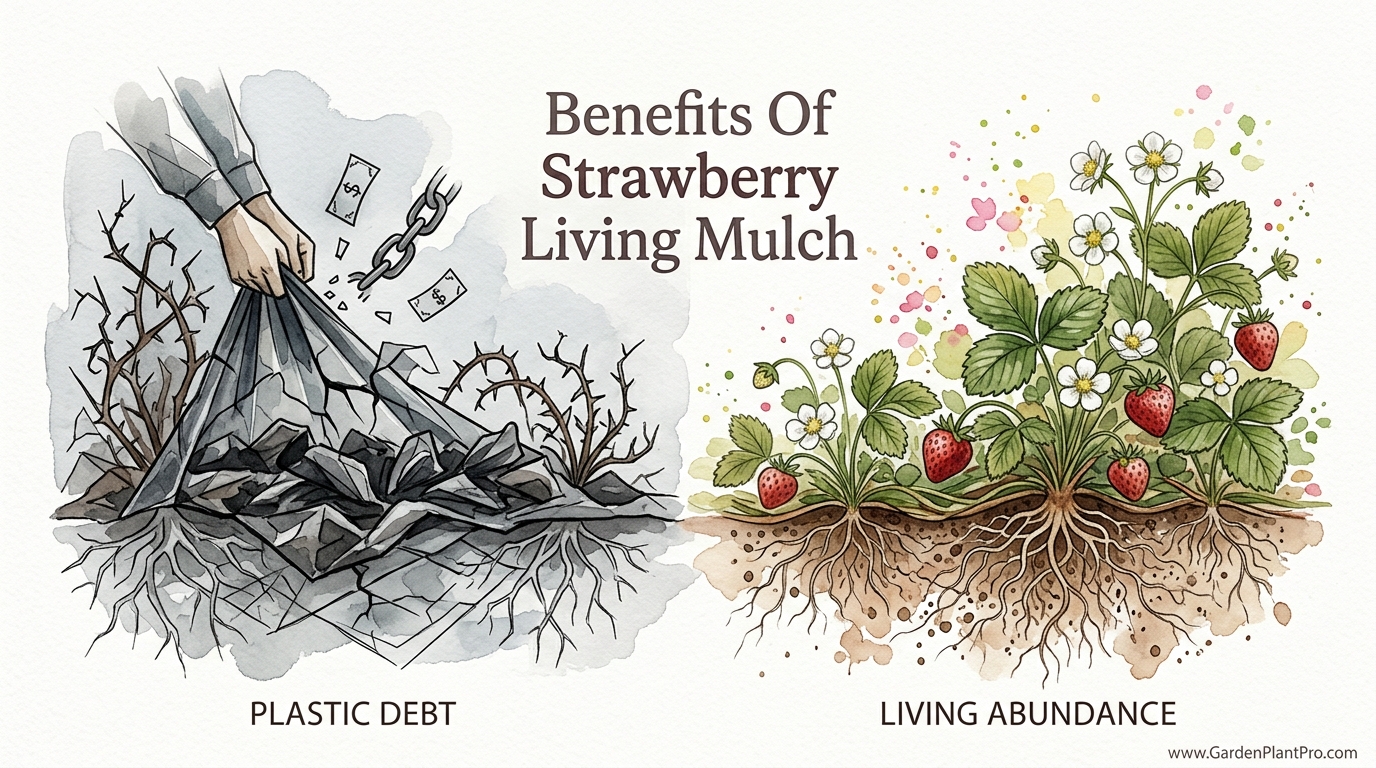
Benefits Of Strawberry Living Mulch
Strawberry living mulch is the practice of using strawberry plants as a dense, year-round ground cover to protect the soil surface. In a traditional garden, you might see “matted rows” with bare paths in between, but a living mulch system allows the plants to colonize the entire area, or at least the entire bed, creating a thick carpet of green leaves.
This approach exists because nature hates a vacuum. If you leave soil bare, the sun bakes it, the wind blows it away, and weeds quickly fill the void to protect the earth. By intentionally filling that space with strawberries, you are choosing your “weed.” A strawberry plant is essentially a very productive weed that tastes like summer.
Think of it as a biological skin for your garden. Just as your skin protects your internal organs from the elements, the strawberry leaves shade the soil, keeping it significantly cooler during the height of summer. This temperature regulation is vital for the millions of microorganisms living in the top few centimeters of your soil. When the sun hits bare ground, it can reach temperatures high enough to effectively sterilize the surface, killing the very life that feeds your plants.
Beyond temperature, this living carpet acts as a barrier against erosion. When a heavy rain hits bare soil, the impact of the droplets breaks apart soil aggregates and washes away the most fertile topsoil. The multi-layered canopy of strawberry leaves breaks that fall, allowing water to gently trickle down to the roots. Research has shown that living mulches can reduce weed biomass by 50% to 65% by outcompeting them for light and space.
How the Living Mulch System Works
Success with this method depends on understanding the unique way strawberries grow. Most garden varieties (Fragaria × ananassa) produce “runners,” technically called stolons. These are long, thin stems that reach out from the mother plant and “peg” themselves into the soil at various nodes, growing a clone of the parent plant.
Utilizing these runners is the secret to a self-replenishing living mulch. In a traditional system, you might clip these runners to keep the mother plant focused on fruit production. In a living mulch system, you encourage them to fill every gap. You can even help the process by “pegging” them down with a small U-shaped wire or a flat stone to ensure the new roots make contact with the soil.
Planting density is the first step. For a new bed, space your initial plants about 40 cm to 45 cm (16 to 18 inches) apart. Within one or two growing seasons, the runners will fill the space between them completely. You aren’t just growing berries; you are growing a permanent, edible infrastructure for your soil health.
Choosing the right location is equally important. While strawberries love full sun, some varieties—especially Alpine strawberries (Fragaria vesca)—are more shade-tolerant and work beautifully as a living mulch under fruit trees or at the edge of a woodland garden. They need well-draining soil with plenty of organic matter, as their shallow root systems are sensitive to both bone-dry conditions and standing water.
Selecting the Right Strawberry Varieties
Not all strawberries are created equal when it comes to ground cover. You generally have three main categories to choose from, and each serves a different purpose in a living mulch system.
June-bearing varieties are the classic choice for a dense mat. They produce a massive flush of fruit over a 2- to 3-week period in early summer and are prolific runner-producers. If your goal is to cover a large area quickly, June-bearers like ‘Earliglow’ or ‘AC Wendy’ are excellent candidates. They spend the rest of the season after harvest sending out runners to expand the colony.
Everbearing and Day-neutral varieties produce fruit throughout the season, often until the first frost. Varieties like ‘Ozark Beauty,’ ‘Seascape,’ or ‘Albion’ produce fewer runners than June-bearers but provide a steady supply of snacks. These are better for smaller, more controlled living mulch areas where you don’t want the plants to wander too far into other parts of the garden.
Alpine and Wild Strawberries are the true masters of the living mulch. They are often smaller, but they are incredibly resilient. ‘Alexandria’ is a popular runnerless Alpine variety that stays in a tidy clump, while wild species like Fragaria virginiana will spread aggressively and create a very tight, weed-resistant mat. The berries are tiny but packed with an intensity of flavor you will never find in a supermarket.
Maintenance and Long-Term Care
Maintaining a living mulch requires a shift in how you handle garden chores. Instead of the heavy-handed tilling or hoeing used in traditional rows, you will mostly be doing “selective thinning.” Because the plants grow so close together, air circulation can become an issue, which leads to fungal diseases.
Thinning out the oldest “mother” plants every 3 to 4 years is essential. Strawberry plants are most productive in their second and third years. After that, they tend to get woody and produce fewer, smaller berries. By removing the old plants and allowing the vigorous new “daughter” plants from the runners to take their place, you keep the living mulch young and productive.
Watering must be consistent. Since the strawberries are covering the entire surface, they are competing with whatever else you have growing there. A soaker hose or drip irrigation system laid underneath the strawberry canopy is the most efficient way to get water to the roots without wetting the leaves, which helps prevent powdery mildew and gray mold.
Fertilizing is another consideration. Strawberries are relatively light feeders, but a dense mat can eventually deplete the soil. Applying a thin layer of well-rotted compost or a balanced organic fertilizer (like a 5-5-5 or 10-10-10 NPK) in early spring and again after the main harvest will keep the foliage lush. Avoid over-fertilizing with nitrogen, as this will lead to a massive explosion of leaves but very few berries.
DIY PROJECT: Collect rainwater no matter where you live...
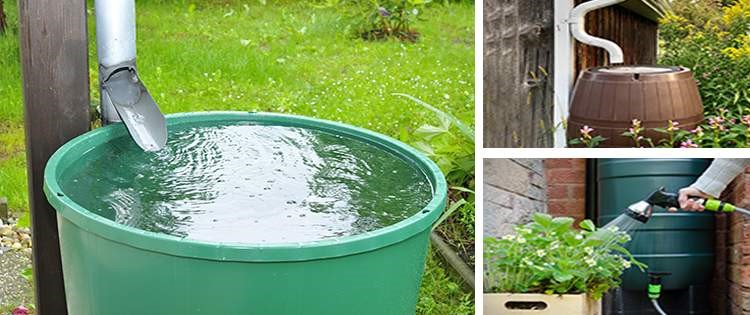
This DIY project is the best way to legally collect rainwater NO MATTER where you live. Get chlorine-free water, cut down on your water bills, and have enough for an emergency situation or to water your garden. Read More Here...
Challenges and Common Mistakes
The biggest challenge with a strawberry living mulch is managing moisture-loving pests. Slugs and snails find the cool, damp environment under a dense canopy of strawberry leaves to be a five-star hotel. If you live in a particularly wet climate, you may need to be proactive. Using organic slug bait or encouraging natural predators like toads and ground beetles can help keep the population in check.
Overcrowding is another common pitfall. While we want a “dense mat,” if the plants are so thick that you can’t see the soil at all, the berries will often rot before you can pick them because they never dry out after a rain. This is why light thinning and removing dead leaves in late winter is so important for maintaining airflow.
Another mistake is planting strawberries as a living mulch near “heavy feeders” that have shallow roots, such as cabbage or broccoli. The strawberries can compete for nutrients and water, potentially stunting your vegetable crop. They work best as a mulch for deeper-rooted perennials, fruit trees, or taller annuals like peppers and tomatoes that have their “feet” shaded by the berries but their heads in the sun.
Limitations of the Method
This method is not a “set it and forget it” solution. While it reduces weeding, it does not eliminate it. Persistent perennial weeds like bindweed or thistle can still poke through the strawberry canopy, and because the strawberries are so thick, it can be harder to pull these weeds without damaging the berry roots.
Environmental factors also play a role. In very hot, arid climates, the strawberries may struggle to stay alive without significant irrigation, as their large leaf surface area leads to high transpiration rates. Conversely, in extremely humid regions, the risk of fruit rot (Botrytis) might make a dense living mulch less ideal than traditional spaced-row planting.
Finally, consider the “plastic debt” vs “living abundance” trade-off. While the living mulch is better for the soil, your total yield of large, marketable berries per plant will likely be lower than in an intensive commercial system. You are trading individual plant productivity for overall system health and reduced labor in other areas.
Comparing Traditional Row Cropping vs. Living Mulch
| Feature | Traditional Row Cropping | Living Mulch System |
|---|---|---|
| Weed Control | Requires regular hoeing or plastic mulch. | Biological suppression by dense foliage. |
| Soil Health | Exposed soil can degrade or compact. | Continuous root activity and shade. |
| Berry Size | Generally larger due to less competition. | Small to medium, but higher flavor density. |
| Water Use | High evaporation from bare soil. | Low evaporation, but high plant demand. |
| Maintenance | High (weeding, runner clipping). | Low to Moderate (thinning, pest checks). |
Practical Tips for Success
Start small by dedicating just one bed or a small section of a border to this method. This allows you to learn how your local slug and weed populations respond before committing your entire garden to it.
When you first plant your strawberries, apply a very thin layer (about 2 cm or 1 inch) of pine needles or straw. This acts as a “bridge” mulch that protects the soil while the plants are still small and haven’t filled in yet. Pine needles are particularly good because they are acidic, which strawberries love, and their prickly texture can deter some slugs.
Encourage the runners to stay where you want them. If a runner starts heading toward your lawn or another bed where it isn’t welcome, simply redirect it back into the living mulch zone. If it has already rooted, you can easily dig it up with a trowel and move it. This is free plant propagation at its finest.
Harvesting in a living mulch requires a bit of a “treasure hunt” mindset. Because the berries are often tucked under a thick canopy of leaves, you have to lift the foliage to find the fruit. This actually protects the berries from birds, who usually spot them from the air. If you find the birds are still a problem, a light netting draped over the entire mat is much easier to manage than netting individual rows.
Advanced Considerations for the Serious Gardener
For those looking to take this further, consider the “stacking functions” principle from permaculture. You can integrate strawberries into a multi-layered food forest or orchard. Using them as the ground layer under fruit trees like apples or pears creates a symbiotic relationship. The trees provide light shade that keeps the berries from scorching in late afternoon sun, while the strawberries act as a “living floor” that prevents grass from competing with the tree’s roots.
Observe the fungal relationships in your soil. Strawberries form strong associations with arbuscular mycorrhizal fungi (AMF). These fungi extend the reach of the strawberry roots, helping them pull in phosphorus and water from deep in the soil. A living mulch system, because it involves zero tilling, allows these delicate fungal networks to thrive and expand year after year, eventually benefiting every plant in the garden.
You can also experiment with “inter-planting” different strawberry types. Mixing June-bearers with Alpines can create a more complex canopy with different heights and leaf shapes, which provides even better weed suppression and a longer harvest window. Some gardeners even mix in other low-growing herbs like thyme or oregano to create a fragrant, multi-purpose living carpet.
Example Scenario: The Orchard Edge
Imagine a small backyard with three young apple trees. Traditionally, you might have circles of bare mulch around each tree. Instead, you plant twenty ‘Mara des Bois’ (day-neutral) and twenty wild strawberry plants in a 2-meter (6-foot) wide strip connecting all three trees.
In the first year, you keep the weeds out by hand and mulch with a little straw. By the second spring, the strawberries have sent out hundreds of runners, weaving together into a solid green mat. You no longer need to buy mulch for the trees. When the apples are small and green in July, you are already harvesting bowls of sweet, aromatic strawberries from the ground below.
By the third year, the soil under that strawberry mat is dark, moist, and full of earthworms, even during a mid-August heatwave. You spend twenty minutes once a month pulling a few stray weeds and thinning out a few overcrowded spots. The system is largely self-sustaining, providing you with fruit, protecting your trees, and building soil health simultaneously.
Final Thoughts
The transition from a consumer-focused, row-cropped garden to a living mulch system is more than just a change in planting technique; it is a change in how we relate to the land. It moves us away from the “war on weeds” and toward a partnership with the plants that want to grow.
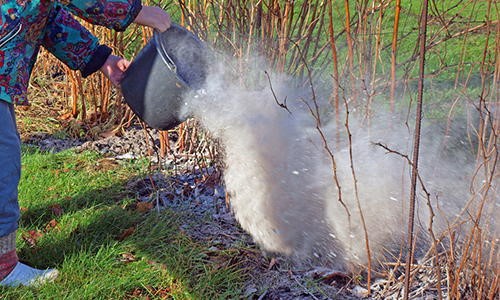
Do you have some charcoal in your house right now? We call charcoal a “miracle leftover” for anyone who wants to be a little more self-sufficient and cut costs. That’s because it can help you with so many different things around the house and garden. You can even use it to make an energy-free fridge. Read More Here...
By using strawberries as a living mulch, you are choosing a path of abundance over a path of restriction. You are creating a garden that works more like a natural forest floor and less like a factory. The rewards are measurable: healthier soil, less plastic waste, and a harvest that tastes like the sun.
I encourage you to let a few runners go this season. Don’t reach for the shears the moment a stem reaches out. Let it find a spot, let it root, and watch how quickly the earth responds to being covered with life. Your garden, and your palate, will thank you for it.