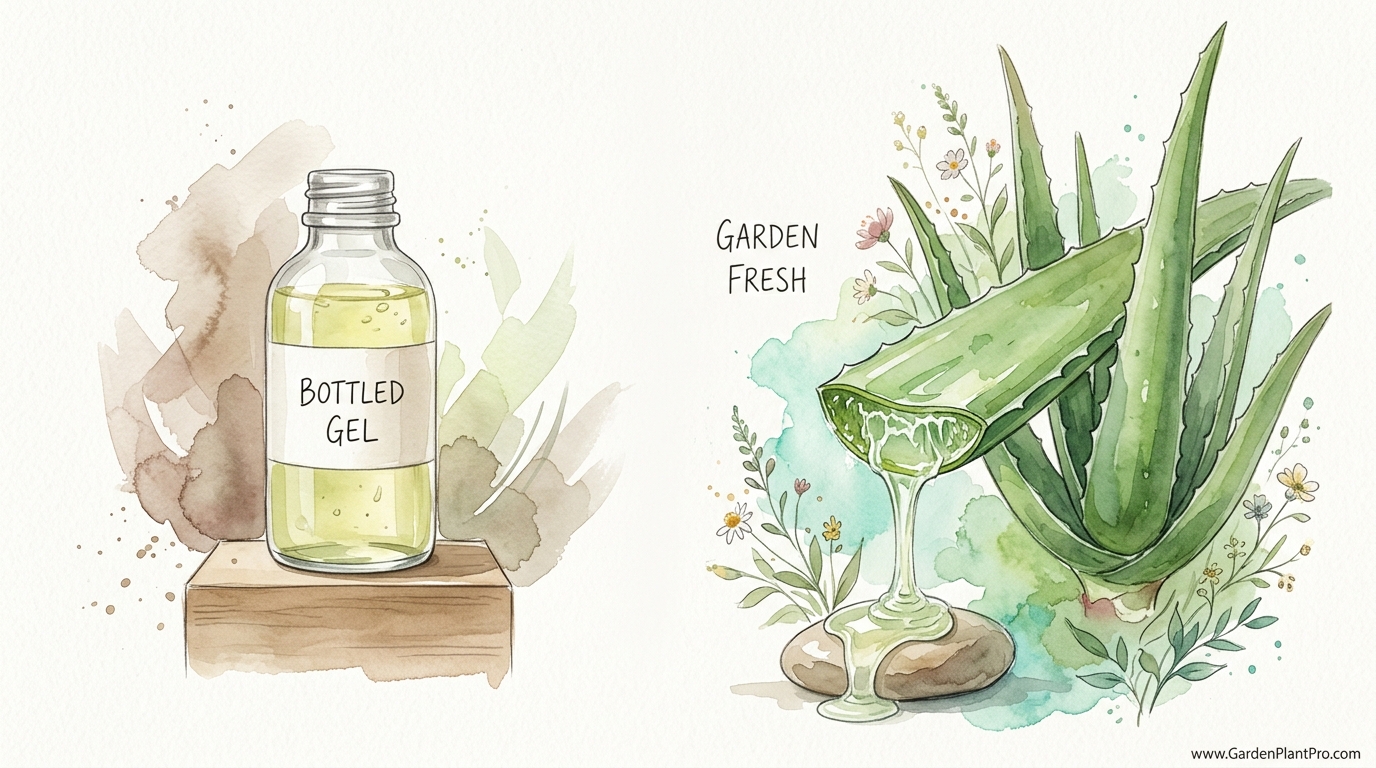
One is a processed chemical cocktail, the other is a living pharmacy from the ancient world. We compared the modern convenience of bottled Aloe to the ancestral wisdom of the raw leaf. Modern manufacturing often strips the ‘Aloin’ and vital enzymes during heat processing, leaving you with nothing but thickened water. The garden-fresh leaf contains over 200 active compounds that your skin can actually recognize.
I have spent the better part of thirty years tending to the same patch of Aloe barbadensis Miller behind my tool shed. These spiky, resilient succulents are more than just decoration; they are a first-aid kit that grows in the dirt. Most folks today reach for a bright green plastic bottle at the drugstore, thinking they are getting the same cooling relief. But if you look at the back of that bottle, you will often find water, alcohol, and artificial dyes listed before the actual plant.
Understanding why the raw leaf beats the bottle comes down to the life inside the plant. When you cut a leaf fresh from the stalk, the gel is a complex, living matrix of polysaccharides and cooling enzymes. It is the difference between eating a sun-ripened tomato from your own vine and opening a can of tomato paste. One is a biological experience, while the other is a shelf-stable shadow of the real thing.
Healing Properties Of Raw Aloe Vera Leaf
The raw Aloe Vera leaf is a biological powerhouse containing a precise balance of nutrients that scientists are still trying to replicate in labs. While the gel is roughly 99% water, that remaining 1% holds the secret to its legendary status. This small fraction contains vitamins A, C, and E, which are potent antioxidants that help neutralize free radicals on the skin surface.
A central component of the raw leaf is a polysaccharide called acemannan. This compound is known for its ability to support the immune system and accelerate the skin’s natural repair processes. When applied to a burn or a scrape, acemannan acts as a bridge, helping skin cells communicate and regenerate more efficiently. Most bottled gels undergo heat stabilization or charcoal filtration, which can break down these delicate long-chain sugars.
Beyond the sugars, the raw leaf provides eight distinct enzymes, including bradykinase, which helps reduce excessive inflammation when applied topically. It also contains 20 of the 22 human-required amino acids and 7 of the 8 essential ones. This “living” chemical profile is why a fresh leaf feels so much more soothing on a kitchen burn than a processed gel. The raw gel is also naturally slightly acidic, matching the skin’s own pH mantle, which helps maintain the protective barrier against bacteria.
Harvesting and Extracting the Living Gel
Harvesting your own Aloe is a simple ritual, but doing it correctly ensures you get the medicine without the irritation. You should always look for the most mature leaves at the very bottom of the plant. These leaves are usually at least 8 to 12 inches (20 to 30 cm) long and feel thick and “plush” to the touch. These older leaves have had years to concentrate their nutrient profile.
Once you have selected a leaf, use a clean, sharp knife to make a horizontal cut as close to the main trunk as possible. Do not simply rip the leaf off, as this can damage the parent plant’s “skin” and invite rot. After the leaf is free, you will notice a yellow, viscous liquid seeping from the cut end. This is the “Aloin” or latex, and you must handle it with care.
Draining the Aloin (Latex)
The yellow sap is the plant’s defense mechanism against hungry animals. It is incredibly bitter and acts as a potent laxative if ingested, but for many people, it is also a skin irritant. To remove it, stand your harvested leaf upright in a clean glass or jar for 10 to 20 minutes. You will see the yellow fluid pool at the bottom. Once it stops dripping, rinse the base of the leaf under cool water to remove any sticky residue.
Filleting the Leaf
Lay the leaf flat on a clean cutting board and follow these steps:
- Remove the Spines: Carefully slice off the serrated edges on both sides of the leaf.
- Open the Skin: Slide your knife just under the green skin on the flat side of the leaf, moving from the base to the tip. This is very similar to filleting a fish.
- Scoop the Gel: Once the top “lid” of skin is removed, use a large spoon to scoop the clear, firm gel into a bowl.
- Final Rinse: Give the gel chunks a quick rinse to ensure every bit of the yellow latex is gone.
Benefits of the Garden-Fresh Approach
The primary advantage of using raw Aloe is the presence of active enzymes. Enzymes are proteins that facilitate chemical reactions, but they are incredibly sensitive to heat. Commercial Aloe is often pasteurized to make it shelf-stable, which effectively “kills” these enzymes. By using the raw leaf, you are applying a biologically active treatment that can actively break down damaged tissue and encourage new growth.
Another benefit is the lack of synthetic fillers. Most bottled products use carbomer or triethanolamine to create that thick, goopy consistency we associate with “gel.” These chemicals serve no medicinal purpose and can actually block the skin’s ability to absorb the actual Aloe. Raw gel has a watery, slightly “stringy” texture that the skin drinks up almost instantly, leaving no sticky residue behind.
Cost is a factor that every gardener appreciates. A single healthy Aloe plant can produce dozens of leaves over its lifetime. Instead of spending five to ten dollars on a bottle of processed chemicals, you have a self-replenishing supply for the price of a little bit of water and some sunshine. It is the ultimate sustainable healthcare solution for minor skin issues.
Challenges and Common Pitfalls
The biggest hurdle for new Aloe users is the shelf life. Because raw Aloe is a “living” product with no preservatives, it spoils quickly. If left on the counter, the gel will begin to oxidize and turn brown within hours, losing its potency. You must treat it like fresh produce—if you aren’t using it immediately, it needs to be refrigerated or frozen.
The smell is another surprise for the uninitiated. Fresh Aloe does not smell like “ocean breeze” or “spring rain.” It has a distinct, slightly pungent odor that some describe as similar to onions or garlic. This is completely natural and usually dissipates once the gel dries on the skin, but it can be off-putting if you are used to the heavily fragranced versions from the store.
Mistaking the species of Aloe is a common error. There are over 400 species of Aloe, but Aloe barbadensis Miller is the one most prized for its medicinal properties. Some ornamental varieties, like the Tiger Aloe (Aloe variegata), are beautiful to look at but do not have the same gel volume or nutrient density. Always verify your plant type before you start harvesting for skin care.
Limitations: When the Leaf Isn’t Enough
While I swear by the leaf for many things, it is not a miracle cure for everything. You should never apply raw Aloe to deep, open wounds or surgical incisions. The gel can actually trap bacteria inside a deep wound or interfere with the natural scabbing process. It is best reserved for “surface” issues like first-degree burns, sun exposure, itchy bug bites, or dry skin patches.
If you have a known allergy to the lily family—which includes onions, garlic, and tulips—you should exercise extreme caution. Even without the yellow latex, the pure gel can cause a reaction in sensitive individuals. Always perform a small “patch test” on the inside of your wrist and wait 24 hours before slathering it over a large area of your body.
Environmentally, the plant has its limits too. Aloe is a desert native and cannot handle a hard frost. If you live in a region where temperatures drop below 40°F (4°C), your “living pharmacy” must be kept in a pot and brought indoors for the winter. A frozen Aloe leaf turns into a mushy, black mess that is useless for healing.
DIY PROJECT: Collect rainwater no matter where you live...
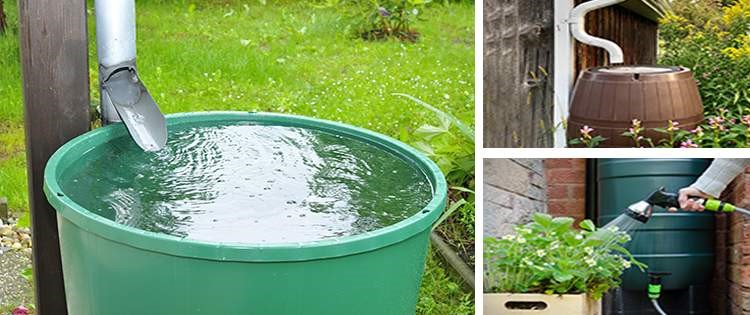
This DIY project is the best way to legally collect rainwater NO MATTER where you live. Get chlorine-free water, cut down on your water bills, and have enough for an emergency situation or to water your garden. Read More Here...
Comparing Raw Leaf vs. Commercial Gel
To help visualize why the garden approach differs so much from the retail one, consider this comparison of the two methods.
| Feature | Raw Garden Leaf | Bottled Store Gel |
|---|---|---|
| Main Ingredient | 100% Pure Aloe Gel | Often Water or Alcohol |
| Enzyme Activity | Fully Active (Living) | None (Heat Processed) |
| Shelf Life | 7-10 Days (Refrigerated) | 2-3 Years |
| Additives | None | Dyes, Fragrance, Thickeners |
| Cost | Free (Self-Replenishing) | $5 – $15 per bottle |
Gardener’s Best Practices for Potent Plants
If you want the most “medicine” in your leaves, you need to treat the plant like the desert dweller it is. The most common way people kill an Aloe is through kindness—specifically, overwatering. These plants store moisture in their leaves (that’s the gel!), so they don’t need much from the soil. I always wait until the top two inches (5 cm) of soil are bone-dry before giving them a deep drink.
The soil itself must be gritty. I use a mix of 50% potting soil and 50% coarse sand or perlite. This ensures that water moves quickly past the roots. If an Aloe sits in “wet feet,” the roots will rot, and the gel inside the leaves will become thin and watery rather than firm and nutrient-dense.
Lighting is the final piece of the puzzle. While they love sun, a sudden move from a dark corner to 100-degree direct sunlight can cause the leaves to “sunburn,” turning them a dusty orange-brown color. They prefer bright, indirect light. If you grow them indoors, a south-facing window is usually the best spot to keep them plump and productive.
Advanced Storage and Stabilization
If you find yourself with a surplus of leaves—perhaps after a storm or a major pruning—you can extend the life of your raw gel. The best method I have found is to blend the clear gel chunks into a liquid and pour them into silicone ice cube trays. Once frozen, pop the cubes into a freezer-safe bag. These cubes will stay potent for up to a year and are the perfect size for rubbing directly onto a fresh sunburn.
For those who want a refrigerated gel that lasts more than a few days, you can add natural stabilizers. Adding 500mg of Vitamin C powder (ascorbic acid) and 400 IU of Vitamin E oil for every cup of gel can extend the refrigerated life to nearly two months. These additives don’t just preserve the Aloe; they also add their own skin-healing benefits to the mix.
Always store your gel in dark glass containers. Light is another enemy of the active compounds in Aloe. A clear jar sitting on a sunny windowsill will degrade the gel much faster than a brown glass jar tucked away in the back of the fridge.
Real-World Scenario: The Kitchen Burn
Imagine you are pulling a tray of biscuits out of the oven and your thumb brushes the hot rack. A red, throbbing mark appears instantly. Instead of digging through a cluttered medicine cabinet for a tube of expired ointment, you walk to the porch and snip a small 2-inch (5 cm) piece from the tip of an Aloe leaf.
You slice the piece open like a book, revealing the glistening, cool interior. Because the plant is a “self-sealer,” the wound on the parent plant will dry and close up by tomorrow morning. You press the cool gel directly onto the burn. Within seconds, the “heat” feels like it is being sucked out of your skin.
The bradykinase in the gel starts reducing the swelling, while the acemannan begins the work of protecting the damaged cells. You don’t have to worry about chemical dyes or artificial fragrances irritating the damaged tissue. By the next morning, the redness has faded, and the pain is a memory. That is the practical power of the living pharmacy.
Final Thoughts
Tending to an Aloe plant is one of the most rewarding things a gardener can do for their household. It bridges the gap between the soil and the medicine cabinet, offering a level of purity that a factory simply cannot provide. While the convenience of a bottle is tempting, it cannot compare to the 200 active compounds found in a leaf you grew with your own hands.
Start small with one or two plants in terra cotta pots. Observe how they react to the light in your home and the rhythm of your watering. Soon, you will have a thriving supply of raw gel that is ready whenever life’s minor scrapes and burns occur.
I encourage you to experiment with the raw leaf and see the difference for yourself. Once you experience the cooling, enzymatic action of garden-fresh Aloe, you will likely never look at that bright green bottle the same way again. It is a simple step back toward a more natural, effective way of caring for ourselves.