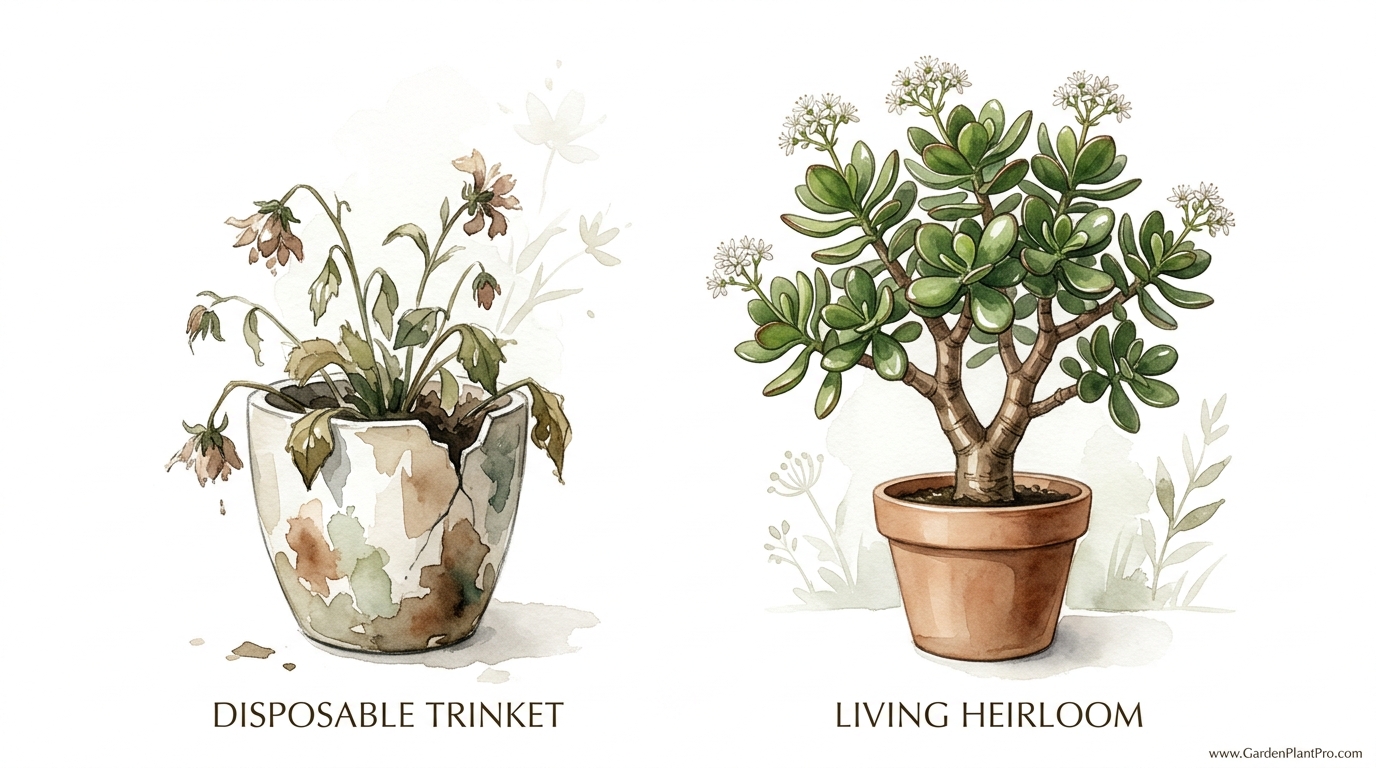
Most people treat Jade plants like temporary desk decor, but with one simple environmental shift, they can actually outlive your house. Are you growing a plant that will be in the trash by next year, or a living piece of history? Most Jade plants stay ‘stuck’ in their juvenile phase because of how we pot them. Here is how to trigger that thick, woody trunk growth and build a legacy plant that your grandkids will fight over.
Walking into a greenhouse and seeing a Jade plant (Crassula ovata) with a trunk the size of a forearm is a transformative experience for any gardener. It shifts your perspective from seeing a plant as a disposable trinket to viewing it as a living heirloom. These succulents are native to the rocky hillsides of South Africa and Mozambique, where they have evolved to withstand harsh droughts and intense sun for decades. In the home, however, they often suffer from “eternal youth”—staying thin, leggy, and fragile because we treat them like tropical houseplants rather than the rugged desert survivors they are.
Building a 50-year Jade isn’t about secret chemicals or expensive equipment. It is about understanding the slow, rhythmic pulse of the plant’s life cycle. You are essentially acting as a sculptor, using light, water, and steel shears to guide a soft succulent into a structural masterpiece. When you get the conditions right, the green, fleshy stems begin to develop a rough, corky bark that mimics the appearance of an ancient oak tree. This process, while slow, is incredibly rewarding as you watch a 10-inch (25 cm) cutting transform into a 3-foot (91 cm) architectural wonder over the coming years.
Jade Plant Care For 50 Year Longevity
The secret to a Jade plant that survives for half a century lies in its structural integrity. A “legacy” Jade is characterized by a thick, stable main trunk and a well-balanced canopy that doesn’t collapse under its own weight. In the wild, these plants can reach heights of up to 10 feet (3 meters), but in a pot, we aim for a compact, sturdy form. Longevity is a direct result of avoiding the “big three” killers: root rot from overwatering, structural failure from lack of light, and the exhaustion that comes from improper seasonal cycles.
To reach the 50-year mark, you must transition your mindset from “keeping it alive” to “building a foundation.” This means prioritizing root health and trunk thickness over rapid vertical growth. A plant that grows 6 inches (15 cm) in a year but has a thin, watery stem is far more likely to die than one that grows 1 inch (2.5 cm) but adds significant girth to its base. Think of it like building a house; you don’t put the roof on until the frame is solid. By providing the right “stressors” in a controlled environment, you trigger the plant’s natural defense mechanism to strengthen its core.
Environmental consistency is the final pillar of longevity. While Jades are tough, they thrive on a predictable rhythm. This involves a vigorous growing season in the spring and summer, followed by a cool, dry “rest” period in the winter. Mimicking these natural cycles prevents the plant from becoming physically exhausted and encourages the development of the “woody” appearance gardeners crave. A 50-year-old Jade isn’t just a plant; it is a record of every season it has endured, stored in the rings of its ever-thickening trunk.
Understanding the “Woody” Transformation
One of the most common questions is how to get that brown, bark-like texture on the stems. This isn’t actually true wood in the botanical sense—Jade plants are succulents, not trees. Instead, it is a process of maturation where the outer epidermis of the stem hardens and develops a corky layer. This usually begins once a branch reaches a certain age or is subjected to enough weight and light exposure. By removing lower leaves and pruning the canopy, you force the plant to direct its energy into these “structural” tissues, accelerating the look of an ancient specimen.
The Woody Trunk Protocol: How to Build a Legacy
Triggering thick trunk growth is a deliberate process of “controlled restriction.” If you give a Jade plant a massive pot and unlimited water, it will grow tall and floppy as it tries to expand its territory. To get a thick trunk, you must do the opposite. You want the plant to feel secure but slightly “squeezed,” which encourages it to reinforce its existing structure rather than just reaching for the ceiling.
Step 1: The Small Pot Strategy. Start by keeping your Jade in a pot that looks slightly too small for it. Succulents generally prefer to be somewhat root-bound. When the roots hit the edges of the pot, the plant receives a biological signal to stop expanding horizontally and start “bulking up.” A heavy terracotta pot is ideal here, as it provides the weight needed to counterbalance a top-heavy plant while allowing the soil to breathe through its porous walls.
Step 2: Pruning for Thickness. This is the part that scares most beginners. To make a trunk thicker, you have to cut the top off. When you prune the growing tip of a branch, the plant’s growth hormones (auxins) are redirected. Instead of pushing upward, the energy flows into the existing stem and into the dormant buds lower down. Aim to prune in the early spring just as the plant wakes up. Never remove more than 20% to 30% of the total foliage at once, as the plant needs those leaves to photosynthesize and fuel its recovery.
Step 3: Light Stressing. Light is the primary driver of trunk diameter. A Jade in low light will always have a thin, weak stem because it is “stretching” (etiolating) to find sun. For a legacy plant, you need 6 to 8 hours of bright, direct light daily. If you live in a northern climate, a south-facing window is non-negotiable, and you may need to supplement with a high-quality LED grow light during the winter months. The “red stress” you see on the edges of the leaves is a good sign—it means the plant is getting enough energy to build dense, strong tissues.
Pruning Techniques for Architectural Shape
- The Pinch Method: Use your fingernails to pinch off the tiny new leaves at the very end of a branch. This encourages the branch to split into two, creating a bushier canopy.
- Node Targeting: Look for the rings (nodes) on the stem. Always cut about 1/4 inch (6 mm) above a node. New growth will emerge from that ring.
- Bottom-Up Cleaning: As the plant grows, remove the bottom-most leaves on the main stem. This exposes the “trunk” to light and air, encouraging the bark-like skin to form faster.
The Perfect Environment: Soil, Water, and Air
If the pruning protocol is the “gym” for your Jade, then the environment is its diet. You cannot build a 50-year plant in standard “indoor potting soil.” Most commercial mixes are designed to hold water, which is the exact opposite of what a Jade needs. Over time, heavy soil compacts, choking the roots and leading to a slow, invisible death. For longevity, you need a “gritty mix” that prioritizes drainage and aeration above all else.
A professional-grade Jade mix usually consists of 1 part organic matter (like coco coir or compost) and 2 parts inorganic grit (like perlite, pumice, or fine lava rock). This ensures that when you water the plant, the moisture flows through the root zone in seconds, leaving the roots damp but never “swimming.” Oxygen is just as important as water for root health; a gritty mix allows the roots to “breathe,” preventing the anaerobic conditions that cause rot.
Watering should follow the “Soak and Dry” method. Do not give your Jade a “sip” of water every few days. This leads to shallow root systems. Instead, wait until the soil is bone-dry all the way to the bottom of the pot. Then, take the plant to the sink and drench it until water pours out of the drainage holes. This mimics the heavy downpours of its native habitat and encourages deep, strong root growth. In the winter, when the plant is dormant, you might only water once every 4 to 6 weeks.
| Factor | Summer (Growing Season) | Winter (Dormancy) |
|---|---|---|
| Temperature | 65°F to 80°F (18°C – 27°C) | 50°F to 60°F (10°C – 15°C) |
| Watering | Every 2-3 weeks (when dry) | Every 4-6 weeks (minimal) |
| Light | 6-8 hours direct/bright indirect | 4-6 hours (supplemental suggested) |
| Fertilizer | Monthly (balanced 10-10-10) | None |
Benefits of the “Legacy” Approach
Choosing to grow a Jade for the long haul offers more than just a beautiful plant. It provides a sense of continuity in a fast-paced world. Many gardeners find that their Jade becomes a “silent witness” to their lives, growing alongside their children and moving with them from house to house. Because Jades are so easily propagated from a single leaf, a 50-year-old plant can eventually become a “mother tree” for dozens of other plants, allowing you to share a literal piece of your garden’s history with friends and family.
From a practical standpoint, a thick-trunked Jade is also much easier to care for than a leggy, juvenile one. As the trunk matures and stores more water and nutrients, the plant becomes increasingly resilient. An old Jade can often survive a missed watering or a temporary drop in temperature that would kill a younger plant. It becomes an “anchor” in your collection—a reliable, low-maintenance centerpiece that requires very little daily attention once its foundation is set.
Finally, there is the aesthetic value. A well-maintained Crassula ovata is essentially a natural bonsai. It possesses an inherent balance and grace that “disposable” plants simply cannot match. Whether it’s the classic green variety, the variegated ‘Tricolor,’ or the tubular leaves of the ‘Gollum’ Jade, a mature specimen commands attention in any room. It stops being “just a plant” and starts being furniture—or art.
Challenges and Common Mistakes
The biggest hurdle to a 50-year Jade is the “Kindness Trap.” Many well-meaning gardeners kill their plants by giving them too much of what they *think* they need. The most common error is overwatering. Because the leaves are thick and succulent, they store vast amounts of moisture. If the soil stays wet for more than a few days, the roots begin to suffocate and rot. This often manifests as the plant suddenly dropping green, healthy-looking leaves, or the stem feeling “mushy” at the soil line.
Another frequent mistake is insufficient light. People often place Jades on coffee tables or bookshelves far from windows. In these conditions, the plant will “stretch,” creating long gaps between the leaves. This is physically exhausting for the plant and creates a weak structure that will eventually snap under its own weight. If your Jade doesn’t have a compact, tight cluster of leaves at the ends of its branches, it is crying out for more sun.
DIY PROJECT: Collect rainwater no matter where you live...
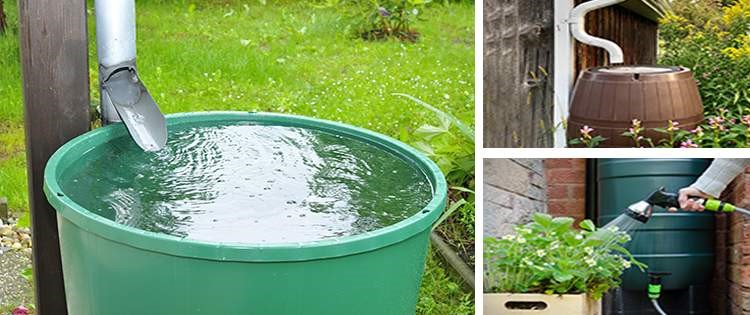
This DIY project is the best way to legally collect rainwater NO MATTER where you live. Get chlorine-free water, cut down on your water bills, and have enough for an emergency situation or to water your garden. Read More Here...
Lastly, gardeners often fail to acclimate their plants when moving them. If you decide to put your Jade outside for the summer (which is great for growth!), you cannot move it from a dark corner directly into full sun. The leaves will “sunburn,” turning white or brown and potentially falling off. Always transition the plant slowly over 10 to 14 days, starting with an hour of morning sun and gradually increasing its exposure.
Limitations and Realistic Constraints
While Jades are incredibly hardy, they are not invincible. Their primary limitation is cold tolerance. Being from southern Africa, they have zero defense against freezing temperatures. A single night below 32°F (0°C) can turn a 20-year-old specimen into a bag of mush. If you live in a region with hard winters, you must have a plan for bringing the plant indoors well before the first frost. Ideally, bring it in once night temperatures consistently drop below 50°F (10°C).
Size can also become a limitation. A 50-year-old Jade can be incredibly heavy. A large specimen in a ceramic pot can easily weigh 50 to 100 pounds (22-45 kg). This makes repotting a two-person job and limits where you can safely place the plant. You must ensure that any shelving or tables used to display a legacy Jade are structurally sound enough to handle the increasing weight of the moisture-filled trunk and leaves.
Finally, Jades are slow. This is not the plant for someone who wants an “instant garden.” You are working on a timeline of years and decades. If you are looking for rapid gratification, a Jade will likely frustrate you. However, for the patient gardener, this slow pace is exactly what makes the plant so special—it forces you to slow down and match your rhythm to the natural world.
Advanced Considerations for Serious Growers
For those who want to take their Jade to the “master” level, consider the art of root pruning. Every 4 to 5 years, when you repot your mature Jade, you can carefully trim back about 1/3 of the outer root mass. This prevents the plant from becoming excessively root-bound and encourages the growth of new, vigorous “feeder roots.” When combined with canopy pruning, this keeps the plant small enough to stay in a manageable pot while still allowing the trunk to thicken indefinitely.
You might also explore seasonal temperature “dips” to trigger flowering. Older Jade plants produce beautiful clusters of star-shaped white or pink flowers in the winter. To get them to bloom, the plant needs a period of cool nights (around 55°F / 13°C) and long, dark nights starting in the autumn. Restricting water during this time further stresses the plant into “survival mode,” which often triggers a spectacular floral display.
Consider the soil chemistry as well. While Jades aren’t heavy feeders, they do benefit from a low-nitrogen fertilizer. Too much nitrogen encourages soft, sappy growth that is prone to pests like mealybugs. A fertilizer with a higher phosphorus and potassium count (like a 5-10-10 or a specific cactus formula) will support structural strength and root development over sheer leaf volume.
A Realistic Scenario: The 10-Year Milestone
Imagine you start with a 6-inch (15 cm) cutting today. You plant it in a 4-inch (10 cm) terracotta pot with a gritty mix. For the first two years, you do nothing but water it when dry and let it sit in your sunniest window. By year three, it’s a foot tall (30 cm) but looks a bit “leggy.” You take the plunge and prune the top 3 inches (7.5 cm) off.
By year five, that single prune has resulted in four main branches. The base of the stem has turned from bright green to a light tan color and is now an inch (2.5 cm) thick. You move it to an 8-inch (20 cm) pot. By year ten, you have a 2-foot (60 cm) tall “tree.” The trunk is as thick as a soda can, and the canopy is so dense you can’t see the stems through the leaves. It has survived three house moves and one accidental “drought” when you went on vacation for a month. This is no longer a plant; it is a member of the family.
Final Thoughts
Growing a Jade plant for 50 years is a masterclass in the power of “benign neglect.” We live in a world that demands constant attention and rapid results, but the Jade asks for the opposite. It asks for a sunny spot, a well-drained home, and the occasional haircut. In return, it offers a level of stability and beauty that few other living things can provide. It is a slow-motion conversation between you and nature, played out over decades.
Don’t be afraid to make mistakes. Jades are incredibly forgiving. If you overwater it and the roots rot, you can almost always cut off a healthy branch, let it dry for a week, and start the whole process over. The most important thing is to start. Get that first cutting, find your sunniest window, and begin building your legacy. Future generations will thank you for the living history you’re starting today.
If you’ve mastered the Jade, you might find yourself curious about other long-term gardening projects. Concepts like soil health restoration, permanent garden planning, or even the slow art of composting all tap into the same “legacy” mindset. Gardening isn’t just about what we grow this season; it’s about the landscape we leave behind for those who come after us.