
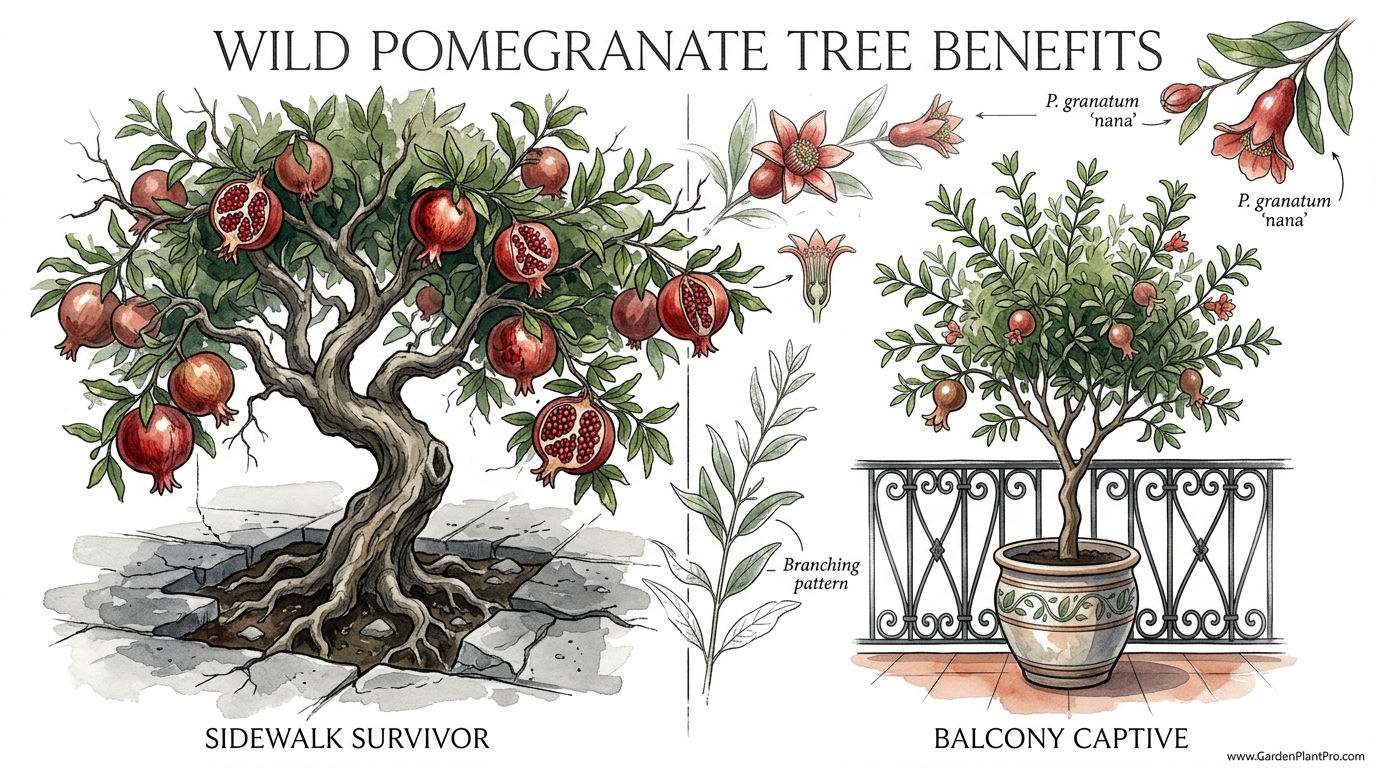
Why does the tree growing in a literal crack in the sidewalk produce more antioxidants than the one in the $100 designer pot? We treat our garden pomegranates like royalty, but the ‘feral’ trees in the alleyways are actually winning the nutrition game. Discover why a little urban struggle creates the sweetest, healthiest harvest.
I have spent forty years watching the seasons turn from my back porch, and if there is one thing the soil has taught me, it is that comfort is the enemy of character. In our gardens, we coddle our plants with balanced fertilizers, precise irrigation, and premium mulch. We essentially put them in a retirement home before they have even had a chance to work. Meanwhile, that scruffy pomegranate tree growing behind the abandoned gas station is fighting for every drop of water, pushing its roots through compacted gravel and breathing in city exhaust. It looks rough, sure, but that struggle is exactly what makes its fruit a nutritional powerhouse.
When a plant is stressed, it does not just give up. It adapts by producing a complex cocktail of secondary metabolites—compounds like polyphenols and anthocyanins—to protect itself from UV rays, pests, and drought. In the gardening world, we call this hormesis. It is the biological equivalent of “what doesn’t kill you makes you stronger.” For us, those survival chemicals are the very antioxidants we pay top dollar for at health food stores. If you have ever wondered why a sidewalk survivor tastes more “intense” than a store-bought ‘Wonderful’ variety, you are tasting the plant’s will to live.
Wild Pomegranate Tree Benefits
Wild or feral pomegranates, scientifically known as Punica granatum, are the ancestors and runaway cousins of the large, sweet fruits we see in the supermarket. While we usually think of “wild” plants as living in pristine forests, many of the most potent specimens are actually feral trees found in urban alleyways or along old farm boundaries. These trees are often escapees from old homesteads or have grown from seeds dropped by birds, reverting over generations to a hardier, more resilient state.
The primary benefit of these wild-type trees is their extraordinary antioxidant capacity. Research has shown that the peel, juice, and seeds of wild pomegranates often contain significantly higher levels of total phenolics and tannins compared to commercial cultivars. In many cases, the antioxidant activity measured by DPPH (2,2-diphenyl-1-picrylhydrazyl) radical scavenging is much more pronounced in these rugged survivors because they lack the “safety net” of regular watering and fertilization.
Beyond the chemistry, these trees offer a level of genetic hardiness that is hard to find in nursery stock. They are naturally resistant to many local pests and can handle temperature swings that would kill a pampered balcony captive. In a world where our climate is becoming more unpredictable, these feral genetics are a literal goldmine for any gardener looking to grow a “no-input” food source that actually thrives on neglect.
The Science of Environmental Stress (Hormesis)
To understand why the sidewalk tree is “better,” we have to look at how plants allocate their energy. A plant in a designer pot has everything it needs, so it puts its energy into growing large leaves and watery, sugary fruit. This is great for the plant’s immediate comfort, but it results in a “dilution effect” where the nutrients are spread thin. A stressed tree, however, cannot afford to be lazy. It produces phytoalexins—defensive chemicals that act as the plant’s immune system.
These chemicals include:
- Anthocyanins: The pigments that give the fruit its deep red hue. They protect the plant from high-intensity light and oxidative stress.
- Punicalagins: Massive antioxidant molecules found almost exclusively in pomegranates that help the tree manage drought.
- Ellagitannins: Astringent compounds that discourage insects from eating the fruit before the seeds are mature.
When you eat a fruit from a tree that has survived a 100°F (38°C) heatwave with no help from a garden hose, you are consuming the very molecules that allowed that tree to survive. This concept of xenohormesis suggests that by eating stressed plants, we actually “borrow” some of their stress-resistance signals, which may improve our own cellular health and longevity.
Nutritional Breakdown: Wild vs. Cultivated
If we were to put a feral pomegranate up against a standard garden variety on a lab bench, the differences would be stark. While the garden variety would win on size and sugar content, the wild-type fruit usually wins on density. In many studies, wild pomegranate juice has been found to have 20% to 50% more Vitamin C (ascorbic acid) than its cultivated counterparts. This is likely because Vitamin C is a front-line antioxidant used by the plant to mitigate cellular damage from environmental pollutants and UV exposure.
| Feature | Cultivated (Garden) | Wild / Feral (Sidewalk) |
|---|---|---|
| Fruit Size | Large (7-12 cm / 3-5 in) | Small to Medium (2-8 cm / 1-3 in) |
| Antioxidant Load | Moderate (Lower phenolic density) | High (Concentrated punicalagins) |
| Sugar vs. Acid | High Sugar, Low Acid | Moderate Sugar, High Acid |
| Peel Thickness | Thinner, more pliable | Thick, leathery, high tannin |
| Maintenance | Requires pruning, fertilizer, water | Zero input once established |
Urban Foraging: Is Sidewalk Fruit Safe?
Many folks worry that a tree growing in an urban environment is “dirty.” It is a valid concern—cities have lead in the soil from old paint and gasoline, and exhaust in the air. However, one of the hidden benefits of trees like the pomegranate is that they are “bio-filters.” Unlike leafy greens (like lettuce) or root vegetables (like carrots) which are very good at soaking up heavy metals and storing them in the parts we eat, fruit-bearing trees are much more selective.
Studies on urban foraging in cities like Berlin and San Diego have shown that the heavy metal content (like lead and cadmium) in tree fruits is often well below safety limits, even when the soil itself is contaminated. The tree’s vascular system acts as a series of filters. Most of the pollutants that do manage to enter the tree end up in the leaves or the bark, not the fruit. Furthermore, the thick, leathery husk of a pomegranate is a fantastic armor. It keeps airborne particulates on the outside. As long as you wash the fruit thoroughly before opening it, the “jewels” inside are usually cleaner than a conventional apple from a pesticide-heavy orchard.
Challenges and Common Mistakes
If you decide to go out and harvest from a feral tree, or even try to grow one from a “survivor” seed, there are a few pitfalls to avoid. The most common mistake is harvesting too early. Wild pomegranates do not “ripen” in the same way store fruit does. They don’t always turn deep red on the outside. A feral fruit might stay a dusty, brownish-yellow color even when it is perfectly ripe. If you pick it early, the acidity will be so high it will strip the enamel off your teeth.
Another mistake is over-watering a wild-genetics tree once you bring it into your garden. If you find a tough variety and plant its seeds or a cutting, don’t immediately start “pampering” it. You will cause the fruit to split. Pomegranates are notorious for cracking if they receive a sudden surge of water after a dry spell. The wild ones are used to the feast-and-famine cycle; if you want the high-antioxidant benefit, you have to maintain a bit of that “tough love” environment.
How to Process Feral Pomegranates
Since feral pomegranates are often much more tart and have harder seeds (arils) than the ‘Wonderful’ cultivar, you shouldn’t expect to eat them by the handful while sitting on the couch. They are best used as a functional ingredient rather than a fresh snack. I like to juice them using a manual press. Because the wild peel is so rich in tannins and polyphenols, a little bit of that “peel juice” getting into the mix actually increases the health benefits—just don’t overdo it, or it will be too bitter to drink.
In many cultures, these tart wild fruits are dried and ground into a spice called Anardana. This is a brilliant way to use “sidewalk survivors” that might be too sour for fresh juice. The high acid content makes it a perfect meat tenderizer and a bright, tangy addition to stews and chutneys. It also preserves those precious antioxidants for months without the need for refrigeration.
Integration with Other Practices
If you want to bring the spirit of the sidewalk survivor into your own backyard, consider deficit irrigation. This is a technique where you intentionally withhold water during certain stages of fruit development. For pomegranates, reducing water in the last few weeks before harvest can actually increase the sugar concentration and the antioxidant density. It’s essentially “simulating” the sidewalk crack environment in a controlled way.
You can also use feral trees as rootstock. If you have a fancy, weak cultivar that keeps getting root rot or failing in your soil, try grafting it onto a seedling grown from a feral tree in your neighborhood. The “alleyway” roots are already adapted to your local soil chemistry and fungal environment, giving the “pampered” top growth a much-needed shot of resilience.
Limitations and Practical Boundaries
While I am a huge fan of feral plants, we have to be realistic. A wild pomegranate will never produce 20 lbs (9 kg) of giant, soft-seeded fruit like a commercial tree. If your goal is to make a gallon of sweet juice for a party, the wild tree will disappoint you. Its arils are often smaller, the seeds are crunchier, and the yield per fruit is lower because the rind is so much thicker.
DIY PROJECT: Collect rainwater no matter where you live...
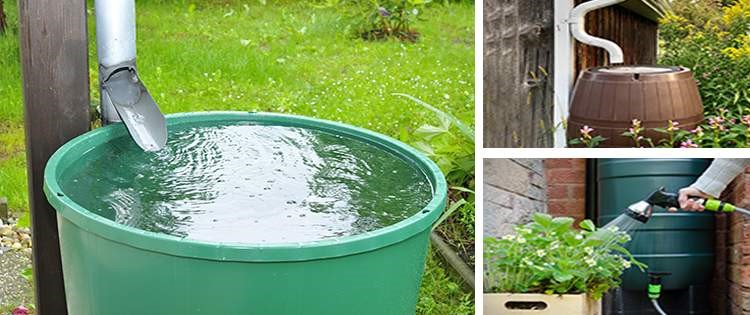
This DIY project is the best way to legally collect rainwater NO MATTER where you live. Get chlorine-free water, cut down on your water bills, and have enough for an emergency situation or to water your garden. Read More Here...
There is also the aesthetic trade-off. Feral trees are often “spiny.” Pomegranates naturally have thorns, but breeders have worked hard to remove them from garden varieties. A sidewalk survivor has reverted to its thorny self to protect its precious moisture and fruit from animals (and maybe the occasional curious gardener). If you plant one, be prepared for a bit of a fight during pruning season. Wear heavy gloves and expect a few scratches.
Practical Tips for the Urban Forager
- Location Matters: Avoid trees growing directly against high-traffic highways where brake dust is constant. Seek out trees in quiet alleyways or residential “easements” instead.
- The Tap Test: When checking for ripeness on a wild tree, tap the fruit. It should sound metallic or “tight.” If it feels soft or squishy, it’s likely overripe or has a pest issue.
- Square Shoulders: Look for fruits that have started to look “square” or angular rather than perfectly round. This means the arils inside are pushing against the skin, signaling peak ripeness.
- Wash Twice: Use a dilute vinegar wash or a drop of biodegradable soap to remove city grime from the outer husk before you cut it open. This ensures no contaminants from the “outside” get onto the “inside.”
Advanced Considerations: Breeding for the Future
For the serious practitioner, these wild pomegranates represent a breeding library. Our commercial fruit supply is dangerously narrow. If a new strain of pomegranate wilt or a specific pest comes along, the ‘Wonderful’ cultivar—which makes up the vast majority of commercial production—could be wiped out. By identifying and preserving feral trees that thrive in “impossible” conditions, we are keeping the genetic diversity of the species alive.
I often suggest to young gardeners that they should plant “wild” hedges. Instead of buying clones from a big-box store, gather seeds from five different feral trees in your city. Each seedling will be a unique individual. Some will be terrible, but one might just be the “Super Pomegranate” of the future—perfectly adapted to your specific neighborhood’s microclimate and packed with enough antioxidants to power a small army. This is how gardening used to be: a partnership with the wild rather than a conquest of it.
Examples and Scenarios
Let me tell you about a tree I know down on 4th Street. It grows out of a gap between a concrete retaining wall and a sidewalk. It gets zero supplemental water, even in our July heatwaves which regularly hit 105°F (40.5°C). The city prunes it once a year with what looks like a chainsaw, yet every October, it is loaded with small, ruby-red pomegranates. I once did a side-by-side taste test with a fruit from my own garden tree. My garden fruit was sweeter and easier to eat, but the 4th Street fruit had a “zing”—a complex, wine-like flavor that stayed on the tongue for ten minutes. That “zing” is the presence of high organic acids and tannins that my pampered tree simply didn’t bother to make.
Consider the “Apartment Balcony” scenario. If you are growing in a pot, you can still apply these lessons. Instead of using a standard potting mix that stays wet for days, mix in some local native soil and crushed gravel. Let the pot dry out significantly between waterings. You will notice the leaves get smaller and thicker, and the fruit—while smaller—will have a deep, intense color. You are effectively “training” your plant to be a survivor, and it will reward you with a more potent harvest.
Final Thoughts
The lesson of the wild pomegranate is that struggle is a biological necessity for excellence. When we remove every obstacle from a plant’s life, we also remove the triggers that create its most beneficial compounds. Whether you are foraging from a sidewalk survivor or trying to toughen up your own garden beds, remember that the “stress” you see is actually the engine of health.
Next time you walk past a scruffy, thorny pomegranate tree growing in a place it has no business being, don’t pity it. That tree is a master of its environment, a self-sufficient chemist producing some of the most powerful medicine on the planet. Grab a fruit (carefully), wash it well, and enjoy the tart, complex flavor of a life well-fought. It is a reminder that even in the middle of the concrete jungle, nature is busy creating something beautiful, hardy, and remarkably good for us.
If this approach to “wilder” gardening interests you, I highly recommend looking into soil health and native microbiology. Understanding how roots interact with the “tough” soils of the world will completely change how you look at your garden. It’s not just about what you put in; it’s about what you allow the plant to do for itself.