
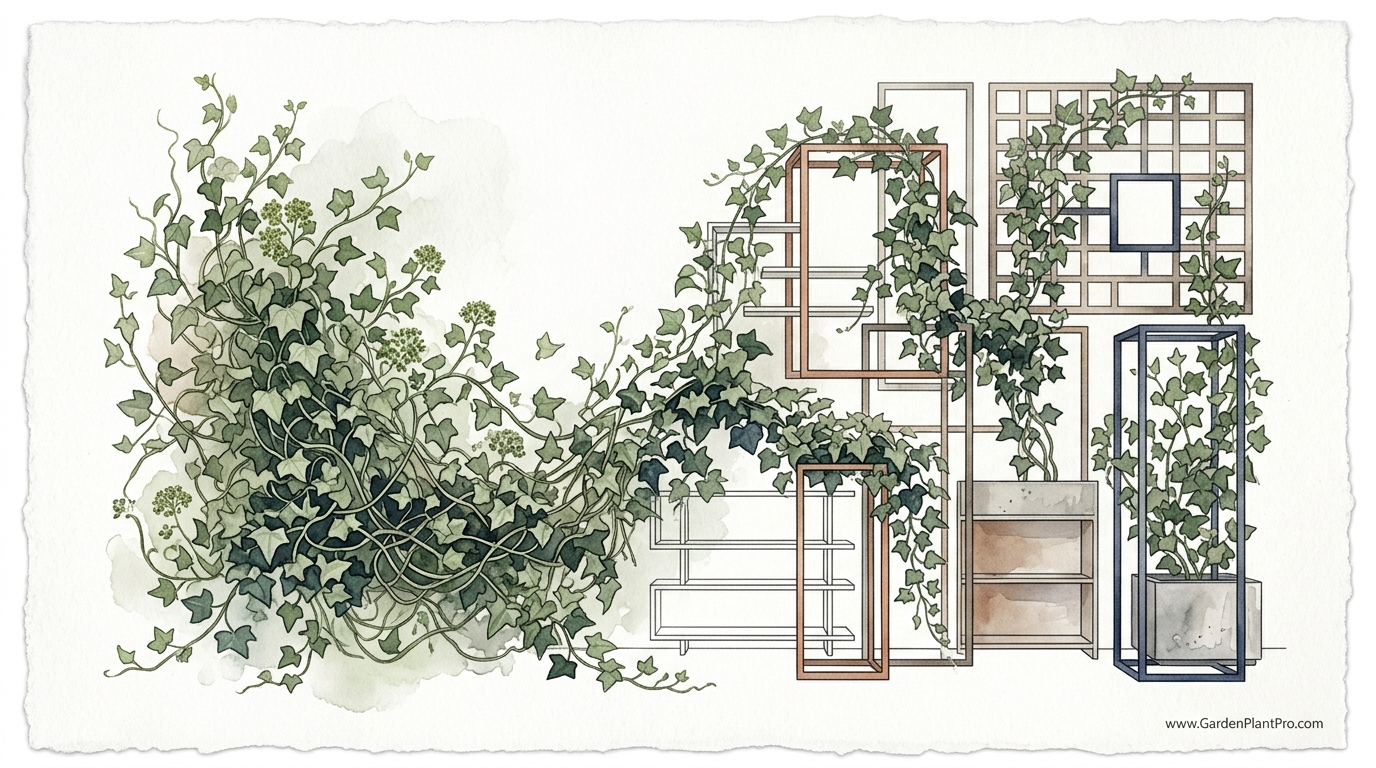
Why settle for a messy floor-crawler when your ivy could be a structured masterpiece? Most people buy English Ivy and just let it trail until it becomes a dusty, tangled mess. But when you apply a little bit of order to the chaos, it transforms from a ‘dorm room plant’ into a high-end architectural feature. Here is the secret to training your vines into a living masterpiece.
Years of gardening have taught me that English Ivy (Hedera helix) is one of the most misunderstood plants in the home. Many folks treat it like a set-it-and-forget-it decoration, only to wonder why it looks bedraggled after six months. The truth is that ivy is a climber at heart, possessing a natural ambition to reach for the sky using its tiny, glue-like adventitious roots. When we give it a structure to follow, we are simply speaking its language and giving it a purpose beyond just hanging around.
This guide is designed to help you move past the “tangled chaos” phase of ivy ownership. I want to show you how to use this plant as a structural element in your home, much like a piece of fine furniture or a curated art piece. Whether you are a beginner looking to spruce up a bookshelf or a seasoned gardener wanting to try your hand at formal indoor topiaries, there is a method here for you.
How To Style English Ivy Indoors
Styling English Ivy indoors is the process of moving the plant from a passive trailing state into an active, guided growth pattern. In the wild, ivy is a forest floor survivor that eventually finds a tree trunk and heads upward to find better light. Indoors, we recreate this vertical journey using wire frames, wooden trellises, or even adhesive wall clips. This shift in perspective turns a “messy” plant into a clean, “architectural” feature that adds height and sophistication to a room.
Most people recognize the standard green ivy found in hardware stores, but styling starts with choosing the right variety for your specific goal. Small-leafed cultivars like ‘Needlepoint’ or ‘Anita’ are the gold standard for intricate shapes because their tiny leaves do not obscure the form of the wire underneath. If you want a more romantic, lush look, variegated types like ‘Glacier’ or ‘Gold Child’ provide a splash of white or yellow that can brighten up a dark corner.
Real-world application of this styling often takes three forms. First, there is the formal topiary, where the ivy is trained around a sphere or hoop to create a classic, European-estate feel. Second, there is the “living wall” approach, where vines are guided along the edges of a window or across a mantle using nearly invisible supports. Third, there is the vertical pillar, often achieved with a moss pole, which allows the ivy to grow larger, more robust leaves as it climbs. Each of these styles serves to organize the plant’s energy and prevent the thin, stringy growth often seen in neglected hanging baskets.
How It Works: Step-by-Step Training Techniques
Training ivy is a marathon, not a sprint. The plant needs to be “introduced” to its support system while the vines are still flexible. If you wait until the stems are woody and thick, they may snap when you try to bend them. Here is the process I use for three common training methods.
Creating a Wire Hoop Topiary
A hoop topiary is perhaps the most elegant way to display ivy. You will need a sturdy wire—a heavy-duty coat hanger works in a pinch—and a pot of ivy with vines at least 12 to 24 inches (30 to 60 cm) long.
- Step 1: Bend your wire into a large circle, leaving about 6 inches (15 cm) of straight wire at each end to serve as “legs.”
- Step 2: Insert the legs deep into the soil, ideally reaching the bottom of the pot for maximum stability.
- Step 3: Separate your ivy vines into two groups. Take one group and gently wind it around the left side of the hoop.
- Step 4: Take the second group and wind it around the right side. Secure the ends at the top with a tiny piece of florist wire or a green twist-tie.
- Step 5: Pinch off the very tips of the vines once they reach the top. This encourages “axillary budding,” which means the plant will start growing side shoots, making the hoop look fuller over time.
Training Ivy Up a Wall
Adhesive clips are a modern gardener’s best friend for creating indoor “living wallpaper.” This method works best near a bright window where the plant can thrive while it climbs.
- Step 1: Place your ivy pot on the floor or a sturdy pedestal near the wall you wish to decorate.
- Step 2: Map out the path you want the vines to take. I usually suggest a diamond pattern or a simple vertical fan.
- Step 3: Stick clear adhesive wire clips to the wall every 10 to 12 inches (25 to 30 cm) along your mapped path.
- Step 4: Gently tuck the ivy vines into the clips. Do not pull them tight; give them enough slack to grow and expand.
- Step 5: Check the clips once a month. As the vines get heavier, you might need to add more clips or adjust the tension to prevent the plant from sagging.
The Moss Pole Method
Moss poles are ideal for those who want their ivy to look as natural as possible. The aerial roots will actually grow into the damp moss, which can lead to larger leaf development.
- Step 1: Buy or make a moss pole (PVC or wood wrapped in sphagnum moss).
- Step 2: Soak the pole in water until it is fully saturated before inserting it into the pot.
- Step 3: Secure the main stems to the pole using “U-shaped” florist pins. These pins hold the stem against the moss, encouraging the adventitious roots to take hold.
- Step 4: Keep the pole moist. I often use a spray bottle to mist the pole itself, not just the leaves, so the roots have a reason to stay attached.
Benefits of Trained English Ivy
Practical benefits go beyond just looking nice. English Ivy was a star performer in NASA’s famous Clean Air Study, proven to help filter toxins like formaldehyde, benzene, and trichloroethylene from the air. By training it vertically, you increase the surface area of the leaves exposed to the air, potentially improving this filtration effect in your living space.
Architectural order provides a psychological benefit as well. A study published in the Journal of Physiological Anthropology found that active interaction with indoor plants—like the pruning and winding required for a topiary—can reduce physiological and psychological stress. There is something meditative about spent five minutes every Saturday morning winding a stray vine back into its hoop.
From a design perspective, trained ivy acts as a “vertical accent.” Most houseplants are low-profile and take up horizontal space on tables. A 3-foot (90 cm) ivy topiary or a wall-trained vine draws the eye upward, making a small room feel taller and more spacious. It provides the lushness of a large tree without the massive footprint of a fiddle-leaf fig.
Challenges and Common Mistakes
Spider mites are the undisputed nemesis of the indoor ivy grower. These microscopic pests thrive in the warm, dry air typical of most homes, especially during the winter when the heater is running. You will notice them as fine webbing between the leaves or a “dusty” appearance on the undersides of the foliage. To avoid this, I make it a habit to give my ivy a “shower” in the sink once a month to wash away potential hitchhikers.
Overwatering is the second most common killer. Many beginners think that because ivy looks “thirsty” (with its thin stems), it needs constant water. In reality, ivy hates “wet feet.” If the roots sit in stagnant water for too long, they will succumb to root rot, characterized by black, mushy stems and yellowing leaves that fall off at the slightest touch. Always wait until the top 1 to 2 inches (2.5 to 5 cm) of soil are dry before watering again.
Choosing the wrong cultivar for the job can also lead to frustration. If you try to train a large-leafed “landscape” ivy onto a small 8-inch (20 cm) wire hoop, the leaves will look clunky and out of scale. Match the leaf size to the size of your structure. For small desktop topiaries, stick to miniature cultivars like ‘Duckfoot’ or ‘Midget’.
Limitations: When This Approach May Not Work
Light constraints are the biggest hurdle for English Ivy. While often marketed as a “low light” plant, it will not grow fast enough to cover a trellis or hoop in a dark hallway. In low light, the plant will become “leggy,” with long gaps of bare stem between the leaves. For successful training, you need bright, indirect light—think of a spot where you could comfortably read a book all day without turning on a lamp.
Structural concerns are also relevant if you are training ivy directly on walls. Outdoors, ivy can damage mortar and wood with its roots. Indoors, while the growth is slower, those same roots can leave “scars” or sticky residue on paint and wallpaper. If you are a renter, always use a trellis or a “stand-off” system that keeps the plant a few inches away from the wall surface.
Toxicity is a mandatory consideration. All parts of English Ivy are mildly toxic to both humans and pets if ingested. The sap can also cause skin irritation (dermatitis) for some people. If you have curious cats or toddlers, keep your trained ivy on high shelves or in rooms where they are not allowed to roam unsupervised. Always wear gloves when doing heavy pruning if you have sensitive skin.
DIY PROJECT: Collect rainwater no matter where you live...
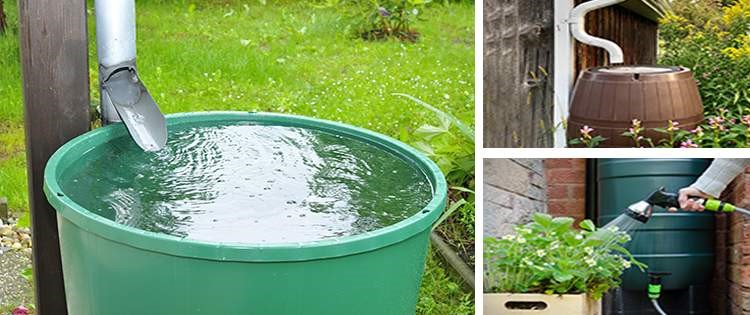
This DIY project is the best way to legally collect rainwater NO MATTER where you live. Get chlorine-free water, cut down on your water bills, and have enough for an emergency situation or to water your garden. Read More Here...
Comparing Ivy Varieties for Indoor Styling
Not all ivies are created equal. Choosing the right “player” for your architectural “team” makes the job much easier.
| Cultivar Name | Leaf Size / Shape | Best Use | Growth Rate |
|---|---|---|---|
| ‘Needlepoint’ | Tiny, bird-foot shape | Intricate topiaries | Moderate |
| ‘Glacier’ | Medium, white/grey variegated | Wall training / Mantles | Fast |
| ‘Gold Child’ | Medium, yellow borders | Bright vertical accents | Slow to Moderate |
| ‘Ivalace’ | Crinkled, glossy dark green | Pillars / Formal cones | Moderate |
Practical Tips for Ongoing Success
Consistent moisture is the name of the game for healthy ivy, but “moisture” does not mean “mud.” I recommend using a high-quality peat-based or coco-coir-based potting mix amended with about 20% perlite or pumice. This ensures that when you do water, the excess can drain away quickly, leaving the roots damp but aerated.
Temperature management is often overlooked. English Ivy is a temperate plant, not a tropical one. It actually prefers cooler temperatures, ideally between 50°F and 70°F (10°C to 21°C). If you place your ivy right next to a radiator or a drafty heater vent, it will likely dry out and drop leaves. A cool hallway or a bathroom with a window is often the perfect environment.
Feeding should be light. During the active growing season (spring and summer), use a balanced liquid houseplant fertilizer diluted to half-strength once a month. In the winter, the plant enters a semi-dormant state. Stop fertilizing during this time to avoid “salt burn” on the roots, which happens when the plant cannot process the nutrients as fast as you are providing them.
- Keep it clean: Dust the leaves once a month. Dusty leaves cannot “breathe” (photosynthesize) effectively.
- Rotate the pot: If your ivy is on a windowsill, turn the pot 90 degrees every week so the vines grow evenly on all sides.
- Prune with purpose: Don’t be afraid to cut off “runners” that are growing away from your structure. This redirects energy back into the main form.
Advanced Considerations: Going Beyond the Basics
Serious practitioners often move from simple wire hoops to 3D “stuffed” topiaries. This involves creating a wire cage in the shape of an animal or a geometric form and stuffing the center with damp sphagnum moss. You then plant the ivy around the base and pin the vines directly into the moss body. Over time, the ivy completely covers the frame, creating a living sculpture that looks like something out of a Victorian garden.
Propagation is another skill that allows you to scale your ivy collection for free. Ivy roots incredibly easily in water. Simply cut a 4-to-6-inch (10 to 15 cm) healthy stem, remove the bottom two leaves, and stick it in a glass of water. Within two to three weeks, you will see white roots emerging. Once those roots are an inch long, you can pot them up and start a new training project.
For those interested in “professional-grade” growth, supplemental lighting can be a game-changer. Standard LED “daylight” bulbs placed in a nearby lamp can provide the extra foot-candles needed to keep variegated ivies looking sharp during the dark winter months. Aim for at least 200 to 400 foot-candles (roughly 2,100 to 4,300 lux) for optimal growth.
Real-World Example: The “Floating” Ivy Mantle
I once helped a neighbor transform her fireplace mantle using a single large ‘Glacier’ ivy. We didn’t want the vines trailing down and blocking the firebox, so we used the architectural approach. We installed a thin wooden lattice painted the same color as the wall, extending 2 feet (60 cm) above the mantle.
After six months of guiding the vines and pinning them with florist wire, the ivy had created a lush, variegated “backdrop” for her family photos. Instead of a messy plant that she had to keep moving, she had a permanent, living piece of art. The maintenance was simple: a quick prune every two weeks to keep the vines within the lattice frame and a weekly check of the soil moisture. This demonstrates how a few dollars’ worth of materials and a bit of patience can turn a common plant into a high-end design feature.
Final Thoughts
Transforming English Ivy from a tangled floor-crawler into a structured masterpiece is one of the most rewarding projects an indoor gardener can undertake. It requires us to stop seeing the plant as a decoration and start seeing it as a partner in design. By providing a clear structure—whether a simple wire hoop or an elaborate wall display—you allow the plant to showcase its natural beauty in a way that feels intentional and clean.
Success with ivy comes down to the basics: bright light, cool air, and a watchful eye for pests. If you can master these, the training part is pure creativity. You aren’t just growing a plant; you are sculpting a living organism that will grow and change with you over the years.
Start small with a single hoop or a moss pole. As you get a feel for how the vines respond to your touch and how they grow in your specific home environment, you can move on to larger, more ambitious projects. The secret is simply to start. Your future architectural masterpiece is just a few clips and a bit of wire away. Experiment, have fun, and let those vines reach for the ceiling!