
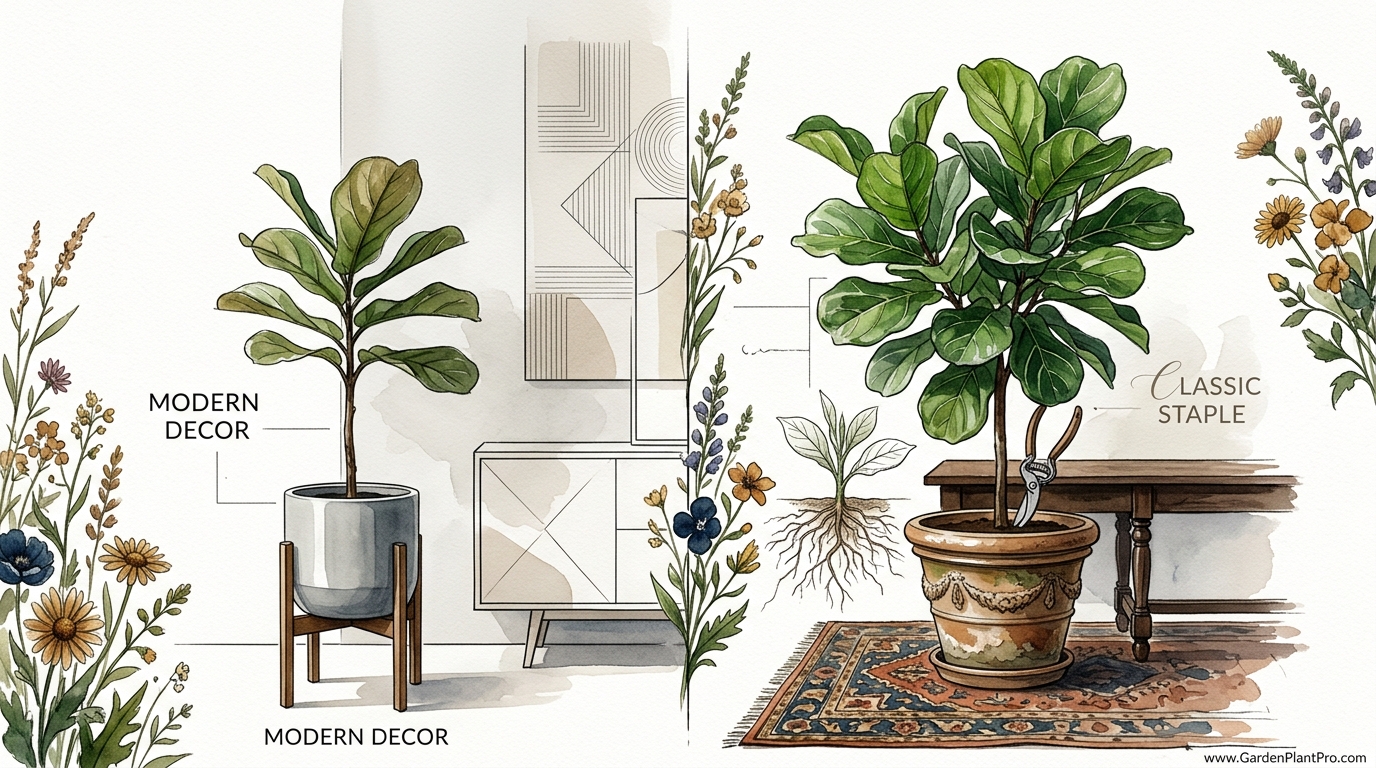
We traded the longevity of our plants for a minimalist aesthetic, and the Fiddle Leaf Fig is paying the price. In the 1970s, the Fiddle Leaf Fig wasn’t just furniture; it was a sun-loving giant. Today, we put them in dark corners and wonder why they drop leaves. Discover the ‘Then’ vs. ‘Now’ secrets to keeping these trees alive for decades.
I remember walking into my neighbor’s sunroom back in the summer of 1978. There it was—a Fiddle Leaf Fig that stood nearly eight feet tall, its leaves as broad as dinner plates and thick enough to feel like leather. Back then, we didn’t call them “statement pieces.” We called them trees. We knew that if you wanted a tree to thrive inside your house, you had to treat it like a living thing, not a sculpture. Somewhere along the way, we started prioritizing where the plant looks best in a photo over where the plant can actually breathe and eat.
Keeping a Ficus lyrata—the scientific name for our finicky friend—alive for thirty years isn’t about luck. It is about understanding the raw, wild nature of a plant that is designed to strangle other trees in the African rainforest. It is a beast of a plant, and when you learn to respect that power, it stops dropping leaves every time you look at it sideways. Let’s talk about how we can bridge that gap between the classic giants of the past and the modern staples of today.
Traditional Fiddle Leaf Fig Growth Secrets
To really “get” the Fiddle Leaf Fig, you have to look at where it came from. These trees are native to the lowland rainforests of Western and Central Africa, specifically regions like Cameroon and Sierra Leone. In their natural habitat, they don’t start in a pot. They often begin life as an epiphyte—a seed dropped by a bird high in the canopy of another tree. They send roots downward, wrapping around the host tree until they hit the ground, eventually outcompeting and “strangling” their host to take its place in the sun.
This history tells us three critical things about their “secrets” for growth. First, they are light-hungry. They are designed to fight their way to the top of the canopy to reach the brightest possible sun. Second, they love humidity. Rainforest air is thick and moist, far different from the bone-dry air of a climate-controlled modern living room. Third, their roots are aggressive but need oxygen. Because they start in the air, their roots are adapted to find moisture without being submerged in stagnant, heavy mud.
In the 1970s, many gardeners understood this intuitively because they had fewer “shortcuts.” They used heavy terracotta pots that breathed, they kept plants in drafty, humid sunrooms, and they weren’t afraid to let the sun hit the leaves. Today, we often use plastic liners inside decorative “baskets” with zero drainage and keep our homes at a constant, dry 70°F (21°C). If we want that vintage longevity, we have to bring some of that “wild” back into our care routines.
The “Banyan” Biology
Understanding that the Fiddle Leaf Fig is a member of the banyan group of figs is the real secret to its resilience. These trees are built for structural strength. When you see a Fiddle leaning or looking “leggy,” it is because it thinks it is still in the rainforest, searching for a host or a patch of light. By providing physical support or “shaking” the trunk—mimicking the wind—you encourage the plant to deposit more lignin in its trunk, making it thick and sturdy like the giants of old.
Understanding Light: The Real Food
The biggest mistake modern owners make is thinking of light as “decor.” Light is quite literally the food for a Fiddle Leaf Fig. Through photosynthesis, those massive leaves convert light into the energy required to maintain such a large surface area. If the light levels are too low, the plant will prioritize new growth at the top and shed the older leaves at the bottom because it simply cannot afford to keep them fed.
For a Fiddle to thrive long-term, you need to measure light in foot-candles or lux. Ideally, your tree wants between 400 and 800 foot-candles (roughly 4,000 to 8,000 lux) for at least six to eight hours a day. In practical terms, this means placing the plant directly in front of an unobstructed window. A south-facing window is usually the gold standard, though an east-facing window with that gentle morning sun is a close second. If you have a north-facing window, the light is often too weak to support a large tree without supplemental grow lights.
One common pitfall is the “corner” placement. If you place your tree five feet away from a window, the light intensity drops off exponentially. While it might look bright to your eyes, your plant’s leaves are starving. Move it closer. If you are worried about the leaves burning, remember that these trees grow in full sun in Africa. The trick is acclimation. If you move a plant from a dark nursery to a bright window overnight, it will scorch. If you move it six inches closer every few days, it will eventually handle that light like a champion.
The Physics of Watering and Drainage
Watering a Fiddle Leaf Fig is where most people lose the battle. We often hear “water once a week,” but that is a dangerous generalization. Your watering schedule should depend entirely on the light, temperature, and pot size. A plant in a bright south window in August will need twice as much water as that same plant in January when it is dormant.
The “soak and dry” method is the only way to ensure deep root health. Instead of giving the plant a cup of water every few days, you should wait until the top two inches (5 cm) of soil are completely dry. Then, take the plant to a sink or use a deep saucer and water it until it runs freely out of the drainage holes. This ensures that the entire root ball is hydrated and flushes out any salt build-up from fertilizers.
Never let the plant sit in a saucer full of water for more than thirty minutes. Standing water is the fastest way to trigger root rot, a fungal infection that turns the roots mushy and black. Once root rot sets in, the plant loses its ability to take up water, which leads to the confusing symptom of a plant that looks “thirsty” (drooping) even though the soil is soaking wet. If you see dark brown or black spots appearing in the center of the leaves, check the roots immediately.
Crafting the Perfect Soil Mix
Generic “all-purpose” potting soil is often too dense for a Ficus lyrata. Over time, it compacts, squeezing the oxygen out of the root zone and creating a swampy environment. A custom-mixed soil mimics the airy, organic-rich floor of a rainforest. If you want your tree to live for decades, you should consider mixing your own substrate or heavily amending a store-bought brand.
A reliable DIY recipe involves mixing equal parts of the following:
- Premium Potting Soil: Provides the base structure and some initial nutrients.
- Orchid Bark or Pine Bark: Creates large air pockets and mimics the woody debris of the forest floor.
- Perlite or Pumice: Ensures rapid drainage and prevents the soil from compacting over time.
- Horticultural Charcoal: Acts as a filter and helps prevent bacterial growth in the soil.
This “chunky” mix allows water to pass through quickly while retaining just enough moisture in the organic bits to keep the roots happy. It also ensures that the roots have constant access to oxygen, which is the primary defense against the fungi that cause root rot. When the soil is well-aerated, the plant can grow a massive, robust root system that supports a ten-foot canopy.
Advanced Shaping: Pruning, Pinching, and Notching
If you let a Fiddle Leaf Fig grow naturally indoors, it will often become one single, long stick reaching for the ceiling. To get that classic “tree” shape—a thick trunk with a branched, bushy top—you have to intervene. This is where many beginners get nervous, but pruning is actually vital for the plant’s health and structural integrity.
Pruning for Height and Branching
Pruning involves cutting the main stem to stop upward growth and force the plant to branch. When you snip the top of a stem, you remove the “apical bud.” This bud produces a hormone called auxin, which suppresses the growth of side branches. Once that bud is gone, the plant redirects its energy to “dormant” nodes lower down the stem. You should always prune just above a leaf node (the little bump where a leaf meets the stem) at a 45-degree angle. Spring and early summer are the best times for this, as the plant is in its active growth phase.
The Art of Notching
Notching is a more surgical way to encourage branching without losing height. If you have a bare spot on the trunk where you want a branch, you can make a small “V” shaped cut into the bark about 1/3 of the way through the stem, just above a dormant node. This disrupts the flow of auxins and can trick that specific node into sprouting a new branch. It only works about 50% of the time, but it’s a great way to “sculpt” your tree as it matures.
DIY PROJECT: Collect rainwater no matter where you live...
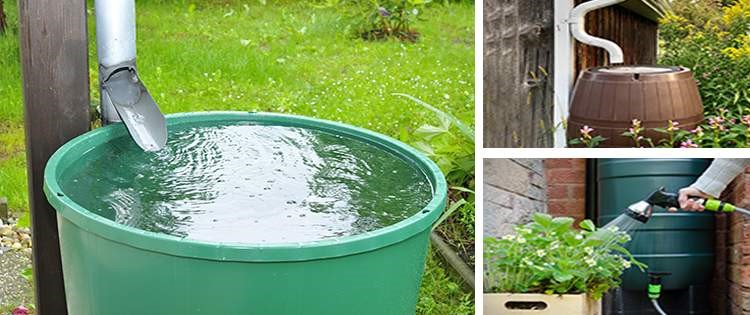
This DIY project is the best way to legally collect rainwater NO MATTER where you live. Get chlorine-free water, cut down on your water bills, and have enough for an emergency situation or to water your garden. Read More Here...
Pinching New Growth
Pinching is the most conservative method. When you see a new “bud” of leaves forming at the very tip of a branch, you can simply pinch it off with your fingers. This is less traumatic than a heavy prune and encourages the plant to fill out its existing branches rather than just getting taller. It’s the best way to maintain a “lollipop” shape once you’ve achieved your desired height.
Benefits of a Long-Term Fiddle Leaf Fig
Why put in all this effort? Beyond the obvious aesthetic value, a mature Fiddle Leaf Fig is a powerhouse for your indoor environment. These plants have massive leaves with thousands of tiny pores called stomata. They are incredibly efficient at filtering airborne toxins and releasing oxygen into your home. A single six-foot tree can significantly improve the air quality of a standard-sized room.
There is also a profound psychological benefit to keeping a plant alive for decades. In our “disposable” culture, a tree that grows with you—from your first apartment to your forever home—becomes a living history. It teaches patience, observation, and the rewarding discipline of consistent care. A thirty-year-old Fiddle Leaf Fig isn’t just a plant; it’s a family heirloom.
Common Challenges and Pitfalls
Even the best gardeners run into trouble with the “Drama Queen” of the plant world. Most problems with Fiddles are environmental, not biological. They hate change. If you move your tree to a different room, it might drop three leaves just to spite you. This is known as transplant shock or environmental stress.
One common mistake is over-fertilizing. While these trees need nutrients, especially during the growing season, too much nitrogen can burn the roots and cause the leaves to turn a sickly yellow-brown at the tips. Use a balanced liquid fertilizer with a 3-1-2 N-P-K ratio, and only apply it when you are already watering the plant. Never fertilize a dry plant, as the salts can “suck” moisture out of the roots, causing chemical burn.
Pests are another reality. Spider mites are the most common enemy. They are tiny, almost invisible spiders that thrive in dry air. If you see fine webbing between the leaves or little yellow speckles on the foliage, you have a mite problem. Wipe the leaves down with a mixture of water and a few drops of mild soap or neem oil. This not only kills the pests but also removes the dust that clogs the plant’s pores.
Maintenance and Long-Term Considerations
As your Fiddle grows, its needs will change. Every two to three years, the plant will likely become “root-bound,” meaning the roots have filled the entire pot and are starting to circle the bottom. You will notice the soil drying out much faster than usual, or you might see roots poking out of the drainage holes. This is the time to repot.
When repotting, only go up one size—about two inches (5 cm) wider than the current pot. If you put a small plant in a massive pot, the excess soil will hold too much moisture, leading to the dreaded root rot. During the repotting process, you can practice root pruning. If the roots are a tangled mess, use a sharp, sterile knife to shave off about 20% of the outer root ball. This stimulates the growth of new, fine “feeder” roots that are better at absorbing nutrients.
Keep the leaves clean. In the rainforest, rain washes away dust and debris. Indoors, dust accumulates, blocking sunlight and providing a home for pests. Use a soft, damp cloth to wipe each leaf once a month. Some people use a “leaf shine” product, but I recommend against it. These can clog the stomata. A simple mixture of water and a tiny bit of lemon juice or diluted milk is an old-school trick for making leaves glow without harming the plant.
Environmental Limits: When It May Not Work
It is important to be realistic. Fiddle Leaf Figs are tropical trees. If you live in a basement apartment with zero natural light and a heater that stays at 85°F (29°C) all winter, your Fiddle is going to struggle. They also cannot tolerate temperatures below 55°F (13°C). A single night of exposure to a cold draft from a window can cause massive leaf drop.
If your environment isn’t ideal, don’t force it. You might have better luck with a Ficus audrey or a Rubber Tree (Ficus elastica). These are cousins to the Fiddle but are significantly more forgiving of low light and inconsistent watering. Part of being a seasoned gardener is knowing which plants match your lifestyle and which ones will only bring you heartache.
Seasonal Integration: Winter vs. Summer
Your care routine must shift with the seasons. In the northern hemisphere, winter brings shorter days and dry, heated indoor air. This is the “danger zone” for Fiddles. You should stop fertilizing entirely during the winter and cut back on watering. The soil will take longer to dry out when the plant isn’t actively growing. Consider using a humidifier to keep the ambient moisture above 40%, which prevents the leaf edges from turning crispy and brown.
In the summer, the plant goes into overdrive. This is the time to be diligent with watering and feeding. If you have a protected patio or balcony that stays above 60°F (15°C) at night, you can even move your Fiddle outside for the summer. The “fresh air” and increased light can jump-start a stagnant plant, often leading to a flush of five or six new leaves in a single month. Just make sure it is in a shaded spot where it won’t get “sunburned” by the harsh midday rays.
| Factor | Standard Modern Care | Traditional Longevity Care |
|---|---|---|
| Light | Medium-low light in a corner. | Directly in front of a south/east window. |
| Soil | Store-bought “Potting Mix.” | Chunky DIY mix (Soil, Bark, Perlite). |
| Potting | Decorative pot with no drainage. | Terracotta or nursery pot with holes. |
| Watering | Set schedule (e.g., every Monday). | Based on soil moisture (Soak and Dry). |
| Shaping | Let it grow wild/leggy. | Pruning and notching for structure. |
Practical Tips for Success
- Rotate your plant: Every time you water, give the pot a quarter-turn. This ensures the tree grows straight instead of leaning toward the light.
- The Finger Test: Don’t trust a calendar. Stick your finger two inches into the soil. If it feels even slightly damp, wait another day.
- Shake the Trunk: Gently grasp the trunk and give it a “wiggle” for 30 seconds once a week. This mimics the wind and strengthens the tree’s internal structure.
- Use Lukewarm Water: Tropical plants hate cold shocks. Use water that is room temperature or slightly warm to avoid stressing the roots.
- Group Your Plants: Putting several plants together creates a “micro-climate” with higher humidity, which Fiddles love.
Advanced Consideration: Air Layering
If your tree has reached the ceiling and you are terrified of just “chopping” it, you can use a technique called air layering. This allows you to grow roots on a branch while it is still attached to the mother plant. You wound the stem, wrap it in damp sphagnum moss and plastic wrap, and wait about two to three months. Once roots are visible through the plastic, you can cut the branch off and plant it in its own pot. This is the safest way to “shorten” a massive tree because the “cutting” already has a root system before you ever make the final snip.
Example Scenario: The Revived Fiddle
Imagine a Fiddle Leaf Fig that was purchased two years ago. It has lost all its bottom leaves, leaving a “bare leg” and only four leaves at the very top. Most people would throw it away. Instead, a seasoned gardener would move it to a brighter window, repot it in a chunky soil mix, and notch the trunk in three places along the bare section. Within two months, those notches sprout new branches. By the following summer, the plant is no longer a “stick” but a thriving, multi-stemmed tree. That is the power of understanding the biology over the aesthetic.
Final Thoughts
Keeping a Fiddle Leaf Fig alive for the long haul isn’t about having a “green thumb.” It is about being a keen observer. These plants speak to us through their leaves—a yellow leaf means one thing, a brown spot another. When you stop looking at the plant as a piece of decor and start seeing it as a rainforest giant adapted to your living room, the “drama” disappears. You aren’t just managing a plant; you are maintaining a legacy.
Start small. Fix your light first, then your soil, then your watering. Don’t be afraid to prune when the time is right. If you give this tree the foundation it needs, it will reward you with decades of lush, green growth that transforms your home. Gardening is a conversation between you and the soil, and the Fiddle Leaf Fig is one of the most rewarding partners you can have in that journey.
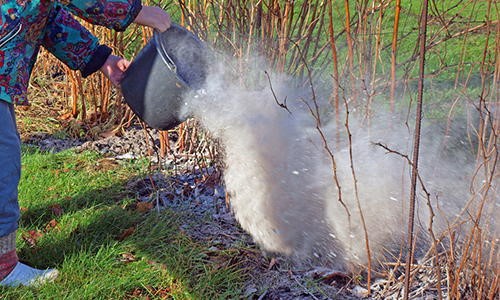
Do you have some charcoal in your house right now? We call charcoal a “miracle leftover” for anyone who wants to be a little more self-sufficient and cut costs. That’s because it can help you with so many different things around the house and garden. You can even use it to make an energy-free fridge. Read More Here...
I encourage you to take a close look at your tree today. Is it truly eating enough light? Is its soil airy or compacted? Small changes today can prevent the “heartbreak” of leaf drop tomorrow. Keep digging, keep learning, and let that tree reach its full, wild potential right in your living room.