
Are you planting a garden that dies every winter, or one that feeds your great-grandchildren? Most modern gardeners are stuck in a cycle of buying, planting, and replacing fragile shrubs. A mulberry tree is an investment in the next century. It requires zero fertilizer, survives droughts, and provides thousands of pounds of fruit for generations. Choose legacy over temporary trends.
I have spent many mornings leaning over my fence, talking to neighbors who are frustrated with their high-maintenance peach trees and finicky cherries. They ask me why my yard always looks so lush without the constant spraying and pruning. My answer is always the same: I stopped chasing the trendy, short-lived plants and started planting for the long haul. When you plant a mulberry, you are not just putting a stick in the ground; you are establishing a landmark.
This tree is a powerhouse of resilience. It is the kind of plant that laughs at a late frost and pushes through a summer dry spell that would shrivel a standard apple tree. If you want a garden that truly sustains itself and your family, you need to understand why the mulberry has earned its place as one of the most significant legacy trees in human history. Let’s walk through what makes this tree a backyard essential and how you can get one started in your own soil.
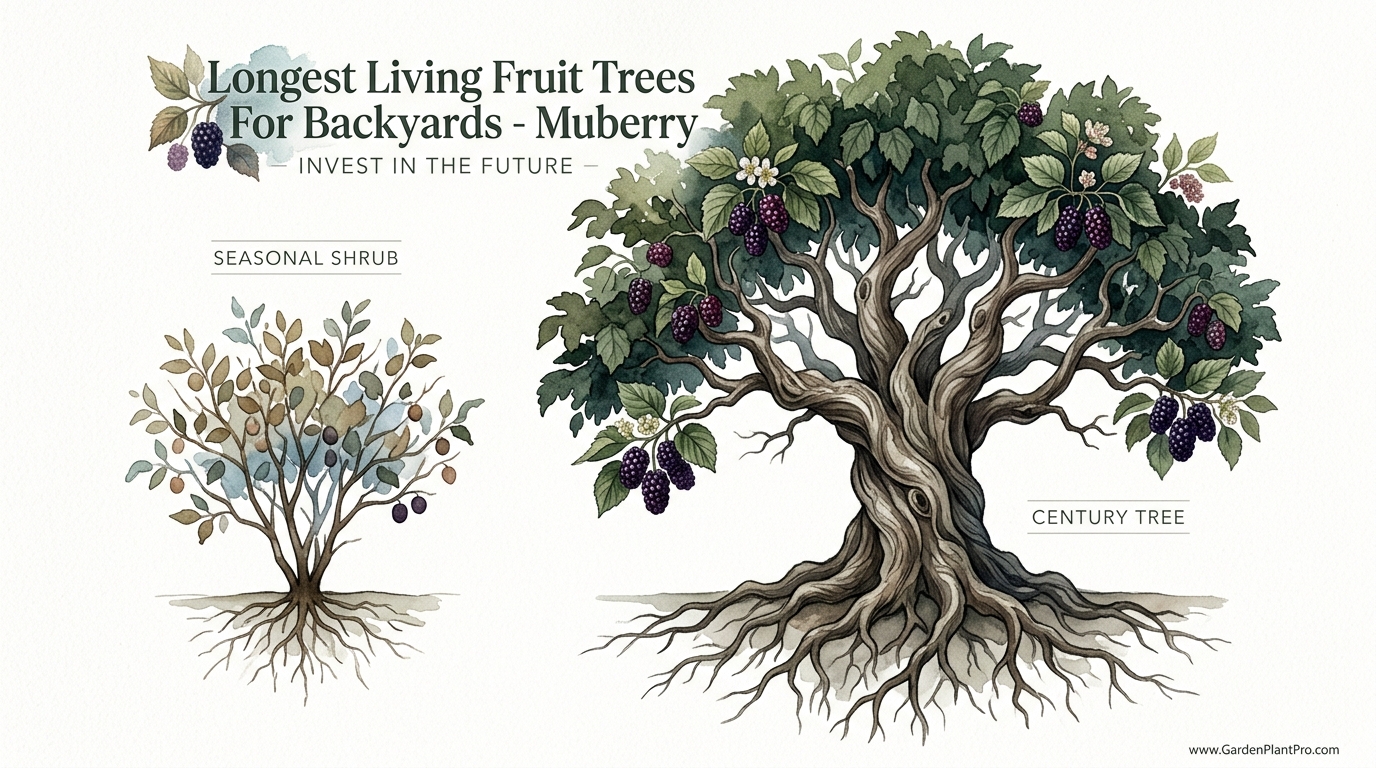
Longest Living Fruit Trees For Backyards – Mulberry
The mulberry, belonging to the genus Morus, is a deciduous tree that has been a staple of home gardens and ancient silk routes for thousands of years. While many modern fruit trees reach their peak at twenty years and fade by forty, certain mulberry species can live and remain productive for centuries. In fact, the black mulberry (Morus nigra) is known to live between 500 and 1,000 years in ideal conditions. Even the more common red and white varieties frequently outlive the gardeners who plant them, making them the ultimate choice for a legacy landscape.
Mulberries come in three primary “colors,” though the name actually refers to the color of the leaf buds rather than the fruit itself. You will find the Morus alba (White Mulberry), Morus rubra (Red Mulberry), and Morus nigra (Black Mulberry). Each has its own distinct personality, growth habit, and flavor profile. Historically, these trees were so valued that kings and emperors ordered their mass planting. King James I of England famously planted tens of thousands of them in an attempt to start a domestic silk industry, though he mistakenly ordered the black variety instead of the white ones that silkworms prefer. That mistake left a legacy of ancient, gnarled black mulberry trees across Britain that still bear fruit today.
In a backyard setting, the mulberry serves multiple roles. It is a rapid provider of shade, a champion of soil stabilization with its deep and wide-reaching root system, and a prolific producer of fruit that you simply cannot buy in a grocery store. Because the berries are so delicate and juicy, they do not survive shipping. This makes the mulberry an exclusive “homegrower’s prize.” If you want to taste a truly ripe mulberry, you usually have to stand under the tree yourself.
How the Mulberry Species Differ
Understanding the nuances between the species is the first step toward choosing the right tree for your specific goals. While they all belong to the same family, their life spans and fruit qualities vary significantly. Most of what you see growing wild in North America today is a hybrid, but the “pure” species still carry specific traits that matter to the long-term gardener.
The Black Mulberry (Morus nigra)
This is the king of the genus when it comes to longevity and flavor. Native to Western Asia, it is a slower-growing, gnarled tree that eventually forms a massive, spreading canopy. Its fruit is often described as the most complex—a perfect balance of sweetness and sharp acidity. A black mulberry tree can take 15 years to reach full production, but once it starts, it is a literal fountain of fruit for hundreds of years. If you are planting for your great-grandchildren, this is the one.
The Red Mulberry (Morus rubra)
The red mulberry is the native North American representative. It is a tough, hardy tree that can reach heights of 70 feet (21 meters). It loves the edges of forests and thrives in the rich, moist soils of the eastern United States. While it doesn’t live quite as long as the black mulberry—maxing out around 75 to 100 years—it is incredibly resilient to local pests and diseases. Its fruit is sweet and large, often appearing as a deep reddish-purple when fully ripe.
The White Mulberry (Morus alba)
Originally from China, this species was brought to the West for the silk industry. It is the fastest grower of the bunch, sometimes shooting up several feet in a single season. The fruit is typically sweeter and less acidic than the black or red varieties, sometimes described as “honey-sweet.” While it is the most adaptable and can thrive in poor soils, it is also the most likely to become invasive in certain regions. In some areas, it has hybridized so much with the native red mulberry that “pure” red mulberries are becoming rare.
Establishing Your Legacy: Planting and Site Selection
Success with a mulberry tree starts with thinking decades ahead. Because these trees can grow quite large and live for such a long time, where you put them matters more than how you treat them. You want to choose a spot where the tree can reach its full potential without interfering with your house, power lines, or underground pipes.
Sun and Soil Requirements: Mulberries are not particularly fussy, but they perform best in full sun. Aim for at least 6 to 8 hours of direct light to ensure maximum fruit production. They prefer deep, well-drained loamy soil, but I have seen them thrive in everything from sandy Florida soils to the heavy clays of the Midwest. The only thing they truly hate is “wet feet”—soil that remains waterlogged for days. If your spot is a swamp, consider building a small mound or choosing a different location.
Spacing for the Long Haul: If you are planting a standard size tree, give it at least 25 to 30 feet (7.5 to 9 meters) of space from other trees or structures. Their root systems are aggressive and shallow. They will find a leaky sewer pipe or lift a cracked sidewalk if given the chance. For smaller backyards, look into dwarf varieties like the ‘Gerardi’ or ‘Dwarf Everbearing’ which can be kept much smaller with pruning, sometimes as low as 6 to 10 feet (2 to 3 meters).
The Planting Process: The best time to plant is in the early spring or late fall when the tree is dormant. Dig a hole twice as wide as the root ball but no deeper. Avoid adding heavy fertilizers or manure directly into the hole; you want the tree to adapt to your native soil right away. Gently spread the roots out if they are circling in the pot. Once the tree is in the ground, water it deeply to settle the soil and remove air pockets. A thick layer of wood chips or organic mulch around the base—keeping it a few inches away from the trunk—will help retain moisture during those critical first two years.
Ongoing Care and Maintenance
One of the greatest joys of a mature mulberry tree is how little it asks of you. Once established, it is one of the most self-sufficient fruit trees you can own. However, a little bit of strategic care in the early years will help shape a stronger, more productive tree for the future.
Watering: During the first two years, your tree needs about 1 inch (2.5 cm) of water per week, especially during dry spells. This helps establish the deep root system that will eventually make the tree drought-tolerant. After it has survived two full summers in the ground, you likely won’t need to water it at all unless you are experiencing a severe, multi-month drought.
Pruning Strategies: You have two choices with mulberry pruning: let it go wild or keep it managed. If you want a majestic shade tree, only prune to remove dead, damaged, or crossing branches in the winter. If you want an easy-to-harvest fruit tree, consider “summer pruning.” By cutting back the new growth by half in July, you encourage the tree to bush out and keep the fruit within reach. Just remember that mulberries bleed a milky sap when cut, which is normal and helps the tree seal its own wounds quickly.
Fertilization: Most mulberries do not need regular fertilization if your soil is reasonably healthy. In fact, over-fertilizing with nitrogen can lead to a lot of leafy growth but very little fruit. If the tree looks stunted or the leaves are pale, a light application of a balanced organic fertilizer or a top-dressing of compost in early spring is all that is necessary. I prefer to let the falling leaves of the tree act as its own natural mulch and fertilizer over time.
The Bountiful Benefits of Growing Mulberries
Why choose a mulberry over an apple or a pear? The benefits go far beyond the fruit itself. When you look at the total value a mulberry brings to a backyard ecosystem, it is hard to find a better competitor.
DIY PROJECT: Collect rainwater no matter where you live...
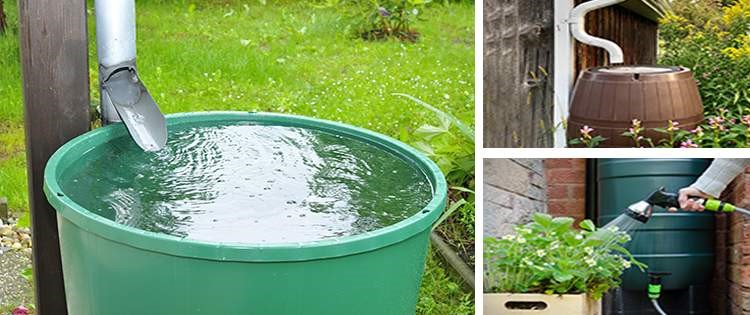
This DIY project is the best way to legally collect rainwater NO MATTER where you live. Get chlorine-free water, cut down on your water bills, and have enough for an emergency situation or to water your garden. Read More Here...
- Incredible Yields: A single mature mulberry tree can produce hundreds of pounds of fruit. The harvest season is often long, lasting 4 to 8 weeks depending on the variety, providing a steady supply of fresh snacks.
- Rapid Shade: Because they grow so quickly, mulberries are excellent for cooling down a house or a patio. A white mulberry can provide a significant canopy in just 5 to 7 years.
- Wildlife Support: If you love birds, this is the tree for you. Robins, cedar waxwings, and orioles will flock to your yard. This can actually protect your other crops; many gardeners plant a “decoy” mulberry to keep birds away from their more “valuable” blueberries or cherries.
- Nutritional Powerhouse: Mulberries are rich in Vitamin C, Vitamin K, iron, and potassium. They are also packed with antioxidants like anthocyanins, which give the berries their deep color and are studied for their heart-health benefits.
- Medicinal Tradition: The leaves have been used in traditional medicine for centuries, particularly in China, to help manage blood sugar levels. Dried mulberry leaves make a pleasant, earthy tea that is gaining popularity in modern wellness circles.
Challenges and Common Mistakes
No tree is perfect, and the mulberry has a few quirks that catch beginner gardeners off guard. Being aware of these challenges will help you plan better and avoid “gardener’s remorse.”
The Staining Factor: This is the biggest complaint. Ripe mulberries are full of dark juice that will stain concrete, wooden decks, and your carpet if tracked inside. Never plant a fruiting mulberry directly over a driveway or a main walkway. If you want the tree but not the mess, look for a “fruitless” variety, though you’ll be missing out on the best part of the tree.
Root Aggression: I cannot stress this enough—keep the tree away from your foundation. The roots are powerful and will seek out any source of moisture. This makes them great for preventing erosion on a slope, but dangerous for a nearby retaining wall or septic tank.
Male vs. Female Trees: Mulberries can be dioecious, meaning some trees are male and some are female. Male trees produce high amounts of pollen, which can be a nightmare for allergy sufferers, but they bear no fruit. Most nurseries sell female, self-fertile cultivars, but if you find a wild seedling, you won’t know what you have until it reaches maturity. Always buy a named cultivar to ensure you are getting the fruit you want.
A Comparison of Popular Mulberry Types
If you are still trying to decide which direction to go, this table breaks down the three main species at a glance. Note how the lifespans vary dramatically.
| Feature | Morus nigra (Black) | Morus rubra (Red) | Morus alba (White) |
|---|---|---|---|
| Average Lifespan | 500 – 1,000 Years | 75 – 100 Years | 100 – 250 Years |
| Growth Rate | Slow | Medium to Fast | Very Fast |
| Fruit Flavor | Rich, Sweet-Tart, Complex | Sweet, Blackberry-like | Very Sweet, Honey-like |
| Typical Height | 20 – 30 Feet (6-9m) | 40 – 70 Feet (12-21m) | 30 – 50 Feet (9-15m) |
| Climate Hardiness | USDA Zones 6 – 10 | USDA Zones 4 – 9 | USDA Zones 4 – 10 |
Practical Tips for the Serious Backyard Gardener
Once your tree starts producing, you will quickly realize that picking individual berries by hand is a fool’s errand. You’ll spend hours and end up with purple fingers. Instead, use the “Sheet Method.” Lay an old clean bedsheet or a large tarp under the tree and give the branches a firm shake. The perfectly ripe berries will drop right off, while the unripe ones stay on the branch. This is the fastest way to harvest enough for a batch of jam or a weekend pie.
If you find that the fruit is too sweet and lacks character, try picking them just as they turn from red to black. This is when the acidity is highest. For those in smaller spaces, don’t be afraid to try pot culture. Dwarf varieties like the ‘Dwarf Everbearing’ can live happily in a 15-gallon (57-liter) container for years. Just be sure to water them more frequently than you would a tree in the ground, as pots dry out much faster.
Another tip I’ve learned over the years is to manage the ground under the tree. Because the fruit drops so readily, the area can become a bit of a magnet for flies or fermenting smells if left unattended. I like to keep a thick layer of mulch that I can occasionally “refresh” or simply let my chickens range under the tree. Chickens and mulberries are a match made in heaven; the birds get free protein and vitamins, and they keep the ground clean of fallen fruit.
Advanced Considerations: Grafting and Popcorn Disease
For those who want to take their mulberry game to the next level, consider multi-grafting. Since many species are compatible, you can technically have a single tree that grows black, red, and white mulberries. This is a great way to extend your harvest season and enjoy different flavors without needing the space for three separate trees. Grafting is best done in late winter using “scion wood” from a dormant tree and a simple whip-and-tongue graft.
Keep an eye out for Popcorn Disease. This is a fungal infection (Ciboria carunculoides) that causes the individual drupelets of the berry to swell and look like a piece of unpopped popcorn. It doesn’t hurt the tree, but it ruins the fruit. The best way to manage it is to be diligent about cleaning up fallen fruit and leaves at the end of the season, as the fungus overwinters in the debris. If it becomes a persistent problem, you may need to look into copper-based organic sprays, but usually, good sanitation is enough.
Real-World Scenario: The Legacy Tree
Imagine a family that moved into a new suburban home in 1950. The father planted a small black mulberry in the far corner of the yard. For the first five years, it provided a little bit of fruit for the children. By the 1970s, it was a massive shade tree where the neighborhood kids gathered to eat berries until their faces were purple. Fast forward to today: that same tree is still standing. The original house might have been renovated, and the family has changed, but the tree is now in its prime. It provides 200 pounds (90 kg) of fruit every June and keeps the backyard ten degrees cooler in the summer. That is what a legacy tree looks like. It is an anchor for the property that increases in value every single year.
Final Thoughts
Planting a mulberry tree is a quiet act of rebellion against a world that wants everything to be temporary. It is a commitment to the soil and a gift to the people who will live on your land long after you are gone. Whether you choose the ancient, gnarled beauty of a black mulberry or the fast-growing shade of a red hybrid, you are making a choice that prioritizes abundance and resilience.
Don’t let the fear of a little purple juice on your sidewalk stop you from owning one of the most productive and long-lived plants on the planet. Start small, pick a sunny spot, and give it the space it needs to stretch its limbs. In a few years, you won’t just have a tree; you’ll have a legend in your own backyard. If you find yourself wanting more out of your garden, look into other long-term systems like soil health and rainwater harvesting to support your new legacy tree. Your great-grandchildren will thank you for the shade and the snacks.