
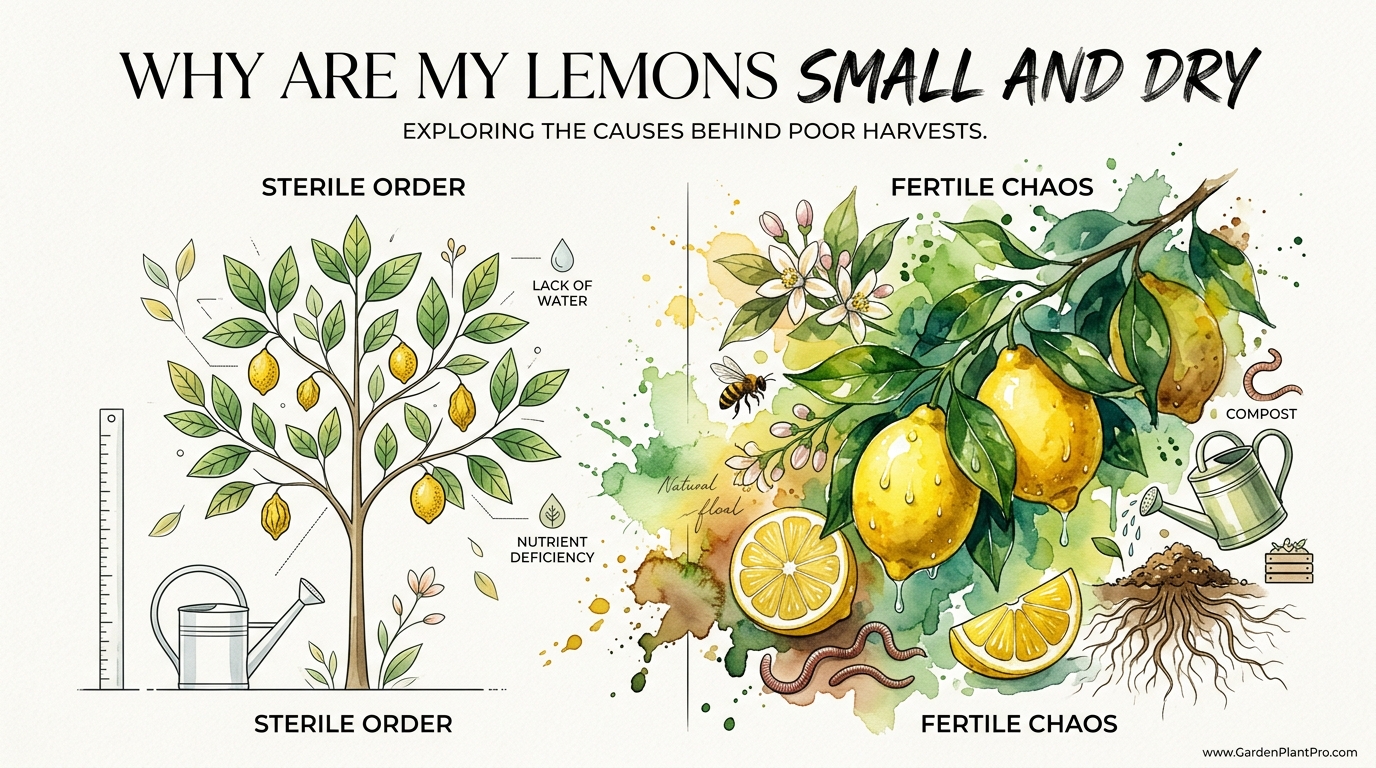
That ‘tidy’ garden floor you worked so hard for is actually the reason your lemons are coming out small, dry, and sour. Nature never intended for soil to be naked. When you rake away every leaf and ‘weed’ from under your lemon tree, you are stripping away its cooling system and its dinner. Embracing ‘fertile chaos’ with deep mulching saves 70% of your water and turns your garden waste into a high-octane citrus fuel.
I’ve spent forty years watching folks in this neighborhood obsess over their “sterile order.” They spend their Saturdays raking every last twig into a plastic bag for the curb, leaving the ground under their citrus trees as bare and hard as a desert floor. Then they wonder why their Eureka lemons look like golf balls and taste like disappointment. They think they’re being clean, but they’re actually starving their trees in plain sight.
You see, a lemon tree doesn’t live in the air; it lives in that interface between the sky and the soil. In the wild, citrus trees evolved in the dappled shade of forest edges, where the ground is a thick, springy carpet of decaying leaves, fallen fruit, and bird droppings. That “chaos” is exactly what a tree needs to thrive. When we strip it away, we force the tree to fight for its life against the very environment it should be enjoying.
Why Are My Lemons Small And Dry
When you cut open a lemon only to find a thick, woody rind and about three drops of juice, you’re looking at a tree that has been in “survival mode.” Small and dry fruit is almost always a symptom of three specific failures: chronic thirst, scorched feet, and mineral starvation. Most gardeners think they’re watering enough, but if the soil is naked, that water is gone before the tree can even take a sip.
Think about the biology of a citrus tree for a second. Unlike an oak or a pine that sends roots deep into the earth to find hidden aquifers, a lemon tree is a surface feeder. About 80% to 90% of its fine, water-absorbing feeder roots live in the top 30 cm to 45 cm (12 to 18 inches) of soil. These roots are the “straws” that pull in the moisture needed to fill those juicy segments. If the soil surface gets too hot or too dry, those straws shrivel up and die. The tree then has to divert all its energy into growing new roots instead of growing big lemons.
Then there’s the temperature problem. On a 35°C (95°F) day, bare soil can easily heat up to 55°C or 60°C (130°F to 140°F). That’s literally hot enough to cook the delicate root hairs. A tree with “cooked” feet cannot hydrate its fruit. Even if you pour a hundred liters of water on it an hour later, the damage is done. The tree protects itself by keeping its fruit small and thick-skinned to prevent moisture loss, leaving you with those dry, sour nubs.
Finally, we have the “starvation” aspect. Lemons are heavy feeders, especially when it comes to potassium and nitrogen. Potassium is the nutrient responsible for fruit enlargement, juice development, and sugar transport. In a “tidy” garden, there is no organic matter breaking down to provide a slow, steady drip of these minerals. You might throw some synthetic pellets down once or twice a year, but those often leach right past the shallow roots in sandy soil or sit on top of hard-packed clay where the tree can’t reach them.
How Fertile Chaos Works: The Mechanics of the Forest Floor
If you want to fix your fruit, you have to stop thinking like a janitor and start thinking like a forest. The concept of “fertile chaos” is simply the practice of allowing organic matter to pile up and rot exactly where it falls. When we apply a deep layer of mulch—anywhere from 10 cm to 15 cm (4 to 6 inches)—we are creating a biological engine that powers the tree’s health.
This “engine” works through a process called nutrient cycling. As fungi and bacteria break down the mulch, they release nitrogen, phosphorus, and potassium (N-P-K) in a form the tree can actually use. More importantly, they create a humic layer—a dark, spongy substance that holds onto water like a reservoir. Instead of your water evaporating into the air, it gets trapped in this sponge, right where those shallow feeder roots are waiting.
The Cooling System
Deep mulching acts as an evaporative cooler for the root zone. A 10 cm (4-inch) layer of wood chips or straw can keep the soil temperature a full 10°C to 15°C (20°F to 30°F) cooler than the ambient air. This stability is the secret to juicy fruit. When the roots stay cool, the tree’s metabolism remains steady. It doesn’t “panic” and shut down photosynthesis during the heat of the day. It keeps pumping water into the lemons, ensuring they grow plump and thin-skinned.
The Microbial High-Octane Fuel
Fresh arborist chips or fallen leaves aren’t just “cover”; they are a buffet for mycorrhizal fungi. These fungi form a symbiotic relationship with your lemon tree’s roots, effectively extending the root system by hundreds of times. They can reach into microscopic soil pores to find pockets of potassium and phosphorus that the tree’s own roots could never touch. By providing the “chaos” of organic matter, you are inviting these fungal partners to set up shop and feed your tree 24/7.
The Benefits of Embracing the Mess
The transition from a raked, bare-dirt garden to a mulched, fertile-chaos system offers practical, measurable benefits that you’ll notice within a single growing season. It’s not just about the fruit; it’s about the entire workload of the garden.
- Water Savings: In many climates, a properly mulched citrus tree requires 70% less supplemental irrigation. Because the mulch prevents 90% of surface evaporation, you can often switch from watering every three days to once every two weeks once the system is established.
- Weed Suppression: Most weed seeds need light to germinate. A thick blanket of “chaos” shades them out. If any weeds do poke through, they are growing in loose, friable organic matter and can be pulled out with two fingers.
- Soil Structure: Over time, the worms and microbes under your mulch will do the tilling for you. They create “macro-pores” in the soil, which improve drainage in heavy clay and increase water-holding capacity in sand.
- Frost Protection: While bare soil re-radiates heat at night (which can help the canopy), a thick mulch layer protects the actual roots from freezing. In marginal climates, keeping the roots alive is the difference between a tree that bounces back in spring and one that dies to the graft.
Challenges and Common Mistakes
Even though I’m advocating for chaos, it’s not a license to be completely reckless. There are a few ways to get this wrong, and they usually stem from a lack of understanding of tree anatomy.
The most common error is what we call “volcano mulching.” This is when a gardener piles mulch right up against the trunk of the tree. Citrus trees are highly susceptible to a fungal disease called Phytophthora, or “collar rot.” If the bark of the trunk stays wet because it’s buried in mulch, the fungus will move in, girdle the tree, and kill it. You must always keep a “donut” of clear space—about 10 cm to 15 cm (4 to 6 inches) wide—between the trunk and the start of your mulch pile.
Another mistake is using the wrong “fuel.” Fresh, green grass clippings might seem like a good idea because they have nitrogen, but they can mat down and become an anaerobic, smelly mess that prevents oxygen from reaching the roots. If you use grass, mix it with dry leaves or straw to keep it “fluffy.” Similarly, if you use only fresh, high-carbon wood chips without any nitrogen source, you might see a temporary “nitrogen drawdown” where the microbes steal nitrogen from the very top layer of soil to break down the wood. This usually doesn’t affect deep-rooted trees, but for a shallow-rooted lemon, it can cause the leaves to turn a pale, sickly yellow. The fix is simple: put down a layer of compost or aged manure before you add the wood chips.
Limitations: When Fertile Chaos Needs a Tweak
While deep mulching is a “miracle” for 90% of citrus growers, there are situations where you need to be careful. If you live in an area with extremely poor drainage and heavy “gumbo” clay, a 15 cm (6-inch) layer of mulch can sometimes keep the soil too wet for too long during a rainy season. In these cases, you might limit your mulch depth to 5 cm (2 inches) or focus on using coarser materials like large bark chunks that allow for better airflow.
Pest management is another consideration. Snails, slugs, and earwigs love the moist, dark environment under a mulch layer. If your lemon tree is young and you have a snail plague, they might use the mulch as a base of operations to climb up and strip the leaves. I’ve found that copper tape around the trunk or a light dusting of iron phosphate pellets usually solves this, but it’s something you have to keep an eye on.
Comparison: Sterile Order vs. Fertile Chaos
| Feature | Sterile Order (Bare Soil) | Fertile Chaos (Deep Mulch) |
|---|---|---|
| Water Requirement | High (Daily in summer) | Low (Once every 7-14 days) |
| Soil Temperature | Extreme (Fluctuates 20°C+) | Stable (Fluctuates <5°C) |
| Fruit Quality | Small, dry, thick skin | Large, juicy, thin skin |
| Nutrient Availability | Dependent on manual fert | Self-sustaining nutrient cycle |
| Maintenance | High (Raking, weeding) | Low (Annual top-up) |
Practical Tips for Success
Ready to turn your garden floor into a citrus-feeding machine? Here are the best practices I’ve gathered from forty years of trial and error:
- The Mulch Sandwich: My favorite method is the “sandwich.” Spread 2 cm (1 inch) of well-rotted compost or chicken manure around the dripline of the tree. Then, top it with 10 cm (4 inches) of arborist wood chips. This provides an immediate nutrient boost while the wood chips work on the long-term soil health.
- The Cardboard Trick: If you are starting with a lawn or a patch of weeds under your tree, don’t dig them up—you’ll damage the shallow citrus roots! Instead, mow the weeds flat and cover them with a single layer of plain brown cardboard (remove the tape first). Put your mulch on top of that. The cardboard will kill the weeds and turn into worm food within six months.
- Identify the Dripline: The “dripline” is the area directly under the outermost edge of the tree’s canopy. This is where most of the feeder roots are located. Your mulch circle should extend at least 30 cm (12 inches) beyond the dripline to ensure the roots have plenty of room to expand.
- Check the Moisture: Don’t just look at the top of the mulch. Push your hand through the layer and feel the soil underneath. It should feel like a wrung-out sponge. If it’s muddy, stop watering. If it’s bone-dry, give it a deep soak.
Advanced Considerations: Mycorrhizal Inoculation
For the gardener who wants to go beyond the basics, you can “supercharge” your fertile chaos. When you first apply your mulch, you can sprinkle a handful of mycorrhizal fungi inoculant (available at most specialty nurseries) onto the soil surface. By providing the fungi with a thick layer of wood chips as a food source, they will establish a permanent network that shuttles nutrients directly into your lemon tree.
DIY PROJECT: Collect rainwater no matter where you live...
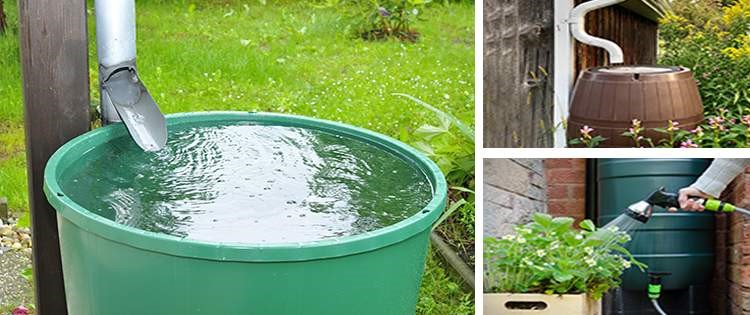
This DIY project is the best way to legally collect rainwater NO MATTER where you live. Get chlorine-free water, cut down on your water bills, and have enough for an emergency situation or to water your garden. Read More Here...
Additionally, consider “Chop and Drop.” If you have other plants in your garden, don’t throw their prunings away. Chop them into small pieces and tuck them under the mulch layer of your lemon tree. Different plants accumulate different minerals. For example, comfrey is a “dynamic accumulator” that brings potassium up from deep in the subsoil. Chopping comfrey leaves and putting them under your lemon tree is like giving it a natural dose of high-potassium fertilizer for free.
Example: A Tale of Two Meyer Lemons
Let’s look at a real-world scenario. Neighbor A has a Meyer lemon in a beautifully raked, bare-dirt circle. He waters it for five minutes every morning with a hose. His tree is ten years old, about six feet tall, and produces a hundred lemons that are the size of limes and mostly rind.
Neighbor B (the “lazy” gardener) has a Meyer lemon surrounded by a 15 cm (6-inch) layer of mixed wood chips, fallen oak leaves, and even some volunteer clover. She waters it once a week for an hour with a slow drip. Her tree is the same age but is nearly ten feet tall, lush, and produces fruit the size of softballs with skin so thin you can practically see the juice through it. The difference isn’t the tree; it’s the “chaos” on the floor.
Final Thoughts
Gardening is often a lesson in letting go of our desire for control. We spend so much energy trying to make our yards look like living rooms, forgetting that a living room is a sterile, dead place. Your lemon tree doesn’t want a carpet; it wants a compost pile. It wants the mess, the bugs, the fungi, and the decaying matter that makes life possible.
If you take nothing else away from this, remember that the ground is the “stomach” of your tree. A bare stomach is an empty one. By layering on the mulch and embracing a bit of fertile chaos, you are giving your tree the resources it needs to do what it does best: produce an abundance of juicy, sweet-tart lemons that make all that waiting worthwhile.
Start small if you have to. Mulch one tree this weekend. Give it a deep drink, put down your donut of wood chips, and walk away. By next season, you’ll be the one over the fence, explaining to your neighbor why their “tidy” garden is the very thing holding them back.