
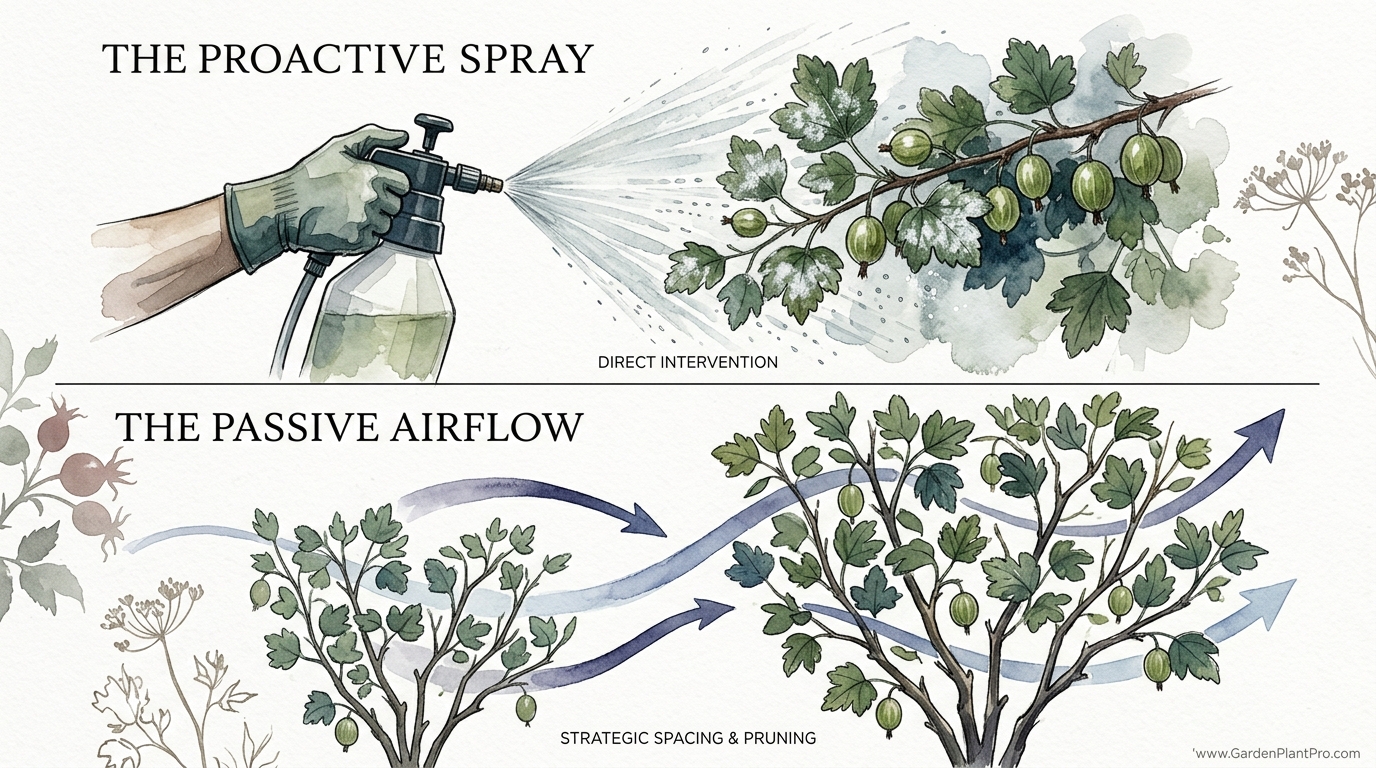
Is your gooseberry bush a patient on chemical life support, or a self-defending system designed for health? Tired of the white fuzz ruining your gooseberry harvest? Stop reaching for the spray bottle. American Gooseberry Mildew thrives in stagnant, humid air. Using ‘Passive Defense’—pruning your bush into a goblet shape—creates a wind tunnel that dries out spores before they can even land.
Gardening often feels like a constant battle against nature, but the most successful growers know that working with environmental forces is far more effective than fighting them. When you see that telltale white dusting on your berries, your first instinct might be to buy the strongest fungicide available. However, a change in how you structure your plants can often solve the problem permanently without a single drop of chemicals.
This guide explores how to transform your gooseberry patch from a mildew-prone thicket into a healthy, productive system. We will walk through the mechanics of airflow, the specifics of variety selection, and the seasonal rhythms required to keep your fruit clean. Whether you are a beginner looking to save your first crop or a seasoned pro refining your technique, these lessons from the soil will change how you look at your bushes.
How To Stop Powdery Mildew On Gooseberries
American Gooseberry Mildew, caused by the fungus Podosphaera mors-uvae, is the primary reason many gardeners give up on this delicious fruit. It manifests as a white, powdery coating on the leaf surfaces, young shoot tips, and eventually the berries themselves. As the season progresses, this white fuzz often matures into a tough, brown, felt-like layer that makes the fruit unappealing and stunts the plant’s growth.
The fungus exists in your garden long before you see the symptoms. It overwinters as tiny black fruiting bodies on the stems and in the fallen leaf litter at the base of the bush. When spring temperatures rise and humidity levels climb, these spores are released, hitching a ride on the wind to land on fresh, soft new growth.
Stopping this cycle requires a multi-pronged approach that focuses on environmental modification. You cannot control the rain or the local humidity, but you can control how much moisture stays trapped within the canopy of your plant. Creating an environment where the leaf surface dries rapidly after dew or rain is the single most effective way to prevent the spores from germinating. This is why “Passive Defense” through structural pruning is the gold standard for healthy gooseberries.
How the Passive Defense System Works
The concept of ‘Passive Defense’ relies on the physics of airflow. Fungal spores need a film of moisture and still air to successfully infect a plant. A congested gooseberry bush, with its dense tangle of thorny branches, acts like a sponge, trapping humid air and preventing sunlight from reaching the interior.
The Goblet Shape
Pruning your gooseberry bush into a goblet shape involves removing the central stems to create an open, hollow middle. This configuration allows wind to pass directly through the center of the bush. Air movement across the leaves reduces the relative humidity within the canopy and speeds up the evaporation of water.
The Wind Tunnel Effect
A well-pruned bush creates what gardeners call a “wind tunnel.” When the center is clear, even a light breeze can circulate through the entire structure. This constant movement of air makes it difficult for spores to settle and nearly impossible for them to find the prolonged damp conditions they need to sprout. Sunlight also penetrates more deeply, and UV rays act as a natural disinfectant against many fungal pathogens.
Nutritional Balance
Airflow is only half the battle. The fungus has a preference for soft, sappy growth, which is often the result of too much nitrogen. Balancing your soil nutrition—favoring potassium over nitrogen—hardens the cell walls of the plant. This makes the tissue physically tougher for the fungus to penetrate.
Step-by-Step: Pruning for Airflow
Establishing the goblet shape takes a bit of courage during the first few years, but the rewards are a lifetime of mildew-free harvests. Follow this seasonal rhythm to maintain the system.
Winter Formative Pruning
Winter is the time for structural changes. When the bush is dormant (usually between November and February in the Northern Hemisphere), you can clearly see the framework without the distraction of leaves.
- Clear the Center: Identify any branches growing toward the middle of the bush. Cut these back to their point of origin on the main stem. You want to be able to reach into the center of the bush without being scratched.
- Select Main Framework: Aim for 6 to 8 main “leg” branches that grow outward and upward. These form the walls of your goblet.
- The “Four D’s”: Remove any wood that is Dead, Damaged, Diseased, or Dying. This includes any stems showing the dark, shriveled tips of previous mildew infections.
- Prune to Outward Buds: When shortening the main branches, always make your cut just above a bud that faces away from the center. This ensures new growth continues to move outward, maintaining the open shape.
Summer Maintenance (The “Five-Leaf” Rule)
Summer pruning is often overlooked, but it is vital for controlling the “soft growth” that mildew loves. Around June or July, when the fruit is beginning to swell, look at the new side shoots growing off your main framework.
- Shorten Side Shoots: Count five leaves from the base of each new side shoot and snip the rest off. This stops the plant from wasting energy on long, floppy stems and keeps the canopy open.
- Remove Low-Hanging Fruit: Any branches that touch the ground should be removed. Moisture from the soil will travel directly up these stems, making them a “mildew bridge” into the rest of the plant.
The Role of Resistant Varieties
If you are planting new bushes, starting with the right genetics makes your job 90% easier. Modern breeding has produced varieties that are naturally resistant to Podosphaera mors-uvae.
| Variety | Color | Key Characteristics |
|---|---|---|
| Invicta | Green | The industry standard for resistance. Huge yields and great for cooking. |
| Hinnomaki Red/Yellow | Red/Yellow | Exceptional flavor and very hardy. Excellent resistance to mildew. |
| Pax | Red | Nearly thornless as it matures. High resistance and very sweet fruit. |
| Captivator | Pink/Red | An American hybrid that thrives in humid climates. Very reliable. |
Older heirloom varieties like ‘Leveller’ or ‘Careless’ produce magnificent fruit but are highly susceptible. If you choose to grow these, you must be much more rigorous with your pruning and site selection.
Organic Remedies and Sprays
Even with the best pruning, a particularly wet summer can lead to an outbreak. Instead of harsh synthetic fungicides, several household and organic options can halt the spread.
The Baking Soda / Potassium Bicarbonate Solution
Potassium bicarbonate is more effective, but common baking soda (sodium bicarbonate) works well as a preventative. These substances change the pH on the leaf surface, making it too alkaline for the fungus to survive. Mix 1 tablespoon of bicarbonate with 1 gallon (3.8 liters) of water and a few drops of organic liquid soap to help it stick. Spraying this every 7 to 10 days during humid spells can prevent spores from taking hold.
The Milk Spray
Diluted milk is a surprisingly powerful bio-fungicide. Research suggests that a protein in milk, when exposed to sunlight, creates an antiseptic effect. Mix one part milk (skim or semi-skimmed works best to avoid odors) with nine parts water. Applying this once a week in full sun can be as effective as many chemical sprays.
Sulfur-Based Sprays
Sulfur is an ancient remedy for mildew. It works by preventing the spores from germinating. However, you must check if your variety is “sulfur-shy.” Varieties like ‘Leveller’, ‘Careless’, and ‘Yellow Champagne’ can actually drop their leaves if treated with sulfur. Always test a small branch before treating the whole bush.
DIY PROJECT: Collect rainwater no matter where you live...
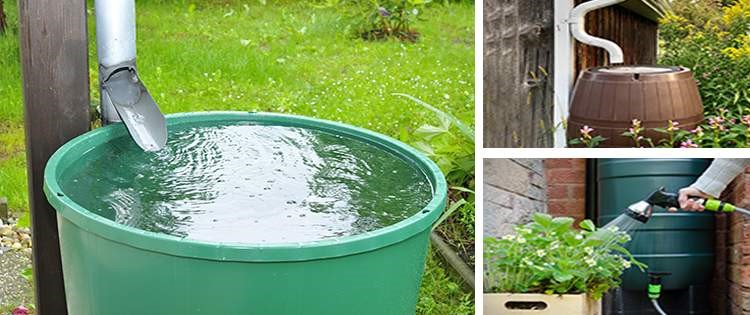
This DIY project is the best way to legally collect rainwater NO MATTER where you live. Get chlorine-free water, cut down on your water bills, and have enough for an emergency situation or to water your garden. Read More Here...
Challenges and Common Mistakes
One of the biggest mistakes gardeners make is over-fertilizing with nitrogen-heavy products like chicken manure pellets. While the resulting explosion of green leaves looks healthy, that tissue is physically weak and “juicy,” providing an ideal buffet for mildew. Always favor high-potassium feeds, like those used for tomatoes or comfrey tea, which toughen the plant.
Another pitfall is “fear of the thorns.” Gooseberries are notoriously prickly, leading many gardeners to avoid pruning the interior properly. This neglect quickly leads to a congested center where mildew thrives. Investing in a pair of high-quality, gauntlet-style leather gloves is the best move you can make for your gooseberry’s health.
Spacing is the final common error. Planting gooseberries too close together (less than 5 feet or 1.5 meters apart) creates a hedge effect. This stops the air from moving *between* the bushes, negating the work you did pruning the *inside* of the bushes. Proper spacing is essential for the wind tunnel to function correctly.
Limitations of Cultural Control
Cultural controls are powerful, but they have limits. In regions with extreme, unrelenting humidity and high nighttime temperatures, even a perfectly pruned bush may struggle. In these cases, the “Passive Defense” must be supplemented with a rigorous organic spraying program from the moment the first leaves appear in spring.
Additionally, “Passive Defense” is a long-term strategy. If you inherit a neglected, mildew-choked bush, pruning it into a goblet will help next year, but it won’t magically cure the current season’s infected fruit. It takes a full cycle of winter and summer pruning to reset the plant’s health.
Practical Tips for Ongoing Care
- Water the Roots, Not the Leaves: Always apply water at the base of the plant. Overhead watering creates the exact humid conditions the mildew needs to thrive.
- Mulch Properly: Apply a thick layer of wood chips or straw in early spring to keep the soil moist, but keep the mulch several inches away from the main stem to prevent rot.
- Sanitize Your Tools: If you are pruning out infected shoots, wipe your secateurs with rubbing alcohol or a 10% bleach solution between bushes. This prevents you from carrying the spores from a sick plant to a healthy one.
- Destroy, Don’t Compost: Never put mildew-infected clippings in your home compost pile. Most home piles do not get hot enough to kill the spores. Burn them or put them in the municipal green waste.
Advanced Considerations: The Standard Form
For serious practitioners, training gooseberries as “standards” (on a single tall stem like a small tree) is the ultimate defense. By raising the entire canopy 3 to 4 feet (about 1 meter) off the ground, you move the plant into the “fast lane” of air movement.
The ground-level air is always the most humid and stagnant. Raising the fruiting area allows for maximum sunlight penetration and keeps the berries far away from the soil-borne spores and moisture. While training a standard takes a few years of careful staking and side-shoot removal, it often results in the cleanest, largest fruit possible.
Example Scenario: The Tale of Two Bushes
Imagine two gardeners, Arthur and Sarah. Arthur lets his gooseberries grow naturally, resulting in a dense, 5-foot-wide thorny thicket. During a damp June, the air inside Arthur’s bush stays wet for 18 hours a day. Mildew takes hold, and by July, his berries are covered in brown felt. He spends hours spraying chemicals, but the spray can’t reach the middle of the bush.
Sarah prunes her bush into an open goblet and feeds it with a high-potassium tomato fertilizer. Her bush is the same size, but you can see right through the middle. When the same damp June weather hits, the wind blows through Sarah’s bush, drying the leaves within 2 hours. She finds one small patch of mildew on a shoot tip, snips it off immediately, and harvests a clean, heavy crop of fruit two weeks later.
Final Thoughts
Mastering the health of your gooseberries is less about what you put *on* the plant and more about how you shape the plant’s life. By embracing the “Passive Defense” of the goblet shape, you are not just treating a disease; you are creating a habitat where the disease simply cannot exist.
Remember that gardening is a conversation with the seasons. Your winter pruning sets the stage, your summer maintenance keeps the air moving, and your soil management provides the armor. Once you see the difference that airflow and light make, you will likely find yourself applying these “Passive Defense” principles to your roses, your currants, and even your vegetable patch.
Go out to your bushes this week and take a look. If you can’t see through the center of the plant, it’s time to sharpen your shears and start building your wind tunnel. Your future harvest will thank you for it.