Most gardeners treat Arnica like a common sunflower, but its true power is unlocked when it has a stone ‘shield’ to grow against. Arnica doesn’t want your wide-open fields. This mountain native is an alpine specialist that craves the thermal protection of stones. By creating a ‘Sheltered Nook,’ you mimic the high-altitude crevices where it evolved, leading to higher medicinal oil content and a plant that actually survives the winter.
In my years of tending herbs, I have seen too many beginners treat this plant like a marigold. They stick it in a flat, rich vegetable bed and wonder why it rots or fails to return the following spring. Arnica montana is a creature of the heights, where the air is thin and the ground is rocky. To grow it successfully at lower altitudes, you have to think like a mountain.
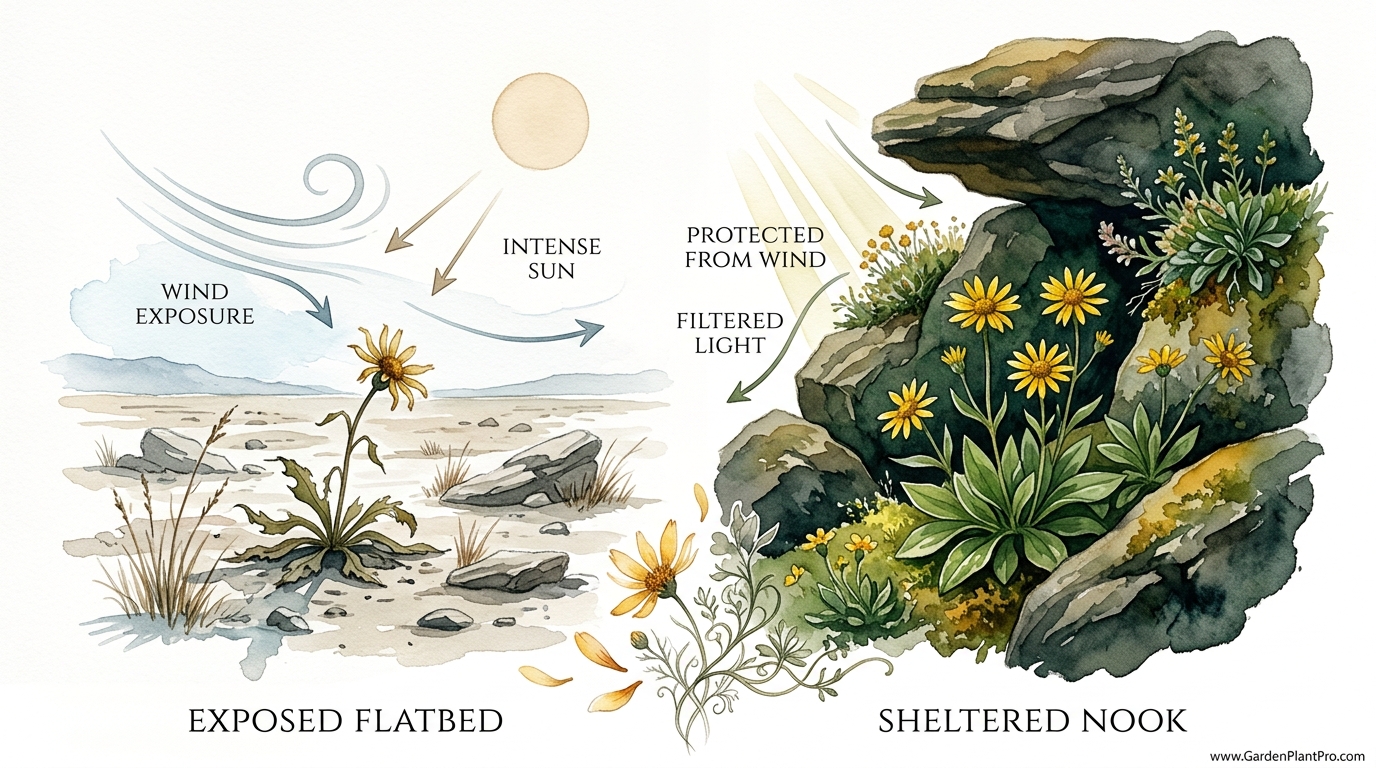
The secret lies in the microclimate. A standard garden bed—what I call an “Exposed Flatbed”—leaves the shallow rhizomes of the Arnica vulnerable to temperature swings and moisture fluctuations. A “Sheltered Nook,” however, uses the physical mass of stones to regulate the environment. It is a simple shift, but it makes the difference between a struggling yellow flower and a medicinal powerhouse.
Arnica Montana Growing Conditions
Arnica montana is a perennial herb known by names like Leopard’s Bane or Mountain Tobacco. In the wild, it thrives in the acidic, nutrient-poor soils of European mountain ranges, often found at altitudes between 800 meters (2,600 feet) and 2,500 meters (8,200 feet). Unlike its more adaptable cousin, Arnica chamissonis (Meadow Arnica), the montana species is incredibly particular about its home.
This plant requires three specific things to thrive: high soil acidity, excellent drainage, and a stable root temperature. Most garden soils are too rich and too neutral in pH for Arnica. It prefers a pH range between 5.0 and 6.0. If your soil has a hint of lime or calcium, Arnica will likely yellow and die. It evolved on granite and siliceous bedrock, where the minerals are slow to break down and the water moves quickly.
The “Sheltered Nook” approach works because it addresses these needs simultaneously. By tucking the plant against a large stone or within a rock garden, you provide a heat sink. During the day, the stone absorbs solar energy. At night, it slowly releases that heat into the soil, protecting the rhizomes from the sharp chill that can occur even in mid-summer in alpine zones. This stability is what the plant recognizes as home.
How to Create the Sheltered Nook
Building a home for your Arnica is more about architecture than traditional digging. You are not just making a hole; you are constructing a niche. Follow these steps to set up a nook that replicates the mountain crevice.
Step 1: Choose Your Stone Shield
Find a large, non-porous stone, preferably granite or a similar volcanic rock. Avoid limestone, as it will leach calcium into the soil and raise the pH, which is the quickest way to kill Arnica. The stone should be roughly the size of a loaf of bread or larger. Place this stone so it faces the direction of the afternoon sun.
Step 2: Prepare the Acidic Substrate
Arnica won’t tolerate standard potting soil. Mix two parts coarse sand with one part peat moss and one part acidic compost (like leaf mold from oak or pine). This creates a “lean” environment that forces the plant to focus on root health and secondary metabolite production—those medicinal oils we want—rather than lush, leafy growth.
Step 3: Position the Rhizome
Plant your Arnica rhizome or seedling directly against the base of the stone on the “lee” side, protected from prevailing winds. Ensure the crown of the plant is slightly above the soil line to prevent rot. I like to tuck the roots deep under the edge of the stone where they can stay cool while the leaves reach for the sun.
Step 4: The Drainage Slope
Mountain plants never sit in standing water. Create a slight mound or a 3-degree slope leading away from your stone. This ensures that even during heavy rain, the “nook” remains moist but never waterlogged. If you are planting multiple Arnicas, space them about 20 to 30 centimeters (8 to 12 inches) apart, each with its own stone protector.
Benefits of the Stone Shield Approach
Using a sheltered nook provides several measurable advantages over a flatbed planting. The most obvious is winter survival. In the “Exposed Flatbed” model, frost heaving can push Arnica’s shallow rhizomes out of the soil, exposing them to freezing air. The stone shield anchors the soil and provides a thermal buffer that prevents the ground from freezing and thawing too rapidly.
Beyond survival, there is the matter of potency. Arnica produces sesquiterpene lactones, specifically helenalin, which are the active anti-inflammatory agents. Research suggests that alpine plants under moderate environmental stress—like that found in a rocky, lean-soil nook—produce higher concentrations of these compounds. A pampered Arnica in a rich garden bed might look bigger, but its medicinal value is often diluted.
Finally, the nook reduces maintenance. The stone acts as a natural mulch, suppressing weeds in the immediate vicinity of the crown. Since Arnica is a slow grower and cannot compete with aggressive garden weeds or grass, this physical barrier is a lifesaver for the plant.
Challenges and Common Mistakes
The biggest mistake I see gardeners make is “loving the plant to death” with fertilizer. Arnica is a scavenger. If you give it high-nitrogen fertilizer, it will grow tall and floppy, lose its resistance to disease, and may fail to flower. It expects poor soil. If you feel the need to feed it, use a very weak, acidic liquid kelp extract once in the early spring, and nothing more.
Another frequent error is ignoring the “limestone trap.” Many gardeners use decorative rocks without knowing their composition. If you use limestone or marble, the rain will wash calcium into the soil. Arnica montana is a calcifuge; it literally hates lime. Within a season, the leaves will turn a sickly yellow (chlorosis) because the plant can no longer take up nutrients in the high-pH environment.
Watering is the third hurdle. While the plant likes moisture, it requires “moving” moisture. Think of a mountain stream or melting snow. If the soil stays soggy for more than a day, the rhizomes will rot. Always check the top 2 centimeters (1 inch) of soil. If it’s damp, don’t water. If it’s dry, give it a deep soak early in the morning so the foliage can dry before nightfall.
Limitations: When the Nook Isn’t Enough
Even a perfect sheltered nook has its limits. If you live in a tropical or subtropical climate where the nights stay hot, Arnica montana will likely struggle. It needs a distinct “vernalization” period—a cold winter dormancy—to reset its internal clock for flowering. Without temperatures below 5°C (41°F) for at least several weeks, the plant may remain a rosette of leaves and never produce its famous yellow blooms.
Additionally, if your native soil is extremely heavy clay, you cannot just dig a hole and fill it with acidic mix. That hole will act like a “bucket,” trapping water and drowning the roots. In clay-heavy areas, the only way to make a nook work is to build it *on top* of the ground as a raised rockery or crevice garden.
DIY PROJECT: Collect rainwater no matter where you live...
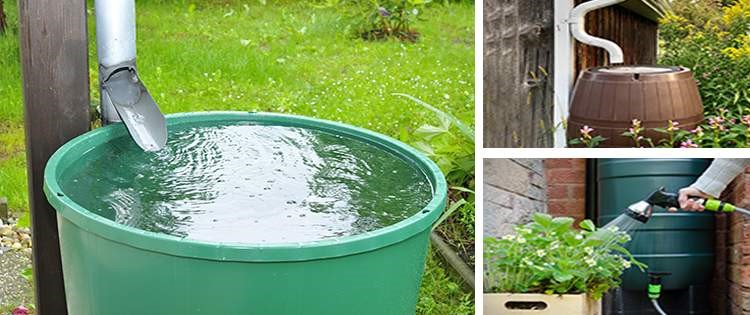
This DIY project is the best way to legally collect rainwater NO MATTER where you live. Get chlorine-free water, cut down on your water bills, and have enough for an emergency situation or to water your garden. Read More Here...
Practical Tips for Ongoing Care
Managing an Arnica patch is a marathon, not a sprint. Here are a few tricks I’ve picked up over the years to keep them happy:
- Deadheading: If you aren’t harvesting the flowers for medicine, cut them off as soon as they fade. This prevents the plant from putting energy into seed production and encourages it to strengthen its rhizomes for next year.
- Pine Needle Mulch: Once a year, sprinkle a handful of pine needles around the base of the plant. As they break down, they help maintain the soil acidity that Arnica craves.
- Hand Weeding Only: Never use a hoe near Arnica. The roots are shallow and very sensitive. Pull weeds by hand, and do it while they are small so you don’t disturb the Arnica’s root system.
- Monitor for Slugs: In lower, more humid gardens, slugs love the “nook” as much as the Arnica does. Check under your stones regularly and remove any pests before they devour the tender new growth in spring.
Advanced Considerations for Practitioners
For those growing Arnica specifically for tinctures or oils, timing is everything. The sesquiterpene lactone levels peak when the flowers are just beginning to open. Once the flower is fully splayed and starts to look “shaggy,” the potency begins to drop.
If you are scaling up, consider the slope of your entire garden. A 3-to-5-degree southern-facing slope is ideal. It maximizes light while ensuring the “stagnant humidity” mentioned by alpine experts never settles around the plants. In high-humidity regions, increase the distance between plants to 40 centimeters (16 inches) to allow better airflow, which prevents Phoma and other fungal diseases.
Scenario: The “Dead Zone” Success
I remember a neighbor who tried growing Arnica in her lush, fertilized perennial border. It died three years in a row. Finally, we moved it to a “dead zone” in her yard—a dry, rocky slope under an old pine tree where nothing else would grow. We tucked a few granite chunks around the seedlings to create nooks.
That “dead zone” had the perfect acidic leaf mold from the pine and the drainage from the slope. The granite stones protected the plants during a particularly harsh, snowless winter. The following June, she had more yellow blooms than she knew what to do with. The lesson? Stop trying to make the mountain plant fit your garden, and start making your garden fit the mountain.
Final Thoughts
Arnica montana is a plant that demands respect for its origins. By moving away from the Exposed Flatbed and embracing the Sheltered Nook, you provide the plant with the thermal stability, drainage, and acidic environment it needs to truly flourish. It is a rewarding process that turns a difficult “specialty” herb into a reliable garden inhabitant.
The stone shield is more than just a gardening trick; it is a way of understanding the plant’s biology. When you see those bright orange-yellow daisies emerging against the gray of a granite rock, you’ll know you’ve successfully brought a piece of the high Alps into your own backyard.
I encourage you to experiment with different stone placements and soil mixes. Gardening is a lifelong conversation with the earth, and Arnica is one of the most interesting teachers you’ll ever have. Start small, observe how the moisture settles, and before you know it, you’ll have a medicinal harvest that is as potent as any wild-crafted mountain bloom.