

The world’s favorite banana is a clone facing extinction, but your backyard can be a biological fortress. Every Cavendish banana you buy is a genetic clone, making it incredibly vulnerable to soil-borne diseases. Every supermarket shelf tells the same story of a fragile monoculture that is one step away from collapse. Switching from a ‘line’ to a ‘circle,’ you create a self-sustaining ecosystem that traps water, recycles nutrients, and protects your harvest from the coming banana apocalypse.
I have spent decades watching the way water moves across a landscape and how plants either fight each other or help each other out. Most people plant bananas in a straight row like soldiers, which forces you to constantly haul fertilizer and drag hoses. There is a better way that mimics the way life actually works in a forest. It is called a banana circle, and it is the closest thing to a “perpetual motion machine” I have ever seen in a garden.
This system is more than just a place to grow fruit. It is a waste management system, a water filter, and a massive composting engine all rolled into one. If you have ever felt overwhelmed by the amount of yard waste or kitchen scraps you produce, this design turns that “problem” into the fuel that grows your breakfast.
How To Build A Permaculture Banana Circle
A permaculture banana circle is a specialized planting system designed to maximize the “edge effect” and nutrient cycling. In its simplest form, it consists of a central pit roughly 2 meters (about 6.5 feet) in diameter and 1 meter (3 feet) deep. The soil removed from this pit is mounded into a donut-shaped rim around the outside.
Bananas are the primary inhabitants of this mound, but they are never alone. This design creates a tiny, self-contained ecosystem where every element serves multiple functions. The pit serves as a repository for organic matter, while the plants on the mound reach their roots into that decomposing mass to pull out exactly what they need.
Gardeners around the world use this technique to transform marginal land into highly productive zones. It is particularly effective for managing greywater from outdoor showers or kitchen sinks because the massive amount of biomass in the pit acts as a biological filter. Instead of letting that water run off and create a boggy mess, you are sending it directly into the heart of a system that thrives on moisture.
The Biological Engine: How It Works
Success in the garden often comes down to how well you can imitate nature’s efficiency. In a natural forest, nothing is ever wasted. Leaves fall, branches break, and everything eventually returns to the soil to feed the next generation. A banana circle speeds up this process by concentrating the resources in a single spot.
Constructing the system starts with the pit. Digging a basin that is 2 meters (6.5 feet) wide and 1 meter (3 feet) deep creates a significant volume for organic matter. As you dig, you place the soil on the outer edge to form a raised berm. This berm should be at least 50 centimeters (20 inches) high. The height is important because it keeps the stems of the bananas out of standing water, which prevents root rot, while still giving them access to the moist environment of the pit.
The center of the circle is then filled with a variety of organic materials. I like to start with large logs or thick branches at the very bottom. This creates a base of “brown” carbon that breaks down slowly over years. On top of that, you add layers of green waste like grass clippings, kitchen scraps, and fallen leaves. The result is a massive, stationary compost pile that never needs to be turned.
Bananas are “gross feeders,” meaning they have an insatiable appetite for nutrients. They are also composed of about 90% water. Placing them around a moist, nutrient-dense pit allows them to grow at an incredible rate. As the material in the center decomposes, it releases nitrogen, potassium, and phosphorus directly to the roots waiting in the berm.
The Resilient Guild: More Than Just Bananas
Growing bananas in isolation is a recipe for struggle. To create a truly resilient circle, you need to surround them with a “guild” of companion plants that perform specific tasks. Each plant in the circle has a job to do.
The Groundcover: Sweet Potato
Sweet potatoes are the perfect partner for this system. Planting about 10 to 12 slips around the outer edge of the berm provides a living mulch. Their broad leaves shade the soil, which prevents evaporation and keeps the roots of the bananas cool. They also act as a weed barrier, saving you hours of maintenance. The best part is that when you harvest your bananas, you can reach down and pull up a crop of tubers as well.
The Nutrient Accumulator: Comfrey
Comfrey is a gardener’s best friend because its deep taproots reach far into the subsoil to pull up minerals that other plants cannot reach. You can plant comfrey on the outer slopes of the mound. Every few months, you simply “chop and drop” the leaves, throwing them directly into the center of the pit. This provides a shot of potassium and nitrogen right where the bananas need it most.
The Moisture Lovers: Taro and Canna Lily
On the inner rim of the circle, where the soil is consistently damp, you can plant taro or canna lilies. These plants love “wet feet” and thrive in the humid microclimate created by the banana leaves. Taro provides another source of food, while canna lilies produce beautiful flowers that attract pollinators and provide extra biomass for the compost pit.
Benefits of the Circle Approach
Choosing a circular design over traditional rows offers several practical advantages that become obvious after the first season. The most immediate benefit is water conservation. Because the pit is bowl-shaped, it traps every drop of rain that falls within its 2-meter diameter. If you live in a region with distinct dry seasons, this can be the difference between a harvest and a dead plant.
Nutrient management is also much simpler. Instead of spreading fertilizer across a wide area, you put everything into the center. This includes “non-traditional” compost items like thick palm fronds or even small logs that would take forever to break down in a standard bin. The banana circle is remarkably forgiving; the high moisture levels and fungal activity in the pit can break down almost anything organic.
Labor efficiency is another major factor. Once the initial digging is done, the maintenance is minimal. You don’t have to turn the compost, and you rarely have to weed if your groundcover is established. The bananas “walk” around the circle on their own—as the mother plant dies after fruiting, you select a new “pup” or sucker on one side to replace it. Over several years, the entire colony slowly rotates around the rim.
Challenges and Common Mistakes
Even a system this robust can run into trouble if the basics are ignored. The most frequent error I see is poor drainage. If you have heavy clay soil, a deep pit can turn into a stagnant pond after a heavy rain. This creates an anaerobic (oxygen-free) environment that smells terrible and can rot your banana corms. In clay-heavy areas, it is better to dig a shallower pit and build the berm higher, or ensure there is an overflow notch in the rim to let excess water escape.
Overcrowding is another issue. It is tempting to plant ten or twelve bananas around a single circle, but they will eventually compete for light and space. Stick to 4 or 5 primary plants at the “compass points” (North, South, East, West). This allows enough airflow to prevent fungal diseases like Sigatoka or Freckle, which thrive in stagnant, humid air.
DIY PROJECT: Collect rainwater no matter where you live...
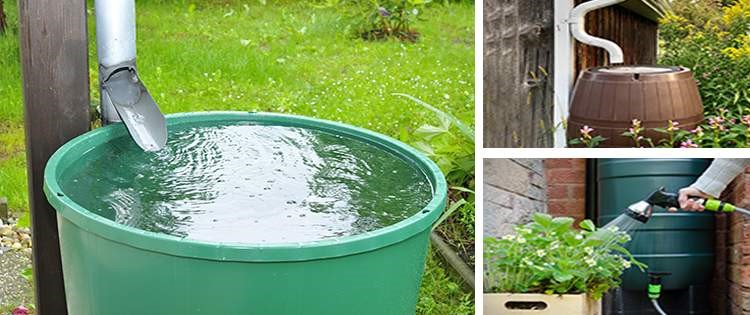
This DIY project is the best way to legally collect rainwater NO MATTER where you live. Get chlorine-free water, cut down on your water bills, and have enough for an emergency situation or to water your garden. Read More Here...
Neglecting the mulch is a mistake that can lead to failure. A banana circle is a hungry beast. If you stop adding organic matter to the center, the soil will eventually become depleted, and your fruit will get smaller and smaller. I make it a habit to throw every bit of yard waste—even the stuff that looks “too big”—into the pit.
Limitations: When the Circle Isn’t Ideal
While I love this system, it isn’t a “one size fits all” solution. If you live in a cold climate where temperatures regularly drop below 13°C (55°F), bananas will struggle. They are tropical plants that need heat to produce fruit. You can still use the circle design for other heavy feeders like mulberry trees or elderberries, but the “banana” part of the circle might be purely ornamental or require a greenhouse.
Space is another constraint. A single circle needs a footprint of at least 3 to 4 meters (10 to 13 feet) once you account for the spreading leaves and the access path. If you have a tiny urban lot, this might take up your entire yard. In those cases, a “mini-circle” or a simple mulched basin might be more practical.
Comparing the Monoculture to the Resilient Circle
To really understand why the circle works, it helps to compare it to the way most commercial bananas are grown. In a monoculture, plants are spaced in rows with bare soil in between. This is an invitation for trouble.
| Factor | Traditional Row Planting | Permaculture Banana Circle |
|---|---|---|
| Water Use | High (requires frequent irrigation) | Low (traps rain and greywater) |
| Fertilizer | External (synthetic or hauled compost) | Internal (self-composting pit) |
| Weed Control | High labor (mulching or tilling) | Low labor (living groundcovers) |
| Resilience | Low (disease spreads easily in rows) | High (diverse guild protects plants) |
| Yield Variety | Bananas only | Bananas, Sweet Potato, Taro, Papaya |
Practical Tips for a Productive Circle
When you are ready to break ground, there are a few things that will make your life much easier. First, pick your spot carefully. Bananas love sun, but they hate wind. Their massive leaves act like sails and can easily tatter or even cause the plant to blow over if they are in a high-exposure area. If you can, tuck the circle into a spot protected by a fence or other trees.
Integrating a greywater system can transform your garden. I have seen folks run a pipe from their outdoor shower directly into the center of the pit. The biomass and the soil microbes do a fantastic job of breaking down soaps and organic matter, turning “waste” into lush, green growth. Just make sure you are using biodegradable, plant-safe soaps.
Selection of varieties matters. If you are worried about the “banana apocalypse” (Tropical Race 4), look for varieties that show resistance. While the common Cavendish is the most vulnerable, there are hundreds of other types like Blue Java, Raja Puri, or Goldfinger that offer incredible flavors and much better disease resistance. Growing a mix of varieties is the best insurance policy you can have.
Advanced Considerations for Serious Growers
For those who want to take their circle to the next level, consider the “walking” management strategy. Bananas grow from a rhizome (a horizontal underground stem). Every mother plant will produce several “pups.” To keep the circle organized, you should prune away most of these. A good rule of thumb is the “Grandmother, Mother, Daughter” system. You keep one fruiting stem (Grandmother), one middle-aged stem (Mother), and one small sprout (Daughter).
When the Grandmother finishes fruiting, you cut the entire stalk down and chop it into 50cm (20-inch) pieces. Throw these directly into the center of the pit. Banana stalks are full of water and potassium; they are the best fertilizer you can give to the next generation. By always choosing the “Daughter” pup on the same side (for example, always the one to the right), the plant will “walk” around the circle over the course of several years.
You can also integrate livestock if you have the space. Chickens love to scratch around the base of a banana circle. If you fence them in a way that gives them access to the outer edge, they will eat any pests and contribute their own high-nitrogen manure to the system. It is a perfect closed-loop cycle.
An Example Scenario
Let’s look at a typical backyard in a subtropical zone. The gardener has a patch of grass that is always boggy after rain. Instead of trying to fix the drainage with expensive pipes, they dig a 2-meter (6.5-foot) circle.
They mound the clay soil high and mix in some sand and aged manure to improve the initial structure. They plant four Dwarf Cavendish suckers at the compass points. In the center pit, they throw in two old rotting logs, three bags of autumn leaves, and their daily kitchen scraps.
Six months later, the sweet potatoes have completely covered the mound, hiding the bare soil. The taro on the inner rim is waist-high, and the bananas have tripled in size. The boggy spot in the yard is gone because the circle is drinking up all the excess water. By the end of the year, the first bunch of bananas is ready for harvest, and the gardener hasn’t had to buy a single bag of fertilizer.
Final Thoughts
Building a permaculture banana circle is a shift in mindset. It is a move away from the idea that a garden must be a series of separate boxes and toward the understanding that everything is connected. When you provide a home for the soil microbes and a place for water to rest, the plants will do the heavy lifting for you.
The current threat to the global banana supply is a wake-up call. We cannot rely on fragile, identical clones forever. By diversifying your backyard with resilient systems like these, you aren’t just growing food; you are building a small piece of a more secure future.
I encourage you to grab a shovel and find a spot in your yard that needs some life. It might take a weekend of sweat to dig that first pit, but the rewards will come back to you in the form of sweet fruit, rich soil, and a garden that practically takes care of itself. Once you see a banana circle in full swing, you’ll never want to plant in rows again.