
Are you buying a plant, or a dependent on life support? Most nursery-bought strawberries are raised in a sterile bubble of liquid chemicals and peat. The moment they hit your real garden soil, they go into shock. Real strawberry success doesn’t come from a plastic pot; it comes from the ‘Runner Engine’—a resilient system that builds its own immunity and thrives on neglect.
Survival Secrets For Strawberry Runners
Strawberry runners, or stolons, are the horizontal stems that shoot out from the base of a mother plant. These stems act like organic explorers, searching for fresh ground to colonize. At specific intervals, called nodes, they sprout leaves and tiny nubs known as root pegs. Once these pegs touch moist soil, they anchor down and form a daughter plant.
This system exists as a survival mechanism. In the wild, strawberries use runners to move away from a parent plant that might be depleting the local soil of specific nutrients. It allows the species to “walk” across the forest floor, finding new pockets of rich earth and better sunlight. In your garden, this means the plant is essentially a self-replicating machine.
You can visualize the runner as an umbilical cord. Until the daughter plant has established a robust root system of its own, it is fed entirely by the mother plant. This connection provides a safety net, allowing the young plant to survive in conditions where a seed might wither and die. Understanding this connection is the key to moving away from fragile nursery starts toward a garden built on grounded resilience.
How the Runner Engine Works
The process of runner formation begins after the main harvest. For June-bearing varieties, this usually happens during the long days of mid-summer. As the plant senses more than 12 hours of daylight and temperatures between 60°F and 80°F (15°C–27°C), it switches its energy from fruit production to vegetative expansion.
The mother plant produces axillary meristems—clusters of dividing cells at the base of each leaf. Depending on the environment, these cells choose one of three paths: they stay dormant, they become a branch crown to produce more fruit, or they become a runner. When you see a long, leafless stem arching out, you are seeing the plant’s investment in the future.
Each runner can produce multiple daughter plants in a chain. The first daughter plant, the one closest to the mother, is usually the strongest because it receives the largest share of the mother’s resources. As a seasoned gardener, you want to focus on these “first-born” daughters for the most vigorous new beds.
Step-by-Step Soil Pinning
Direct soil pinning is the most natural way to harness this engine. It keeps the plant grounded and allows it to adapt to your specific soil microbes from day one. Here is how to do it effectively:
- Identify the Root Pegs: Look at the bottom of a runner node for small, brownish bumps. These are the future roots.
- Prepare the Landing Zone: Scratch the soil surface where you want the new plant to grow. Adding a handful of compost helps, but don’t over-fertilize with nitrogen yet.
- Pin the Runner: Use a U-shaped garden staple, a bent piece of wire, or even a small stone to hold the runner node firmly against the soil.
- Maintain Moisture: The soil must stay consistently damp for 10 to 14 days. If the soil dries out, the root pegs will callous over and refuse to dig in.
- The Umbilical Cut: Wait about 4 to 6 weeks. Once the daughter plant has at least three large leaves and resists a gentle tug, you can snip the connecting stem.
The Benefits of Home-Grown Runners
Choosing to grow from runners rather than buying new plants every year offers several practical advantages. The most obvious is the cost. A single healthy mother plant can produce up to 120 daughter plants in one season if given enough space and water. You are essentially generating free inventory for your garden expansion.
Genetic continuity is another major factor. When you find a variety that tastes perfect and grows well in your specific microclimate, runners allow you to clone that success. Unlike seeds, which can produce unpredictable results due to cross-pollination, a runner is a genetic twin of the parent. You know exactly what fruit you are going to get.
Grounded resilience is the most important benefit. Plants born in your soil develop a relationship with your local mycorrhizal fungi and beneficial bacteria from the moment they sprout roots. They aren’t coming from a greenhouse in another state; they are “locals.” This makes them far more resistant to your specific weather patterns, whether that’s a sudden heatwave or a damp, late spring.
Challenges and Common Mistakes
One of the most frequent errors is allowing the bed to become “matted” without any management. While it’s tempting to let every runner take root, this leads to overcrowding. When plants are too close together, air circulation drops, and the risk of fungal diseases like gray mold (Botrytis) or powdery mildew skyrockets.
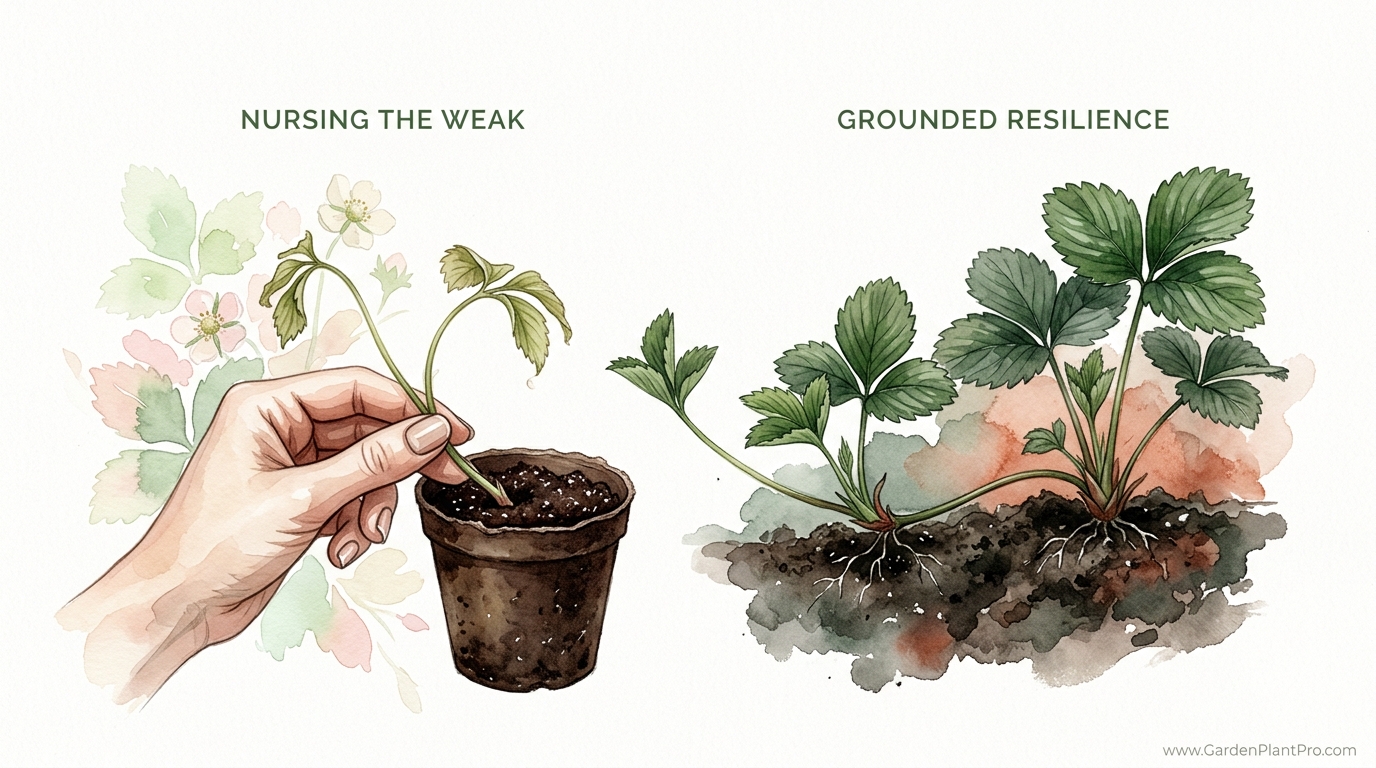
Another pitfall is the “Noodle Stage.” This is when the runners are long and thin, looking for a home, but the gardener forgets to pin them down. If they spend too long suspended in the air, they drain energy from the mother plant without ever becoming self-sufficient. This is the definition of nursing the weak—supporting a dependent that isn’t building its own foundation.
Timing the cut too early is a fatal mistake. If you snip the runner before the daughter has enough root mass, the young plant will wilt within hours. It hasn’t developed the vascular system to pull water from the soil yet. Always check for a firm “anchor” before you cut the cord.
Limitations and Environmental Constraints
Not every strawberry variety is a runner machine. June-bearing types are the champions of propagation, but everbearing and day-neutral varieties are much more conservative. They put so much energy into producing multiple crops of fruit that they often “forget” to make runners. If you are trying to expand a patch of Ozark Beauty or Seascape, you may only get one or two runners per plant.
Space is a hard constraint. Strawberry runners need room to roam. If you are growing in tight containers or vertical towers, runners are often more of a nuisance than a benefit. In these systems, the runners will dangle in the air, never reaching soil, and wasting the plant’s fruit-making energy. In small-space gardening, the rule is usually to snip runners off as soon as they appear.
Soil-borne diseases can also limit your success. If your mother plants are infected with Verticillium wilt or certain viruses, every single runner they produce will also carry those pathogens. This is why you must start with certified disease-free stock and rotate your beds every 3 to 4 years. Using runners from a sick bed is just propagating failure.
Comparing Propagation Methods
Understanding the difference between different starting points can help you decide how much effort to invest. Here is a look at how home-grown runners compare to other common methods.
| Feature | Home-Grown Runners | Nursery Starts (Pots) | Bare-Root Crowns |
|---|---|---|---|
| Cost | Free (from own bed) | High ($5-$8 per plant) | Medium ($1-$2 per plant) |
| Transplant Shock | Zero (if pinned in place) | Moderate | High |
| Adaptability | Maximum (Local) | Low (Greenhouse raised) | Moderate |
| Disease Risk | Higher (if bed is old) | Low (Certified) | Very Low |
Practical Tips for Best Performance
To get the most out of your runner engine, you have to play the role of the traffic controller. Don’t let the runners grow wherever they want. Direct them into the empty gaps of your bed to create a uniform “matted row” or “carpet” of plants. Aim for a final spacing of about 6 inches (15 cm) between each daughter plant.
DIY PROJECT: Collect rainwater no matter where you live...
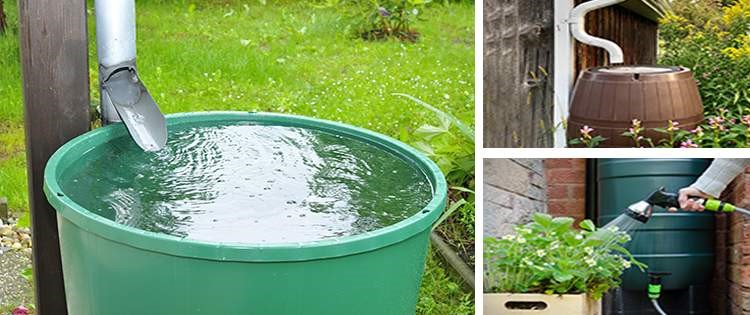
This DIY project is the best way to legally collect rainwater NO MATTER where you live. Get chlorine-free water, cut down on your water bills, and have enough for an emergency situation or to water your garden. Read More Here...
Always limit the number of daughters per runner. While a single runner might try to produce four or five plants in a line, the ones at the end of the chain are often stunted and weak. Snip the runner after the second daughter plant. This forces all the “mother’s milk” into those first two siblings, ensuring they grow into giants before winter hits.
Feeding is a delicate balance. Avoid high-nitrogen fertilizers while you are trying to establish runners. Too much nitrogen produces lush, soft leaves that are a magnet for aphids and spider mites. Instead, focus on soil health through well-rotted compost. Once the daughters are rooted in the fall, a light application of a potassium-rich fertilizer can help strengthen their crowns for the coming frost.
- Sanitize Your Tools: When you finally “cut the cord,” use sharp, clean scissors. Wiping them with rubbing alcohol prevents the spread of viruses from one plant to the next.
- Mulch Early: Use clean straw to keep the runners off the bare mud. This prevents fruit rot and makes it easier for you to see where the nodes are trying to root.
- Remove First-Year Blooms: If you are starting a new bed with runners in the spring, pinch off any flowers. You want the plant’s energy focused on building a deep root system, not a single berry.
Advanced Considerations: The 3-Year Renovation
Even the best runner engine eventually loses steam. Strawberry plants are generally at their peak during their second and third years of life. By year four, the original mother plant (the crown) becomes woody, large, and less productive. It also starts to harbor more pests and diseases.
Serious practitioners use a system of constant renovation. Every summer, after the harvest, they identify the oldest “grandparent” plants and remove them. They then use the runners from the younger plants to fill in the gaps. This creates a perpetual cycle of youth in the strawberry bed, ensuring you never have a “down” year.
In colder climates (USDA zones 3-5), managing runners in the fall is critical for winter survival. You want the daughter plants to have at least 4 to 6 weeks of growth before the first hard freeze. If a runner starts too late in the season, it won’t have the stored carbohydrates in its crown to survive the winter. In these regions, it’s better to snip off any runners that appear after late August.
Example Scenario: Expanding a 4×8 Bed
Imagine you have a small 4×8 foot (1.2m x 2.4m) raised bed with six June-bearing plants. By mid-July, those six plants will likely send out dozens of runners. If you do nothing, you’ll have a tangled mess by September that produces tiny berries the following year.
Instead, you select the two strongest runners from each plant. You pin them down in a grid pattern, exactly 12 inches (30 cm) apart, filling the empty spaces in the bed. By the time October arrives, you have gone from six mother plants to eighteen established crowns. You snip all other runners that try to form.
The result? Next spring, your bed is perfectly spaced for air circulation, the nutrient load is balanced, and your harvest will be three times larger than if you had just left the original six plants to struggle on their own. You have successfully used the runner engine to scale your garden with zero additional investment.
Final Thoughts
Success with strawberries is about working with the plant’s natural rhythm rather than fighting it. The runner engine is a powerful tool for any gardener willing to pay attention to the soil. By shifting your focus from “nursing the weak” nursery plants to encouraging the “grounded resilience” of home-grown runners, you create a garden that is self-sustaining and productive for the long haul.
Remember that the goal is not just to have more plants, but to have better plants. Quality always beats quantity in the strawberry patch. Managing your runners, maintaining soil moisture, and knowing when to cut the cord are the marks of an experienced gardener who understands the life cycle of the soil.
Don’t be afraid to experiment. Try pinning some runners directly into small pots filled with potting mix to give to neighbors, or let a few colonize a new corner of your yard to see how they handle different light conditions. Every runner is a chance to learn more about how these resilient little plants interact with your specific environment. Happy gardening!