

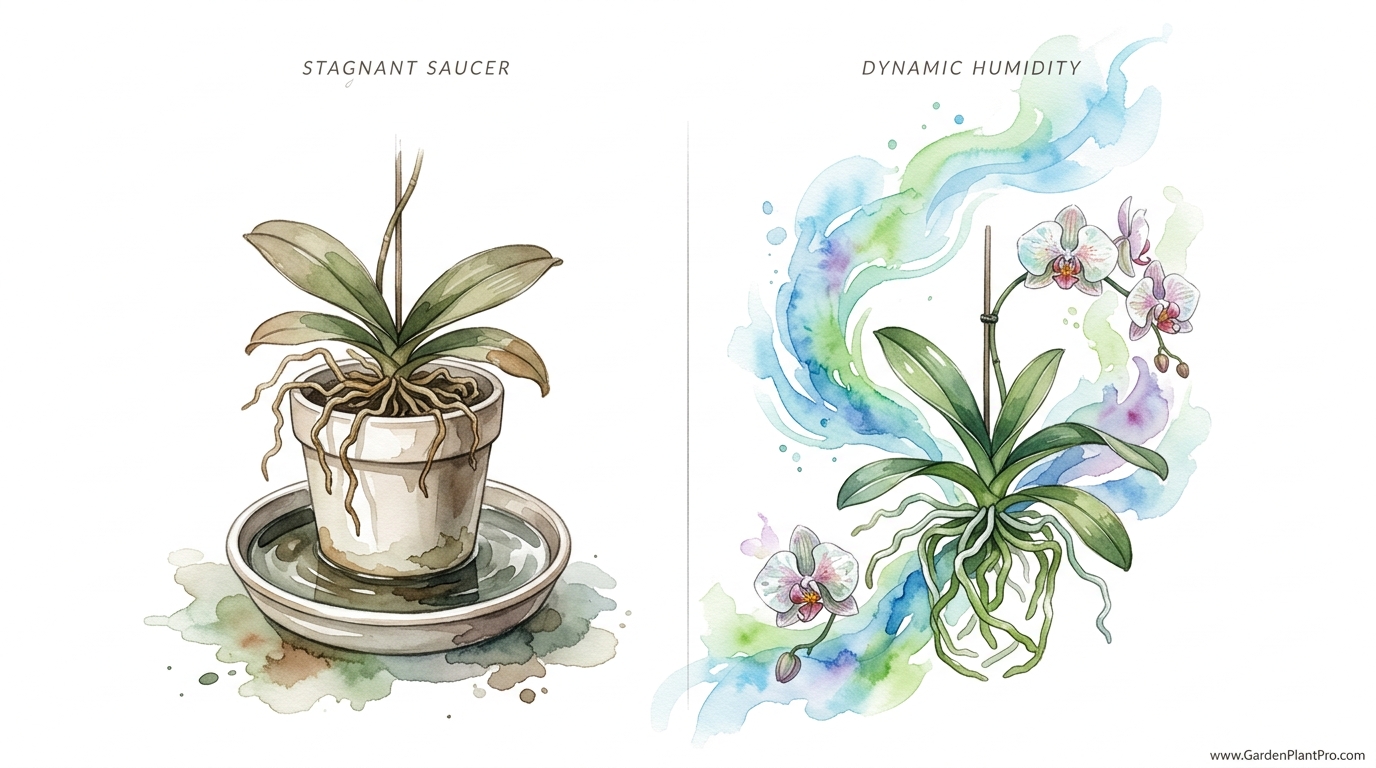
Your orchid wants to drink the air, not drown in a puddle – here is why ‘wet feet’ is the #1 killer. In the rainforest, water is always moving and the air is alive. Static water in a saucer breeds bacteria and rots roots in days. Creating a dynamic humidity tray and adding simple air movement provide the ‘breathing room’ your orchid needs to thrive in a dry home environment.
Many folks treat their orchids like a regular geranium or a tomato plant, but those roots are built for a different life. Think of an orchid as a mountaineer rather than a valley dweller. Most of the ones we grow in our living rooms are epiphytes, meaning they spend their lives clinging to tree branches way up in the canopy. They get a heavy drenching from a tropical storm, then the wind comes whipping through and dries them out before the sun even sets.
When we bring them inside, we often forget about that breeze. We see a dry surface and dump water in, letting it pool at the bottom of a decorative pot. That stagnant water is a death sentence for a plant that evolved to live in the wind. Understanding how these roots actually “breathe” is the first step toward keeping those beautiful blooms around for months instead of weeks.
How To Water Orchids Without Rot
Watering an orchid properly means respecting its history as an air plant. Rot happens when the roots are deprived of oxygen. In the world of gardening, we call this “wet feet,” and for an orchid, it is the fastest way to the compost pile. These plants do not grow in soil; they grow in specialized media like fir bark, coconut husk, or sphagnum moss because their roots need huge pockets of air to survive.
The white or silvery coating you see on orchid roots is called velamen. This is a spongy, multi-layered epidermis that acts like a thirsty wick. When it rains in the jungle, this velamen sucks up water instantly, turning green as it hydrates. Once the rain stops, the velamen holds onto that moisture while the air moves around it, preventing the “true” root in the center from suffocating.
If you leave an orchid sitting in a saucer of water, that velamen stays saturated. It cannot exchange gases, and the beneficial fungi that live in the roots start to die off, replaced by anaerobic bacteria. This is why we focus on a “soak and dry” rhythm rather than a constant dampness. You are trying to mimic a tropical rainstorm followed by a refreshing breeze.
How It Works: Mastering the Soak and Dry Method
The most reliable way to water a potted orchid is the soaking technique. This ensures the potting medium is fully saturated without leaving the plant in a swamp. Most of the orchids you find at the grocery store, like the Phalaenopsis or “moth orchid,” come in a clear plastic liner inside a prettier ceramic pot. You want to work with that inner liner.
First, take the plastic liner out of the decorative pot. Carry it to the sink or a bucket and fill it with room-temperature water. Do not use ice-cold water, as these are tropical plants and a sudden chill can shock the root system or cause the flowers to drop prematurely. Let the plant sit in that water for about 10 to 15 minutes. This gives the bark or moss enough time to absorb moisture so it can release it slowly over the next week.
After the soak, lift the liner and let every last drop of water drain out. This is the part where most people go wrong—they put the drippy plant back into the ceramic pot too soon. If an inch of water collects at the bottom of that outer pot, the roots at the base will start to rot by morning. Give it a good five minutes to drain completely before tucking it back into its home.
Monitoring the roots is your best guide for when to water again. Healthy, hydrated roots are plump and bright green. As the plant uses up the water, the roots will turn a silvery-gray or white. If you see that silver color, it is time for another soak. You can also use the “finger test” or a wooden skewer. Push a skewer an inch or two into the center of the bark; if it comes out dry, get the watering can.
The Practical Benefits of Dynamic Humidity
Creating a dynamic humidity environment solves the problem of dry indoor air without the risks of overwatering. In a typical home, especially during the winter when the heater is running, the humidity can drop to 20% or lower. Orchids usually prefer something closer to 50% or 60%. A stagnant saucer—just a tray of water under the pot—doesn’t do much and often leads to the pot sitting in the water.
A dynamic tray involves filling a shallow saucer with pebbles, river rocks, or clay LECA beads and adding water until it is just below the tops of the stones. When you place your orchid pot on top of the stones, it stays high and dry, never touching the liquid. As the water evaporates, it creates a small microclimate of humid air right around the leaves.
Adding a small, gentle fan near your orchid collection makes this system “dynamic.” Moving air speeds up the evaporation from the tray and mimics the tropical breezes of the canopy. This airflow is vital because it prevents water from sitting on the leaves or in the “crown” (the center where the leaves meet), which is a common cause of crown rot.
Challenges and Common Mistakes to Avoid
The “Ice Cube Myth” is one of the biggest hurdles for new orchid owners. Many labels suggest watering with three ice cubes once a week. While this might prevent overwatering by limiting the volume of water, it often leaves the bottom roots bone-dry while chilling the top ones. Tropical plants do not like freezing temperatures on their roots. It is much better to provide a thorough soak with room-temperature water and then let the plant dry out naturally.
Another frequent error is watering in the evening. In the garden, we know that wet leaves at night are an invitation for fungus. Orchids are the same. If you water at night and the temperature drops, the water trapped in the leaf joints can lead to bacterial infections. Always aim to water in the morning so the plant has the whole day to dry off.
Overpotting is a hidden danger that leads to rot. Orchids actually like to be a bit snug in their pots. If you move a small orchid into a giant pot filled with lots of bark, that bark will hold onto way more water than the plant can drink. The center of the pot stays soggy for weeks, and the roots in the middle will turn into mush long before the surface looks dry.
Limitations: When This Method Needs Tweaking
Your home environment dictates how often you should water. If you live in a very humid climate, like the coastal South, you might find that your orchids stay damp for too long. In these cases, a humidity tray might actually be too much, and you may need to increase the airflow significantly to prevent mold.
Temperature also plays a massive role. In the summer, when it is 80°F (27°C), your orchid might need a soak every five days. In the winter, when the plant is resting and the house is cooler, it might go two weeks between waterings. Always check the roots rather than following a strict calendar. If the house stays below 60°F (15°C), be very careful with watering, as cold and wet is the perfect recipe for fungal collapse.
Different orchid types have different needs. While Phalaenopsis like a bit of consistent moisture, Cattleyas have thick “pseudobulbs”—those swollen stems—that store water. They need to dry out almost completely between waterings. If you treat a Cattleya like a Phalaenopsis, you will likely rot the roots because they aren’t designed to stay damp for long periods.
DIY PROJECT: Collect rainwater no matter where you live...
This DIY project is the best way to legally collect rainwater NO MATTER where you live. Get chlorine-free water, cut down on your water bills, and have enough for an emergency situation or to water your garden. Read More Here...
Comparison: Stagnant Saucer vs. Dynamic Humidity
Understanding the difference between these two setups can be the difference between a blooming plant and a dead one.
| Feature | Stagnant Saucer | Dynamic Humidity Tray |
|---|---|---|
| Root Contact | Pot often sits in water, causing rot. | Pot is elevated on stones, keeping roots dry. |
| Air Circulation | Minimal; air becomes heavy and still. | Enhanced by evaporation and fan movement. |
| Bacterial Risk | High; standing water breeds pathogens. | Low; water is moving and evaporating. |
| Humidity Levels | Low local humidity; mostly bottom-heat. | Consistent 5-10% boost in local moisture. |
Practical Tips for Success
Experience has taught me that a few small adjustments make a world of difference. Here are the best practices I have gathered over the years:
- Use Rainwater if Possible: Orchids are sensitive to the salts and chlorine in city tap water. If you can collect rainwater, your orchids will reward you with much greener leaves and more frequent blooms. If not, let your tap water sit out overnight to allow some of the chemicals to dissipate.
- The Weight Test: Pick up your orchid pot after you have watered it and feel its weight. Then, pick it up again in five days. A dry orchid is surprisingly light. Once you get a feel for the weight, you won’t even need to look at the roots to know it’s time for a drink.
- Fertilize “Weekly, Weakly”: Orchids don’t need much food. Use a balanced orchid fertilizer diluted to one-quarter strength every time you water. Once a month, skip the fertilizer and flush the pot with plain water to wash away any salt buildup.
- Clear Pots are Your Friend: Growing in clear plastic liners allows you to see the roots without disturbing the plant. It takes the guesswork out of the process. If you see condensation inside the clear pot, it usually means there is still enough moisture in the bark.
Advanced Considerations: Choosing the Right Medium
The material your orchid lives in changes how you water. If your orchid is in 100% sphagnum moss, it acts like a giant sponge. Moss stays wet for a long time, so you might only water once every 10 to 14 days. Bark, on the other hand, dries out much faster. New bark is especially water-repellent, so a brand-new orchid in fresh bark might need a longer soak—up to 30 minutes—to really take in the moisture.
As bark breaks down over a year or two, it begins to hold onto more water and less air. This is why we repot every couple of years. If you notice that your orchid’s medium looks like “coffee grounds” or has a musty smell, it is breaking down and suffocating the roots. This is the time when even a careful watering routine won’t save the plant; it needs fresh, chunky bark to breathe again.
For folks living in extremely dry climates, adding a bit of perlite or charcoal to the bark mix can help. Perlite holds a tiny bit of extra moisture without turning into muck, and charcoal helps filter out impurities while keeping the air pockets open. It is all about finding the balance that fits your specific house and local weather.
Example Scenario: The Kitchen Window Success
Consider two orchids: one in a dry office and one in a bright kitchen. The office orchid is likely struggling with 20% humidity and stagnant air. Without a humidity tray and regular soaking, its leaves will shrivel and look like accordion pleats—a classic sign of underwatering.
The kitchen orchid, however, benefits from the steam of the dishwasher and the occasional boiling pot of water. If that gardener uses a pebble tray and opens the window for a few hours on a mild spring day, the orchid feels right at home. The roots stay a vibrant green because the environmental humidity slows down the evaporation from the leaves, allowing the plant to use its water more efficiently.
If the kitchen orchid starts showing yellowing leaves at the base, the gardener shouldn’t just add more water. Instead, they should check the bottom of the pot. Often, the decorative ceramic pot has collected a “puddle” of runoff. Simply pouring that out and ensuring the plant has a few days to dry in the breeze will usually stop the yellowing in its tracks.
Final Thoughts
Mastering orchid care is not about following a rigid schedule; it is about learning to observe. These plants are slow-moving and patient, but they are very clear about what they need if you know where to look. By moving away from the stagnant saucer and embracing the soak-and-dry rhythm with plenty of air movement, you are giving your orchid the closest thing to its natural home.
Remember that a slightly dry orchid is much easier to save than a rotten one. If you are ever in doubt about whether it is time to water, wait another day. Use your hands to feel the weight of the pot and your eyes to check the color of the roots. This simple mindfulness will turn you from someone who “struggles with orchids” into the neighbor who always has a spectacular bloom on the windowsill.
Experiment with your setup. Try a small fan, build a better pebble tray, or switch to a clear pot. Every home is a different microclimate, and part of the joy of gardening is fine-tuning your environment until your plants start to thrive. With a little fresh air and a careful drink, your orchids will continue to brighten your home for years to come.