
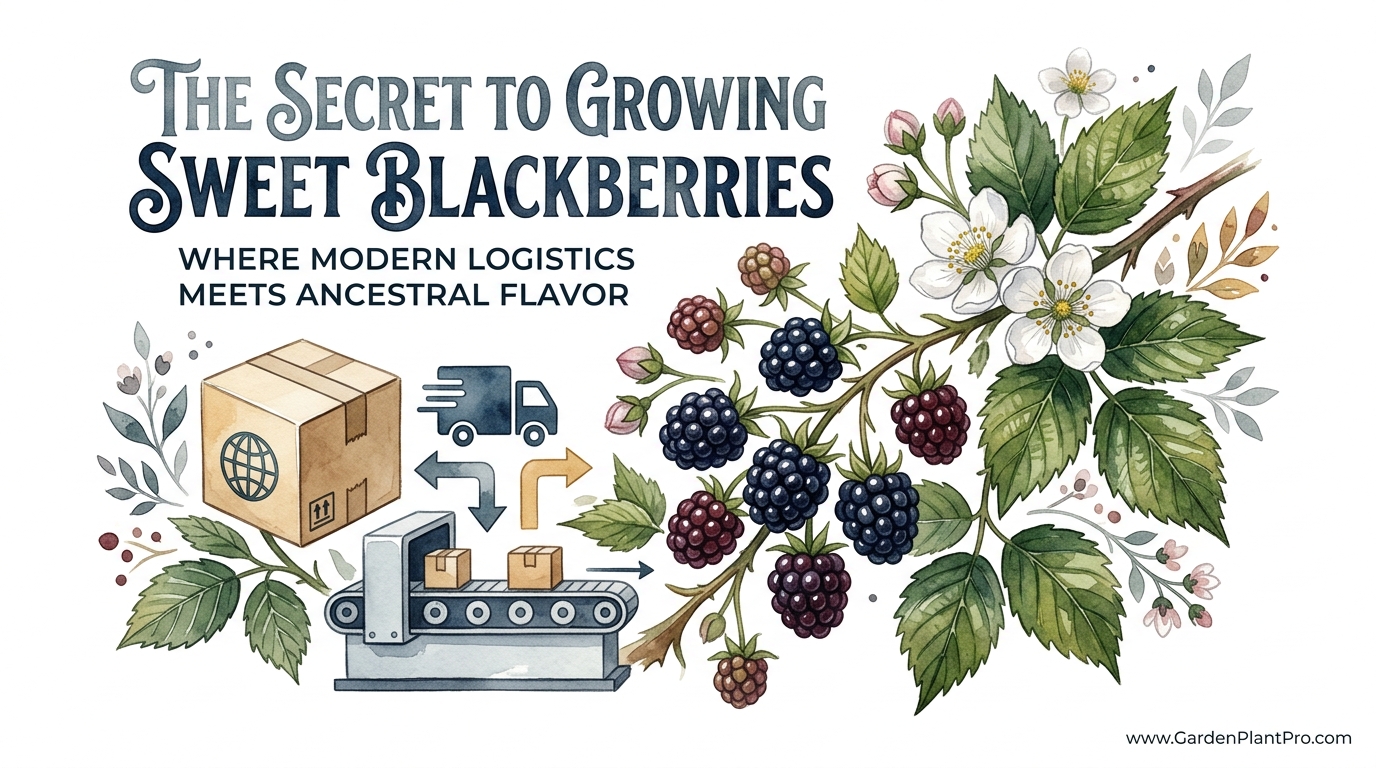
If your berries taste like crunchy water, you’re eating a logistics experiment instead of actual fruit. Modern supermarket blackberries are bred to survive a 1,000-mile truck ride, resulting in thick skins and zero sugar. The berries our grandparents picked were a completely different fruit—soft, messy, and bursting with complex sweetness.
For decades, we’ve been told that blackberries are supposed to be tart, seedy, and generally a “baking berry” that requires a cup of sugar to be palatable. That’s a myth born of convenience. When you grow them yourself, you realize that a truly ripe blackberry doesn’t just rival a strawberry for sweetness—it often leaves it in the dust. The secret isn’t some magic chemical; it’s a combination of choosing the right genetics and respecting the natural clock of the plant.
I’ve spent years leaning over garden fences, trading tips with neighbors and trial-and-erroring my way through various bramble patches. What I’ve learned is that the difference between a berry that makes your mouth pucker and one that tastes like a summer afternoon boils down to a few critical choices made months before the first bloom even opens.
The Secret To Growing Sweet Blackberries
The secret to growing sweet blackberries lies in the intersection of variety selection and patience at harvest. While soil and sun are the fuel, the genetics are the engine. In the world of home gardening, the most significant leap forward came from the University of Arkansas breeding program, which fundamentally changed the sugar profile of this fruit. For over 50 years, breeders like Dr. James Moore and Dr. John Clark focused on increasing soluble solids (sugar content) and reducing the “acid bite” that plagued older varieties.
In a practical sense, “sweetness” is measured by the Brix scale, which tells us the percentage of sugar in the fruit’s juice. A typical supermarket blackberry might sit at a disappointing 7% or 8% Brix. However, newer homegrown varieties can easily reach 11% to 13%, and the standout “Ponca” variety has been known to hit 13.4% Brix even in rainy conditions.
The second part of the secret is the “Dullness Rule.” Blackberries are unique because they turn black long before they are actually sweet. A shiny black berry is physically mature but chemically underripe; it still contains high levels of organic acids. You must wait until the berry loses its mirror-like sheen and takes on a slightly matte or “dull” appearance. At this stage, the acids have converted into sugars, and the berry will practically fall into your hand with the gentlest touch.
Choosing the Right Variety for Maximum Flavor
If you want sweetness, you cannot just grab any random “blackberry” from a big-box store. You need to look for specific cultivars that were bred for flavor rather than shipping durability.
The Arkansas Sweetheart: Ponca
Released in 2020, Ponca is currently widely regarded as the sweetest blackberry available for home gardeners. It was specifically bred to maintain its sugar levels even when the weather turns cloudy or rainy—a common pitfall that turns other berries bland. Ponca is a thornless, erect variety, meaning it grows more like a stiff shrub than a wandering vine, making it manageable for smaller backyards.
The Classic Flavor King: Marionberry
If you live in a climate with mild winters (like the Pacific Northwest), the Marionberry is the gold standard for complex flavor. It isn’t just sweet; it has a deep, earthy, wine-like richness that many consider the peak of “blackberry-ness.” However, be warned: it is a trailing variety with thorns, so you’ll need a sturdy trellis and a pair of thick gloves.
The Reliable Producer: Triple Crown
For those in slightly colder regions or those who want a long harvest window, Triple Crown is a fantastic choice. It’s a thornless, semi-erect variety known for three things: vigor, high yield, and superior flavor. The berries are large—often the size of a thumb—and have a very balanced sweetness that lacks the harsh astringency of wild berries.
The “Fast-Track” Berries: Primocane Varieties
Traditionally, blackberries produce fruit on two-year-old wood (floricanes). This meant you had to wait a full year before seeing a single berry. Newer “Primocane” varieties, like Prime-Ark Freedom or Prime-Ark Traveler, can fruit on first-year wood. This allows for two harvests: one in mid-summer on the old canes and another in late summer or autumn on the new ones. These are game-changers for anyone wanting a nearly continuous supply of sweets.
Site Selection: The Solar Engine
Sugar production is a direct result of photosynthesis. If your plants are in the shade, they simply won’t have the energy to manufacture the sugars required for a sweet crop.
Sun Requirements
Blackberry plants need a minimum of 6 to 8 hours of direct, unfiltered sunlight every day. In the garden, I always recommend the south-facing side of a fence or a wide-open patch away from the shadow of large trees. If you live in a particularly hot climate, such as the southern United States or parts of Australia, you might find that the berries “sunburn.” This is known as White Drupelet Disorder, where the individual tiny orbs on the berry turn tan or white due to intense UV radiation. In these specific cases, a 30% shade cloth can help, but generally, more sun equals more sugar.
Drainage and Airflow
Blackberries hate “wet feet.” Their root systems are prone to rot if they sit in standing water. I’ve seen many gardeners fail because they planted in a low spot of the yard. Ideally, you want a sandy loam soil that is rich in organic matter. If your soil is heavy clay, planting in raised beds (at least 30 cm or 12 inches high) is the best way to ensure your plants thrive. Good airflow is also essential; crowded canes trap moisture, leading to fungal diseases like Botrytis (gray mold), which can ruin a sweet harvest overnight.
Soil Preparation and Nutritional Strategy
The soil is the pantry for your plants. To get the best fruit, you need to provide a balanced diet, with a heavy emphasis on specific minerals that promote sugar transport.
The pH Sweet Spot
Blackberries prefer slightly acidic soil, ideally with a pH between 5.5 and 6.5. If your soil is too alkaline (above 7.0), the plant will struggle to take up iron and other micronutrients, leading to yellowing leaves (chlorosis) and bland fruit. A simple soil test is the first thing I tell any neighbor to do. You can lower pH with elemental sulfur or raise it with garden lime, but do this at least six months before planting to allow the chemistry to settle.
The Role of Potassium (K)
While nitrogen (N) is great for growing big green canes, potassium is the nutrient responsible for fruit quality and sugar movement. I like to use an organic fertilizer with a higher last number (like a 5-5-10) once the berries start to form. Some old-timers swear by sea minerals or kelp meal to “sweeten” the berries. While the science is complex, the trace minerals in kelp can help the plant handle stress, and a healthy, unstressed plant is always going to produce better-tasting fruit.
Mulching for Consistency
I never leave the soil bare around my blackberries. A 10 cm (4-inch) layer of pine bark, straw, or wood chips does wonders. It keeps the roots cool, suppresses weeds, and—most importantly—retains consistent moisture. Fluctuating soil moisture is a primary cause of “crumbly” or tart fruit.
The Architecture of the Cane: Trellising and Spacing
Blackberries are unruly by nature. Without a plan, you’ll end up with a tangled briar patch that is impossible to harvest. Proper spacing and a trellis system make the difference between a garden and a mess.
DIY PROJECT: Collect rainwater no matter where you live...
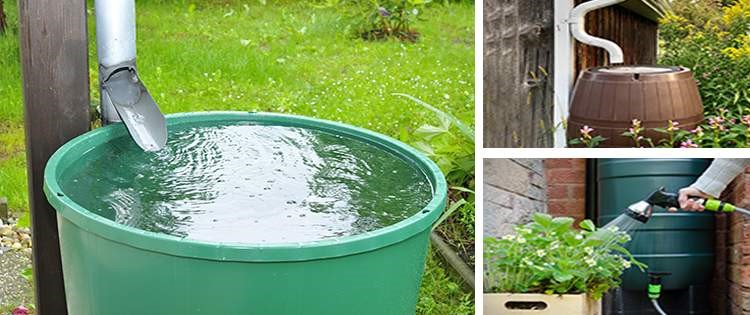
This DIY project is the best way to legally collect rainwater NO MATTER where you live. Get chlorine-free water, cut down on your water bills, and have enough for an emergency situation or to water your garden. Read More Here...
Spacing Distances
– **Erect Varieties:** Space these 90 cm to 1.2 meters (3 to 4 feet) apart. They grow like stiff bushes.
– **Trailing Varieties:** These need more room, at least 2.5 to 3 meters (8 to 10 feet) between plants, as their canes can easily reach 6 meters (20 feet) in length.
– **Row Spacing:** If you’re planting multiple rows, leave about 3 to 3.5 meters (10 to 12 feet) between rows so you can walk between them with a mower or a harvest basket.
The DIY Trellis
A simple and effective system is the **T-Post Trellis**. You drive two T-posts at the ends of your row and run two parallel wires—one at 90 cm (3 feet) and another at 1.5 meters (5 feet).
– For **Erect** types, the wires simply keep the canes from flopping over during heavy winds or when loaded with fruit.
– For **Trailing** types, you wrap the long canes around the wires in a “fan” or “loop” pattern. This spreads the foliage out so every leaf can catch the sun, maximizing that sugar production we’re after.
Pruning Like a Seasoned Pro
Pruning is the most intimidating part for beginners, but it’s the most vital for long-term sweetness. Remember: **Blackberries fruit on wood that grew the previous year.**
Summer Tipping
When your new primocanes (the green, first-year canes) reach about 1.2 meters (4 feet) in height, snip off the top 2-3 cm (1 inch). This is called “tipping.” It breaks the plant’s apical dominance and forces it to grow lateral (side) branches. It’s these side branches that will be covered in flowers and berries next year. More lateral branches mean a much higher yield in a smaller space.
The Post-Harvest Cleanout
As soon as you finish picking for the year, the canes that just fruited (the floricanes) will start to turn brown and die. They are finished. Cut them off right at the ground level and remove them from the garden. This does two things: it prevents diseases from overwintering and it opens up the center of the plant so the new green canes (next year’s crop) can get plenty of light and air.
Winter Thinning
In late winter, while the plants are dormant, go back to your lateral branches. Trim them back to about 30 cm to 45 cm (12 to 18 inches) in length. This might feel like you’re cutting away potential fruit, but you’re actually ensuring that the berries the plant *does* produce are much larger and sweeter. If you leave too many buds, the plant will overproduce small, sour berries.
Hydration for Sugar: The Watering Rule
You might think that less water would “concentrate” the sugar, but the opposite is true for blackberries. The plant needs water to move sugars from the leaves into the fruit.
During the “fruit swell” period—the two weeks before they turn black—blackberries need about 2.5 cm to 5 cm (1 to 2 inches) of water per week. If the soil dries out during this time, the berries will be small, seedy, and bitter. I highly recommend **drip irrigation** or a soaker hose. Keeping the water at the base of the plant prevents the fruit and leaves from getting wet, which is the number one cause of fruit rot.
Common Mistakes and Challenges
Even the best-laid plans can hit a snag. Here are the pitfalls I see most often:
– **Picking too early:** I cannot stress this enough. If you have to tug on the berry, it isn’t ready. A ripe berry should almost fall into your hand. If it’s shiny, it’s a “store” berry; wait for the dullness.
– **Neglecting the “Orange Rust”:** If you see bright orange powdery spots on the underside of the leaves in spring, you have Orange Rust. This is a systemic fungal disease with no cure. You must dig up the entire plant, roots and all, and dispose of it (do not compost it) to save the rest of your patch.
– **Over-fertilizing with Nitrogen:** Too much nitrogen in late summer will encourage soft, green growth that won’t survive the winter. Stop fertilizing after your mid-summer harvest.
– **Ignoring Birds:** Birds love sweet berries as much as you do. Once the berries start turning red, it’s time to throw some bird netting over the trellis. Trust me, you don’t want to do all that work just to feed the local starlings.
Blackberry Comparison: Varieties at a Glance
| Variety | Flavor Profile | Growth Habit | Brix (Sugar) % | Hardiness |
|---|---|---|---|---|
| Ponca | Intensely sweet, aromatic | Erect (Thornless) | 13.4% | Zones 6-9 |
| Triple Crown | Classic balanced sweet | Semi-Erect (Thornless) | 9-11% | Zones 5-9 |
| Marionberry | Complex, wine-like | Trailing (Thorny) | 11-12% | Zones 7-9 |
| Natchez | Tart-sweet, early ripener | Erect (Thornless) | 8-10% | Zones 6-9 |
| Prime-Ark Freedom | Good sweetness, very large | Primocane (Thornless) | 10-11% | Zones 6-9 |
Advanced Considerations: The Brix and the Biology
For those who want to take their berry patch to the professional level, it’s worth looking into **soil biology**.
### Mycorrhizal Fungi
Blackberries have a symbiotic relationship with mycorrhizal fungi. These microscopic organisms attach to the roots and extend far into the soil, bringing back phosphorus and water that the roots couldn’t reach on their own. When I plant a new cane, I always sprinkle a little mycorrhizal inoculant into the hole. It helps the plant establish faster and results in a more resilient, “sweeter” plant in the long run.
### Understanding the “Acid Bite”
The perception of sweetness isn’t just about sugar; it’s about the sugar-to-acid ratio. Varieties like **Osage** or **Caddo** have what breeders call “sub-acid” profiles. This means even if they have the same amount of sugar as a wild berry, they taste much sweeter because they have less malic and citric acid to compete with. If you are sensitive to tartness, focus your garden on these “sub-acid” varieties.
The Brix Refractometer
If you’re a real data nerd, you can buy a handheld Brix refractometer for about $30. You squeeze a drop of berry juice onto the glass, hold it up to the light, and it tells you the exact sugar percentage. It’s a great way to “calibrate” your eye so you know exactly what a 12% Brix berry looks like versus a 9% one.
A Practical Example: The “Neighbor’s Patch” Scenario
Imagine a gardener named Mike who lives in Zone 7. He plants three **Ponca** blackberries in a raised bed facing south. He uses a 10-10-10 fertilizer in early spring and switches to a 5-10-15 organic blend once he sees the first white flowers.
In June, he tips the new canes at 1.2 meters (48 inches). By July, he’s seeing the first berries turn black. Instead of picking them immediately, he waits three days until they look plump and “dull.” When he finally picks, he does it at 7:00 AM while the berries are cool. Because he used a thick layer of wood chips and a drip line, his berries are juicy and reach 13% Brix. His neighbor, who picked shiny berries from an unpruned, unwatered wild patch, wonders why Mike’s berries taste like candy while his taste like vinegar. The difference was entirely in the management.
Final Thoughts
Growing sweet blackberries is a journey back to the flavors our ancestors took for granted. It requires rejecting the “logistics experiment” of the supermarket and embracing the specific needs of the plant. By choosing modern, high-sugar cultivars like Ponca or Triple Crown, preparing a sunny, well-drained site, and mastering the simple art of summer tipping and patient harvesting, you can turn a corner of your yard into a gourmet fruit stand.
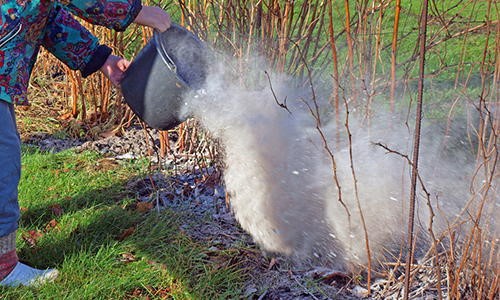
Do you have some charcoal in your house right now? We call charcoal a “miracle leftover” for anyone who wants to be a little more self-sufficient and cut costs. That’s because it can help you with so many different things around the house and garden. You can even use it to make an energy-free fridge. Read More Here...
Don’t be afraid of the pruning shears or the wait. The first time you bite into a sun-warmed berry that has truly reached its peak sweetness, you’ll never be able to go back to those plastic clamshells again. It’s a small investment of time for a reward that literally gets sweeter every single year.
Experiment with different varieties to see which ones love your specific microclimate. Gardening is a conversation between you and the soil, and blackberries are one of the most rewarding ways to keep that conversation going. In time, you might find yourself sharing your own tips over the fence, passing along the “secret” to the next generation of curious gardeners.