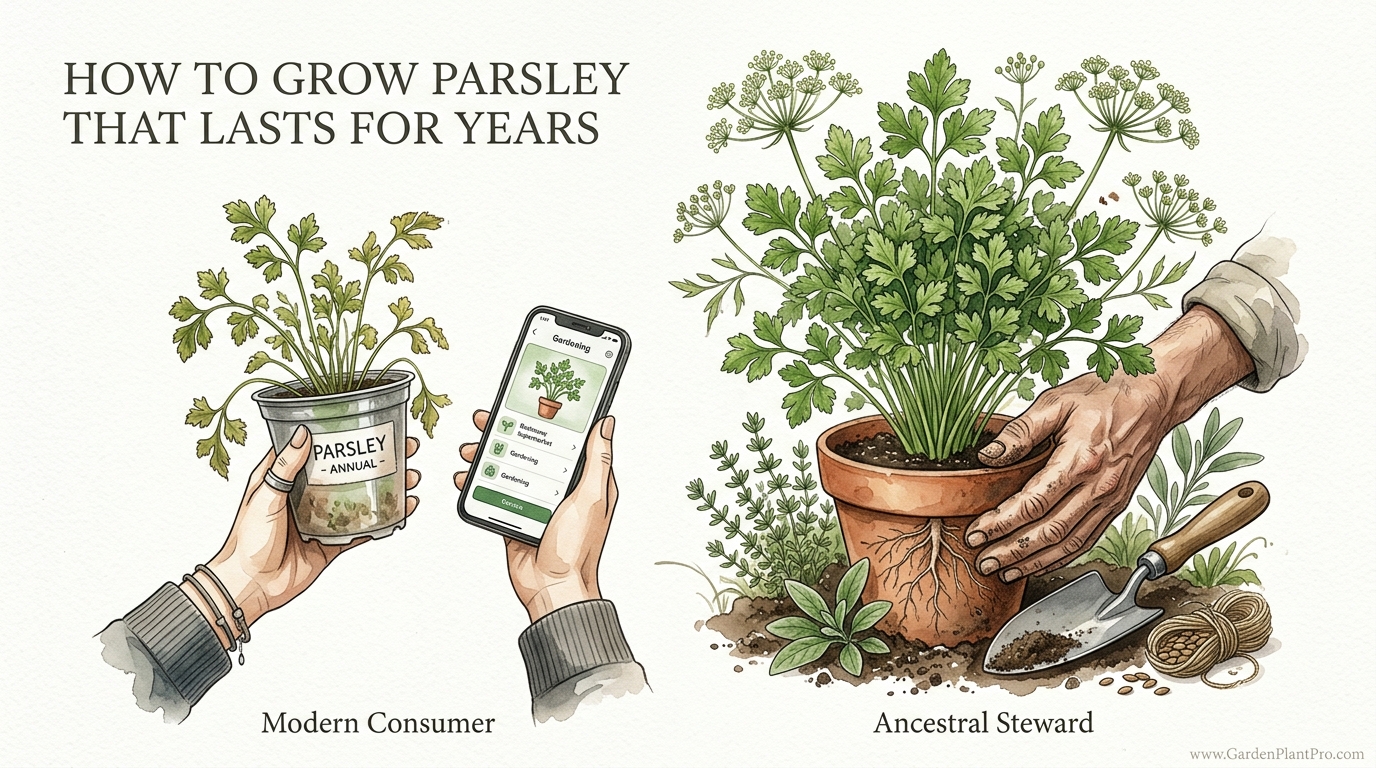
Are you treating your parsley like a temporary grocery item or a permanent garden resident? Modern gardening has tricked us into buying parsley as a temporary, potted guest that dies in two weeks. Our ancestors understood that parsley is a resilient biennial designed to feed you for years through self-seeding. By switching from plastic pots to a ‘legacy patch,’ you never have to buy seeds or plants ever again. It’s time to stop consuming and start stewarding.
Most folks think of parsley as a garnish, a bit of green fluff left on the side of a plate. If you have spent any time in a real kitchen garden, you know it is the backbone of flavor. It brings a brightness to stews and a mineral-rich punch to salads that nothing else can match. Realizing that this plant wants to be your partner for the long haul changes how you look at that little patch of dirt near the back door.
Establishing a legacy patch is about moving away from the “buy-grow-die” cycle. It is a return to a way of gardening where the plants do the heavy lifting of reproduction while you provide the space. This transition requires a bit of patience and a shift in perspective, but the reward is a lifetime of free, nutrient-dense herbs.
How To Grow Parsley That Lasts For Years
Growing parsley that lasts for years means understanding its nature as a biennial. A biennial plant spends its first year growing lush, edible leaves and building a deep taproot. After the winter chill sets in, the plant enters its second phase. The following spring, it sends up tall, architectural flower stalks to produce seeds.
Once those seeds drop, they start the cycle all over again. If you manage the space correctly, you will always have first-year plants for eating and second-year plants for seed production. This creates an overlapping “legacy” where the garden effectively replants itself without your intervention.
Success with this method depends on moving beyond the single-pot mentality. A legacy patch requires a dedicated spot in the ground or a very large raised bed where the soil is rich, deep, and well-drained. This is not a plant for a shallow window box if you want it to survive for years. You need to give those taproots room to reach down 6 to 12 inches (15 to 30 cm) into the earth.
Establishing the Lifecycle Foundation
Creating a self-sustaining patch starts with a two-year commitment. You cannot reach “legacy” status in a single season because you need those seeds to drop and germinate naturally. Most gardeners get impatient and pull the plants up as soon as they start to flower, thinking the plant is “done.” In reality, that is exactly when the most important work begins.
Phase One: The First Sowing
Start your first batch of seeds in early spring or late summer, depending on your local climate. Parsley is famously slow to germinate, sometimes taking 21 to 28 days to peek through the soil. Old-timers used to say the seed has to go to the devil and back seven times before it sprouts. To speed this up, soak your seeds in warm water for 24 hours before planting.
Plant the seeds about 1/4 inch (6 mm) deep in rows or clusters. Keep the soil consistently moist but never waterlogged. If the soil dries out during those first three weeks, the delicate embryos inside the seeds may die before they ever reach the surface. Once they are a few inches tall, thin them to about 8 to 10 inches (20 to 25 cm) apart to give each plant enough room to breathe and expand.
Phase Two: The Second Sowing
Wait exactly one year and plant a second batch of parsley right next to the first one. This is the secret to the legacy patch. You now have “Year 1” plants that are ready for heavy harvesting and “Year 2” plants that are preparing to flower. This staggered approach ensures that you always have a fresh supply of culinary leaves even when the older plants are focusing their energy on making seeds.
Phase Three: Letting It Go to Seed
Allow the second-year plants to bolt. They will produce beautiful, flat-topped yellow flowers that look like tiny umbrellas. These flowers are magnets for beneficial insects, including predatory wasps and hoverflies that eat aphids. Once the flowers turn into brown, dry seeds, you can either shake them onto the ground yourself or let the wind do it. These “volunteer” seedlings will be much stronger and more adapted to your specific soil than any store-bought variety.
Benefits of a Permanent Parsley Patch
Moving to a legacy system offers more than just free herbs. It changes the ecology of your garden. When plants are allowed to complete their full lifecycle, they become part of a larger web of life that supports your entire vegetable plot.
- Unmatched Resilience: Volunteer plants that sprout from your own seeds are naturally selected for your local microclimate. They handle your specific temperature swings and soil conditions better than nursery starts.
- Zero Cost: Seed packets and nursery pots add up over time. A self-seeding patch eventually removes the “herb budget” from your gardening expenses entirely.
- Ecological Support: Parsley flowers are a primary food source for the Black Swallowtail butterfly caterpillar. By letting your plants flower, you are providing a nursery for one of the most beautiful pollinators in the garden.
- Consistent Harvest: Once established, a staggered patch provides greens for almost 10 months of the year in many temperate zones. Even under a light dusting of snow, you can often find green sprigs ready for the soup pot.
Common Mistakes to Avoid
Even the most experienced gardener can run into trouble if they treat parsley like a typical annual. The most common error is being too “tidy.” A legacy patch looks a bit wild during the seeding phase, and fighting that natural messiness is the fastest way to kill the cycle.
Pulling “Bolted” Plants: When you see a tall stalk shooting up from the center of the plant, don’t reach for the shovel. This is the bolting stage. While the leaves on that specific plant will become tougher and more bitter, the seeds it produces are the keys to next year’s food. Keep the plant in the ground until the seeds are fully brown and falling off.
Over-Harvesting the Crown: When picking leaves, always take the outer stems first. Never cut the very center (the crown) of the plant where the new growth emerges. Cutting the crown can stunt the plant or kill it entirely, especially in its first year.
Poor Drainage: Parsley loves water, but it hates “wet feet.” If your soil is heavy clay and stays soggy, the taproot will rot. You will notice the leaves turning a sickly yellow before the whole plant collapses. Mix in plenty of organic matter or compost to keep the soil loose and airy.
Environmental Factors and Site Selection
Parsley is surprisingly hardy, but it has preferences. It thrives in full sun but appreciates a little afternoon shade if you live in a region where summer temperatures regularly climb above 90°F (32°C). In very hot climates, the leaves can become scorched and tough without that mid-day relief.
Soil pH should ideally sit between 6.0 and 7.0. If your soil is too acidic, the plant may struggle to take up nutrients. Adding a bit of composted manure or a balanced organic fertilizer once or twice a year is usually enough to keep it happy. Because it has a long taproot, it is an excellent “miner” of nutrients, pulling minerals from deep in the earth that shallow-rooted plants can’t reach.
Integration With Other Practices
A legacy parsley patch doesn’t have to exist in isolation. It works beautifully as a companion to other garden residents. Because it is a member of the Apiaceae family (the same as carrots and dill), it shares many of the same beneficial relationships.
DIY PROJECT: Collect rainwater no matter where you live...
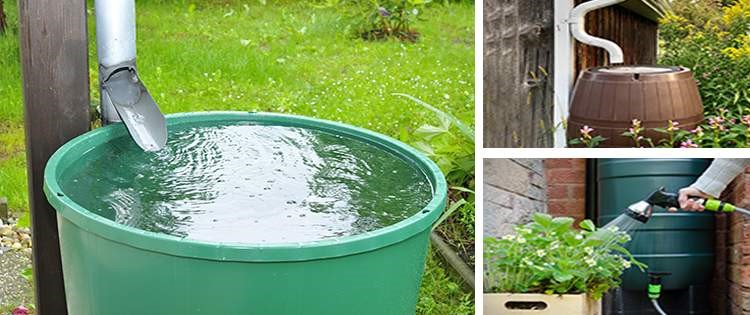
This DIY project is the best way to legally collect rainwater NO MATTER where you live. Get chlorine-free water, cut down on your water bills, and have enough for an emergency situation or to water your garden. Read More Here...
| Companion Plant | Benefit to Parsley | Benefit to Companion |
|---|---|---|
| Tomatoes | Provide cooling shade in mid-summer. | Parsley is thought to improve tomato flavor and repel certain beetles. |
| Asparagus | Grows tall and doesn’t compete for surface space. | Parsley repels the asparagus beetle. |
| Roses | Provides an aesthetic backdrop for the herbs. | Parsley flowers attract hoverflies that eat rose aphids. |
| Onions | Deter carrot flies that might target parsley roots. | Parsley provides a living mulch to keep onion bulbs cool. |
Maintenance and Long-Term Care
Once your legacy patch is up and running, your primary job is observation rather than labor. You are no longer the “boss” of the plants; you are the manager of their environment.
Mulching: Apply a 2-inch (5 cm) layer of shredded leaves or straw around the base of the plants in late autumn. This protects the taproots from the “heaving” caused by the ground freezing and thawing. In the spring, this mulch breaks down into the soil, providing the organic matter parsley craves.
Thinning Volunteers: Nature is generous. Sometimes a single plant will drop thousands of seeds, resulting in a thick carpet of “parsley grass” the following spring. You must be brave and thin these out. If they are too crowded, none of them will develop the strong taproots needed for long-term survival. Aim for that 8 to 12 inch (20 to 30 cm) spacing between the strongest-looking seedlings.
Watering: Focus on deep, infrequent watering rather than daily sprinkles. You want to encourage the roots to grow deep into the ground. A good soaking once a week—or twice in extreme heat—is usually sufficient. If you see the plants wilting in the morning, they need water. If they wilt in the heat of the afternoon but perk up by sunset, they are just protecting themselves from the sun.
Practical Tips for the Modern Steward
Traditional wisdom often holds the best secrets for herb success. These are the small adjustments that make the difference between a struggling plant and a thriving patch.
- The Boiling Water Trick: Some old-timers swear by pouring a kettle of boiling water over the planting row just before sowing the seeds. This is said to help soften the tough seed coat and clear away any soil-borne pathogens. Only do this *before* you put the seeds in the ground.
- Mark Your Rows: Since parsley takes so long to sprout, it is easy to forget where you planted it and accidentally hoe it up as a weed. Plant a few radish seeds in the same row. Radishes sprout in three days and will act as “row markers” while you wait for the parsley to appear.
- Harvesting for Yield: If you want the plant to stay productive, keep it trimmed. Even if you don’t need parsley for a recipe, snip a few outer stems every week. This prevents the plant from thinking its job is done and keeps it in a “vegetative” state longer.
- Winter Protection: In Zone 6 or colder, use a cold frame or a simple cloche (an upside-down clear jug or jar) to keep the greens harvestable through December. Parsley is incredibly cold-tolerant and can often survive temperatures down to 10°F (-12°C) without much fuss.
Advanced Considerations for Serious Practitioners
If you want to take your legacy patch to the next level, start thinking about genetics. Not all parsley is created equal. Over several years of self-seeding, you might notice that some plants are more upright, some are darker green, and some handle the summer heat better than others.
Select the seeds from the very best plants to start your next patch. If you see a plant that survived a particularly harsh winter without help, that is the one you want to let flower. By intentionally allowing only the strongest individuals to go to seed, you are performing “landrace” breeding. You are creating a variety of parsley that exists nowhere else on Earth because it is perfectly tuned to your specific backyard.
Consider also the difference between flat-leaf (Italian) and curly-leaf varieties. Flat-leaf varieties are generally more robust and have a deeper flavor for cooking. Curly varieties are often hardier in cold weather and make a beautiful ornamental edging. A truly diverse legacy patch might include both, allowing them to interbreed over time into a unique, resilient hybrid.
A Realistic Scenario: The Three-Year Turnaround
Imagine you start today with a single packet of Italian Flat Leaf seeds. You clear a 3-foot by 3-foot (1 meter by 1 meter) square in a sunny corner of the garden.
Year One: You sow the seeds in April. By June, you are harvesting fresh leaves for tabbouleh. You keep the plants watered through the summer. By November, the plants have slowed down, but you are still picking stems for Thanksgiving stuffing. You mulch them heavily before the first hard freeze.
Year Two: In March, the plants wake up and put out a burst of fresh, sweet leaves. In April, you sow a second, smaller row of seeds next to the old ones. By June, the Year One plants send up tall stalks. You stop eating from those plants and let them flower. Thousands of seeds drop in August. By September, you are eating from the “new” April plants.
Year Three: The original plants are gone, replaced by hundreds of tiny “volunteers” that sprouted from the dropped seeds. You thin the volunteers to the best 10 plants. You now have a self-perpetuating system. You have forgotten what it feels like to pay for a bunch of parsley at the store.
Final Thoughts
The shift from being a consumer of seeds to a steward of a legacy patch is one of the most rewarding steps a gardener can take. It moves you away from the anxiety of the nursery center and toward a deeper rhythm with the seasons. Parsley is the perfect teacher for this lesson because it is humble, hardy, and incredibly generous if you simply give it the time it needs to finish its work.
Treating your garden as a permanent residence for your plants rather than a temporary stage for a show changes the way you interact with the soil. You begin to notice the subtle changes in the weather and how the plants respond to them. You see the life that thrives in the flowers and the strength that comes from a deep, undisturbed taproot.
Start your patch this season. Be patient with the slow sprouts and be brave enough to let those beautiful flowers bloom. In a few years, you will look back at that first packet of seeds as the beginning of a lifetime of abundance. The soil is ready; all it needs is a gardener willing to stay for more than just one season.