
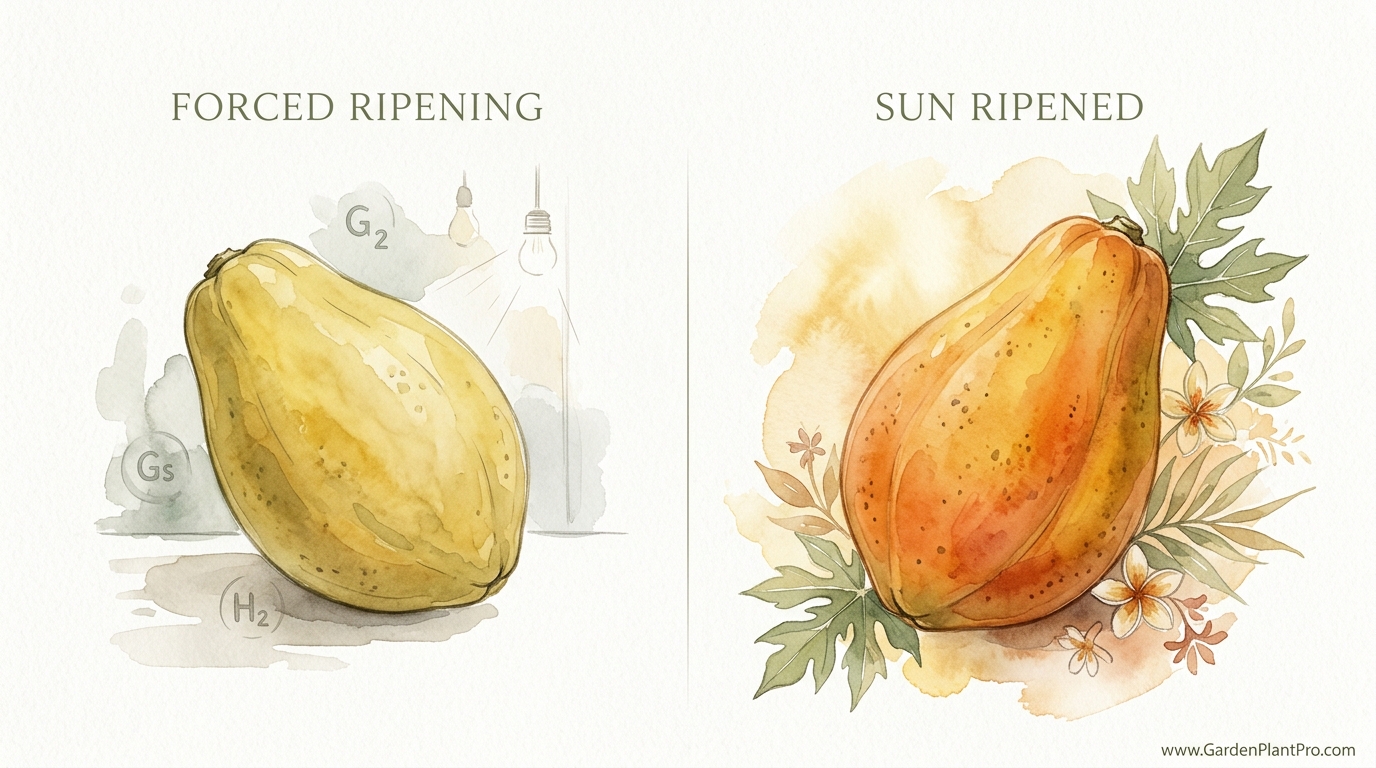
Is your fruit actually ripe, or just ‘colored’ by a chemical shortcut? Most store-bought papayas never actually ripened; they were just triggered to change color by industrial gas. This stops the development of papain, the fruit’s most powerful digestive enzyme.
When you see a perfectly yellow papaya in a supermarket bin, you are often looking at a fruit that was picked while it was still rock-hard and green. To make it “market-ready,” producers often expose the fruit to concentrated ethylene gas or, in some regions, riskier chemicals like calcium carbide. These triggers force the skin to turn yellow, but they do not allow the complex biological dance inside the fruit to finish its work.
As a gardener who has spent decades watching the subtle shift of the “color break” on a tree, I can tell you there is no substitute for time. A naturally ripened papaya is a different species entirely compared to a gassed one. It has a buttery texture, a musky sweetness, and a medicinal profile that the industrial versions simply cannot match.
In this guide, I will show you how to navigate the ripening process at home. Whether you have picked a few early from your own tree or brought home a “mature green” fruit from the market, you can still achieve a beautiful, enzyme-rich result if you follow the rules of the garden.
How To Ripen Papayas Naturally
To ripen papayas naturally, you must understand that these are “climacteric” fruits. This means they continue to ripen after being harvested, provided they reached a certain stage of maturity on the tree. If you pick a papaya too early—when it is completely dark green and lacks any yellow streaks—it will likely never ripen into something edible. It will simply rot or stay rubbery.
Natural ripening is the process of allowing the fruit’s own internal ethylene gas to break down starches into sugars and soften the cell walls. In the real world, gardeners use various “trapping” methods to concentrate this natural gas around the fruit without suffocating it. This process usually happens best at warm room temperatures, ideally between 22.5°C and 27.5°C (73°F to 82°F).
When you allow a fruit to ripen this way, you are ensuring that the papain—a proteoloytic enzyme—is fully developed. This enzyme is what makes papaya a legendary digestive aid. Forced ripening via industrial chemicals often stalls the conversion of these enzymes, leaving you with a fruit that looks ripe but acts like a green one in your stomach.
The Biology of the Better Bite: How Ripening Works
The ripening of a papaya is a sophisticated biological event triggered by a burst of ethylene production and a spike in respiration. In the gardening world, we call this the “climacteric peak.” During this phase, several key changes occur simultaneously within the fruit’s tissues.
First, the chlorophyll in the skin begins to break down, revealing the carotenoids—pigments like lycopene and beta-carotene—underneath. Research shows that naturally ripened fruits often have higher levels of these antioxidants compared to those treated with blockers or forced too quickly. The internal flesh shifts from a pale, firm texture to a vibrant orange or red, depending on the variety, such as the common Solo or the massive Maradol.
Second, the fruit’s acidity levels drop while its sugar content rises. Papayas do not actually get much sweeter after they leave the tree, which is why picking them at the “color break” stage is so vital. The “color break” is that first visible streak of yellow starting at the blossom end (the bottom) of the fruit. If you pick it before this streak appears, the sugar levels remain locked at whatever level they were when the fruit was severed from the plant.
Finally, enzymes called pectinases begin to dismantle the cell walls. This is what gives a sun-ripened papaya that signature “melt-in-your-mouth” texture. When a fruit is gassed, this process is often uneven. You might find a papaya with soft, yellow skin but a core that is still hard and flavorless. Allowing the fruit to sit at room temperature in a controlled environment ensures the softening happens from the inside out.
Methods for Ripening Papayas at Home
If you have a papaya that is at least 1/8 to 1/4 yellow, you can successfully finish the ripening process on your kitchen counter. Here are the most effective, tried-and-true methods I have used in my own kitchen over the years.
The Brown Paper Bag Method
This is the gold standard for home ripening. By placing the papaya in a brown paper bag and loosely rolling the top, you trap the ethylene gas the fruit naturally emits. Unlike plastic, paper allows the fruit to “breathe,” preventing moisture buildup that could lead to mold.
- Place the papaya in a clean brown paper bag.
- For faster results, add a ripe banana or an apple to the bag. These fruits are ethylene powerhouses and will act as a natural catalyst.
- Fold the top of the bag over once or twice.
- Keep the bag in a dark, dry spot at room temperature, away from direct sunlight.
- Check the fruit every 24 hours. Depending on the initial maturity, it should be ready in 2 to 4 days.
The Rice Bin Technique
Common in many tropical regions, burying an unripe papaya in a container of dry rice is an excellent way to trap ethylene. The rice acts as an insulator, maintaining a stable temperature and a concentrated gas environment.
This method is particularly useful for “mature green” papayas that have a very hard skin. Ensure the fruit is completely dry before submerging it to avoid fungal growth. Gardeners often check the fruit every 12 hours with this method, as it can work surprisingly fast.
The Cotton Cloth or Newspaper Wrap
If you don’t have paper bags, wrapping the fruit in a clean cotton cloth or a few layers of newspaper works similarly. Lay the fruit on a flat surface, ideally with the stem side pointing downward or slightly tilted. This helps the gases circulate around the blossom end where ripening typically begins.
Always avoid keeping the fruit on cold surfaces like stone or metal countertops, as the “cold sink” can stall the enzyme activity. A wooden cutting board or a lined pantry shelf is much better.
Benefits of Natural Ripening
Choosing to wait for nature to take its course offers measurable advantages that go beyond just flavor. When you avoid the chemical shortcuts used in commercial shipping, you are getting a superior product in several ways.
Maximum Enzyme Potency: The enzyme papain is most concentrated in the latex of green papayas, but it transforms into a more bioavailable form as the fruit ripens naturally. Forced ripening can cause the latex to dry up prematurely or remain trapped in the flesh, which is why some store-bought papayas have a slightly bitter or “soapy” aftertaste.
DIY PROJECT: Collect rainwater no matter where you live...
This DIY project is the best way to legally collect rainwater NO MATTER where you live. Get chlorine-free water, cut down on your water bills, and have enough for an emergency situation or to water your garden. Read More Here...
Rich Carotenoid Profile: Studies have indicated that ethylene-treated fruits often have lower levels of major carotenoids, particularly all-trans-lycopene. Naturally ripened fruit has the time to synthesize these pigments, providing you with more vitamin A and antioxidant support.
Superior Texture and Aroma: A naturally ripe papaya develops a complex bouquet of volatile compounds, including the terpene linalool. This gives the fruit its characteristic sweet, tropical scent. Chemically ripened fruits often lack this aroma entirely, smelling either like nothing at all or faintly of the industrial gases used to treat them.
Challenges and Common Mistakes
Even with the best intentions, ripening a papaya at home can go wrong if you ignore the environmental cues. Here are the most common pitfalls I see beginners make.
Picking Too Early
This is the number one mistake. If a papaya is harvested while it is still “immature green”—meaning it hasn’t reached its full size or developed the internal signals to ripen—no amount of paper bagging will help. The fruit will simply shrivel and turn a sickly grey-green. Always look for that “color break” or a slight softening at the blossom end before you pick or buy.
Chilling Injury
Never store an unripe papaya in the refrigerator. Temperatures below 7°C (45°F) effectively “kill” the ripening process. The cold damages the cell structure, leading to pitting on the skin, water-soaked tissues, and a complete failure to ever soften. Once a fruit has been chilled too early, it will usually rot the moment you bring it back to room temperature.
Bruising and Latex Staining
Papayas have very thin skin. Even a small bump can cause “latex staining,” where the white sap leaks out and marks the skin. These spots often stay green and hard even when the rest of the fruit turns yellow. Handle your fruit like a carton of eggs; use soft surfaces and avoid stacking them on top of each other.
Limitations: When Nature Needs More Time
While natural ripening is ideal, there are realistic constraints you must acknowledge. In colder climates or during the winter months, the ambient temperature in your kitchen might be too low to sustain the ripening process. If your countertops are cold to the touch, your papaya might take 10 days to ripen instead of 3, increasing the risk of rot.
Furthermore, some cultivars are bred specifically for shipping and have naturally thicker skins or slower ripening cycles. The massive Maradol papayas, for instance, are much more forgiving of handling but can be stubborn to ripen if they were picked too green. In these cases, you might need to use a “warm spot” in your house, like the top of a refrigerator or a high pantry shelf, to provide the necessary 25°C (77°F) environment.
Comparison: Forced vs. Sun-Ripened Papayas
Understanding the differences between these two can help you make better choices at the market.
| Feature | Forced (Gassed/Chemical) | Sun-Ripened / Natural |
|---|---|---|
| Color Consistency | Uniformly yellow, even at the stem. No gradient. | Gradient pattern; yellow at bottom, green near stem. |
| Aroma | Odorless or slightly chemical/garlicky. | Sweet, musky, and floral tropical scent. |
| Internal Texture | Can be mushy on the outside but hard near the seeds. | Consistently soft and buttery throughout the pulp. |
| Seed Color | Often white or pale (indicating immaturity). | Dark brown or jet black when fully mature. |
| Nutritional Value | Lower Vitamin C and stalled papain development. | Peak enzyme levels and high carotenoid content. |
Practical Tips for Peak Flavor
If you want to get the most out of your papaya, follow these simple garden-learned adjustments:
- The Squeeze Test: Don’t just look at the color. A ripe papaya should yield to gentle thumb pressure, similar to a ripe avocado. If it feels like a baseball, it’s not ready.
- The Sink or Float Test: If you suspect a papaya was artificially ripened with calcium carbide, place it in a bucket of water. Naturally ripe papayas are dense with sugars and will usually sink. Artificially ripened ones are often “airy” inside and may float.
- Temperature Management: If you need to slow down the ripening of a fruit that has already reached the 1/2 yellow stage, move it to a cool spot of about 13°C (55°F). This will buy you an extra day or two without causing chilling injury.
- The “Stem Down” Trick: Storing the fruit with the stem end down on a soft cloth can help concentrate the ethylene at the base, which sometimes encourages a more even ripening across the fruit’s length.
Advanced Considerations for the Home Gardener
For those of you growing your own trees, ripening begins long before you pick the fruit. The sugar content of your papaya is largely determined by the health of the soil during the final weeks of growth.
Potassium and Phosphorus: These minerals are the drivers of sugar transport. If your soil is deficient in potassium, your papayas will lack that deep sweetness, no matter how long you let them sit in a paper bag. Use a balanced organic fertilizer or a compost rich in banana peels and wood ash to boost these levels during the fruiting season.
Watering Regimen: As the fruit approaches maturity, you should slightly reduce your watering. Over-watering during the ripening phase can lead to “water-core,” where the flesh becomes translucent and bland. A slight bit of water stress (not enough to wilt the leaves) can actually concentrate the sugars and enzymes.
Sunlight Exposure: While we often talk about “sun-ripened” fruit, direct, scorching afternoon sun can actually cause “sunburn” on the skin of the papaya, which prevents that area from ever turning yellow. The leaves of the tree should provide a dappled shade to protect the developing fruit.
Example Scenario: The “Too Many Papayas” Problem
Imagine you have a small backyard orchard and three trees decide to drop twenty papayas at once. They are all at the “color break” stage—roughly 1/8 yellow. You cannot possibly eat them all today.
In this situation, you would use temperature as your throttle. Take five papayas and put them in a paper bag with a banana in your warm kitchen; these will be ready in 48 hours. Take another five and leave them out on the counter on a wooden board; they will be ready in 4 to 5 days. Take the remaining ten and place them in a cool pantry or a basement area (around 13°C or 55°F). This will slow their metabolism significantly, allowing you to bring them into the kitchen in batches over the next two weeks.
Final Thoughts
The difference between a “colored” fruit and a truly ripe one is the difference between a chemical reaction and a biological masterpiece. By taking the time to ripen your papayas naturally, you are respecting the complex chemistry of the plant and ensuring that you receive the full medicinal and nutritional benefits it has to offer.
Do you have some charcoal in your house right now? We call charcoal a “miracle leftover” for anyone who wants to be a little more self-sufficient and cut costs. That’s because it can help you with so many different things around the house and garden. You can even use it to make an energy-free fridge. Read More Here...
Do not be afraid to let a fruit sit until it looks a bit “ugly.” A few small brown freckles on the skin often indicate the highest sugar content, much like a ripe banana. As long as the fruit isn’t leaking fluid or smelling fermented, those spots are often a sign of peak maturity.
I encourage you to experiment with these methods and notice the difference in how your body feels. The digestive power of a true, enzyme-rich papaya is something you will feel almost immediately. Once you have tasted a fruit that has finished its dance with nature, you will never look at those “perfect” supermarket bins the same way again.