Your avocado tree is a forest dweller, not a concrete prisoner. Avocados are social creatures that thrive in complex ‘wild’ ecosystems, not isolated plastic pots. When you move from a sterile urban setup to an integrated garden guild, you stop fighting nature and start growing a legacy. Here is how to build a forest in your own backyard.
I have spent many decades watching these trees behave in various settings, from the tight confines of a balcony to the sprawling freedom of a homestead. The difference between a tree that survives and one that truly thrives is often found in how closely we can mimic its ancestral home. In the wild, an avocado tree doesn’t sit in a clean circle of bark mulch; it lives in a chaotic, beautiful pile of its own fallen leaves, surrounded by friends that fix nitrogen and flowers that invite the local pollinators.
Growing an avocado is a long game. It is a commitment to the soil as much as it is to the fruit. If you approach this with the mindset of a forest manager rather than a decorator, you will find that the tree does most of the heavy lifting for you. Let’s look at how we can get your tree out of its “concrete prison” mindset and into a thriving ecosystem.
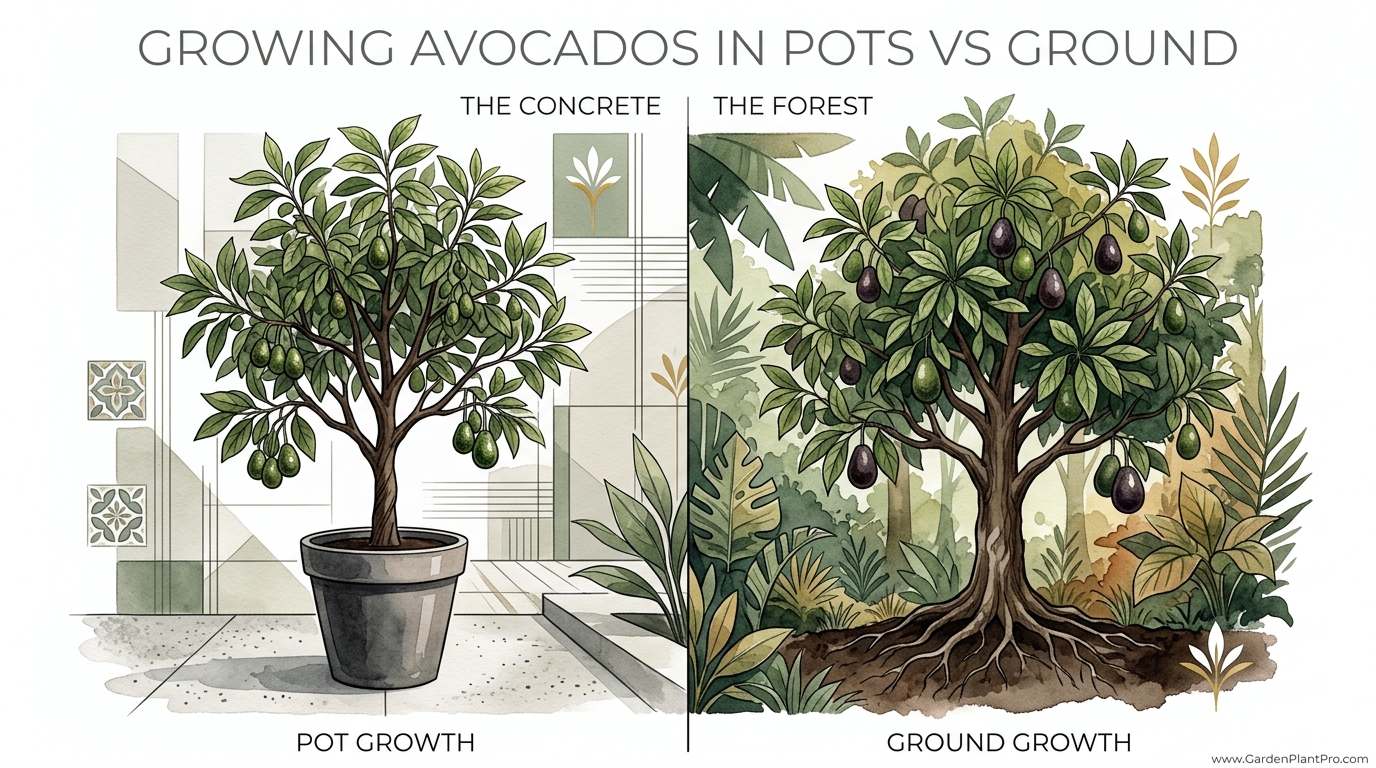
Growing Avocados In Pots Vs Ground
The choice between a pot and the open ground is the first major decision you will face. In the gardening world, we often talk about these as two different lifestyles for the tree. A potted avocado is like a bonsai—it is a managed, contained version of its true self. It exists in a world where you control every drop of water and every milligram of nutrient. This is often a necessity for those of us living in colder climates (above USDA Zone 9) where the winter frost would otherwise claim the tree. In these cases, moving the tree into a garage or sunroom is the only way to keep the dream alive.
When you plant in the ground, however, you are giving the tree access to a massive biological network. In-ground trees develop a much more robust structure. They can tap into the thermal mass of the earth, which stays warmer than the air during a light frost. They also connect with mycorrhizal fungi, those microscopic underground web-builders that help the roots find water and nutrients far beyond their reach. In the ground, a standard avocado tree like a ‘Hass’ can reach heights of 30 to 40 feet (9 to 12 meters), whereas a potted one will rarely exceed 6 to 8 feet (1.8 to 2.4 meters) even with the best care.
Think of it this way: a pot is a hotel room, while the ground is a permanent home. Both have their place, but the level of maturity and fruit production you can achieve in the ground is vastly superior. If you have the space and the right climate, the ground is always the preferred destination for a tree that wants to leave a legacy.
Choosing Your Variety: Standard vs. Dwarf
Before you dig that hole, you need to know who is going into it. If you have a massive backyard, a standard ‘Hass’ or ‘Fuerte’ is a classic choice. These trees are vigorous and produce hundreds of fruits once they hit maturity. However, for most modern suburban gardens, these giants are often too much to handle. They cast deep shade and their roots can be quite competitive with nearby plants.
This is where dwarf and semi-dwarf varieties come into play. The ‘Wurtz’ (often called ‘Little Cado’) is perhaps the most famous true dwarf, rarely growing larger than 10 feet (3 meters) in the ground and much smaller in a container. It has a weeping, umbrella-like shape that makes harvesting a breeze. Other great options for smaller spaces include the ‘Gwen’ and ‘GEM’. These varieties are precocious, meaning they start fruiting much earlier in their lives—often within 2 to 3 years compared to the 5 to 7 years a standard seedling might take.
Understanding Flower Types
To get fruit, you need to understand the “dance” of the avocado flower. Avocados have a unique flowering behavior where they alternate between male and female stages over two days. Type A varieties (like ‘Hass’ and ‘Gwen’) open as female in the morning of the first day and male in the afternoon of the second. Type B varieties (like ‘Fuerte’ and ‘Zutano’) do the opposite. While many trees are self-fertile to some degree, having both types in your garden—or even in the same “guild”—massively increases your harvest.
Creating the Forest Floor: Soil and Drainage Essentials
If you take only one lesson from me today, let it be this: avocados hate “wet feet.” In their native tropical and subtropical habitats, they grow in soils that are rich in organic matter and incredibly well-draining. Their roots are shallow and fibrous, mostly staying in the top 6 to 8 inches (15 to 20 cm) of soil. Because they are so close to the surface, they need constant access to oxygen. If the soil stays saturated for too long, a common pathogen called Phytophthora cinnamomi (root rot) will move in and kill the tree faster than you can say “guacamole.”
To check your drainage, dig a hole 12 inches (30 cm) deep and fill it with water. If it hasn’t drained away within a few hours, you have a drainage problem. You can’t just plant into heavy clay and hope for the best. Instead, you must build up. Many successful growers use “mounds” or “berms.” By piling up a mix of native soil and high-quality compost to a height of 12 to 18 inches (30 to 45 cm), you ensure the main root mass stays above the water table during heavy rains.
Soil pH and Microbes
Avocados prefer a slightly acidic soil, ideally with a pH between 5.5 and 6.5. In more alkaline soils (pH above 7.0), the tree will struggle to take up essential micronutrients like iron and zinc. You will see this as “yellowing” between the veins of the leaves. Adding garden gypsum (calcium sulfate) is a trick many of us old-timers use. It doesn’t change the pH significantly, but it helps improve soil structure and has been shown to suppress the fungi that cause root rot.
Building the Guild: Social Networking for Trees
In a true forest, the avocado is never alone. It is part of a “guild”—a group of plants that support each other. This is the heart of moving away from the “concrete prisoner” model. A good guild includes plants that fulfill different roles: nitrogen fixers, dynamic accumulators, pest repellents, and groundcovers.
- Nitrogen Fixers: Plants like pigeon peas or even certain types of clover have a symbiotic relationship with bacteria that pull nitrogen from the air and store it in their roots. When you prune these plants, the roots die back slightly and release that nitrogen directly to your avocado.
- Dynamic Accumulators: Comfrey is the king here. Its deep taproot reaches down into the subsoil to pull up minerals like potassium and calcium. You can “chop and drop” the comfrey leaves right under the avocado to create a nutrient-rich mulch.
- Pest Repellents and Pollinator Magnets: Lavender, basil, and rosemary attract bees while their strong scents can confuse pests. Onions and garlic planted a few feet from the trunk can also help deter certain soil-borne insects.
- Groundcovers: Instead of bare dirt or wood chips, try nasturtiums or sweet potatoes. They protect the soil from the sun, keeping those shallow avocado roots cool and moist, while providing a secondary harvest for you.
The Art of Watering: Irrigation Strategies
Watering an avocado is a balancing act. Because the roots are so shallow, they dry out quickly, but because they are sensitive to rot, you can’t just leave the hose running. A mature tree in a hot, Mediterranean climate might need as much as 40 to 50 inches (1,000 to 1,300 mm) of water per year, including rainfall. During the peak of summer, a single large tree can transpire 40 to 50 gallons (150 to 190 liters) of water a day.
The best way to water is deeply but infrequently. You want to soak the entire root zone—which extends out to the “drip line” of the canopy—and then allow the top few inches of soil to dry out before watering again. If you are growing in a pot, you might need to water every day or two in the summer. In the ground, every 7 to 10 days is often sufficient once the tree is established. Using a tensiometer, a tool that measures soil moisture tension, can take the guesswork out of this. If the gauge reads between 25 and 30 centibars, it is usually time to turn on the tap.
Maintenance and Long-Term Care
Once your tree is in the ground and your guild is established, the work shifts to observation. The most important maintenance task is mulching. An avocado tree is naturally designed to live under a thick blanket of its own leaves. Never rake up avocado leaves! They contain the exact nutrients the tree needs and they encourage the growth of beneficial Trichoderma fungi, which are the natural enemies of root rot. If the leaf litter isn’t thick enough, add 4 to 6 inches (10 to 15 cm) of coarse wood chips or straw, keeping it a few inches away from the trunk to prevent bark decay.
Pruning for Productivity
Unlike many fruit trees, avocados don’t require heavy annual pruning to produce fruit. In fact, heavy pruning can encourage “vegetative growth” (lots of leaves) at the expense of fruit. We mostly prune for three reasons: to keep the tree at a manageable height, to remove dead or diseased wood, and to allow light into the center of the canopy. Always prune after the harvest but before the next bloom cycle. Be aware that the bark of an avocado is very thin and can easily get “sunburned” if you suddenly expose a branch to direct sunlight. If you must do a heavy prune, many gardeners paint the exposed branches with a diluted white latex paint to act as a sunscreen.
Benefits of the Integrated Approach
Choosing to grow your avocado in a guild rather than an isolated pot offers several measurable advantages. First, you will notice a significant reduction in the need for synthetic fertilizers. By using nitrogen-fixing plants and dynamic accumulators, you are creating a self-feeding system. Second, the diversity of the guild creates a “self-policing” environment. Beneficial insects like ladybugs and predatory wasps will move in to manage thrips and mites, reducing your need for chemical sprays.
There is also the benefit of climate resilience. A tree surrounded by a thick layer of mulch and companion plants is much better at surviving extreme heat waves or unexpected cold snaps. The ecosystem acts as a buffer, regulating soil temperature and humidity in a way a plastic pot never could. Finally, the fruit quality is often better. Trees that have access to a wide range of micronutrients through a healthy soil web tend to produce creamier, more flavorful avocados.
DIY PROJECT: Collect rainwater no matter where you live...
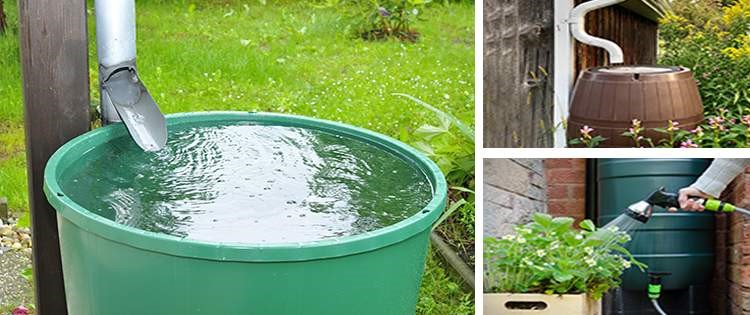
This DIY project is the best way to legally collect rainwater NO MATTER where you live. Get chlorine-free water, cut down on your water bills, and have enough for an emergency situation or to water your garden. Read More Here...
Common Pitfalls and How to Avoid Them
The most common mistake I see is planting the tree too deep. When you take the tree out of its nursery pot, the top of the root ball should be level with or even slightly above the surrounding soil. If you bury the trunk, you are inviting collar rot. Another frequent error is over-fertilizing young trees. A newly planted avocado has very sensitive roots that can easily be “burned” by high-nitrogen chemical fertilizers. Stick to compost and organic mulches for the first year or two while the root system establishes.
Don’t forget about salt buildup, especially if you are growing in a pot or an area with “hard” water. Avocados are very sensitive to salts (sodium and chloride). If you see the tips of the leaves turning brown and crispy, it is often a sign of salt stress. You can fix this by “leaching” the soil—applying a large amount of water all at once to wash the salts down below the root zone. Doing this once every few months can save a struggling tree.
Limitations: When the Forest Isn’t Possible
As much as I love the “forest” approach, there are times when it just won’t work. If you live in an area where temperatures regularly drop below 25°F (-4°C), growing a tree in the ground is a recipe for heartbreak unless you are prepared to build a temporary greenhouse around it every winter. In these climates, a large 15 to 25-gallon (55 to 95 liter) pot is your best friend. You can still use elements of the guild, like planting some small herbs or clover in the pot, but the scale will be limited.
Soil quality is another boundary. If your backyard is nothing but solid rock or heavy, swampy clay that cannot be drained, an in-ground avocado will never thrive. In these cases, building large raised beds (at least 4 feet or 1.2 meters wide) or using large containers is the only way to provide the aerated environment the roots require. Always be honest with yourself about your site conditions before you invest in a tree.
Advanced Considerations: Going Beyond the Basics
For those who want to take their avocado game to the next level, I recommend looking into “fertigation”—the process of adding organic liquid fertilizers directly into your irrigation system. This allows for small, frequent doses of nutrients that mimic the natural “drip” of nutrients from a forest canopy. You might also consider specific rootstocks. Commercial growers often use clonal rootstocks like ‘Dusa’ or ‘Toro Canyon’ because they have been bred for specific resistance to root rot or salt tolerance.
Monitoring your tree’s health through leaf analysis is another professional-level step. Once a year, you can send a few leaves to a lab to see exactly what nutrients the tree is lacking. This stops you from guessing and allows you to apply exactly what is needed—whether it’s a bit of extra zinc or a touch of boron to help with fruit set. It is this level of attention that separates the hobbyist from the master gardener.
Practical Scenario: Planting Your First Guild
Let’s imagine you’ve just bought a ‘GEM’ semi-dwarf avocado. You’ve found a sunny spot on a slight slope in your yard. First, you clear a 6-foot (1.8 meter) circle of grass. Instead of digging a deep hole, you loosen the top 2 inches (5 cm) of soil and place the tree right on top. You then bring in a mix of native soil and compost to build a mound around the root ball, ensuring the “flare” of the trunk is visible.
Next, you plant three comfrey plants about 3 feet (1 meter) away from the trunk. Between the comfrey and the tree, you scatter some clover seeds and plant a few basil starts. Finally, you cover the entire mound with 4 inches (10 cm) of wood chips, leaving a small gap around the trunk. You give the tree a deep soak of about 5 gallons (19 liters) of water. Over the next few months, you watch the basil grow, the comfrey reach down, and the avocado start to push out new, coppery-red leaves. You aren’t just a gardener anymore; you are the keeper of a tiny forest.
Final Thoughts
Growing an avocado tree is one of the most rewarding experiences a gardener can have. There is something deeply satisfying about slicing into a fruit that you watched grow from a tiny blossom into a heavy, oil-rich treasure. By treating your tree as a forest dweller rather than a prisoner, you are working with the grain of nature. You are building soil health, encouraging biodiversity, and creating a resilient system that will produce for decades.
Remember that gardening is a conversation between you and the earth. Your tree will tell you what it needs if you learn to look at its leaves and feel the moisture in its soil. Don’t be afraid to experiment with different companion plants or mulching techniques. Every backyard is a unique microclimate, and what works for me might need a slight tweak for you. Step away from the sterile plastic pots and the bare dirt. Embrace the complexity of the forest guild, and your avocado tree will reward you with a legacy of shade, beauty, and more fruit than you know what to do with.