
Is your mulberry tree a neighborhood nuisance or the secret engine of a thriving backyard ecosystem? In the city, we’ve been taught to see mulberries as a sidewalk stain. But in the wild-designed garden, they are a high-yield superfood and a free self-feeder for your livestock. It’s time to stop fighting the fruit and start building the system that makes it an asset.
When I first started gardening decades ago, the old-timers used to tell me that a mulberry tree was more of a burden than a blessing. They saw the purple-stained driveways and the birds flocking to the branches. What they missed was the incredible amount of energy those trees were pumping into the soil and the local food chain.
Whether you have an acre of land or a small balcony in the city, you can harness this power. These trees are some of the most resilient, fast-growing, and productive plants you can ever put in the ground. They are the ultimate “lazy gardener” plant because they ask for so little while giving so much.
In this guide, I want to share what I’ve learned from years of watching these trees grow. We’ll talk about how to keep them small, how to use them to feed your chickens or goats, and why they deserve a prime spot in your garden layout.
How To Grow Mulberry Trees In Small Spaces
Growing a tree that naturally wants to reach 50 feet (15 meters) in a small backyard might seem like a recipe for disaster. However, the mulberry is surprisingly cooperative when it comes to space constraints. It exists in a variety of forms that make it perfect for urban or suburban settings where every square inch (square centimeter) counts.
In real-world situations, gardeners use dwarf varieties or specific pruning techniques to keep the harvest within reach. Think of it like a “fruiting hedge” rather than a towering forest giant. In a small garden, a mulberry tree provides a dense canopy of shade in the summer, delicious fruit for your breakfast, and a constant supply of green biomass for your compost pile.
The secret to success in tight quarters is choosing the right variety from the start. You wouldn’t try to fit a Great Dane into a studio apartment, and you shouldn’t plant a standard White Mulberry (Morus alba) right next to your foundation. Instead, we look for cultivars that have “dwarf” or “everbearing” in their name.
For those with only a patio or a small deck, container gardening is a perfectly viable option. A mulberry tree in a 20-gallon to 30-gallon (75 to 115 liter) pot can stay a manageable 6 to 8 feet (1.8 to 2.4 meters) tall while still producing several pounds (kilograms) of fruit every year. It’s all about managing the roots and the shoots.
Managing Growth Through Variety and Technique
To keep a mulberry small, you have to be the boss of the tree’s biology. These trees are incredibly vigorous, sometimes putting on 6 to 10 feet (1.8 to 3 meters) of new growth in a single season. If you don’t have a plan, they will quickly take over the sky.
Start with a true dwarf variety. The Gerardi Dwarf is a personal favorite because it naturally stays under 6 feet (1.8 meters) and has a weeping, bushy habit. It produces large, 1-inch (2.5 cm) long black fruits that are as sweet as any standard tree. Another great choice is the Thai Dwarf, which is prolific and handles heat exceptionally well.
If you already have a standard tree and don’t want to dig it up, you can use a technique called “orchard height” pruning. This involves heading back the main trunk at about 4 or 5 feet (1.2 or 1.5 meters) when the tree is young. This forces the tree to branch out horizontally rather than vertically.
Every winter, you’ll want to come in and remove the “water sprouts”—those thin, straight branches that shoot straight up toward the sun. By keeping the canopy low and wide, you make it easier to harvest and ensure that the tree doesn’t shade out the rest of your garden.
How the Mulberry System Works
The mulberry tree operates as a massive nutrient pump. Its deep roots reach down into the subsoil, pulling up minerals that other plants can’t reach. Those minerals end up in the leaves and the fruit, which eventually drop back to the surface, creating a rich layer of “self-mulch.”
In a well-designed system, you aren’t just growing fruit; you are growing a closed-loop fertilizer factory. The leaves are incredibly high in protein—often between 15% and 25% on a dry-matter basis. This makes them a “super-forage” for livestock like chickens, rabbits, and goats.
When the fruit ripens, it doesn’t all come at once. A single tree can drop berries for 6 to 8 weeks. This steady “drip” of calories is perfect for a backyard ecosystem. Instead of a single massive harvest that you have to process in a weekend, you get a daily snack for yourself and a constant food source for your animals.
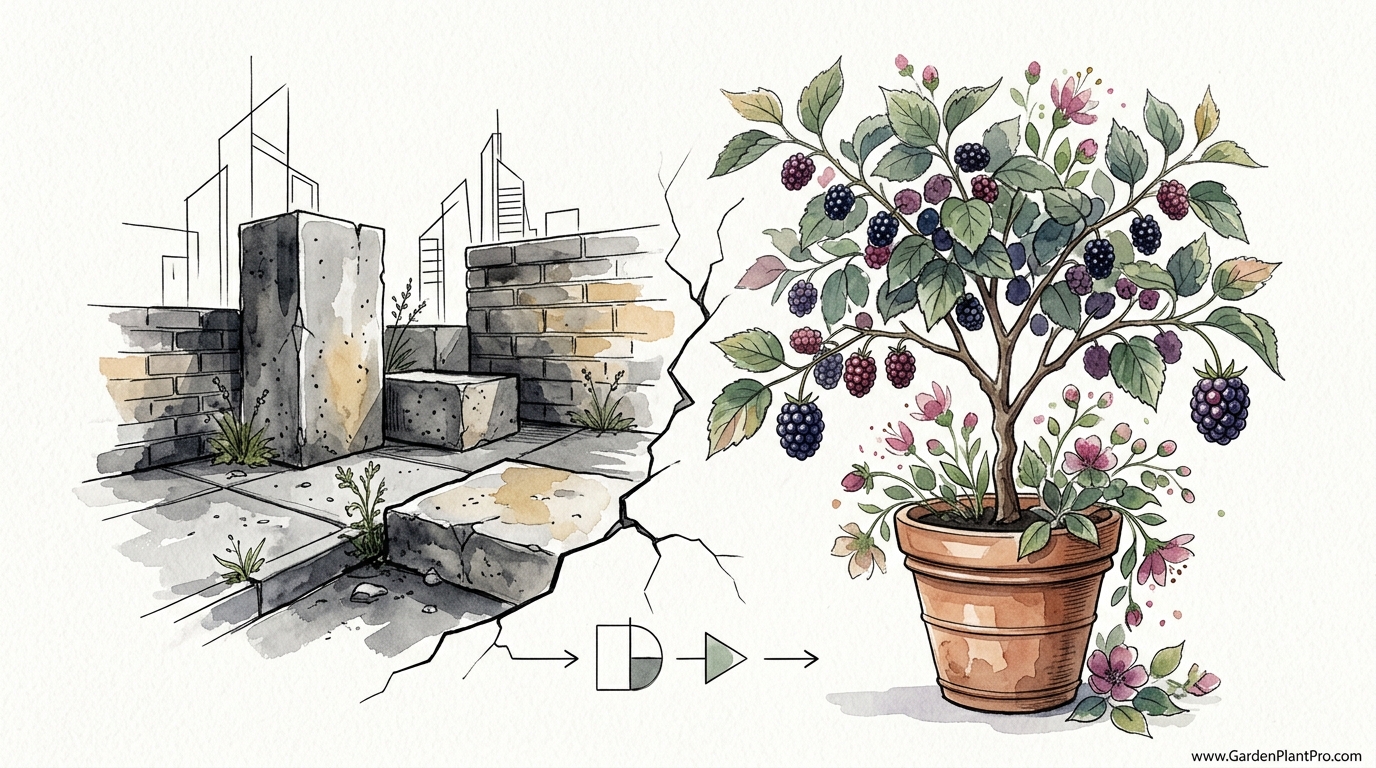
If you position the tree correctly—perhaps overhanging a chicken run—the “nuisance” of dropping fruit becomes a “free-feeder” system. The chickens do the work of cleaning up the mess, turning the sugar and protein from the berries into high-quality eggs. This is the heart of moving from a concrete conflict to a wild harvest.
Benefits of the Backyard Mulberry
The most obvious benefit is the fruit. Mulberries don’t ship well, which is why you almost never see them in a grocery store. They are fragile and start to ferment shortly after being picked. Growing your own is the only way to experience the true flavor of a fresh, sun-warmed berry.
Beyond the kitchen, the mulberry is a champion of soil health. The fallen leaves decompose rapidly, feeding the earthworms and soil microbes. If you have “dead” soil that feels like hard-packed clay, planting a mulberry and letting it drop its leaves for a few years will transform that ground into rich, dark loam.
From a livestock perspective, the benefits are measurable. Feeding mulberry leaves to dairy goats has been shown to increase milk production and improve the quality of the fats in the milk. For poultry, the high protein content in the leaves helps during the molting season when they need extra nutrients to grow new feathers.
DIY PROJECT: Collect rainwater no matter where you live...
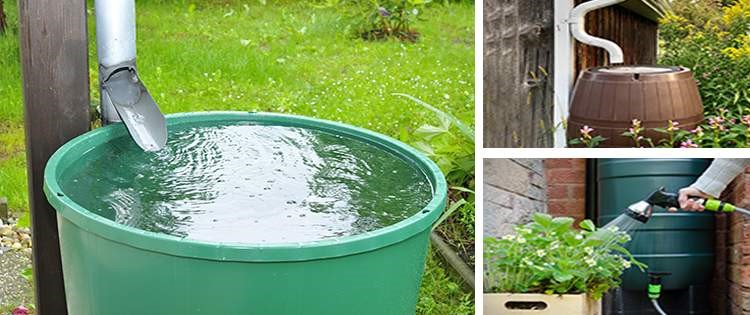
This DIY project is the best way to legally collect rainwater NO MATTER where you live. Get chlorine-free water, cut down on your water bills, and have enough for an emergency situation or to water your garden. Read More Here...
Finally, the mulberry is a “climate-proof” tree. Once established, they are remarkably drought-tolerant. They can handle a wet spring and a scorching, dry summer without missing a beat. In an era of unpredictable weather, having a reliable producer like the mulberry is a great form of garden insurance.
Challenges and Common Mistakes
One of the biggest mistakes I see new gardeners make is planting a fruiting mulberry too close to a walkway or a driveway. The dark purple juice is a powerful dye. If you step on a fallen berry and walk into the house, your carpet will never be the same. Always plan your “drop zone” away from hardscaping.
Another pitfall is ignoring the tree for too long. Because they grow so fast, a tree that was “manageable” last year can be a monster this year if you skip your winter pruning. You have to stay on top of the growth to keep the fruit within reach. If the fruit is 20 feet (6 meters) up, the birds will get all of it, and you’ll just get the purple droppings on your car.
Wait to harvest until the fruit is truly ripe. A mulberry that is still reddish-purple will be tart and slightly astringent. You want them to be a deep, matte black (or pure white, depending on the variety). They should almost fall off into your hand with the slightest touch.
Lastly, be aware of the “root-to-shoot” ratio. Mulberry roots are aggressive and shallow. They can easily lift up pavers or crack old pipes if planted too close. Give the tree at least 10 to 15 feet (3 to 4.5 meters) of space from any underground infrastructure or foundation.
Environmental Limitations and Constraints
While mulberries are tough, they aren’t invincible. The Black Mulberry (Morus nigra), which many consider the best-tasting, is the most temperamental. It prefers a Mediterranean-style climate—dry summers and mild winters. It often struggles in the humid Southeast of the United States or the frigid winters of the North.
If you live in a region with late spring frosts, you might lose your fruit crop occasionally. While the tree itself will survive, the tender new blossoms can be killed by a sudden dip below freezing (0°C / 32°F). Choosing a variety that blooms later, like the Illinois Everbearing, can help mitigate this risk.
Soil drainage is another factor. Mulberries hate “wet feet.” If your planting site stays boggy for weeks at a time, the roots will rot. They prefer well-drained soil with a pH between 6.0 and 7.0. If you have heavy clay, planting on a slight mound can provide that extra drainage the roots need to thrive.
Comparison of Common Mulberry Types
| Feature | White Mulberry (M. alba) | Red Mulberry (M. rubra) | Black Mulberry (M. nigra) |
|---|---|---|---|
| Origin | Asia | North America | Western Asia |
| Flavor | Very sweet, honey-like | Sweet-tart, complex | Rich, acidic, deep flavor |
| Cold Hardiness | Excellent (Zone 4-9) | Good (Zone 5-9) | Moderate (Zone 7-10) |
| Growth Rate | Very Fast | Moderate | Slow |
| Leaves | Glossy, smooth | Rough, “sandpaper” feel | Hairy underside |
Practical Tips for a Successful Harvest
The easiest way to harvest a large mulberry tree is the “shake and catch” method. Lay a large clean tarp or an old bedsheet under the tree. Give the branches a vigorous shake, and the ripe fruit will rain down. This saves you from having to pick each berry individually, which can take hours.
To prolong the shelf life of your harvest, do not wash the berries until right before you eat them. Moisture is the enemy of the mulberry. Put them in a shallow container—don’t stack them too deep or the weight will crush the berries at the bottom—and keep them in the refrigerator. They will usually last 2 or 3 days.
If you are growing mulberries for your chickens, consider planting a “mulberry guild.” This is a group of plants that grow well together. You might plant comfrey around the base of the tree to provide even more green forage and chop-and-drop mulch. The chickens can scratch around the comfrey without hurting the tree’s roots.
For those in colder climates, remember that potted trees are more susceptible to freezing. The roots in a pot aren’t insulated by the earth. In the winter, wrap your pots in burlap or move them into an unheated garage or shed to prevent the root ball from freezing solid and thawing repeatedly.
Advanced Techniques: Pollarding and Coppicing
For the serious practitioner, mastering pollarding and coppicing is the key to massive yields in small spaces. Pollarding is a pruning system where you cut back all the new growth to the same “knobs” on the main branches every year. This keeps the tree at a specific height and creates a beautiful, gnarled appearance over time.
Coppicing is even more extreme. This involves cutting the entire tree down to a stump (or “stool”) near ground level every year or two. The tree responds by sending up a thicket of long, straight rods. This is the traditional way to grow mulberries for basket weaving or for maximum leaf production for silkworms and livestock.
By using these methods, you can grow a “forest” of mulberry browse in a space the size of a parking spot. The new growth from a coppiced stump is incredibly tender and nutritious. If you have goats, you can simply cut the long rods and toss them over the fence. They will strip the leaves and bark, leaving you with clean “mulberry sticks” that make excellent kindling or garden stakes.
When you pollard a tree, you are also concentrating the tree’s energy. Instead of growing 20 feet (6 meters) of wood, the tree puts that energy into producing more nodes and larger leaves. In the spring, these nodes will explode with fruit, all of it at eye level where you can easily pick it.
A Realistic Example: The Backyard Chicken Orchard
Imagine a small 20-foot by 20-foot (6m x 6m) corner of your yard. You plant one Illinois Everbearing mulberry tree in the center. For the first two years, you let it grow, but you keep the central leader pruned to 5 feet (1.5 meters).
Do you have some charcoal in your house right now? We call charcoal a “miracle leftover” for anyone who wants to be a little more self-sufficient and cut costs. That’s because it can help you with so many different things around the house and garden. You can even use it to make an energy-free fridge. Read More Here...
By year three, the tree has a wide, umbrella-like canopy. You build a simple chicken run underneath it. In May and June, the tree drops pounds of sweet berries directly into the run. Your feed bill drops by 30% during those months because the chickens are gorging on “free” fruit.
In the heat of July, the thick, green leaves provide a cool sanctuary for the birds, protecting them from heat stress. In the late fall, you prune the tree back heavily, throwing the high-protein leaves to the chickens for a final boost before winter. The wood you prune off becomes stakes for next year’s tomato garden. This is a complete, functioning system from a single tree.
Final Thoughts
The mulberry tree is a testament to the generosity of nature. It asks for the poorest soil, the most neglected corner of the yard, and a minimum of care, and in return, it provides a bounty of food, shade, and fertility. It is the bridge between a sterile landscape and a productive homestead.
Start by choosing a variety that fits your space, and don’t be afraid to be aggressive with your shears. Whether you are shaking a sheet full of berries for a summer pie or watching your livestock thrive on the high-protein leaves, you will quickly see why this tree has been a staple of human agriculture for thousands of years.
Stop seeing the stains and start seeing the system. The mulberry isn’t a mess; it’s a miracle of yield and resilience. Get one in the ground this season, and your future self—and your neighbors, if you share the harvest—will thank you.