
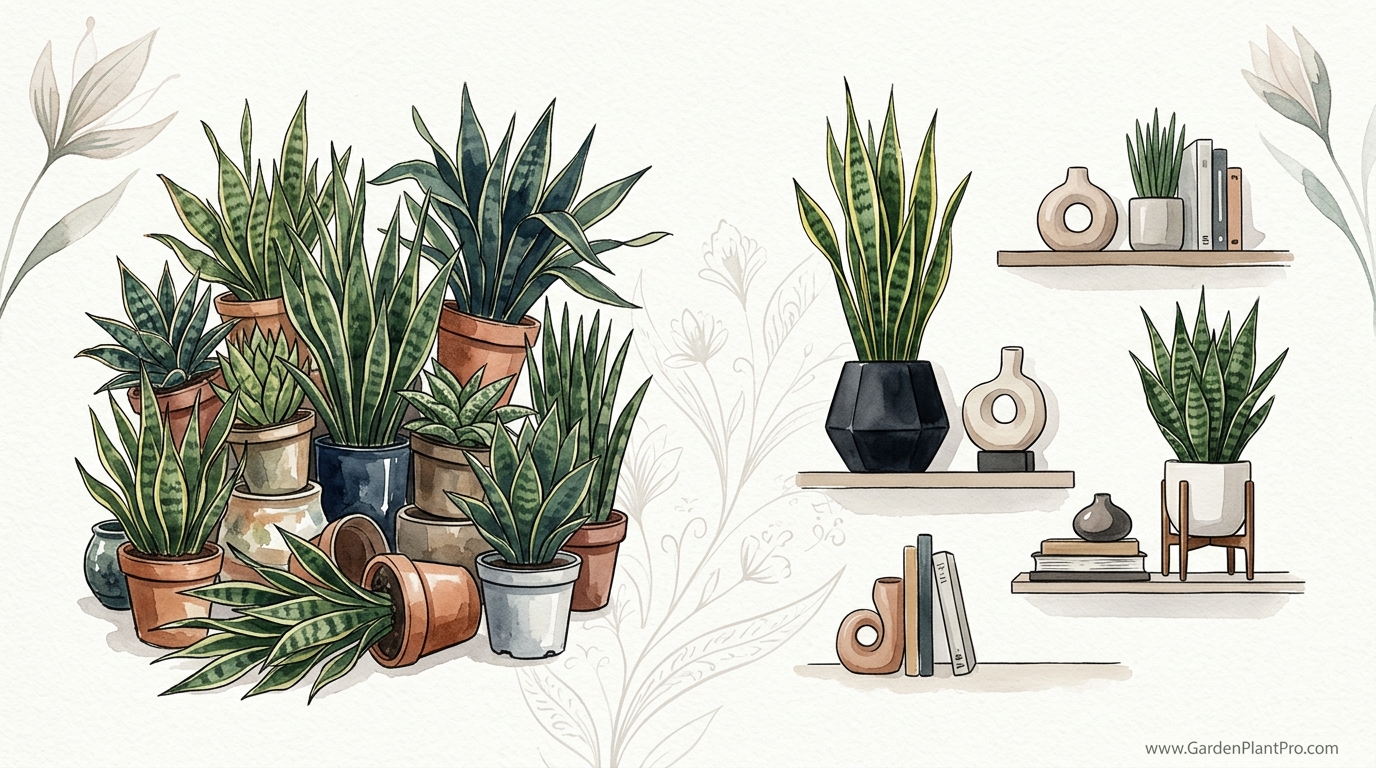
Is your collection of hardy survivors looking more like a storage unit than a sanctuary? Are your snake plants just ‘there’ or are they making a statement? Most of us start with one, and before we know it, there is a cluttered jungle in the corner.
We often mistake ‘having plants’ for ‘interior design.’ Learn how to move from a chaotic plant hoard to a curated gallery by focusing on structural heights and unified textures. It is time your plants looked as good as they make you feel.
Pull up a chair, and let’s talk about how to turn those sturdy spears into a masterpiece. I have spent years moving these “Mother-in-Law’s Tongues” from one corner to the other, and if there is one thing I have learned, it is that a snake plant is a sculptor’s tool as much as it is a gardener’s joy.
Snake Plant Interior Design Ideas
Snake plant interior design is the intentional use of the Dracaena trifasciata (formerly known as Sansevieria) to provide architectural structure and vertical interest within a home. Unlike many houseplants that spill or vine, the snake plant grows upward in rigid, sword-like leaves. This makes it a perfect candidate for modern, minimalist, and industrial aesthetics where clean lines are preferred.
In the real world, designers use these plants to “anchor” a room. If you have a high ceiling, a tall specimen like the Laurentii can draw the eye upward, making the space feel more expansive. If you have a long, empty hallway, a row of identical snake plants in matching troughs can act as a living gallery wall.
The reason we focus on snake plants for design is their versatility. They don’t just “survive” in low light; they hold their shape. A fiddle leaf fig might drop its leaves if you look at it wrong, but a snake plant stays put, maintaining its design integrity for months or years with minimal shifting.
How to Style Your Snake Plants: A Step-by-Step Approach
Moving from a hoard to a gallery requires a change in mindset. You are no longer just keeping a plant alive; you are composing a scene.
1. Evaluate Your “Canvas”
Before you move a single pot, look at your room. Identify “dead zones”—those corners where furniture does not quite fit, or the space above a low credenza that feels empty. Snake plants are vertical punctuation marks. Use them where you need a strong line.
2. Select Your Varieties by Height and Texture
Not all snake plants are created equal. To create a curated look, you need a mix of heights:
- Tall Specimens (3–4 feet / 90–120 cm): Use Laurentii (yellow edges) or Zeylanica (mottled green) for floor displays.
- Mid-Range (1–2 feet / 30–60 cm): Use Moonshine (silvery-green) or Black Coral (dark, moody green) for side tables and mantels.
- Dwarf Varieties (under 12 inches / 30 cm): Use Golden Hahnii or Twisted Sister for bookshelves and desk spaces.
3. Choose Unified Vessels
The quickest way to make a collection look like a “hoard” is to have fifteen different mismatched plastic pots. To get that gallery feel, pick a theme for your containers. I often recommend matte black or white ceramic for a modern look, or terracotta for a more “lived-in,” earthy vibe. When the pots match, the plants become the stars.
4. The Rule of Three
When grouping plants, odd numbers are more pleasing to the eye. Place a tall snake plant in the back, a medium-sized one slightly to the side, and a small, bushy variety in the front. This creates depth and makes the arrangement look like a deliberate composition rather than a random pile.
Benefits of a Curated Snake Plant Gallery
Creating a designed space with snake plants offers more than just a pretty room. There are practical, measurable benefits to this approach.
Architectural Definition: Because they grow straight up, snake plants can act as room dividers. I have seen them used on low benches to separate a dining area from a living area without blocking the light or the conversation.
Air Purification: It is well-documented that snake plants are among the top performers for removing toxins like formaldehyde and benzene from the air. A curated group of five or six plants in a bedroom doesn’t just look like a sanctuary; it actually cleans the air while you sleep.
Psychological Calm: A cluttered room creates a cluttered mind. By moving from a hoard to a gallery, you remove the visual “noise” of many small, struggling plants and replace it with a few strong, healthy focal points. This brings a sense of order and tranquility to your home.
Challenges and Common Styling Mistakes
Even though snake plants are “unkillable,” you can still make mistakes that ruin the design aesthetic.
The “Drowning” Mistake: This is the most common error. People see their plants as decor and forget they are living things. They water them on a strict schedule, leading to root rot. If the leaves start to lean or turn mushy, you have likely overwatered. Always wait until the soil is bone-dry—about 2 inches (5 cm) down—before watering again.
Ignoring the Light: While they tolerate low light, snake plants do not “thrive” there. In a dark corner, a variegated plant (like the Laurentii) will lose its yellow stripes and turn a dull, solid green. If your design relies on those bright colors, you must provide bright, indirect light.
Dust Accumulation: Large, flat leaves are dust magnets. A dusty snake plant looks sad and neglected, which is the opposite of a “curated gallery.” I make it a habit to wipe the leaves down once a month with a damp cloth. It helps the plant breathe and keeps that glossy, high-end look.
DIY PROJECT: Collect rainwater no matter where you live...
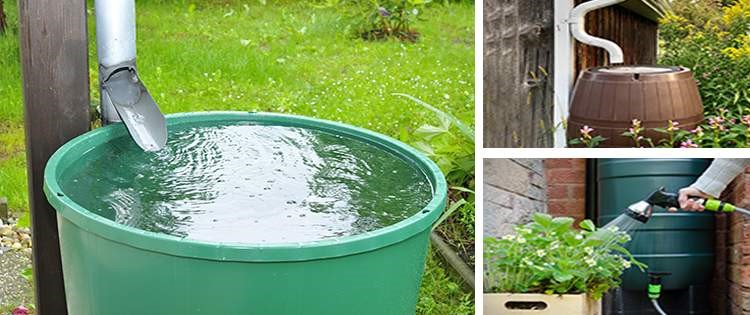
This DIY project is the best way to legally collect rainwater NO MATTER where you live. Get chlorine-free water, cut down on your water bills, and have enough for an emergency situation or to water your garden. Read More Here...
Limitations: When This Approach May Not Work
While I love a good snake plant, there are times when they aren’t the right choice for your design.
Pet and Child Safety: Snake plants contain saponins, which are mildly toxic if ingested. If you have a curious puppy or a toddler who likes to taste the greenery, keep these plants on high shelves or choose a different species.
Growth Speed: If you buy a small snake plant expecting it to fill a corner by next month, you will be disappointed. They are slow growers. For design purposes, always buy the size you need rather than waiting for it to grow into the space.
Drainage Constraints: Many “designer” pots do not have drainage holes. If you put a snake plant directly into one of these, it will eventually die from water sitting at the bottom. Use a “cachepot” system: keep the plant in its ugly plastic nursery pot and just set that inside the pretty decorative one.
Comparing Design Approaches
| Feature | The Plant Hoard | The Curated Gallery |
|---|---|---|
| Visual Impact | Cluttered, overwhelming | Sophisticated, intentional |
| Maintenance | High (many pots to check) | Low (fewer, larger specimens) |
| Cost | Low initial (buying small plants) | Higher initial (investing in scale) |
| Longevity | Moderate (crowding causes pests) | High (better airflow and light) |
Practical Tips and Best Practices
If you want to start curating your gallery today, here are some actionable steps I use in my own home:
- Use a Soil Mix That Breathes: I never use standard potting soil. It holds too much water. Mix 70% cactus/succulent mix with 30% perlite or pumice. This ensures that even if you get a little heavy-handed with the watering can, the roots won’t drown.
- Rotate for Symmetry: Snake plants will lean toward the light. Every time you water, give the pot a quarter-turn. This keeps those sword-like leaves growing straight up rather than curving into a “C” shape.
- The “Finger Test”: Don’t trust a moisture meter. Stick your finger into the soil. If you feel any coolness or dampness, leave it alone. These plants prefer a “neglect” style of parenting.
- Fertilize Sparingly: Once in the spring and once in the summer is plenty. Use a balanced, water-soluble fertilizer at half-strength. Too much food will cause the leaves to grow too fast and become “floppy.”
Advanced Considerations for the Serious Collector
For those who want to take their snake plant design to the next level, consider Hydroculture. Some collectors grow snake plants in glass vessels filled only with pebbles and water. This allows you to see the root system and creates a very clean, laboratory-chic aesthetic.
Another advanced move is Propagating for Uniformity. If you find a variety you love, like the Whale Fin (Masoniana), you can propagate leaf cuttings to create a series of identical “pups.” Placing five identical young plants in a row on a windowsill creates a stunning, rhythmic pattern that you simply cannot buy at a garden center.
Example Scenarios
The Minimalist Bedroom:
Imagine a single, large Moonshine snake plant in a textured grey concrete pot sitting on a low wooden bench at the foot of the bed. The silvery leaves catch the morning light and provide a soft, ethereal glow. Because it produces oxygen at night, it’s not just a decoration; it’s a sleep aid.
The Industrial Home Office:
A long, black metal console table sits behind the desk. On it, four identical Zeylanica plants are spaced exactly 12 inches (30 cm) apart in matte black cylindrical pots. This creates a “living screen” that provides privacy from the rest of the house while maintaining a professional, structured vibe.
Final Thoughts
Transforming your home from a chaotic plant hoard to a curated gallery doesn’t happen overnight, but the snake plant is the perfect partner for the journey. Its resilience allows you to experiment with placement, and its architectural form provides an immediate upgrade to any room’s “bones.”
Remember to focus on height, texture, and unified vessels. Don’t be afraid to give away the plants that don’t fit your new vision—quality always beats quantity when it comes to design. Your home should be a place that breathes, and a well-placed snake plant is the most stylish way to let it do just that.
Go ahead, move that pot from the corner to the center of the room. See how it changes the light. See how it changes the energy. You’ve got the knowledge now; it’s time to let your survivors become the stars of the show.