Is your eggplant plant a leaf factory or a fruit producer? Most gardeners think a bigger, bushier plant means more food, but the truth is the exact opposite. If you don’t ‘edit’ your eggplant, it will spend 90% of its energy growing leaves that you can’t eat. Learn the ‘Two-Stem’ secret to switching your plant’s engine from leaf-mode to high-yield fruit production.
I’ve been leaning over garden fences for forty years, and if there’s one thing I’ve seen break a beginner’s heart, it’s a massive, gorgeous eggplant bush that doesn’t have a single purple fruit to show for it. We get so excited by that lush, green growth that we think the plant is doing great. In reality, that plant is just a spoiled teenager—it’s taking all the “allowance” (your water and fertilizer) and spending it on looks rather than doing the hard work of making dinner.
The “Two-Stem” secret is all about discipline. It’s the difference between a plant that grows wide and wild and one that is designed for precision production. When you prune your eggplant, you aren’t just cutting off leaves; you are redirecting the very lifeblood of the plant. Instead of feeding twenty small, unproductive branches, you’re funneling all that energy into two strong, primary leaders that will give you the heavy, glossy fruits you actually want to harvest.
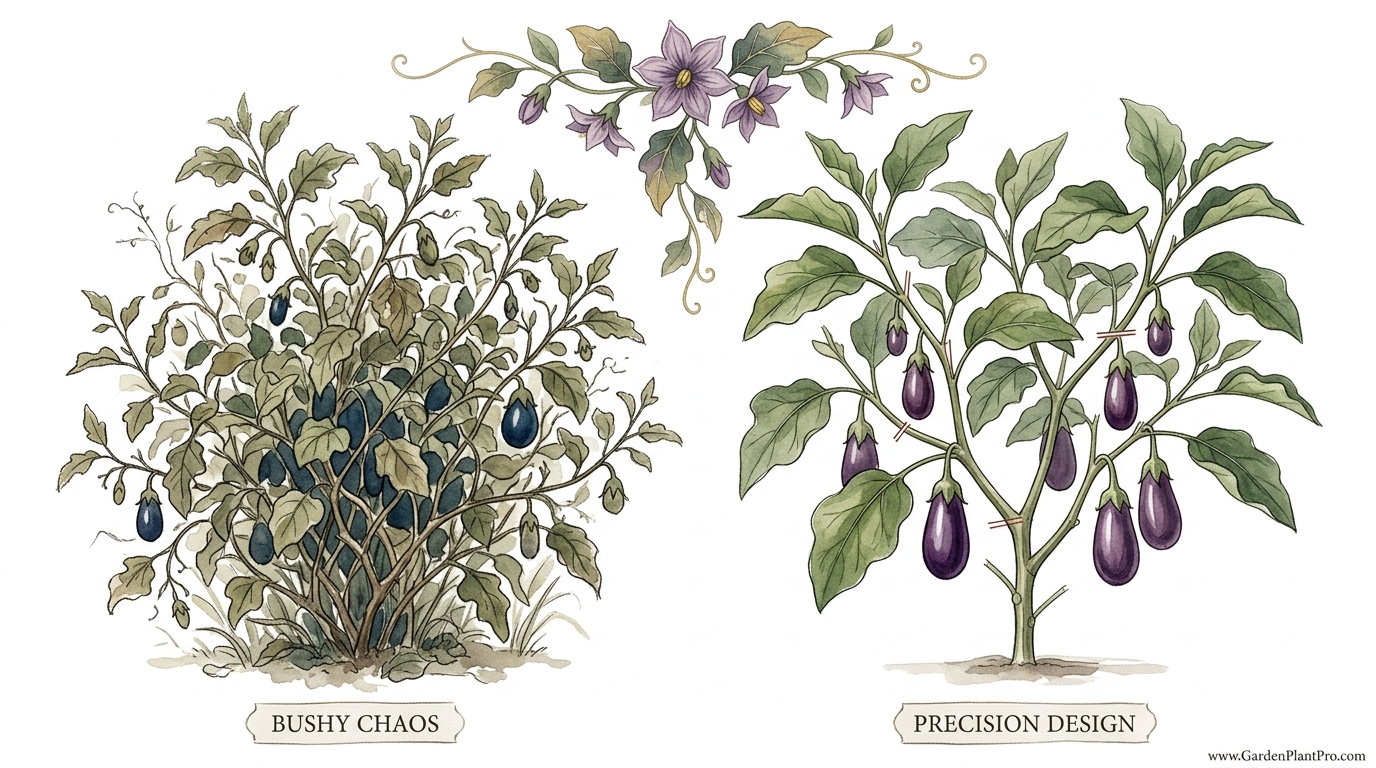
This isn’t just about getting a bigger harvest, though that’s the main prize. It’s also about keeping your plants alive long enough to actually pick something. Eggplants are magnets for trouble—flea beetles, verticillium wilt, and all sorts of fungal nastiness love a crowded, damp canopy. By opening things up, you let the wind and sun do the cleaning for you. It’s a simple shift in how you look at your garden, moving away from BUSHY CHAOS and toward a PRECISION DESIGN that works with the plant’s natural biology.
How To Prune Eggplants For Maximum Harvest
Pruning an eggplant is the process of strategically removing suckers, lower foliage, and non-fruiting branches to focus the plant’s resources. In the wild, an eggplant (which is a member of the nightshade family, just like tomatoes and peppers) wants to grow as much surface area as possible to catch sunlight. But in your backyard, you have a limited growing season. You don’t need a six-foot-wide bush; you need a productive plant that can finish its fruit before the first frost hits.
In real-world terms, pruning acts as a “biological switch.” When the plant is left to its own devices, it stays in a vegetative state for as long as possible. When you start “editing” those stems, you signal to the plant that it’s time to shift into reproductive mode. This is why pruned plants often produce fruit 7 to 14 days earlier than unpruned ones. For those of us in regions with shorter summers, those two weeks can be the difference between a basket full of eggplants and a basket full of frozen, undeveloped buds.
Think of your eggplant like a water hose with twenty holes in it. The water pressure at the end of the hose is going to be weak. If you plug up eighteen of those holes, the pressure at the end becomes a powerful stream. Pruning is how you “plug the holes” so the energy reaches the fruit with maximum force. This results in eggplants that aren’t just more numerous, but also larger, denser, and better-tasting because they received a concentrated dose of the plant’s nutrients.
The Step-by-Step Guide to the Two-Stem Method
The best time to start your pruning routine is when the plant is about 12 to 18 inches (30 to 45 cm) tall and has established its first few sets of true leaves. You want the plant to be strong enough to handle the “surgery” but young enough that you aren’t removing massive amounts of established wood, which can cause shock.
1. Identify the “Y” Split
Look at the main stem of your eggplant. As it grows, it will eventually reach a point where it forks into two main branches. Usually, the first flower bud appears right in the center of this fork. This is your “Y” or the foundation of your precision design. Everything below this fork is a candidate for removal, and everything above it is where your future harvest lives.
2. Remove the Suckers
Just like a tomato, an eggplant produces “suckers”—small shoots that grow in the “armpit” between the main stem and a leaf. These suckers will grow into entirely new branches if left alone. Use your thumb and forefinger to pinch these off while they are still small (less than 2 inches or 5 cm long). If they’ve grown thicker than a pencil, use a pair of clean, sharp shears to make a clean cut. Focus on removing every sucker from the ground up to that first “Y” fork.
3. Manage the Lower Canopy
Leaves that touch the soil are a highway for pests and diseases. Once your plant has reached that 12-inch (30 cm) mark, clip off the bottom-most leaves. This creates a “clearance zone” of about 6 to 8 inches (15 to 20 cm) between the soil and the first leaf. This improves airflow and prevents soil-borne pathogens from splashing onto the foliage during a heavy rain or when you’re watering.
4. The Two-Stem Choice
After you have cleared the trunk and identified the “Y” split, you have your two main leaders. In some cases, a third strong branch might emerge just below the fork. While some folks like a “Three-Stem” approach, sticking to two stems is the secret for truly massive fruit. Any other branches that try to compete with these two main leaders should be thinned out. You want the plant to look like a tall, narrow wine glass rather than a round ball.
Benefits of Pruning for the Home Gardener
The most immediate benefit of pruning is fruit size and quality. When a plant isn’t trying to support fifty leaves and twelve stems, it can pour all its sugars into the developing fruit. This leads to that classic glossy sheen and firm flesh that we look for in a perfect eggplant. If you’ve ever harvested an eggplant that felt spongy or looked dull, it likely didn’t get the concentrated nutrients it needed during the final ripening stage.
Disease resistance is the second, and perhaps more important, benefit. Eggplants are notoriously prone to fungal issues like powdery mildew and various wilts. These diseases thrive in stagnant, humid air. By pruning, you create a “wind tunnel” through the center of the plant. This allows the morning dew to dry quickly and keeps the leaves at a temperature that is less hospitable to fungi. It also makes it much easier to spot pests like flea beetles or Colorado potato beetles before they become a full-blown infestation.
Pruning also makes the garden more efficient. If you prune your plants to two stems, you can actually space them closer together—about 18 inches (45 cm) apart instead of the traditional 24 to 36 inches (60 to 90 cm). This means you can grow more plants in the same amount of square footage without them fighting for light. It turns your garden bed into a high-density “precision design” that produces more food per square inch.
- Increased Solar Exposure: Sunlight reaches the inner parts of the plant, ripening fruit more evenly.
- Reduced Pest Hiding Spots: Fewer leaves mean fewer places for bugs to hide and lay eggs.
- Easier Harvest: You won’t have to go on a “treasure hunt” through a thorny bush to find your eggplants.
- Better Pollination: Bees and other pollinators can easily see and reach the flowers.
Challenges and Common Pruning Mistakes
One of the biggest mistakes I see is “Panic Pruning.” This happens when a gardener realizes their plant is too big and decides to hack off half the plant in one day. This is a massive shock to the system. The plant’s roots are designed to support the foliage above; if you remove too much at once, the roots can actually start to rot because the plant isn’t “pulling” enough water through the system. Always prune gradually—no more than 20% of the plant’s foliage in a single session.
Another common pitfall is using dirty tools. Eggplants are very sensitive to bacteria. If you use the same shears you just used to prune a diseased tomato, you are essentially injecting that disease into your eggplant. Always wipe your blades with rubbing alcohol or a 10% bleach solution between plants. It sounds like a chore, but it’s a whole lot less work than pulling out a dead plant in July.
Lastly, don’t forget the sunburn factor. In extremely hot climates where temperatures regularly soar above 95°F (35°C), the leaves actually provide a “shade canopy” for the fruit. If you prune too aggressively in these areas, your eggplants can develop “sunscald”—white, leathery patches that ruin the fruit. If you live in a high-heat zone, be a bit more conservative with your leaf removal and try to leave a few “sunshade” leaves over the developing fruits.
Limitations: When Not to Prune
Not every eggplant needs the “Two-Stem” treatment. If you are growing compact or dwarf varieties (like ‘Patio Baby’ or ‘Fairytale’), these have been bred to stay small and bushy. Pruning these can actually decrease your yield because they don’t have the “wild” growth habit of traditional heirloom varieties. These plants are already “pre-edited” by their genetics, so you can usually just leave them alone, aside from removing any leaves touching the ground.
DIY PROJECT: Collect rainwater no matter where you live...
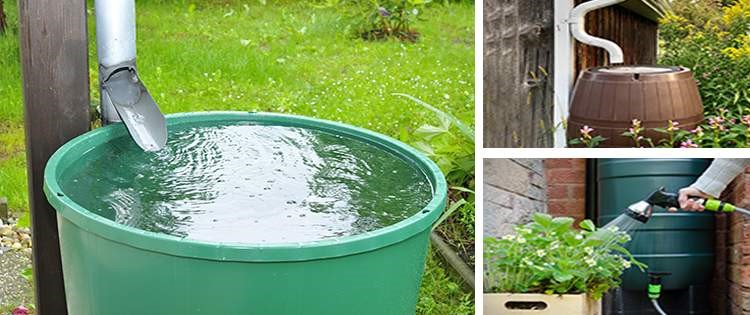
This DIY project is the best way to legally collect rainwater NO MATTER where you live. Get chlorine-free water, cut down on your water bills, and have enough for an emergency situation or to water your garden. Read More Here...
Environmental constraints also play a role. If you are growing in very poor soil with limited nutrients, a heavy prune might be too much for the plant to recover from. Pruning is a high-performance technique; it works best when the plant has plenty of “fuel” (compost, fertilizer, and consistent water). If your plant is already struggling or looks yellow and stunted, put the shears away and focus on soil health first.
Finally, consider your support system. A pruned, two-stem plant is going to be tall and top-heavy. If you don’t have a solid stake or a sturdy cage in place, the first summer thunderstorm will snap your precision-designed plant right in half. Only prune if you are committed to tying the stems to a support as they grow. If you prefer a “low-maintenance” garden where you just let things grow on the ground, pruning is not the right approach for you.
Comparison: Bushy Chaos vs. Precision Design
To really understand why we do this, it helps to look at the numbers. While every garden is different, the results of pruning are usually quite measurable in terms of efficiency and health.
| Feature | Bushy Chaos (Unpruned) | Precision Design (Pruned) |
|---|---|---|
| Fruit Size | Small to Medium | Large and Heavy |
| Ripening Speed | Slower (can be inconsistent) | Faster (better sun exposure) |
| Disease Risk | High (trapped moisture) | Low (high airflow) |
| Maintenance | Low (initially) | Moderate (weekly checks) |
| Yield per Plant | Many small fruits | High-quality, marketable fruits |
Practical Tips for Success
If you’re ready to start “editing” your plants, keep these seasoned tips in mind to make the process smoother. Gardening is as much about the “feel” as it is about the rules.
- Prune in the morning: Do your cutting after the dew has dried but before the heat of the day. This gives the “wound” all day to callus over before the damp night air arrives.
- Feed after the prune: Whenever you remove a significant amount of growth, give the plant a little drink of liquid seaweed or a balanced organic fertilizer. It’s like giving a patient a vitamin boost after a procedure.
- Watch the flowers: If your plant is very young (under 12 inches) and starts to flower, pinch that first flower off. I know it’s hard, but it tells the plant to build more roots and a stronger stem before it tries to carry the weight of a heavy eggplant.
- Mulch heavily: Once you’ve cleared the lower leaves, put down a thick layer of straw or wood chips. This keeps the soil from splashing up onto those freshly cut stems.
Advanced Considerations for Long-Season Gardeners
For those living in warmer climates (Zones 9 and above), eggplants don’t have to be annuals. In these regions, you can “re-set” your plants in late summer or early fall. If your plant is looking “petered out” after a big summer harvest, you can perform a renewal prune. This involves cutting the main stems back by about one-third and removing any spindly, old wood. With a fresh dose of compost, the plant will often send out a new flush of growth and give you a second harvest before winter.
Another advanced technique is the “Four-Stem” method. This is used by greenhouse growers who have a very long, controlled season. Instead of stopping at two leaders, they allow the next set of forks to grow, resulting in four main stems. This requires a very high level of support (usually overhead strings) and a rigorous fertilizing schedule, but it can lead to massive total yields over a six-month period.
Example Scenario: The July Turnaround
Imagine it’s mid-July. You have an eggplant variety like ‘Black Beauty’ that is currently a three-foot-wide ball of leaves. You see plenty of flowers, but the tiny eggplants keep falling off before they grow (this is called fruit drop). The plant is simply spread too thin.
You go in and identify the main “Y” fork. You see three large suckers below that fork that have already started to grow their own leaves. You clip those off. Then, you remove the bottom five leaves that are shaded and yellowing. Finally, you thin out the “clutter” in the center of the “Y” to let the sun hit the remaining blossoms. Within ten days, you’ll likely see those blossoms finally “set” and start growing into heavy fruits. That’s the power of the turnaround—it’s never too late to start pruning, as long as you have at least six weeks of warm weather left.
Final Thoughts
Pruning eggplants might feel like you’re taking something away from the plant, but you’re actually giving it a clearer path to success. By moving from a state of bushy chaos to a precision design, you are working with the plant’s natural desire to reproduce rather than its tendency to just “exist” as a green bush. It’s a small investment of time that pays off in heavy, glossy, delicious dividends.
I always tell my neighbors to try it on just one plant first. Keep one “wild” and prune the other using the two-stem secret. By the time August rolls around, the difference will be written in purple. You’ll see that the pruned plant is easier to manage, healthier, and much more rewarding when it comes time to fire up the grill.
Once you master the art of “editing” your eggplants, you might find yourself looking at your peppers and tomatoes with the same critical eye. It’s all part of the journey toward becoming a more intentional, observant gardener. So, grab your shears, be brave, and start turning those leaf factories into the fruit producers they were meant to be.