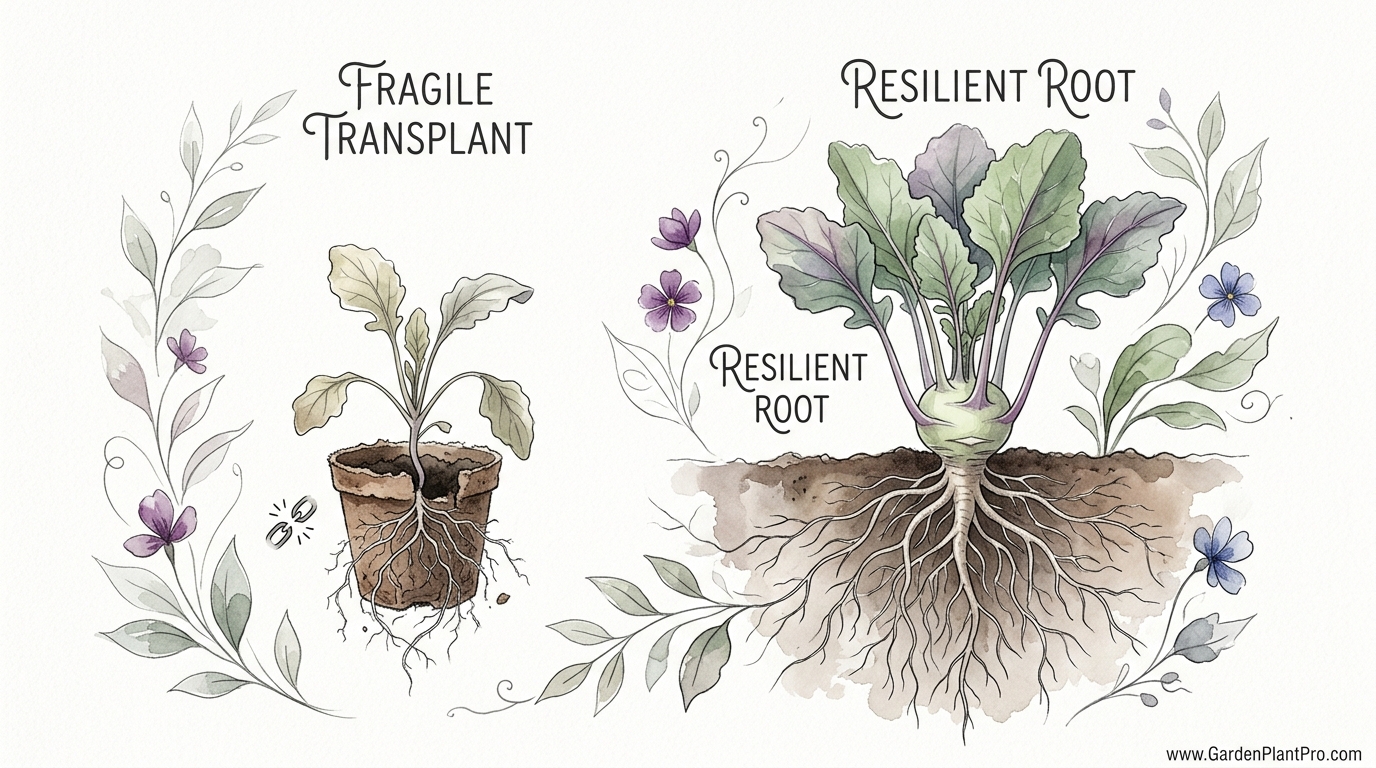
The secret to a kohlrabi that survives the summer heat is a root system that never saw a plastic pot. Most gardeners head to the nursery to buy kohlrabi seedlings, but that’s the first step toward a stunted harvest. Kohlrabi is incredibly sensitive to root disturbance. A ‘Fragile’ transplant spends weeks recovering from shock, while a ‘Resilient’ direct-sown seed builds a deep, undisturbed taproot from day one. If you want bulbs that stay sweet even when the rain stops, you need to let them grow where they land.
I’ve spent forty years watching the weather turn on a dime, and if there is one thing I have learned about brassicas, it is that they remember how they started. When you tuck a seed into the soil, you are giving it the chance to map its environment. That tiny embryo feels the moisture levels and the temperature of your specific garden beds, adjusting its growth rate to match the reality of the ground. It doesn’t have the luxury of a climate-controlled greenhouse, and that’s exactly why it ends up stronger.
Kohlrabi often gets a bad reputation for being “woody” or “tough,” but more often than not, that is a symptom of stress rather than variety. When a plant is moved from a pot to the garden, it experiences a localized trauma. The fine root hairs—the ones responsible for drinking up water—are often damaged or dried out during the transition. By the time the plant recovers, the season has moved on, the sun is hotter, and the kohlrabi starts protecting itself by thickening its cell walls, leading to that unpleasant fibrous texture we all want to avoid.
Direct sowing isn’t just about saving a few dollars at the garden center. It is about biological integrity. We are aiming for a crop that can handle a week without rain because its roots have chased the moisture deep into the subsoil. We want a bulb that swells quickly and stays crisp, which only happens when the plant has a continuous, uninterrupted supply of nutrients. Let’s talk about how to set your garden up for that kind of success.
Direct Sowing Kohlrabi For Resilient Crops
Direct sowing kohlrabi is the practice of placing seeds directly into their final growing location rather than starting them in containers for later transplanting. While many vegetables handle the “pot-to-plot” transition with ease, kohlrabi belongs to a group of plants that prioritize early, deep root development. This method exists to preserve the primary taproot, which is the first root to emerge from a germinating seed. In a direct-sown environment, this taproot can penetrate 12 to 18 inches (30 to 45 cm) deep into the soil before the bulb even begins to swell.
In the real world, this deep root system acts like a biological insurance policy. If you live in a region where spring turns into a scorching summer overnight, a direct-sown kohlrabi will remain hydrated and cool because it is pulling water from deep Earth layers that haven’t dried out yet. Conversely, a transplant often develops a shallower, more “matted” root system because its vertical progress was blocked by the bottom of a plastic nursery cell. When the top two inches (5 cm) of soil dry out, the transplant panics, but the direct-sown plant keeps on growing.
Think of it like a skyscraper. A building with a deep, poured-in-place foundation can stand much taller and withstand much stronger winds than one built on a shallow slab. Kohlrabi is essentially a “stem” vegetable; the part we eat is a swollen stem, not a root. To support that heavy, water-filled globe, the plant needs a vertical anchor. Direct sowing ensures that the anchor is never bent, cramped, or broken.
How to Direct Sow Kohlrabi Step by Step
Success starts with timing. Kohlrabi thrives in cool weather, ideally between 60°F and 75°F (15°C to 24°C). For a spring crop, you want to get your seeds in the ground about 3 to 4 weeks before your last expected frost. The soil should be workable and not a muddy mess. If you can squeeze a handful of soil and it stays in a tight, dripping ball, wait a few days. If it crumbles like a chocolate cake, it’s time to plant.
Prepare the bed by loosening the soil to a depth of at least 8 inches (20 cm). Kohlrabi doesn’t like to fight through compacted clay. Incorporate an inch (2.5 cm) of well-rotted compost into the top layer. You aren’t looking for high-nitrogen chemical fertilizers here; too much nitrogen can actually lead to leafy growth at the expense of the bulb. You want balanced, organic nutrition that feeds the soil microbes alongside the plant.
- Sowing Depth: Place seeds 1/4 to 1/2 inch (6 to 12 mm) deep. I like to make a shallow trench with the handle of my rake, drop the seeds in, and then lightly “pinch” the soil over them.
- Spacing: Space your seeds about 1 inch (2.5 cm) apart initially. We will thin them later, but sowing thickly ensures a good stand even if some seeds fail or a few “damp off.”
- Row Spacing: Keep rows 12 to 18 inches (30 to 45 cm) apart. This gives you enough room to walk between them and allows for good airflow, which is your best defense against fungal issues like downy mildew.
- Initial Watering: Use a fine mist to settle the soil. You don’t want to use a heavy stream that washes the seeds away or creates a hard crust (crusting) on the surface that the seedlings can’t break through.
Once the seedlings have two sets of “true leaves”—the ones that look like little jagged cabbage leaves—it is time to thin. This is the hardest part for most gardeners, but it is mandatory. Use a pair of small scissors to snip the extras so you don’t pull and disturb the roots of the keepers. Leave one strong plant every 6 to 8 inches (15 to 20 cm) for standard varieties, or 12 inches (30 cm) for giant varieties like ‘Superschmelz’.
The Benefits of Growing Resilient Roots
The most immediate benefit you will notice is the flavor. A kohlrabi that grows without a check or a pause is consistently sweeter. When a plant is stressed by transplant shock or drought, it produces bitter compounds as a defense mechanism. By direct sowing, you keep the plant in a “flow state” where its only job is to expand and sweeten. The texture stays crisp and juicy, almost like a Granny Smith apple, rather than turning into something that resembles a piece of firewood.
Another major advantage is pest resilience. It sounds counterintuitive, but a healthy, fast-growing plant is often less attractive to pests like aphids and flea beetles. These insects are biologically programmed to seek out weakened plants with high sugar concentrations in their sap (a sign of stress). A direct-sown kohlrabi with a deep root system has a more balanced sap chemistry, making it a harder target for the local bug population.
You also save a significant amount of labor and resources. There is no need for grow lights, heat mats, potting soil, or the daily chore of hardening off seedlings. You are letting nature do the heavy lifting. This approach fits perfectly into a sustainable garden model where we try to minimize external inputs and trust the inherent strength of the seed.
Challenges and Common Mistakes
One of the biggest pitfalls is crusted soil. If you have heavy clay soil and a heavy rain hits right after you plant, the sun can bake the surface into a “brick” that the tiny seedlings can’t penetrate. If you see this happening, very lightly scratch the surface with a hand fork, or better yet, cover your freshly sown rows with a thin layer of vermiculite or finished compost to keep the “exit” soft.
Another mistake is neglecting the thinning process. If kohlrabi plants are crowded, they will compete for light and nutrients. Instead of round, fat bulbs, you will end up with long, skinny, tough stems. The plant needs space for the sun to hit the base of the stem; that sunlight is what triggers the characteristic swelling of the kohlrabi bulb.
Finally, watch out for inconsistent watering. Even with a deep taproot, kohlrabi needs about an inch (2.5 cm) of water per week. If the soil goes from bone-dry to soaking wet, the bulbs can actually split open. This “splitting” happens because the inner tissues expand faster than the skin can grow. Mulching with straw or shredded leaves once the plants are 4 inches (10 cm) tall will help keep the moisture levels steady.
Limitations: When Direct Sowing Might Not Work
While I am a firm believer in the “Resilient Root,” there are times when you might have to pivot. If you live in a region with an incredibly short spring—where it goes from snow to 90°F (32°C) in three weeks—you might need the “head start” that a transplant provides just to get a harvest before the heat kills the crop. In the far north, where the ground stays frozen until late May, those four weeks in a greenhouse can be the difference between a harvest and a failure.
Very high pest pressure is another constraint. If your garden is a magnet for flea beetles (the ones that leave tiny “shot holes” in the leaves), a tiny seedling emerging from the soil might get devoured before it has more than two leaves. In this specific scenario, a larger, tougher transplant can sometimes survive the onslaught better than a tender sprout. However, I usually solve this with row covers rather than switching to transplants.
Comparison: Direct Sowing vs. Transplanting
| Feature | Direct Sowing (Resilient Root) | Transplanting (Fragile Transplant) |
|---|---|---|
| Root Structure | Deep, vertical taproot | Shallow, fibrous, potentially bound |
| Heat Tolerance | High; reaches deep moisture | Lower; prone to wilting in sun |
| Days to Maturity | 45–60 days (uninterrupted) | 50–70 days (includes recovery time) |
| Labor Level | Low; sow and thin | High; indoor start, hardening off |
| Flavor Quality | Consistently sweet and crisp | Variable; risk of woodiness from stress |
Practical Tips for Best Results
If you want to truly master kohlrabi, think about succession planting. Instead of planting fifty seeds at once, plant ten seeds every two weeks. Kohlrabi matures fast, and it doesn’t “hold” in the garden forever. Once a bulb reaches the size of a tennis ball (about 3 inches or 7.5 cm), it is at its peak. By staggering your sowing, you can have fresh, tender kohlrabi from late spring all the way into early summer.
DIY PROJECT: Collect rainwater no matter where you live...
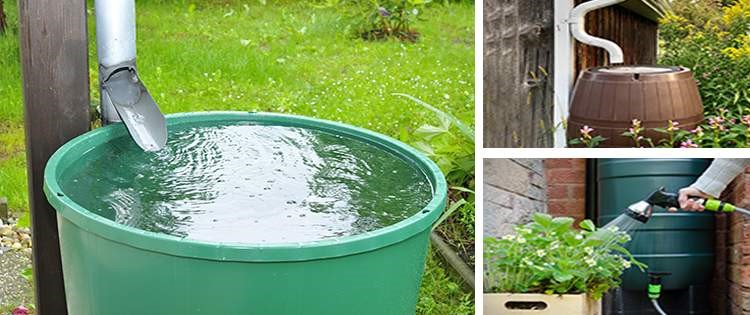
This DIY project is the best way to legally collect rainwater NO MATTER where you live. Get chlorine-free water, cut down on your water bills, and have enough for an emergency situation or to water your garden. Read More Here...
Consider the soil pH. Kohlrabi prefers a neutral to slightly alkaline environment, ideally between 6.0 and 7.5. If your soil is too acidic, the plants might struggle to take up calcium, and you increase the risk of clubroot disease. A quick application of garden lime a few weeks before planting can make a world of difference if your soil is on the sour side.
- Row Covers: Use a lightweight, spun-bonded fabric (like Reemay) immediately after sowing. This keeps flea beetles and cabbage moths off your plants without blocking light or water.
- Deep Watering: Instead of a light sprinkle every day, give the bed a deep soak once or twice a week. This encourages the roots to grow downward toward the water rather than staying near the hot surface.
- Harvesting Tip: Use a sharp knife or garden snips to cut the bulb just above the soil line. If you leave the roots in the ground, they will rot and feed the soil biology for your next crop.
Advanced Considerations: Variety Selection
Not all kohlrabi is created equal. If you are direct sowing for a fall crop, look for “storage” varieties like ‘Kossak’ or ‘Superschmelz’. These giants can grow to the size of a bowling ball and still remain tender. They are bred to handle the cooling temperatures of autumn and can stay in the ground even after a few light frosts, which actually makes them taste even sweeter.
For spring, go with the classics like ‘Early White Vienna’ or ‘Kolibri’. These are built for speed. They want to get in and out of the garden before the heavy humidity of summer sets in. ‘Kolibri’ is particularly noted for its beautiful purple skin and its ability to resist “bolting” (going to seed) when a random heat spike hits in May.
If you are interested in seed saving, remember that kohlrabi is a biennial. It won’t flower in its first year. To get seeds, you have to over-winter the plants. In colder climates, this means digging them up, storing them in a root cellar in damp sand, and replanting them the following spring. It’s a bit of work, but there is nothing like having a jar of “home-grown” seeds that are already adapted to your local climate.
A Real-World Scenario: The July Heatwave
Imagine it is the first week of July. The thermometer is hitting 92°F (33°C), and the air is thick enough to chew. Your neighbor’s kohlrabi, which they bought as transplants from the big-box store, are looking sad. The leaves are wilting by noon, and the bulbs have stopped growing; they are effectively “curing” into wood on the vine. They will likely pull them tomorrow and find them inedible.
Meanwhile, your direct-sown plants are standing tall. Why? Because three feet below the surface, the soil is still a cool 65°F (18°C). Your kohlrabi’s taproot is down there, drinking deeply. The plant isn’t stressed because its water supply is secure. When you harvest that bulb for dinner, it is still crisp, cold, and sweet. That is the difference between a plant that was “placed” in the garden and one that was “born” in it.
Final Thoughts
The journey from a tiny seed to a crisp kohlrabi bulb is one of the most rewarding sights in the vegetable garden. By choosing to direct sow, you are respecting the plant’s natural architecture. You are prioritizing the hidden work of the roots, knowing that the beauty and flavor of the harvest are simply the end results of a healthy, undisturbed beginning. It requires a little more patience during the thinning stage and a bit of vigilance against early-season pests, but the payoff is a crop that is objectively superior in every way.
As you plan your next garden, I encourage you to look past the tempting rows of green plastic pots at the nursery. Trust the soil, trust the seed, and let your kohlrabi build the resilient root system it was designed for. Once you taste the difference that an undisturbed taproot makes, you’ll never go back to “fragile” transplants again. Happy gardening, and may your bulbs always be sweet and your soil always be rich.