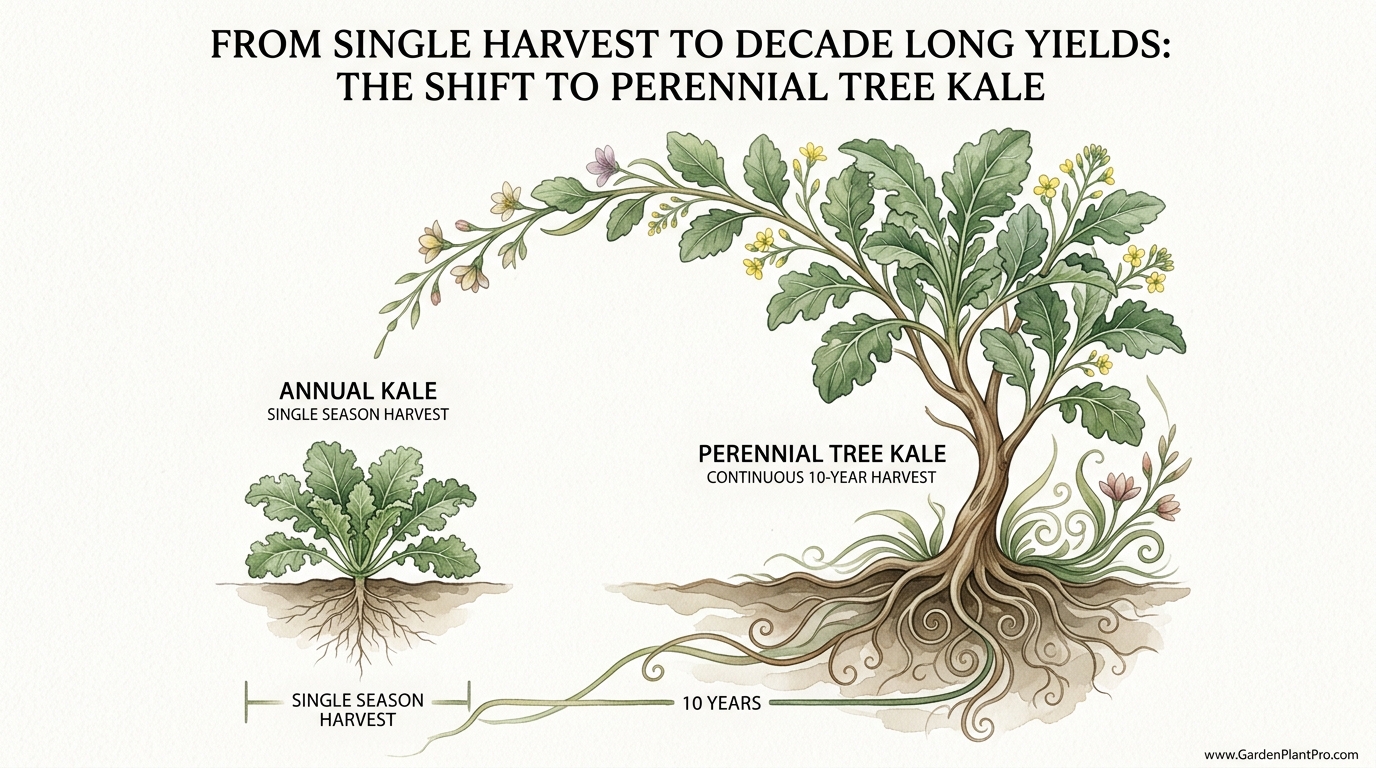
Stop planting your kale every spring and start growing a legacy that feeds you for a decade from a single trunk. Most gardeners are stuck in the ‘buy seeds, plant, harvest, die, repeat’ cycle every single year. But there is a secret hidden in the history of sustainable gardening: Perennial Tree Kale. Unlike standard varieties, it doesn’t die after one season. It grows woody, tall, and more resilient every year. Why keep buying seeds when you can grow a vegetable tree that feeds your family for a decade?
I’ve spent many years watching my neighbors struggle with their brassicas. They fuss over tiny seedlings every April, only to watch them bolt as soon as the July heat hits. If you are tired of that cycle, it is time to look at the “immortal” greens. Tree kale isn’t just a plant; it is a permanent fixture in the landscape that bridges the gap between a vegetable and a shrub.
In my own garden, the tree kales are the anchors. They stand tall through the winter frost and provide lush, sweet greens when everything else has gone dormant. Talking to folks over the fence, I always tell them the same thing: once you go perennial, you never go back to the seed packets for your daily greens.
How To Grow Perennial Tree Kale For A 10 Year Harvest
Perennial tree kale, often classified under Brassica oleracea var. acephala or ramosa, is a unique branch of the cabbage family. Unlike the curly kale you find at the grocery store, these plants are bred to live for years. They develop thick, woody trunks that can grow as wide as a human arm over time. Some varieties can reach heights of 6 to 10 feet (1.8 to 3 meters), making them look more like a Dr. Seuss creation than a dinner ingredient.
These plants exist because they found a niche in maritime climates, particularly around the Channel Islands and parts of Western Europe. Gardeners there realized that some kale plants simply refused to die after flowering—or better yet, they stopped flowering altogether. This lack of flowering is the secret to their longevity. Since the plant doesn’t put its energy into making seeds, it puts all that power into leaves and structural wood.
You’ll find these growing in permaculture food forests, old cottage gardens, and even as ornamentals. They provide a “cut-and-come-again” harvest that literally lasts for years. Imagine walking out to your garden in January and snapping off a handful of leaves from a trunk that you planted back when your kids were in elementary school. That is the reality of growing a legacy plant.
The Main Varieties to Know
Not all tree kales are created equal. Depending on your climate and how much space you have, one might suit you better than the others. Here are the heavy hitters in the world of perennial brassicas:
- Taunton Deane: A legendary English heritage variety. It is incredibly hardy and can grow up to 6 feet (1.8 meters) tall and nearly as wide. It has a rich, nutty flavor and rarely flowers.
- Purple Tree Collard: This is a favorite in the United States, especially in California. It has beautiful purple-veined leaves that turn deep violet in the winter. It is lanky and often needs a strong stake.
- Daubenton’s Kale: A shorter, more bush-like perennial. It usually stays around 3 feet (0.9 meters) tall but spreads out. There is also a “Panache” variety with stunning white and green variegated leaves.
- Walking Stick Kale (Jersey Cabbage): Famous on the Island of Jersey, these can hit 15 feet (4.5 meters). People historically used the dried stalks to make actual walking canes.
How It Works: The Lifecyle of a Vegetable Tree
Growing tree kale is different from growing annuals because you are managing a woody perennial. The process starts with a cutting, not a seed. Because these plants rarely flower, they don’t produce much seed. Even if they do, the seeds often revert to something that looks more like a wild mustard than a tree. To keep the “tree” genetics, you have to clone them.
Once a cutting is tucked into the soil, it spends the first year establishing a deep root system. During this time, the stem is soft and green. By the second year, the base of the plant begins to lignify, turning into hard wood. This wood protects the plant from pests and allows it to store nutrients for the winter. Each year, the plant adds more “knuckles” where leaves have been harvested, creating a rugged, textured trunk.
Maintenance involves regular harvesting from the bottom up. As you take the lower leaves, the plant continues to grow from the top. If the plant gets too tall or “leggy,” you can simply prune the top off. This encourages the plant to branch out, turning your single-trunk tree into a multi-stemmed shrub. It is this ability to regenerate that allows it to thrive for 8, 10, or even 12 years in the right conditions.
Establishing Your Tree Kale: A Step-by-Step Guide
Getting started is the hardest part because you usually won’t find these at a local nursery. You’ll likely need to order a cutting from a specialty grower or a friend. Once you have a 6-to-10-inch (15-to-25-centimeter) stem in your hand, follow these steps:
1. Preparing the Cutting
Strip most of the leaves off the cutting, leaving only the very tiny ones at the growing tip. This prevents the plant from losing too much moisture through its leaves while it has no roots. If the stem is thick, make a fresh diagonal cut at the base to expose more of the cambium layer.
2. The Rooting Phase
You can root tree kale in a glass of clean water or directly in a pot of moist, high-quality potting soil. I prefer the soil method. Stick the cutting about 3 or 4 inches (7 to 10 centimeters) deep. Keep it in a spot with dappled shade—never direct, scorching sun. The goal is to keep it cool and hydrated until you see new growth emerging from the top, which usually takes 4 to 6 weeks.
3. Choosing the Permanent Site
Tree kale needs a lot of room. Don’t crowd it! Give each plant at least 3 feet (0.9 meters) of space on all sides. It needs full sun, though in very hot climates (above 85°F or 30°C), some afternoon shade will keep the leaves tender. The soil should be rich in organic matter. Dig in plenty of compost or well-rotted manure before planting.
4. Planting and Staking
Dig a hole twice as deep as the root ball. If your cutting is tall and lanky, you can actually bury part of the stem; it will grow extra roots from the buried nodes. Immediately drive a sturdy stake into the ground—something like a heavy bamboo pole or a metal T-post. Use soft ties to secure the main trunk as it grows. These plants get top-heavy, and a strong wind can snap a 5-year-old trunk in seconds if it isn’t supported.
Benefits of Choosing Perennial Over Annual
The primary advantage is yield per square foot. An annual kale plant gives you a handful of leaves and then quits. A tree kale plant produces hundreds of leaves a year, every year. Because it has a massive, established root system, it can access minerals deep in the subsoil that shallow-rooted annuals can’t reach. This often makes the leaves more nutrient-dense.
Labor savings are another huge factor. You don’t have to till the soil every year, which preserves the delicate fungal networks (mycorrhizae) that help plants thrive. There is no seed starting, no hardening off, and no delicate transplanting phase every spring. Once it is in, it is in.
Finally, these plants are incredibly resilient to “boom and bust” weather. When a surprise frost kills the neighbors’ spring greens, the tree kale barely notices. When a summer drought withers the lettuce, the tree kale’s deep roots keep it hydrated. It is the ultimate insurance policy for a hungry gardener.
Challenges and Common Mistakes
One of the biggest mistakes is neglecting the soil pH. Like all brassicas, tree kale hates acidic soil. If your pH drops below 6.0, you are inviting clubroot disease, which will kill your legacy plant before it hits year three. Aim for a neutral pH between 6.5 and 7.0. Adding a bit of garden lime every year is a good habit to get into.
DIY PROJECT: Collect rainwater no matter where you live...
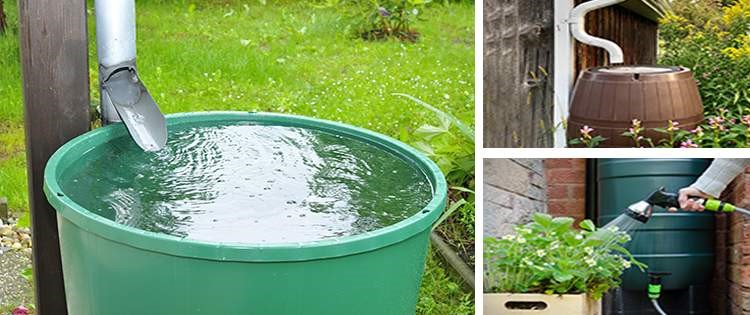
This DIY project is the best way to legally collect rainwater NO MATTER where you live. Get chlorine-free water, cut down on your water bills, and have enough for an emergency situation or to water your garden. Read More Here...
Another pitfall is underestimating the pests. Just because it is a tree doesn’t mean the bugs won’t find it. Aphids love the crinkles in the leaves, and Cabbage White butterflies will lay eggs on them all summer long. Because the plant is permanent, you have to be vigilant. I recommend a strong blast of water from the hose every few days to knock off aphids before they colonize the whole trunk.
Avoid over-harvesting in the first year. It is tempting to start eating the leaves right away, but the plant needs that foliage to photosynthesize and build the woody structure. Let it get to at least 3 feet (0.9 meters) tall before you start taking more than a leaf or two. Think of the first year as an investment in the next nine.
Limitations: When Tree Kale Might Not Work
Tree kale is not a “plant it and forget it” solution for every climate. If you live in a region where the ground freezes solid for months (USDA Zone 6 or lower), your tree kale will likely die. They are generally hardy down to about 15°F to 20°F (-7°C to -9°C). In colder zones, you have to grow them in large pots and move them into a frost-free garage or greenhouse for the winter.
They also require consistent moisture. While they are tougher than annuals, they are not desert plants. If you live in a very arid region, you will need a reliable irrigation system. A thirsty tree kale will produce tough, bitter leaves that are almost impossible to chew.
ANNUAL KALE vs PERENNIAL TREE KALE
If you are trying to decide which way to go, look at this breakdown. It helps to see the trade-offs in terms of maintenance and output.
| Feature | Annual Kale | Perennial Tree Kale |
|---|---|---|
| Lifespan | 6–9 months | 5–10+ years |
| Height | 1–2 feet (0.3–0.6m) | 6–10 feet (1.8–3m) |
| Propagation | Seeds | Cuttings (Clones) |
| Harvest Window | Short (Spring or Fall) | Year-round (in mild zones) |
| Maintenance | High (annual planting) | Medium (pruning/staking) |
| Flavor | Tender, mild | Rich, nutty, gets sweeter with age |
Practical Tips for Success
- Mulch Heavily: Use a thick layer of wood chips or straw around the base. This keeps the soil temperature stable and prevents weeds from competing for nitrogen.
- Nitrogen is Key: Since you are growing leaves, the plant is a nitrogen hog. I like to top-dress with composted chicken manure or a liquid seaweed feed every few months during the growing season.
- Companion Planting: Plant aromatic herbs like Sage or Rosemary nearby. The strong scent helps confuse the Cabbage White butterflies and keeps them away from your kale.
- The “Heel” Trick: When taking cuttings, try to pull a side branch off so it takes a “heel” of the main stem with it. These heels often root much faster than a clean cut.
Advanced Considerations: Protecting Your Genetics
Because tree kales are rare, you should act as a steward for the plant. Every two or three years, take a few cuttings and start new plants. This is your insurance policy. If your main “mother” plant eventually dies from old age or a freak storm, you’ll have her “children” ready to take her place. I always keep at least two different varieties in different parts of the garden to prevent a total loss from pests or disease.
You can also experiment with “topping” your plants at different heights. Some gardeners like a single tall trunk to save ground space, while others prefer a 3-foot (0.9-meter) hedge. Pruning in early spring is the best time to reshape the plant. Don’t be afraid to be aggressive; as long as the trunk is healthy, it will sprout new heads within weeks.
Example Scenario: The Small Backyard Plot
Let’s say you have a tiny 10×10 foot (3×3 meter) garden. In an annual system, you might plant 10 kale plants, harvest them in June, and then have an empty spot. In a perennial system, you could plant just two Taunton Deane kales in the corners. They will grow upward, taking up very little ground space but providing a massive canopy of leaves. Underneath them, you can grow shade-loving plants like spinach or herbs. This “stacking” allows you to get three times the food from the same small footprint.
I knew a gardener who had a Purple Tree Collard that grew so tall it reached his second-story balcony. He would just reach out over the railing and pick his dinner. That is the kind of efficiency you can’t get with a row of Lacinato seeds.
Final Thoughts
Growing perennial tree kale is a shift in mindset. It moves you away from the frantic pace of seasonal gardening and toward something more permanent and peaceful. It turns your garden into an ecosystem rather than a factory. When you plant a tree kale, you aren’t just thinking about next month’s salad; you are thinking about a decade of food security.
Start with one good cutting. Give it a sturdy stake and some rich soil, and then watch as it transforms from a simple stem into a towering green monument. You’ll soon find yourself standing at the fence, just like I do, telling your neighbors why they should stop buying seeds and start growing a legacy.
Don’t be afraid to experiment with the different varieties to find what tastes best in your kitchen. Whether you are making kale chips, green smoothies, or a hearty winter soup, the convenience of having a permanent harvest right outside your door is something you’ll never want to give up.