
What if your peach tree could water itself even in the middle of a record-breaking drought? If you are watering your fruit trees every day, you are not a gardener, you are a servant. Building a biological sponge around your peach trees using guilds and mulch allows you to stop the daily chore and let nature provide the hydration your fruit needs to stay juicy. This approach shifts your garden from a high-maintenance project into a self-sustaining ecosystem that thrives on its own terms.
Practical gardening is about more than just putting a plant in a hole and hoping for the best. It involves understanding how different plants interact with the soil, the insects, and each other. In the wild, you never see a peach tree standing alone in a perfectly manicured lawn of green grass. Instead, it is surrounded by a messy, beautiful community of herbs, flowers, and deep-rooted weeds that all work together to keep the soil healthy and the pests at bay.
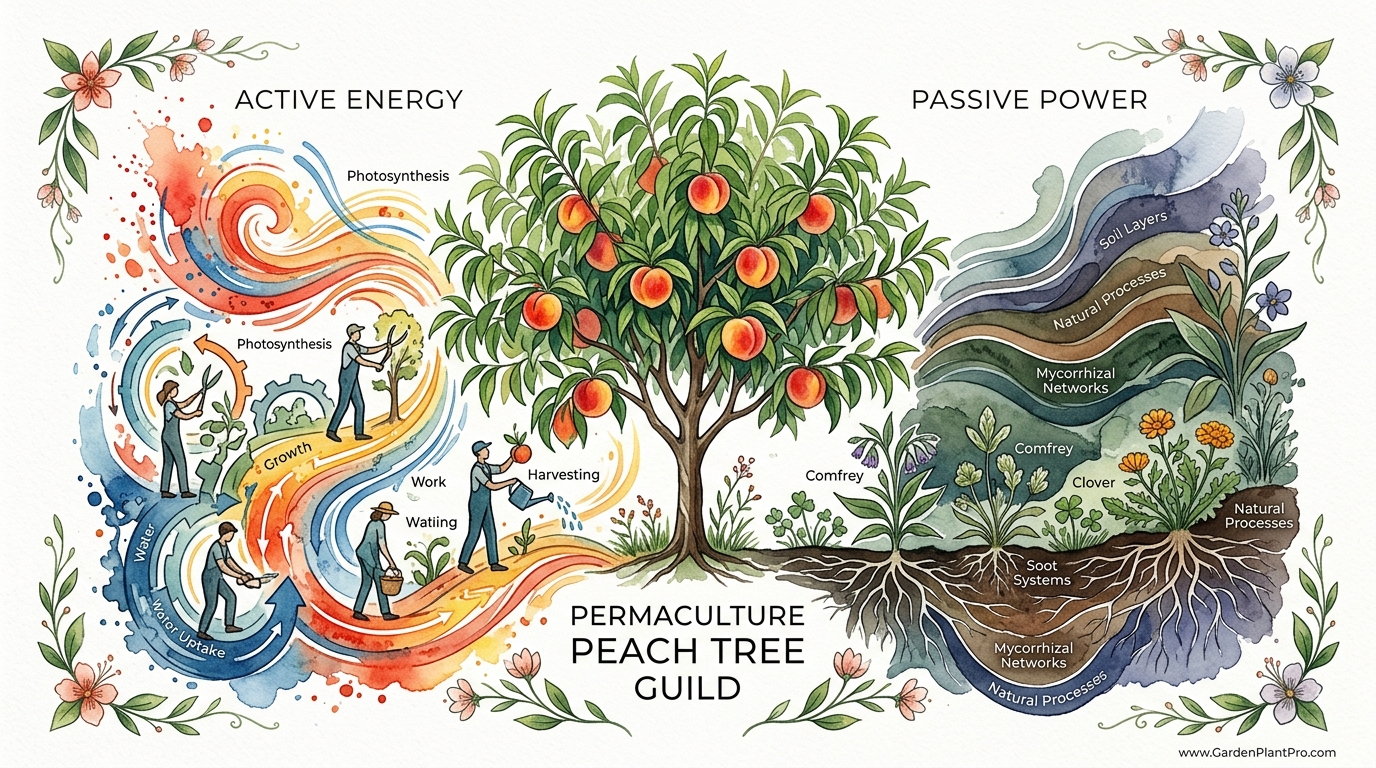
Establishing a guild is the difference between active energy and passive power. Active energy requires you to haul hoses and spray chemicals every weekend. Passive power is the slow, steady strength of a balanced ecosystem that does the work for you while you sit on the porch with a cold drink.
Permaculture Peach Tree Guild
A permaculture peach tree guild is a grouping of plants centered around a peach tree, designed to mimic a natural forest edge. This community is built with intention, choosing each plant for its specific job. Some plants fix nitrogen in the soil, some pull up minerals from deep underground, and others act as a living mulch to keep the roots cool and damp.
The reason this system works so well is that it addresses the specific weaknesses of the peach tree. Peach trees (Prunus persica) are notorious for being “divas” in the garden. They are susceptible to borers, aphids, and fungal issues, and they absolutely hate having their roots compete with heavy turf grass. A guild replaces that competitive grass with cooperative neighbors that solve these problems naturally.
Real-world gardeners use guilds because they create resilience. When you have a diverse mix of plants, a single pest outbreak or a dry spell is less likely to kill your tree. The guild acts as a safety net, ensuring that the soil remains fertile and the beneficial insect population remains high enough to defend your harvest.
How to Design and Build Your Guild
Building a guild is a process that happens in layers, much like building a house. You start with the foundation and move outward. The following steps will guide you through the process of setting up a successful peach tree community.
Step 1: Observation and Site Selection
Take a moment to look at your yard before you dig any holes. Peach trees need at least 6 to 8 hours of full sun to produce sweet fruit. Check the drainage as well; these trees do not like “wet feet.” If your soil stays soggy after a rain, you might need to plant on a slight mound or a swale.
Step 2: Plant the Central Tree
The peach tree is the heart of the guild. Dig a hole twice as wide as the root ball but no deeper. Ensure the graft union—that bump near the base of the trunk—stays at least 2 to 3 inches (5 to 7 cm) above the soil line. If you bury the graft, the tree may rot or lose its disease resistance.
Step 3: The Suppression Layer
Grass is the enemy of a young peach tree. It steals nitrogen and water from the top few inches of soil. To kill the grass without digging, use the “sheet mulching” technique. Lay down a thick layer of plain brown cardboard or several layers of newspaper around the tree, extending out to the drip line—about 3 to 5 feet (0.9 to 1.5 meters) from the trunk. Wet the cardboard thoroughly, then cover it with 4 to 6 inches (10 to 15 cm) of wood chips or straw.
Step 4: Adding the Supporting Cast
Once your mulch is down, you can begin planting your companion species. Cut small holes through the cardboard to tuck your plants into the soil. Aim for a mix of the following functional groups:
- Nitrogen Fixers: Plants like white clover or lupine take nitrogen from the air and store it in their roots. When they die back or get pruned, that nitrogen becomes available for the peach tree.
- Dynamic Accumulators: Comfrey and yarrow have deep taproots that mine minerals like potassium and calcium from deep in the earth, bringing them up to the leaves.
- Pest Repellents: Garlic, chives, and onions have strong scents that confuse pests like the peach tree borer.
- Pollinator Attractors: Flowers like dill, fennel, and cosmos attract predatory wasps that eat the aphids and moths that plague fruit trees.
Benefits of a Peach Tree Guild
The most immediate benefit you will notice is a significant reduction in watering. The thick layer of organic matter and living ground cover creates a “biological sponge” that holds onto rainwater and releases it slowly. In my experience, a well-established guild can go weeks without supplemental water even in mid-summer heat.
Soil health improves dramatically over time. As the companion plants grow and die back, they add organic matter to the soil. This feeds the earthworms and beneficial fungi that build soil structure. You are essentially creating a self-fertilizing system. The nitrogen fixers provide the “fuel,” and the dynamic accumulators provide the “vitamins.”
Pest management becomes much easier when you let nature take the lead. By planting aromatic herbs and nectar-rich flowers, you invite a small army of ladybugs, lacewings, and parasitic wasps into your garden. These beneficial insects do a better job of controlling aphids than any chemical spray ever could.
Common Mistakes to Avoid
Many gardeners make the mistake of planting too close to the trunk. Always keep a “clear zone” of about 12 inches (30 cm) around the base of the peach tree. This area should only have wood chip mulch, no living plants. Airflow around the trunk is vital to prevent fungal infections and rot.
Another frequent error is using aggressive, spreading plants like mint without a plan. While mint is a great pest repellent, it will quickly take over the entire guild and compete with the tree if not managed. I prefer to keep mint in large bottomless pots buried in the ground to contain the roots while still getting the aromatic benefits.
Over-planting in the first year can also lead to trouble. It is tempting to fill every inch of space immediately, but remember that the peach tree will grow. A sapling with a 3-foot canopy will eventually have a 12-foot (3.6 meter) spread. Plan your spacing based on the mature size of the plants, or be prepared to thin things out as the years go by.
Limitations and Practical Constraints
Guilds are not a magic bullet for every situation. If you have extremely limited space, such as a narrow side yard, a full-scale guild might be too crowded. In those cases, you may need to stick to just one or two companions, like garlic and a low-growing clover, rather than the full seven-layer forest model.
Environmental factors like extreme cold or heat will dictate which companion plants you can use. A plant that works perfectly in a temperate Zone 6 garden might wither in the humidity of the South or freeze in a northern Zone 3. Always check your local hardiness zone before purchasing expensive perennials.
DIY PROJECT: Collect rainwater no matter where you live...
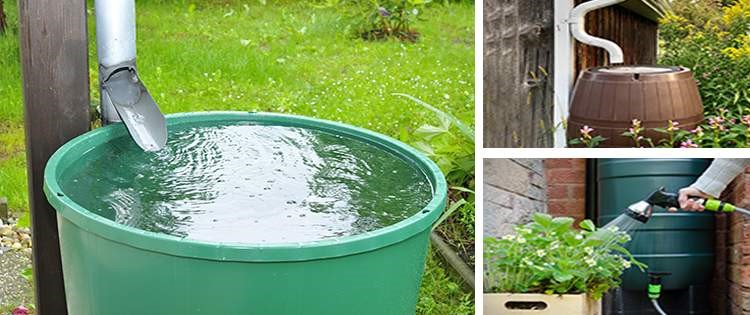
This DIY project is the best way to legally collect rainwater NO MATTER where you live. Get chlorine-free water, cut down on your water bills, and have enough for an emergency situation or to water your garden. Read More Here...
Practical Tips for Success
Managing a guild is less about “working” and more about “tending.” Here are a few ways to keep your system running smoothly:
- The Chop and Drop: When your comfrey or clover gets tall and leggy, don’t throw the clippings in the compost. Chop them down and drop them right on top of the mulch. This “green manure” breaks down quickly and feeds the tree exactly when it needs it.
- Observe the Drip Line: Most of the tree’s feeder roots are located at the edge of its canopy, known as the drip line. This is the best place to plant your most nutrient-hungry companions.
- Succesional Blooms: Try to choose plants that bloom at different times. You want something flowering in the guild from early spring until late fall to keep the beneficial insects fed all season long.
A Sample Peach Guild Layout
If you are looking for a simple starting point, here is a basic layout for a single peach tree in a temperate climate.
| Plant Layer | Suggested Plant | Primary Function |
|---|---|---|
| Canopy | Reliance Peach Tree | Fruit production |
| Herbaceous | Comfrey (Bocking 14) | Mulch & mineral accumulation |
| Herbaceous | Yarrow | Attracts predatory wasps |
| Ground Cover | White Clover | Nitrogen fixation |
| Bulb/Root | Garlic Chives | Deters borers and aphids |
| Flower/Annual | Dill | Attracts beneficial hoverflies |
Advanced Considerations for the Serious Gardener
For those who want to take their guilds to the next level, consider the fungal component. Mycorrhizal fungi form a symbiotic relationship with peach tree roots, helping them absorb phosphorus and water. You can “inoculate” your soil with these fungi when planting, or simply encourage their growth by avoiding chemical fertilizers and heavy tilling.
Timing your “chop and drop” can also make a big difference. Cutting back your nitrogen fixers just before the peach tree enters its heavy fruiting stage provides a boost of nutrients exactly when the tree is under the most stress. This helps prevent the “fruit drop” that often happens when a tree is overwhelmed.
Final Thoughts
Stepping away from the traditional monoculture way of gardening takes a bit of a mental shift. It can feel strange to let “weeds” like dandelions or clover grow under your fruit trees. However, once you see the vibrant health of a tree supported by a guild, you will never want to go back to the old way of doing things.
The goal is to create a system that is regenerative. Every year that passes, the soil gets richer, the ecosystem gets more balanced, and your job as a gardener gets easier. You aren’t just growing a peach tree; you are building a legacy of healthy soil and abundant life that will continue to give back for decades.
Start small if you need to. Plant a tree, lay down some cardboard, and tuck in a few cloves of garlic. Watch how the system responds. Nature is a patient teacher, and she is always ready to do the heavy lifting if you are willing to give her the space to work.