Stop paying for the ‘finished product’ when you can grow a legacy from a single node. The secret the nurseries don’t want you to know: that ‘Giant Monstera’ is just a collection of nodes you could have grown yourself for free. By shifting from a buyer to a propagator, you learn the plant’s true growth engine and create an infinite supply of organic gifts. It’s time to stop consuming and start producing.
I have spent the better part of three decades watching the seasons turn from my back porch, and if there is one thing the soil has taught me, it is that nature is incredibly generous if you know where to look. A Monstera deliciosa, with those iconic Swiss-cheese leaves, might cost you a week’s wages at a high-end boutique, but to a gardener with a sharp pair of shears, it is simply a map of potential new lives. Every bump on that thick green stem is a promise waiting to be kept.
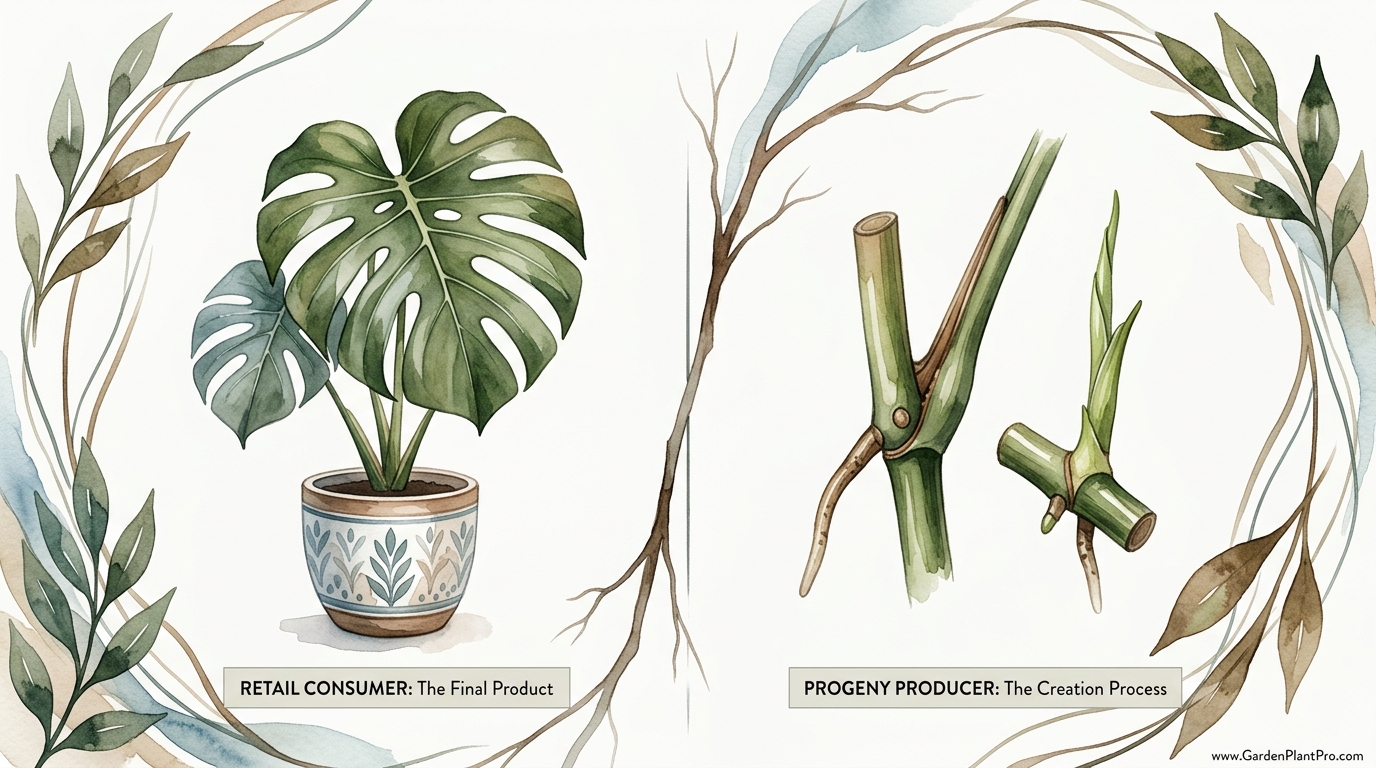
Most folks look at a lush, five-foot plant and see a decoration. I want you to look at it and see a lineage. When you take a cutting, you aren’t just making more plants; you are participating in a cycle that has existed long before we started putting plastic pots on windowsills. You are moving from being a mere retail consumer to a progeny producer, someone who understands the value of patience and the biological mechanics of the “Swiss Cheese Plant.”
This guide is meant to take the mystery out of the process. We will talk about why certain cuttings fail, how to spot the “eye” of the plant, and why a little bit of moss and a lot of light are usually all you need to turn a bare stick into a jungle centerpiece. Grab a cup of coffee, pull up a chair, and let’s talk about the magic hidden inside a single node.
How To Propagate Monstera From Node Cuttings
Propagating a Monstera from a node cutting is the act of taking a specific section of the stem that contains the genetic instructions and cellular energy required to build a whole new organism. In the gardening world, we often call this “asexual propagation” or “cloning,” because the new plant will be a genetic twin of the parent. This is particularly useful for variegated varieties like the Monstera Albo or Thai Constellation, where you want to ensure the new plant keeps those striking white or cream splashes.
The node is the absolute heart of this operation. It is the thickened part of the stem where leaves, petioles, and aerial roots emerge. Think of the node like a junction box in your home’s electrical system; it is the point where all the energy and information intersect. Without a node, a leaf is just a temporary decoration that will eventually wither in a vase. With a node, you have the “meristematic tissue”—essentially the plant’s version of stem cells—that can differentiate into roots or brand-new vines.
In the real world, Monsteras are climbers. In their native Central American rainforests, they use these nodes and their accompanying aerial roots to latch onto giant mahogany trees, pulling themselves toward the canopy light. When we propagate them at home, we are simply hacking into that survival instinct. We are telling the plant, “You’ve been disconnected from your source, so it’s time to build a new one.” This process is used by hobbyists to save a rotting plant, by professionals to mass-produce stock, and by neighbors to share a bit of green across the fence.
Anatomy of the Cutting
Understanding the anatomy is the first step toward success. You need to be able to tell the difference between the node, the internode, and the axillary bud. If you cut in the wrong place, you might end up with a piece of stem that looks green but is biologically “blind,” meaning it has no way to produce new growth. Always look for the slightly swollen ring around the stem; that is your target. Just above that node, often tucked into the “armpit” where the leaf petiole meets the stem, is a tiny, often dormant bump called the axillary bud. This bud is the future of your plant.
The Step-By-Step Process: From Chop to Crop
Taking the first cut is always the most nerve-wracking part for a beginner, but I promise the plant is tougher than it looks. A healthy Monstera can handle a significant pruning, and in many cases, it will grow back even bushier than before. You want to approach this with clean tools and a clear plan. Rubbing alcohol or a quick pass through a flame will ensure your shears aren’t carrying any fungal hitchhikers that could cause the cutting to rot before it ever has a chance to root.
Locate a healthy section of the vine with at least one node, though two nodes are often safer for beginners. Make a clean, swift cut about 1 inch (2.5 cm) to 2 inches (5 cm) below the node. This space below the node is called the internode. Keeping a bit of extra “tail” gives you a buffer; if the very tip of the stem starts to soften or rot, you can trim it back without losing the precious node itself. If your cutting has an aerial root attached, you are in luck—that root is already primed to start seeking moisture and will often transition into a water or soil root much faster than a bare node.
Once the cutting is free, do not rush it into water or soil immediately. Let the “wound” dry out and form a callus. This usually takes about 30 to 60 minutes, though some gardeners prefer to let it sit overnight. Think of this like a scab forming on a scraped knee. This hardened layer of cells acts as a barrier, preventing bacteria from entering the stem’s vascular system. If you skip this step, the open “flesh” of the plant is essentially a buffet for pathogens, especially in a water-based environment.
- Step 1: Identify the Node. Look for the swelling on the stem where a leaf or aerial root is attached.
- Step 2: Locate the Axillary Bud. Ensure there is a visible “eye” or bud on the stem; this is where the new vine will emerge.
- Step 3: Sterilize and Cut. Use sharp bypass pruners to cut through the internode, leaving a bit of stem below the node.
- Step 4: Callus. Place the cutting in a dry, shaded spot for at least an hour to let the cut end seal.
- Step 5: Select a Medium. Decide whether you will use water, moss, or another substrate to encourage root growth.
Choosing Your Rooting Medium
Gardeners have debated the “best” medium for decades, and the truth is that your environment—your home’s temperature and humidity—will dictate which one works best for you. There is no single right answer, only the answer that fits your routine. I have used everything from old pickle jars to sophisticated propagation boxes, and each has its place in a successful garden setup.
Water propagation is the most popular method for beginners because it is visual. You can see the roots emerging, which is both rewarding and educational. Use a clear glass container and fill it with room-temperature water. Ensure the node is submerged, but try to keep the leaf and petiole above the waterline to prevent rot. Changing the water every 5 to 7 days is crucial; fresh water carries oxygen, and oxygen is what prevents the anaerobic bacteria that cause “mushy stem” from taking hold.
Sphagnum moss is often the choice for serious practitioners, especially when dealing with expensive variegated cuttings. Moss provides a perfect balance of moisture and aeration. You want to soak the moss in water and then wring it out until it feels like a damp sponge—it should not be dripping. Pack it loosely around the node and place the whole thing in a clear plastic cup or a propagation box. This creates a high-humidity microclimate that mimics the tropical forest floor. Moss-grown roots are often sturdier and transition to soil more easily than water roots.
Perlite or LECA (Lightweight Expanded Clay Aggregate) are “semi-hydroponic” options. These inorganic materials provide massive amounts of oxygen to the developing roots while still wicking up enough moisture to keep the node hydrated. This is a great middle ground if you find that your cuttings often rot in water but you aren’t ready to commit to the maintenance of moss. Keep a shallow reservoir of water at the bottom of the container, allowing the material to pull the moisture up to the node without submerging it entirely.
Environmental Factors for Success
You can have the perfect cutting and the best medium, but if the environment is wrong, the plant will simply sit in a state of suspended animation. Growth requires energy, and for a plant, that energy comes from two main sources: light and warmth. In my experience, a cold windowsill is the quickest way to kill a promising propagation project. The cellular processes required for root formation slow down significantly when temperatures drop below 65°F (18°C).
Aim for a consistent temperature of around 75°F (24°C). If you live in a cooler climate or are propagating in the winter, a seedling heat mat can be a game-changer. These mats provide a gentle, bottom-up warmth that stimulates the meristematic cells to divide. Just be careful not to “cook” the cutting; place a towel or a thin piece of wood between the mat and your propagation vessel to ensure the heat is indirect and steady.
Light is the second pillar of the environment. While a mature Monstera can tolerate lower light, a cutting needs bright, indirect light to fuel the growth of new tissue. Avoid direct afternoon sun, which can scorch the single leaf the cutting is relying on for photosynthesis. A spot about 3 to 5 feet (1 to 1.5 meters) away from a south-facing window is often ideal. If you don’t have good natural light, a simple LED grow light positioned 12 inches (30 cm) above the cutting will work wonders. Aim for about 12 to 14 hours of light a day to keep the plant in “growth mode.”
Benefits of the Progeny Producer Mindset
Moving away from the retail consumer model offers more than just financial savings. When you grow from a node, you are developing a deep understanding of the plant’s life cycle. You see the first white root “nubs” appear, the development of secondary root hairs, and the eventual “awakening” of the axillary bud. This knowledge makes you a better gardener overall, as you learn to read the subtle signs of thirst, stress, and vigor.
DIY PROJECT: Collect rainwater no matter where you live...
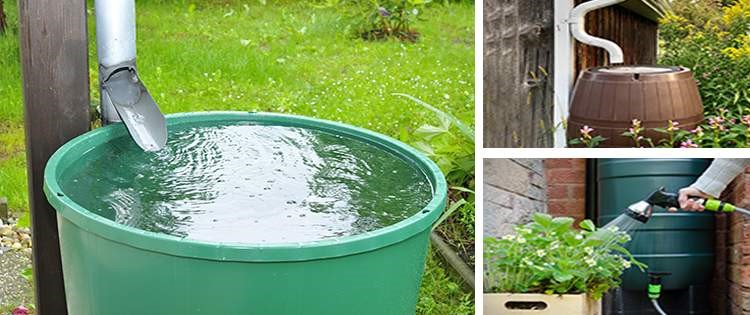
This DIY project is the best way to legally collect rainwater NO MATTER where you live. Get chlorine-free water, cut down on your water bills, and have enough for an emergency situation or to water your garden. Read More Here...
Creating your own supply of plants also means you have a steady stream of gifts for friends and family. A Monstera grown from a cutting taken from a grandmother’s plant is infinitely more valuable than a generic one bought at a big-box store. It carries a story and a connection to a specific time and place. Plus, propagating your own plants ensures they are already acclimated to your home’s unique climate, often resulting in hardier specimens that are less likely to suffer from transplant shock.
Sustainable gardening is also a major benefit. Every plant you produce yourself is one less plant that has to be grown in a massive industrial greenhouse, treated with synthetic pesticides, and shipped across the country in a fuel-hungry truck. By rooting your own nodes, you are shrinking your gardening footprint and fostering a more organic, localized ecosystem within your own four walls.
Challenges and Common Mistakes
The most frequent heartbreak I see is “Stem Rot.” It usually starts at the very bottom of the cutting and works its way up, turning the firm green tissue into a brown, foul-smelling mush. This is almost always a result of too much water and too little oxygen. If you notice rot, do not panic. Take a sterilized knife, cut back to healthy, firm green tissue, and let it callus again. Change your medium to something more breathable, like perlite, or be more diligent about changing your propagation water.
Another common mistake is choosing a “Spent Node.” In a Monstera’s life, an axillary bud usually only activates once. If a node has already produced a vine that was subsequently cut off, that specific bud is likely “spent.” While the node can still produce roots, it might never produce a new leaf. When selecting a cutting, always look for a plump, green axillary bud that hasn’t “popped” yet. It looks like a tiny, unblinking eye staring back at you from the stem.
Impatience is a silent killer. Many gardeners give up after two weeks if they don’t see roots. However, depending on the time of year and the health of the parent plant, a Monstera node can take anywhere from three weeks to three months to establish a viable root system. If the leaf is still green and the stem is still firm, the plant is still working. Leave it alone. Every time you pull a cutting out of its medium to “check” on it, you are damaging the microscopic root hairs and resetting the clock on its progress.
Retail Consumer vs. Progeny Producer
| Factor | Retail Consumer | Progeny Producer |
|---|---|---|
| Cost | High ($50–$200+ for large specimens) | Near Zero (Cost of a single node or free gift) |
| Plant Connection | Transactional and superficial | Deep understanding of biology and growth |
| Success Rate | Dependent on the nursery’s care | High, with personal oversight of variables |
| Sustainability | Low (High transport and greenhouse energy) | High (Circular, local, and organic) |
| Growth Potential | Limited to the purchased specimen | Infinite (One plant becomes fifty) |
Practical Tips for the Serious Propagator
For those who want to take their skills to the next level, I suggest looking into Air Layering. This is a technique where you encourage the plant to grow roots while it is still attached to the mother plant. You simply wrap a damp ball of sphagnum moss around a node and secure it with plastic wrap and twine. After a few weeks, you will see roots filling the plastic. Only then do you make the cut. This virtually eliminates the risk of “shock” because the cutting already has a fully functional root system the moment it is separated.
Consider the timing of your cuts. While you can propagate a Monstera year-round indoors, you will have much faster results if you do it during the active growing season. In most regions, this means spring and early summer. The plant is naturally flooded with growth hormones (auxins) during this time, and the higher ambient light levels will give your cutting the “fuel” it needs to establish itself quickly. If you must propagate in winter, be prepared for a slower journey and consider using supplemental grow lights.
Don’t be afraid to use a rooting hormone. While Monsteras are vigorous enough that they don’t *need* it, a quick dip in a rooting powder or liquid can speed up the process by several days. These products contain synthetic auxins that signal the plant’s cells to begin the transformation from “stem” to “root.” It’s a small investment that can pay off in a much higher success rate, especially for beginners who are still learning to balance moisture and light.
- Keep it clean. Sterilize your knife between every single cut to prevent cross-contamination.
- Focus on humidity. If your house is dry, place a clear bag over the cutting to trap moisture.
- Airflow matters. Even in a high-humidity environment, you need some air movement to prevent fungal growth.
- Use filtered water. If your tap water is heavily chlorinated, let it sit out for 24 hours or use rainwater.
- Patience is key. A dormant node might take months to “wake up.” Don’t toss it unless it turns black and mushy.
Advanced Considerations: Genetic Reversion and Stability
For those working with variegated Monsteras, like the Albo or Aurea, propagation is as much an art as it is a science. The white or yellow patches on the leaves are caused by a lack of chlorophyll in those cells. Because those areas cannot produce energy, the plant is naturally “weaker” than its solid green counterparts. When you take a cutting, you must look at the stem, not just the leaf. Look for “striations”—lines of color—running through the node itself. If the node is solid green, the new growth will likely be solid green, regardless of how variegated the leaf is.
This is where the concept of “chimerical variegation” comes in. The white and green cells are competing for dominance. If you want to maintain a highly variegated plant, you must select nodes that show a balanced mix of colors. If a plant starts to “revert” (turn all green), you can often save it by cutting back to the last node that showed good variegation. This forces the plant to activate a new axillary bud that might have a better genetic mix. It’s a game of chess with nature, and it’s one of the most rewarding aspects of high-level propagation.
Lastly, consider the size of the cutting. While a single-node “wet stick” (a leafless piece of stem) can grow into a full plant, it has very little stored energy. A “top cutting,” which includes the most recent leaf and the active growing tip, will establish much faster because it is already in “growth mode.” If you are a beginner, start with top cuttings. If you are looking to mass-produce or save a dying vine, the wet stick method is your best friend, provided you have a high-humidity propagation box to keep it from drying out.
A Real-World Scenario: The $200 Lesson
Imagine a young gardener named Sarah who buys a large, beautiful Monstera from a local nursery for $150. She takes it home, but within two months, she overwaters it, and the roots begin to rot. The leaves turn yellow, and the plant begins to lean. A “Retail Consumer” might throw the whole plant away, discouraged and out of pocket. But Sarah has been studying the progeny producer method.
She takes the plant out of the pot, identifies the healthy green sections of the stem that haven’t been reached by the rot, and makes five clean node cuttings. She lets them callus, puts them in a mix of perlite and moss, and places them under a $20 grow light. Four months later, she has five healthy, rooted Monstera plants. Not only did she save her initial investment, but she now has $750 worth of plants (at retail prices) to keep, sell, or trade. She turned a failure into an orchard. That is the power of understanding the node.
Final Thoughts
The journey from a single node to a towering, split-leaf specimen is one of the most satisfying experiences in the garden. It requires very little in the way of expensive equipment, but it asks for a great deal of observation and respect for the plant’s natural rhythms. By focusing on the node—the heart of the plant’s growth—you move beyond being a person who simply “owns” plants and become a person who “grows” them.
Remember that every mistake is just a data point. If a cutting rots, you’ve learned something about your humidity levels. If a node stays dormant for six months, you’ve learned something about the value of warmth and light. There is no such thing as a “black thumb,” only a gardener who hasn’t yet learned to speak the language of the node. Keep your shears sharp and your eyes open for those tiny axillary buds.
I encourage you to look at your current plants not as finished products, but as potential ancestors. Take a cutting, share a node with a neighbor, and watch how your garden expands. Once you master the Monstera, the same principles will carry you through propagating Pothos, Philodendrons, and dozens of other tropical treasures. The soil is waiting, and so is your legacy.