Why do the world’s oldest succulents thrive in literal dust while yours struggles in a $50 designer setup? Our ancestors didn’t have moisture meters or purple LED lights, yet their desert plants lived for decades. We’ve traded natural resilience for modern convenience, and our plants are becoming bloated and weak. Here is how to return to the rocky roots of succulent success.
I’ve spent the better part of forty years watching people try to “love” their succulents to death. They buy the fancy peat-based mixes, the self-watering pots, and the expensive plant food, only to find their Echeverias turning into mush within a month. Meanwhile, I’ve got an old Jade plant in a cracked clay pot out by the shed that hasn’t seen a drop of “designer” water in years, yet it stands like a weathered oak. The secret isn’t in what we give these plants; it’s in what we have the courage to take away.
Traditional Desert Succulent Care Secrets
Traditional desert succulent care is rooted in one word: lean. In the wild, these plants don’t live in the rich, black “potting soil” we find at the big-box stores. They live in the cracks of granite cliffs, in volcanic ash, and in sun-baked sand that looks more like a construction site than a garden. This environment is physically harsh, but it provides the one thing a succulent needs more than anything else: oxygen to the roots.
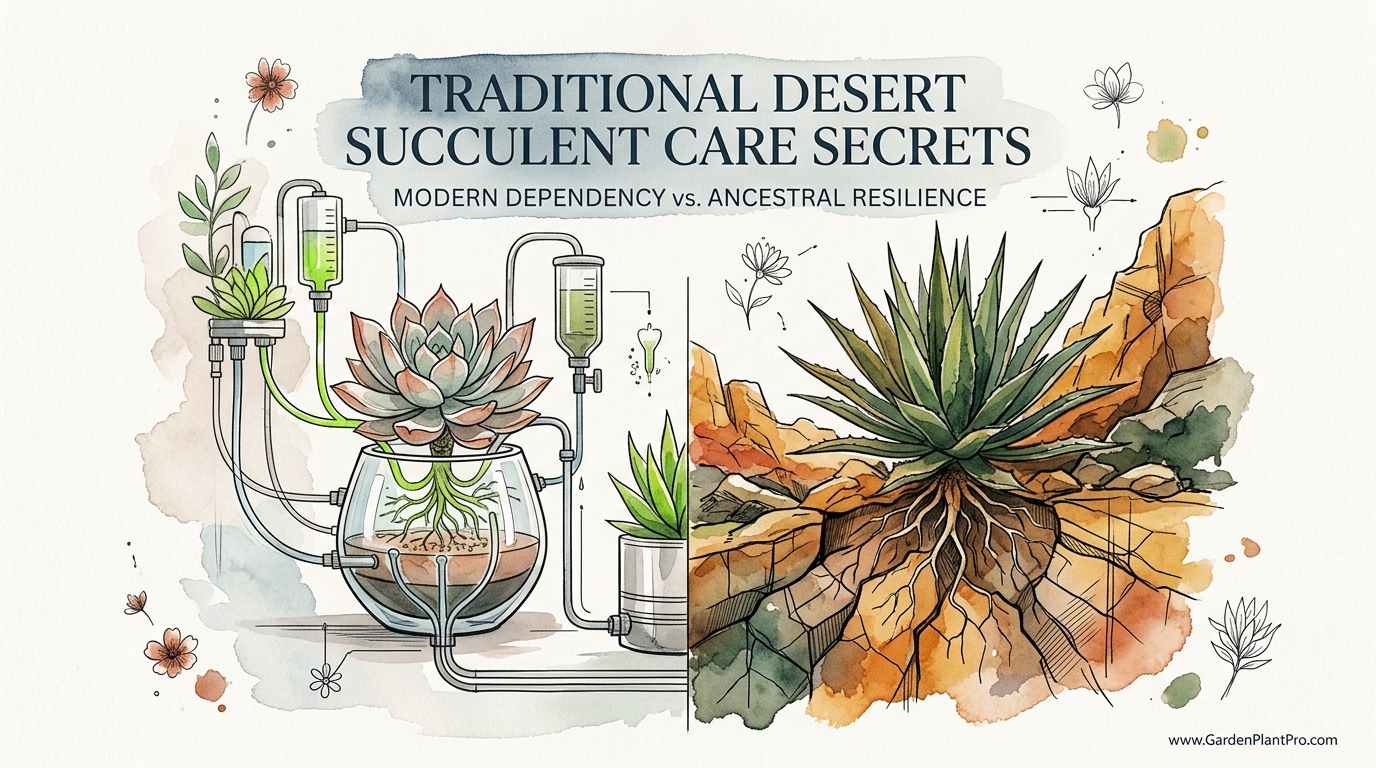
When we talk about traditional secrets, we’re really talking about mimicking the natural stress of the desert. Succulents are built to store water because they expect it to disappear. When we provide a constant, moist environment, the plant loses its internal “rhythm.” It stops using its water storage efficiently and becomes susceptible to every fungus and bacteria in the neighborhood. Traditional care focuses on a cycle of extreme abundance (the monsoon) followed by extreme scarcity (the drought).
How It Works: The “Soak and Dry” System
To grow succulents the traditional way, you have to understand the “monsoon” logic. In the desert, rain doesn’t come in gentle sips. It comes in a sudden, overwhelming drenching that saturates the ground, followed by weeks of baking sun. This is the rhythm your plant expects.
To replicate this at home, you should never water with a spray bottle. Misting only encourages weak, shallow roots and keeps the humidity high around the leaves, which can lead to rot. Instead, wait until the soil is bone-dry—not just the surface, but all the way to the bottom. Then, drench the pot until water flows freely from the drainage holes. This flushing action does two things: it provides a deep drink that encourages roots to grow downward, and it pushes out old, stagnant air, pulling fresh oxygen into the soil as the water drains.
The Secret of Night Breathing
One of the most fascinating “hidden” mechanics of these plants is something scientists call Crassulacean Acid Metabolism, or CAM. Most plants breathe during the day, but in the desert, opening your “pores” (stomata) in the heat of the sun is a death sentence; you’d lose all your water to evaporation. So, succulents wait. They keep their stomata tightly shut during the day and only “exhale” and “inhale” at night when it’s cooler and the air is more humid.
This traditional insight tells us two things: first, succulents need a significant drop in temperature at night to trigger this breathing cycle. Second, they need airflow at night. If you keep your plants in a stuffy, warm room with no circulation, they literally can’t breathe properly. I always tell my neighbors to crack a window or keep a small fan moving the air in the evenings. It makes a world of difference.
The Rocky Foundation: Soil and Substrate
If you take nothing else from this conversation, remember this: peat moss is the enemy of the desert plant. Most commercial succulent soils are still 50% to 70% organic matter like peat or compost. While this is great for a fern, it’s a sponge that holds water far too long for a cactus.
A traditional “gritty mix” is mostly mineral. In my garden, I aim for a ratio of about 80% mineral to 20% organic. If you’re in a humid climate, you might even go 90% mineral. Here is the recipe I’ve used for years:
- 2 Parts Coarse Sand: Not fine beach sand, which packs down like concrete, but “sharp” sand or builder’s sand with grit sizes around 1/8 inch (3 mm).
- 2 Parts Pumice or Perlite: These are volcanic rocks that are full of tiny air pockets. Pumice is better because it’s heavier and won’t float to the top when you water.
- 1 Part Crushed Granite or Poultry Grit: This provides weight and keeps the soil “open” so it never compacts.
- 1 Part Pine Bark Fines or Coir: This is your only organic component. It holds just enough nutrient and moisture to keep the plant from shriveling between monsoons.
The Benefits of Going “Old School”
Why go through the trouble of mixing your own “dust” when you can buy a bag of soil for five dollars? The benefits show up in the long-term health of the plant. A plant grown in lean, mineral soil will have a much more robust root system. Instead of the thin, hair-like roots found in potting soil, you’ll see thick, orange or white “anchoring” roots that are resilient to temperature swings.
Furthermore, traditional care brings out the “stress colors.” You know those beautiful pinks, purples, and deep reds you see in desert photos? Those aren’t a sign of a “happy” plant in the human sense; they are a sign of a plant that is effectively managing sun and water scarcity. A coddled plant stays a boring, flat green. A traditionally grown plant becomes a living jewel.
Common Challenges and Pitfalls
The biggest challenge isn’t the plant; it’s the gardener’s guilt. We see a dry pot and we feel like we’re neglecting a pet. You have to overcome the urge to “just give it a little splash.” In the world of succulents, neglect is often the kindest form of care.
Another mistake is the “pot with no hole.” I don’t care how pretty that ceramic bowl is—if it doesn’t have a drainage hole, it is a coffin. Water sits at the bottom, the air can’t circulate, and the roots will drown in their own waste. If you must use a decorative pot, keep the plant in a plain plastic or terracotta “nursery” pot inside the fancy one, and always take it out to water it.
Terracotta vs. Modern Containers
There is a reason our grandmothers only used unglazed terracotta. Clay is porous. It “breathes” through its walls. When you water a plant in a terracotta pot, the clay absorbs some of that moisture and then slowly releases it through evaporation. This process actually cools the soil, protecting the roots from the midday heat.
| Feature | Unglazed Terracotta | Plastic / Glazed Ceramic |
|---|---|---|
| Breathability | High; allows air to reach roots through the walls. | None; air only enters from the top. |
| Moisture Control | Wicks away excess water; dries faster. | Holds moisture for a long time; higher rot risk. |
| Temperature | Insulates and cools through evaporation. | Can heat up rapidly in direct sun. |
| Durability | Fragile; can crack in freezing weather. | Durable; lasts for years but can become brittle. |
Practical Tips for Success
If you’re ready to transition your plants to a more traditional setup, don’t do it all at once during the dead of winter. Wait for the active growing season (usually spring or early summer).
- Check the stem: If the leaves are wrinkling, the plant is thirsty. If the leaves are turning yellow and translucent (mushy), it has had too much water.
- Use “Top Dressing”: A layer of small river stones or granite grit on top of the soil isn’t just for looks. It keeps the “neck” of the plant dry, preventing rot at the soil line, and it stops the light mineral soil from washing away when you water.
- The Chopstick Test: If you aren’t sure if the soil is dry, stick a wooden chopstick or bamboo skewer deep into the pot. If it comes out looking dark or feeling damp, leave it alone. If it’s dry as a bone, it’s time for a monsoon.
Advanced Considerations: Dormancy and Light
Serious practitioners know that succulents aren’t “static” decorations. They have seasons. Most succulents go into a semi-dormancy either in the heat of mid-summer or the cold of winter. During these times, they need almost zero water. I’ve gone three months in the winter without giving my indoor Aloes a single drop. They don’t mind; they’re resting.
Light is the other half of the equation. Modern windows often have UV coatings that block the very spectrum of light succulents need to stay compact. If your plant is “stretching” (growing tall with wide gaps between leaves), it is desperately searching for the sun. Traditionally, these plants want at least 6 hours of bright light. If you’re growing indoors, a south-facing window is usually the only place they’ll truly thrive.
A Real-World Example: The “Bloated” Echeveria
Imagine a neighbor brings you an Echeveria they bought at a supermarket. It’s in a tiny plastic pot filled with pure peat moss. The leaves are a pale green, stretched out, and the bottom ones are starting to turn yellow. This plant is “bloated”—it has too much water and too little light.
DIY PROJECT: Collect rainwater no matter where you live...
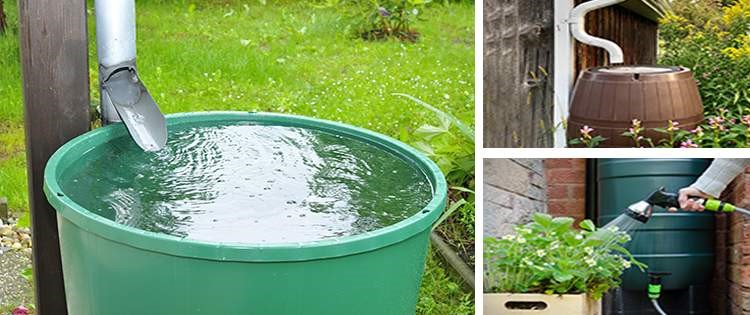
This DIY project is the best way to legally collect rainwater NO MATTER where you live. Get chlorine-free water, cut down on your water bills, and have enough for an emergency situation or to water your garden. Read More Here...
The first step is to take it out of that soil immediately. Shake off all the old peat—you might even need to wash the roots gently to get it all off. Let the plant sit out on a counter, bare-rooted, for two or three days. This sounds like murder to most people, but it allows any damaged roots to “callous” over, preventing rot. Then, repot it in an unglazed terracotta pot using the 80/20 mineral mix we discussed. Don’t water it for a week. Put it in a spot with bright, indirect light and slowly move it into more direct sun over the course of two weeks. You’ll watch that plant transform from a weak, floppy mess into a tight, colorful rosette.
Final Thoughts
Returning to the rocky roots of succulent success isn’t about buying more gear; it’s about understanding the ancient resilience of these desert survivors. By mimicking the harsh, lean environments of their ancestors, we stop being “plant owners” and start being “gardeners.” We learn to read the leaves, respect the seasons, and trust in the power of a little bit of dust and a lot of patience.
Don’t be afraid to let your plants get a little thirsty. Don’t be afraid to use soil that looks like it belongs on a driveway. These plants have survived for millions of years in the most inhospitable places on Earth; they don’t need our pampering, they just need us to get out of their way. Experiment with a few different mineral mixes, try out a terracotta pot, and see how your plants respond. You might just find that your “black thumb” was actually just a case of too much kindness.