
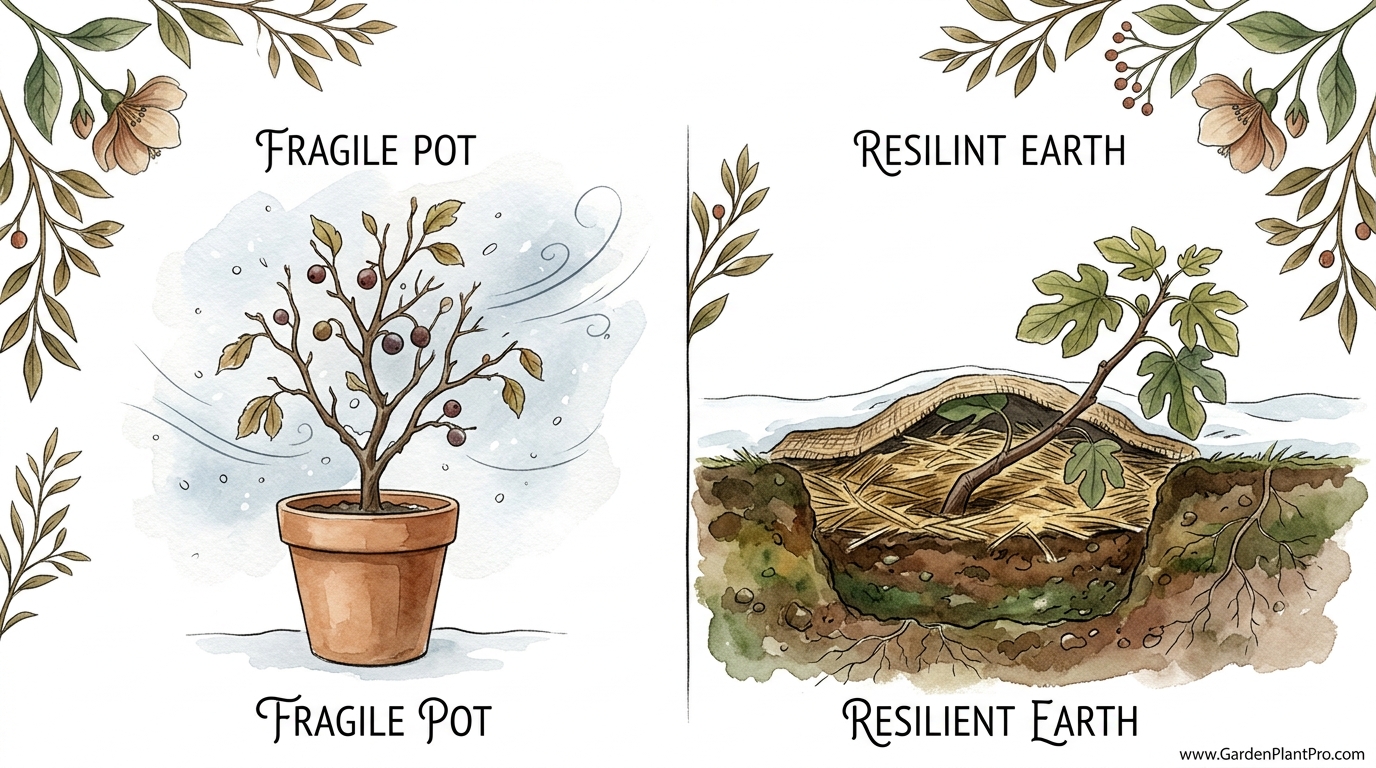
One of these trees will be dead by April; the other will provide 20 pounds of fruit. If you live north of Zone 7, your potted fig tree is a ticking time bomb. Learn why ‘trenching’—the secret of the old-world immigrants—is the only way to ensure your tree survives a polar vortex.
Over the years, I have seen too many gardeners lose their prized Mediterranean treasures to a single week of sub-zero temperatures. They try wrapping them in bubble wrap or dragging heavy pots into drafty garages, only to find a shriveled, lifeless stick come springtime. There is a better way, a method born of necessity and passed down through generations of Italian and Greek families who refused to leave their beloved figs behind when they moved to the cold Northeast.
This technique is called trenching, and it is the closest thing to a “magic trick” in the gardening world. It transforms the way we think about plant hardiness by using the Earth’s own thermal mass to keep a semi-tropical plant alive in the middle of a blizzard. It is messy, it is a bit of work, and your neighbors might think you are digging a grave in the backyard, but the reward is a harvest of honey-sweet figs that simply cannot be matched by any other method.
How To Overwinter Fig Trees In Cold Climates
Overwintering fig trees is the process of protecting these Mediterranean natives (Ficus carica) from lethal winter temperatures that would otherwise kill the above-ground wood or the entire root system. While some cold-hardy varieties like ‘Chicago Hardy’ can survive down to 10°F (-12°C), a true polar vortex can easily push temperatures into the negatives. When that happens, even the toughest fig will die back to the ground.
Trenching, or burying the tree, is the gold standard for survival in USDA Zones 5 and 6. It works by taking advantage of the constant temperature of the soil. While the air temperature might swing wildly from 40°F (4°C) to -10°F (-23°C), the earth below the frost line remains significantly warmer and more stable. By tucking the tree into a trench and covering it, you are effectively “hibernating” the plant in a natural root cellar.
In real-world terms, this method is used by serious fig enthusiasts who want to maintain the “scaffold” or permanent structure of their tree. If a fig dies back to the roots every year, it has to spend all its energy in the spring just regrowing its branches. This often means the fruit doesn’t have enough time to ripen before the next winter. By trenching, you preserve the old wood, giving you a massive head start and a much larger harvest.
The Step-by-Step Guide to Trenching Your Fig Tree
Trenching is a physical process that requires a bit of muscle, a sharp spade, and some careful timing. You cannot rush this; you must wait for the tree to tell you it is ready.
1. Wait for Full Dormancy
Do not start digging until the tree is completely dormant. This usually happens after the first or second hard frost of autumn, typically late October or November in the Northern Hemisphere. You will know the time is right when the leaves have turned yellow or brown and dropped off on their own. The sap has retreated into the roots, and the tree is “asleep.”
2. Prune and Tie the Canopy
Prune away any crossing branches or overly long, spindly growth. You want to simplify the shape so it fits into a narrow trench. Once pruned, take sturdy twine or electrical wire and wrap it around the branches, starting from the bottom and working your way up. Pull the branches in tight until the tree looks like a narrow “rocket ship.” This makes it much easier to handle and reduces the width of the trench you need to dig.
3. Dig the Trench
Decide which direction you want the tree to “lay down.” Dig a trench starting from the base of the trunk extending outward. The trench should be as long as the tree is tall and at least 18 to 24 inches (45 to 60 cm) deep. The goal is to get the entire canopy below the soil surface.
4. Sever the Roots on One Side
This is the part that scares most beginners, but I promise the tree can handle it. On the side opposite your trench, about 12 inches (30 cm) away from the trunk, drive your spade deep into the ground to sever the lateral roots. You are essentially creating a “hinge.” By cutting the roots on one side, you allow the root ball to pivot so the tree can lean over without snapping the main trunk.
5. Lay the Tree Down
Gently push the tree over into the trench. You may hear some small roots snapping—this is normal. If the tree resists, you might need to dig a little deeper under the root ball on the trench side to create more room for the pivot. Once it is lying flat, you can use a heavy stone or a wooden stake to pin it down so it doesn’t spring back up.
6. Cover and Insulate
Place a piece of plywood or an old door over the trench. This creates an air pocket and prevents the soil from compacting too tightly around the branches. Cover the plywood with the soil you excavated, and then add a thick layer of autumn leaves, straw, or mulch on top. A final layer of plastic or a tarp can help keep the insulation dry, which prevents rot.
Benefits of Trenching Over Other Methods
The primary advantage of trenching is reliability. While wrapping a tree in burlap and straw might work during a mild winter, it offers very little protection against a sustained deep freeze. Air-based insulation only slows down heat loss; it doesn’t provide a heat source. The earth, however, is a massive thermal battery.
A major benefit is the preservation of the “breba” crop. Some fig varieties produce an early crop of fruit on the previous year’s wood. If that wood dies back to the ground, you lose that entire first harvest. Trenching ensures that the wood survives, allowing you to pick figs weeks earlier than your neighbors.
Furthermore, trenching is a one-time cost of labor. Unlike purchasing expensive frost blankets or heaters every year, the soil is free. It is a sustainable, low-tech solution that has worked for centuries because it respects the biological limits of the plant and the physical realities of the climate.
Common Mistakes and Pitfalls
The most frequent error I see is burying the tree too early. If the ground is still warm and the tree hasn’t fully hardened off, you risk trapping moisture and heat inside the trench, which can lead to fungal rot or mold. Patience is a virtue here; wait for those leaves to drop.
Another mistake is failing to protect against rodents. Voles and mice love the cozy, dry environment of a buried fig trench, and they find the bark of the tree to be a delicious winter snack. I have seen beautifully buried trees unearthed in the spring only to find the bark completely girdled by hungry mice. To avoid this, place some rodent bait or mint-scented deterrents inside the trench before closing it up.
Lastly, do not forget the “hinge.” If you try to force a mature tree to lie down without severing the roots on the opposite side, the trunk will almost certainly splinter. This damage is often fatal or takes years to recover from. Take the time to undercut the root ball properly.
DIY PROJECT: Collect rainwater no matter where you live...
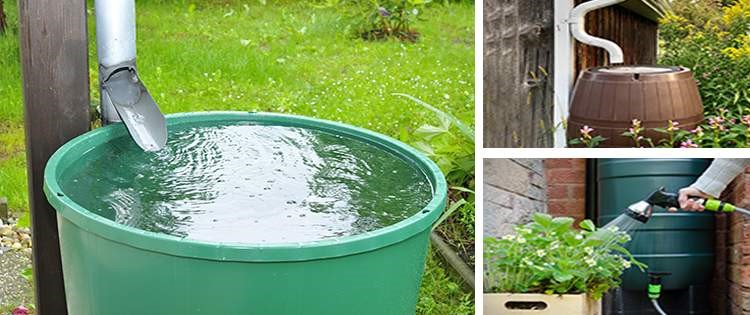
This DIY project is the best way to legally collect rainwater NO MATTER where you live. Get chlorine-free water, cut down on your water bills, and have enough for an emergency situation or to water your garden. Read More Here...
Limitations and Environmental Considerations
Trenching is not ideal for every garden. If you have very heavy clay soil with poor drainage, a buried trench can turn into a bathtub during a wet winter. Sitting in standing water for months will drown the roots and rot the wood faster than the cold would have killed it. In these cases, you are better off using an “above-ground burial” where you mound soil and mulch over the tree rather than digging down.
Space is another constraint. If you have a small urban backyard, you might not have the room to dig a 6-foot trench every autumn. Additionally, this method is physically demanding. As the tree grows and the trunk thickens, it becomes harder to bend. For very old, massive trees, many gardeners eventually transition to a “low-cordon” training system where the tree is grown horizontally from the start, making it easier to cover.
Practical Tips for Success
To make the process easier and more effective, consider these professional tips from my years in the garden:
- Use a “Burying Wire”: Instead of hemp twine, which can rot and break over the winter, use a coated electrical wire or nylon rope to tie your branches. It makes unearthing the tree in the spring much easier because you can find the end of the wire and use it to pull the canopy up.
- The Plywood Trick: Never put soil directly on the branches if you can avoid it. Using plywood or even old plastic bins to create a “shell” over the tree prevents the weight of the dirt from breaking smaller fruiting spurs.
- Spring Timing: Do not unbury the tree too early. A warm week in March can be tempting, but a late April frost will kill the tender new buds that have started to swell in the dark of the trench. Wait until the threat of a hard freeze (below 25°F / -4°C) has passed.
- Hydration: Make sure the tree is well-watered before it goes into the trench. A dehydrated tree is more susceptible to winter desiccation.
Advanced Considerations for Serious Growers
For those looking to optimize their results, focus on lignification. This is the process where green, succulent growth turns into brown, woody tissue. Only well-lignified wood can survive the winter, even when buried. To encourage this, stop fertilizing your figs by mid-summer and reduce watering in early autumn. This signals to the tree that it is time to stop growing and start hardening off.
You should also consider the “Japanese Stepover” or “Cordon” method. Instead of growing a traditional upright tree and bending it every year, you train the main trunk to grow permanently at a 45-degree angle or even horizontal to the ground. This minimizes root stress and makes the annual burial a ten-minute job rather than a half-day project.
A Real-World Scenario
Consider a gardener in Zone 6a (where temperatures hit -10°F / -23°C). They have two ‘Brown Turkey’ fig trees. One is kept in a large 15-gallon (57-liter) pot on the patio. The other is planted in the ground and trenched every November.
In January, a week-long cold snap hits. The potted tree, even if moved against the house, experiences “root freeze” because the thin plastic walls of the pot offer no insulation. The roots die at 15°F (-9°C), and the tree is lost. The trenched tree, however, sits 18 inches below the surface. Even as the air drops to -10°F, the soil temperature in the trench stays at a consistent 35°F to 40°F (2°C to 4°C).
In May, the gardener unearths the trenched tree. It has zero dieback. By July, it is covered in figs. The potted tree is a memory. This is the difference between fighting nature and working with the resilience of the earth.
Final Thoughts
Overwintering fig trees through the trenching method may seem like an extreme measure, but it is the most reliable way to enjoy a Mediterranean harvest in a cold climate. It connects us to a long history of immigrant gardeners who understood that the soil is our greatest ally. By taking a few hours each autumn to “tuck in” your trees, you are ensuring years of productivity and the unique joy of eating a sun-warmed fig right off the branch.
Don’t be afraid of the work. The first time you unbury a tree in April and see the vibrant green buds ready to burst, you will realize that the effort was a small price to pay. Whether you are a beginner or a seasoned grower, experimenting with these old-world techniques will deepen your understanding of soil health and plant resilience.
As you plan your garden, remember that the “fragile pot” is a temporary home, but the “resilient earth” is where a fig tree truly thrives. Give your trees the protection they deserve, and they will reward you with a bounty that lasts a lifetime. For those looking to expand their knowledge further, exploring topics like soil mulching and garden planning for microclimates can provide even more ways to push the boundaries of what is possible in your backyard.