
Are you accidentally funding the nursery industry’s ‘planned obsolescence’ for succulents? Most people treat a String of Pearls like a temporary decoration, buying a new one every time the last one shrivels up. But the true plant parent knows that a single healthy strand is actually a lifetime supply. Stop being a consumer who buys and dies; become a producer who grows and clones. One simple snip changes everything.
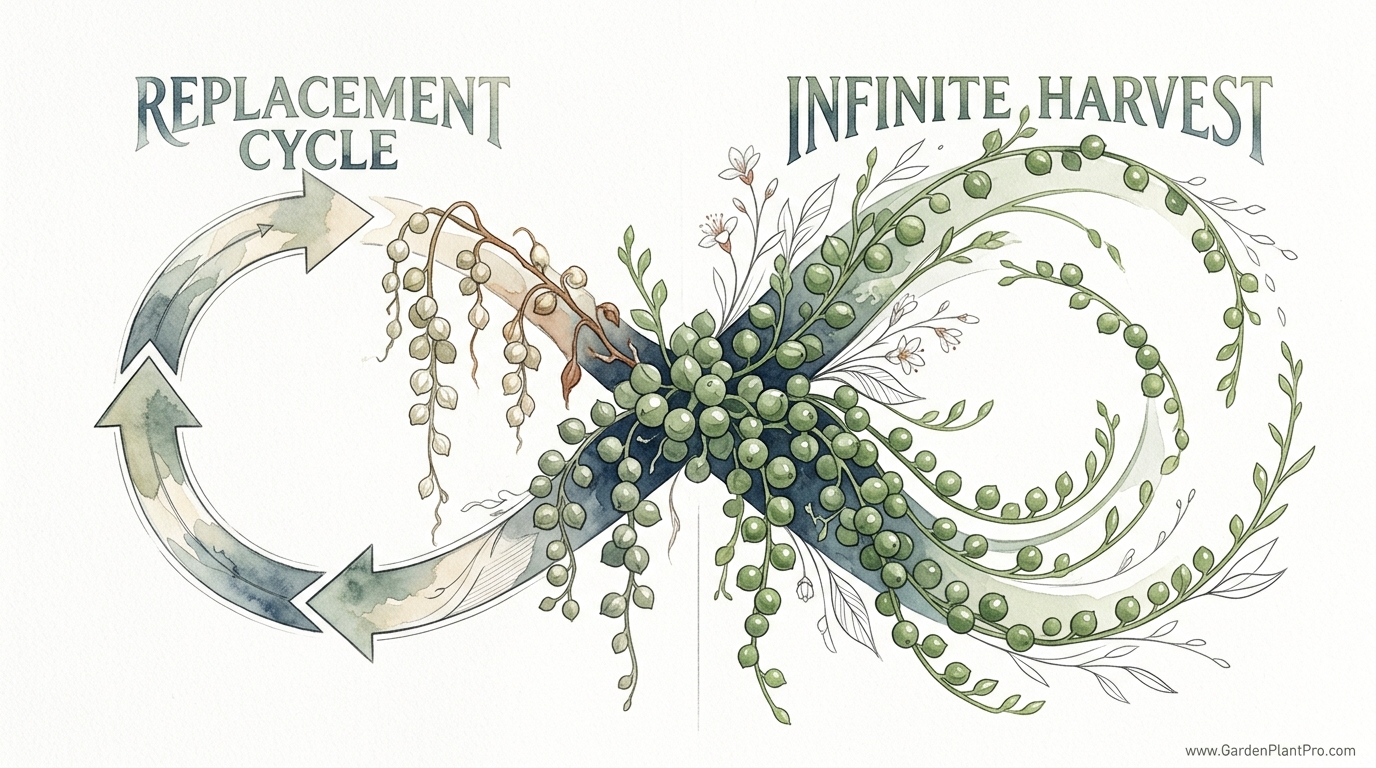
The String of Pearls, scientifically known as Curio rowleyanus, is often misunderstood as a “difficult” plant. In reality, it is a resilient survivor from the dry regions of South Africa. Those little green beads are not just for show; they are sophisticated water-storage organs designed to withstand drought. When you learn how to harness its natural drive to spread, you move away from the replacement cycle and into a state of infinite harvest.
How To Propagate String Of Pearls Succulents
Propagation is the process of creating new plants from a parent specimen. In the case of the String of Pearls, this typically involves taking stem cuttings and encouraging them to develop their own root systems. In its native habitat, this plant acts as a creeping ground cover, spreading across the soil and sending out roots wherever a stem node touches the earth. As a gardener, you are simply mimicking this natural behavior in a controlled environment.
This practice is essential for several reasons beyond just getting “free” plants. Over time, older String of Pearls can become “bald” at the top as the older stems age and light fails to reach the soil surface. Propagation allows you to refresh the plant, thicken the foliage, and even save a specimen that has begun to rot at the base. It is the ultimate insurance policy for your indoor garden.
How to Propagate Using Stem Cuttings in Soil
Soil propagation is generally considered the most reliable method for Curio rowleyanus because it produces stronger, more resilient roots from the start. Unlike water-grown roots, soil-grown roots are immediately adapted to the medium they will live in for the rest of their lives.
To begin, select a healthy, turgid vine from your mother plant. Use a pair of sterilized scissors to snip a section approximately 10 to 15 centimeters (4 to 6 inches) long. Look for stems that have “pearls” that are plump and firm; avoid any that are already shriveling.
Once you have your cuttings, remove the pearls from the bottom 2 or 3 centimeters (about 1 inch) of the stem. This exposes the nodes—the points where the leaves were attached—which is exactly where the new roots will emerge. It is vital to let these cuttings sit out in a shaded spot for 24 to 48 hours to callous over. This drying period creates a protective barrier that prevents soil-borne bacteria from entering the open wound and causing rot.
The Water Propagation Technique
Water propagation is a favorite for many because it allows you to watch the roots grow in real-time. It is also a very “clean” method that works well if you have limited space or want to create a decorative display while the plant roots.
Take a 10-centimeter (4-inch) cutting and remove the lower pearls just as you would for soil propagation. Place the bare stem end into a small jar of room-temperature water. Ensure that no pearls are submerged, as they will quickly turn to mush and pollute the water. Place the jar in a spot with bright, indirect light but no direct sun, which can overheat the water and cook the delicate new roots.
Change the water every few days to keep it oxygenated and free of algae. You should see tiny white roots appearing within 2 to 3 weeks. Once these roots are at least 2 or 3 centimeters (1 inch) long, you can carefully transplant them into a well-draining succulent mix.
The Layering Method for a Fuller Pot
If your goal is not necessarily to start a new pot but to make your current plant look thicker and more lush, the layering method is your best friend. This technique involves taking existing long vines and coiling them back onto the surface of the soil rather than letting them hang.
Use small, U-shaped landscape pins or even a bent paperclip to gently secure the stem against the soil surface. Ensure the nodes are in direct contact with the dirt. In nature, this is how the plant creates dense mats. Over the course of a few weeks, the stem will root at multiple points. Once established, these rooted sections will often send out new vertical shoots, effectively doubling or tripling the fullness of your pot’s “crown.”
The Foundation of Success: Soil and Potting
The single biggest mistake gardeners make with String of Pearls is using the wrong soil or a pot that is too deep. Because these plants have very shallow root systems, a deep pot is a liability. The bottom half of the soil stays wet for too long, leading to the dreaded “bottom rot” while the top of the plant looks thirsty.
Choosing the Right Container
Always opt for a shallow pot, often called a “bulb pan” or a “succulent bowl.” Terracotta is an excellent choice for propagation because the porous clay allows the soil to breathe and helps excess moisture evaporate. Whatever material you choose, a drainage hole is non-negotiable. Without one, you are essentially creating a swamp, and Curio rowleyanus will not survive it.
A Custom Soil Recipe
Standard “potting soil” is designed to hold moisture, which is the opposite of what a succulent needs. For the best results, mix your own substrate using the following ratio:
- 2 parts high-quality succulent/cactus mix: This provides the organic base.
- 1 part pumice or perlite: This ensures the soil stays airy and prevents compaction.
- 1 part coarse sand: This improves drainage speed and mimics the gritty South African soil.
This mixture ensures that when you water, the liquid moves through the pot quickly and the roots are never sitting in stagnant moisture. If you are interested in broader garden health, exploring soil health and aeration techniques can help you understand why this grit is so important for desert-dwelling species.
Ideal Environmental Factors
Your propagation success depends heavily on the “Big Three”: Light, Temperature, and Water. If any of these are out of balance, the cutting will likely fail before it can establish roots.
The Perfect Light Balance
While established String of Pearls can handle a little morning sun, cuttings are much more sensitive. They need “bright, indirect light.” This means a spot near a window where they can see the sky but the sun’s rays do not physically touch the pearls. If the light is too low, the plant will stretch (etiolate), creating long, ugly gaps between the beads. If the light is too intense, the pearls will turn a stressed reddish-purple color or simply shrivel and die.
Temperature and Humidity
These plants prefer temperatures between 21°C and 27°C (70°F to 80°F) during their active growing season. If you are propagating in a colder climate or during the winter, using a heat mat under your pots can significantly speed up the rooting process. Unlike tropical plants, String of Pearls does not need high humidity. In fact, stagnant, humid air can encourage fungal issues. A room with normal household humidity and good air circulation is ideal.
DIY PROJECT: Collect rainwater no matter where you live...
This DIY project is the best way to legally collect rainwater NO MATTER where you live. Get chlorine-free water, cut down on your water bills, and have enough for an emergency situation or to water your garden. Read More Here...
Benefits of Propagating Your Own Pearls
Why bother with all this snip-and-tuck work? Beyond the financial savings, there are practical horticultural advantages.
- Plant Longevity: String of Pearls tend to lose vigor after 3 to 5 years. Regular propagation ensures you always have young, energetic plants coming up.
- Customization: You can create unique arrangements, such as “spilling” pearls over the edges of mixed succulent planters.
- Genetic Security: If your main plant catches a pest or suffers from root rot, having “babies” in other pots ensures you don’t lose your collection entirely.
- Gifting: A small, rooted String of Pearls in a cute ceramic pot is one of the most appreciated gifts a gardener can give.
Challenges and Common Mistakes
Even experienced gardeners can run into trouble with this plant. Understanding the “why” behind failures is the first step to mastering the craft.
The Overwatering Trap
The most common mistake is loving the plant to death. Because we want our cuttings to grow, we tend to water them too often. Remember that the “pearl” is a water tank. If the soil is constantly wet, the plant cannot “breathe” through its roots, and the stem will turn mushy and translucent. This is often accompanied by a foul smell. If this happens, you must act fast: cut off the healthy green tips above the rot and start the propagation process over in fresh, dry soil.
Ignoring the Epidermal Window
If you look closely at a single pearl, you will see a small, translucent “slit” or window. This is a biological marvel that allows light to enter the interior of the leaf for photosynthesis. If your pearls are covered in dust or if the light is so low that the window cannot function, the plant will starve. Keep your pearls clean with a gentle misting or a soft brush to ensure they are processing light efficiently.
Practical Tips and Best Practices
- Wait for the Wrinkle: Don’t water your established cuttings until the pearls show very slight “stress wrinkles.” This is the plant’s way of telling you its internal water tank is low.
- Bottom Watering: Once your cuttings have roots, try bottom-watering. Place the pot in a tray of water and let it soak up moisture from the bottom. This keeps the delicate stems on top dry and prevents rot.
- Weakly Weekly Feeding: During the growing season (spring and summer), use a balanced succulent fertilizer diluted to 25% strength. Frequent, weak feedings are much safer than one strong dose.
- Sterilization is Key: Always wipe your cutting tools with rubbing alcohol. Fungal pathogens are the silent killers of succulent propagation.
Advanced Considerations for Serious Practitioners
For those who want to go beyond the basics, consider the timing of your “harvest.” While you can propagate year-round indoors, success rates are nearly 100% during the spring. This is when the plant’s metabolism is highest.
If you are dealing with a very large collection, you might explore pest management strategies specifically for succulents. Mealybugs love the tight crevices between pearls. Using a cotton swab dipped in isopropyl alcohol is a precise way to remove them without damaging the plant. Furthermore, understanding the irrigation methods that work best for your specific home climate (desert vs. humid coast) will dictate whether you should use terracotta or plastic pots.
Example Scenario: The “Rescue” Propagation
Imagine you find a String of Pearls at a big-box store that has been drowned. The base of the plant is brown and slimy, but the ends of the vines are still bright green and firm.
1. The Cut: Immediately snip the healthy green ends, making sure to cut at least 2 centimeters (1 inch) above the brown, rotting section.
2. The Prep: Strip the bottom pearls and let the cuttings callous on a paper towel for two days.
3. The Plant: Lay them on a shallow bed of 50/50 cactus mix and perlite.
4. The Result: In three weeks, those “doomed” vines will have sent down white hair-like roots, and in two months, you will have a thriving new plant that is better adapted to your home than the original.
Final Thoughts
The journey from a single strand to a cascading curtain of green pearls is one of the most rewarding experiences in indoor gardening. By moving away from the “buy and replace” mentality, you develop a deeper connection to the life cycles of your plants. You start to see every long vine not as a finished product, but as a source of potential new life.
Don’t be afraid of a few failed attempts. Gardening is a series of experiments, and every shriveled cutting is just a lesson in soil moisture or light levels. Keep your scissors sharp, your soil gritty, and your patience high. Soon enough, you will be the one giving away “lifetime supplies” of pearls to your own neighbors over the fence.
As you master this succulent, you might find yourself curious about other advanced techniques like composting for specialty soils or garden planning for year-round indoor displays. The skills you learn here—patience, observation, and the balance of elements—are the same skills that will make your entire garden thrive.