
Buying Angelica in a pot might be the exact reason your plant dies before its first birthday. It is the gardening world’s hidden trap: Angelica is a tap-rooted powerhouse that hates being a prisoner. When you buy it in a plastic pot, you are buying a plant with a broken ‘anchor.’ Because its root is already deformed by the pot’s walls, it will never reach the depths it needs to survive a drought. Discover why direct-sowing is the only way to grow a six-foot medicinal giant that stands its ground for years.
If you have ever walked through a nursery and seen a lush, green Angelica plant sitting in a 1-gallon (3.8-liter) pot, you might have been tempted to take it home. It looks healthy, vigorous, and ready to take over a corner of your herb garden. But the truth is, that plant is already on a countdown to failure.
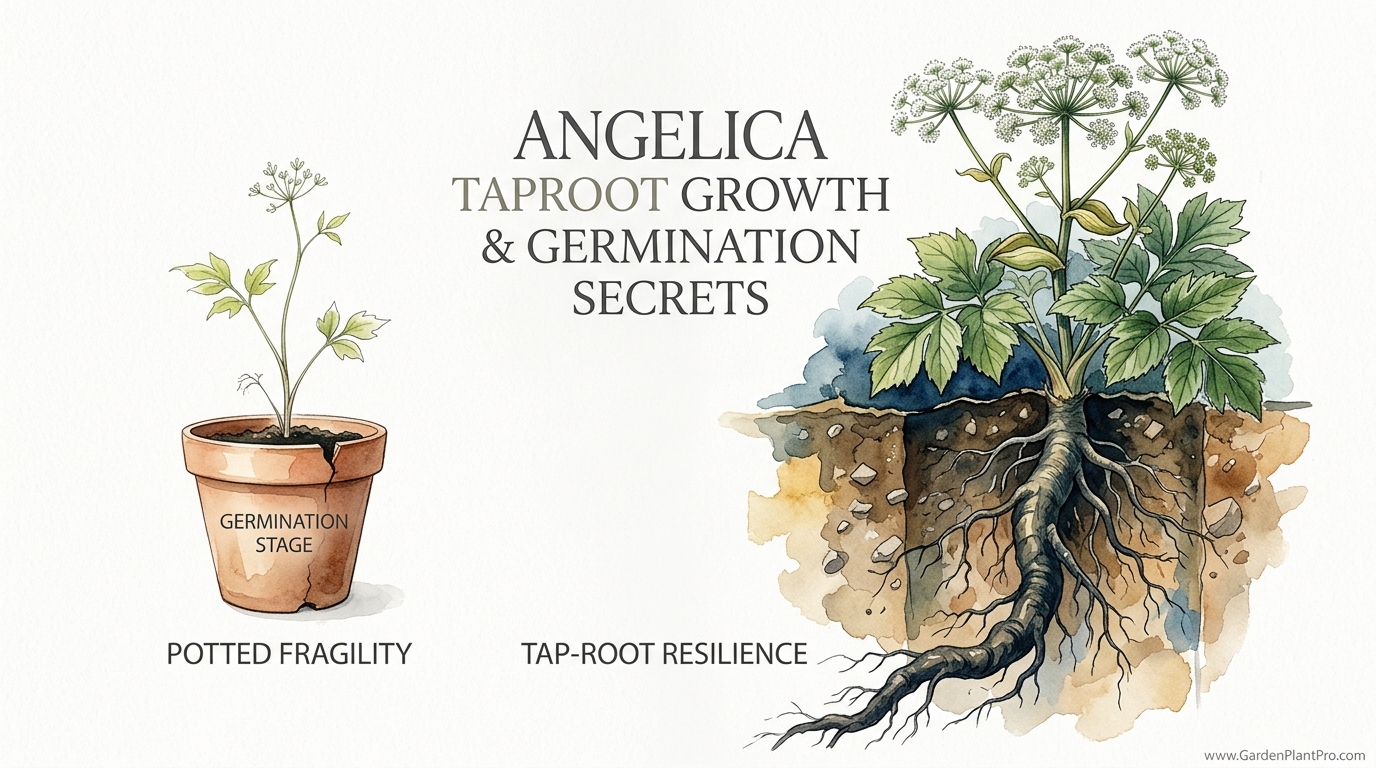
Angelica archangelica is a plant designed for the deep, moist soils of the north. It sends down a massive, carrot-like taproot that acts as its primary lifeline. In the wild, this root can dive several feet into the earth, anchoring the plant against heavy winds and reaching deep water reserves. When that root hits the bottom of a plastic pot, it begins to circle. This “spiraling” is more than just a minor inconvenience; it is a structural defect that prevents the plant from ever establishing the deep connection to the earth it requires.
As a gardener who has spent decades watching these giants rise and fall, I can tell you that the most magnificent specimens are almost always those that grew from a seed exactly where they stand. These “volunteer” plants, or those carefully direct-sown by hand, possess a resilience that no nursery-bought transplant can match. They stand taller, they flower more brilliantly, and they survive the erratic weather patterns of our modern seasons far better than their potted counterparts.
Angelica Taproot Growth And Germination Secrets
The biology of Angelica is fascinating and quite unlike many of the common kitchen herbs we grow. It belongs to the Apiaceae family, which includes carrots, parsley, and celery. Much like its cousins, it relies on a central taproot system. However, while a carrot is harvested for that root within months, an Angelica plant needs that root to support a structure that can reach 6 to 8 feet (1.8 to 2.4 meters) in height by its second year.
This taproot is a nutrient warehouse. During the first year of the plant’s life, it focuses almost entirely on building this underground reservoir. It produces a large basal rosette of leaves—sometimes reaching 3 feet (90 cm) in diameter—but the real action is happening beneath the surface. If that root is constricted, the “pump” that sends water to those massive, hollow stems in the second year simply cannot keep up. This is why transplanted Angelica often wilts and dies during the heat of its first summer or fails to produce a significant flower stalk in its second.
Germination is the second half of the secret. Angelica seeds are notoriously short-lived. In the wild, the plant drops its seeds in late summer, and they germinate almost immediately or after a winter’s chill. If you buy “fresh” seeds that have been sitting in a dry warehouse for a year, your success rate will be near zero. For the best results, you need seeds that were harvested in the current season. These seeds contain oils and embryos that begin to degrade the moment they leave the plant.
Another critical secret is light. Unlike many seeds that you bury deep in the soil, Angelica seeds are “photoblastic,” meaning they require light to trigger the germination process. If you bury them more than 1/4 inch (6 mm) deep, they will likely sit dormant until they eventually rot. The best way to sow them is to press them firmly into the surface of the soil so they have good contact but are still exposed to the sky. This mimics the natural way the seeds fall from the spent flower heads at the end of the season.
How To Direct Sow Angelica For Success
Direct sowing is the gold standard for this plant. To do this correctly, you must think like the plant’s native habitat—cool, moist, and fertile. Here is a step-by-step process that I have used for years to ensure a successful “take.”
- Site Selection: Choose a spot that will stay moist but not stagnant. Angelica loves “feet in water, head in sun,” though in warmer climates, partial shade is a necessity to prevent the leaves from scorching.
- Soil Preparation: Dig the area at least 12 to 18 inches (30 to 45 cm) deep. Mix in a generous amount of well-rotted compost or leaf mold. This loosens the soil, allowing that taproot to dive deep without hitting hardpan or rocks.
- The Sowing Window: In many regions, the best time to sow is late summer or early autumn, just as the mother plants are dropping their seeds. This allows the seeds to undergo a natural cold stratification over the winter. If you are sowing in the spring, you may need to “trick” the seeds by keeping them in a damp paper towel in the refrigerator for 4 to 6 weeks before sowing.
- Surface Sowing: Scatter the seeds over your prepared bed. Aim for a spacing of about 10 seeds per foot (30 cm). Gently press them into the soil using your hand or the flat side of a hoe. Do not cover them with soil.
- Consistency: Keep the area consistently damp. If the top layer of soil dries out, the germinating seed will die instantly. A very light dusting of fine vermiculite or a thin layer of burlap can help retain moisture while still letting light through.
Once the seedlings emerge—usually in 14 to 30 days depending on the temperature—you will need to thin them. Wait until they are about 3 to 4 inches (7 to 10 cm) tall. Thin them to a final spacing of at least 3 feet (90 cm) apart. It feels painful to pull up healthy seedlings, but remember: a single mature Angelica can take up as much space as a large shrub.
The Benefits Of Direct Sowing vs. Potted Fragility
When you direct sow, you are giving the plant the ultimate gift: an undisturbed life. The transition from a seed to a seedling to a giant happens in one place, allowing the root system to adapt perfectly to the specific soil structure and moisture levels of your garden. This creates a level of “tap-root resilience” that simply cannot be replicated.
Transplanted Angelica often suffers from “transplant shock,” which is essentially a physiological stall. The plant spends weeks or months trying to repair broken root hairs and reorient its taproot. During this time, it is highly susceptible to pests and disease. A direct-sown plant, however, never hits that “pause” button. It grows steadily, and its deep roots make it remarkably drought-tolerant once established—a surprising trait for a moisture-loving plant.
Furthermore, direct-sown plants tend to be sturdier. The hollow stems of Angelica can be 2 to 3 inches (5 to 7.5 cm) thick. In high winds, a plant with a compromised root system will topple or snap at the base. A direct-sown giant, anchored deep in the subsoil, can sway and bend with the wind, remaining upright throughout the heaviest summer storms.
Challenges And Common Mistakes To Avoid
The most common mistake gardeners make with Angelica is neglecting seed freshness. If you are buying seeds online, always check the harvest date. If it’s not from the current year, keep looking. I have seen many people spend an entire season waiting for seeds to sprout that were simply dead on arrival.
Another pitfall is letting the soil dry out during the first year. While a mature plant can handle some dry spells, the first-year rosette is very vulnerable. If the soil becomes bone-dry, the taproot may shrivel. This doesn’t always kill the plant immediately, but it permanently stunts its growth, leading to a puny flower stalk in the second year.
Lastly, people often underestimate the size of this plant. They plant it in the middle of a small herb bed, only to find that it shades out their thyme, basil, and oregano within months. Angelica belongs at the back of the border or in its own dedicated “wild” corner. It is an architectural plant, and it needs the “elbow room” to be the star of the show.
Environmental Factors And Climate Considerations
Angelica archangelica is a creature of the North. It is incredibly hardy, surviving in USDA zones 4 through 9. However, it does not like extreme heat combined with high humidity. In the Southern Hemisphere or in warmer climates like the American South, you must provide it with afternoon shade. If the temperature consistently stays above 86°F (30°C), the plant may go dormant or even die.
The soil pH is also important, though Angelica is somewhat flexible. It prefers a slightly acidic to neutral range, roughly 6.0 to 7.0. If your soil is very alkaline, you might notice the leaves turning yellow—a sign of iron chlorosis. Adding elemental sulfur or high-quality organic compost can help bring the pH down to a comfortable level for the plant.
| Feature | Garden Angelica (A. archangelica) | Korean Angelica (A. gigas) |
|---|---|---|
| Height | 6–8 ft (1.8–2.4 m) | 4–6 ft (1.2–1.8 m) |
| Flower Color | Greenish-White | Deep Burgundy / Purple |
| Hardiness | Zone 4–9 | Zone 5–9 |
| Sun Needs | Part Shade to Full Sun | Part Shade Preferred |
| Primary Use | Culinary / Medicinal | Ornamental / Medicinal |
Practical Tips For Maintaining Your Angelica Patch
Once your Angelica is established, it requires very little “active” maintenance, but a few seasonal habits will ensure it thrives for generations. Remember, Angelica is a biennial, meaning it lives for two years, flowers, sets seed, and then dies. To have a continuous supply, you need to sow seeds every year so you always have a mix of first-year rosettes and second-year giants.
DIY PROJECT: Collect rainwater no matter where you live...
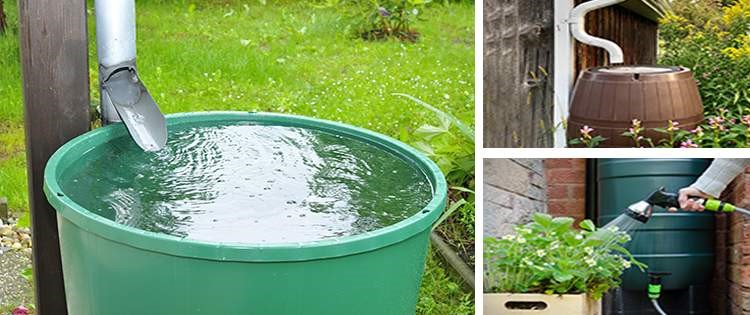
This DIY project is the best way to legally collect rainwater NO MATTER where you live. Get chlorine-free water, cut down on your water bills, and have enough for an emergency situation or to water your garden. Read More Here...
- Mulching: Apply a 2-inch (5 cm) layer of organic mulch around the base of the plants in late spring. This keeps the roots cool and helps retain the moisture that the taproot craves. Avoid piling mulch directly against the stem to prevent rot.
- Feeding: Angelica is a “heavy feeder.” It pulls a lot of nutrients from the soil to create that massive biomass. A side-dressing of compost in the spring of both its first and second years is usually enough to keep it happy.
- Staking: While direct-sown plants are strong, in very windy gardens, you might want to provide a sturdy stake for the second-year flower stalk. Use soft garden twine to tie the stem loosely to the stake, allowing for some movement.
- Self-Sowing: If you want the plant to do the work for you, let the seeds ripen on the stalk. They will fall naturally and, if the soil is kept moist, they will sprout in the spring. This “naturalized” approach is often the most successful way to grow Angelica long-term.
Advanced Considerations: The Life Cycle Trap
For the serious practitioner, understanding the “monocarpic” nature of Angelica is key. Monocarpic means the plant flowers once and then dies. Most people call it a biennial, but if the conditions aren’t perfect, it might stay as a rosette for three or even four years before it finally finds the energy to flower. This is why you sometimes see “perennial” Angelica in catalogs.
You can sometimes “trick” the plant into living longer by cutting the flower stalk before it sets seed. This forces the plant to store energy back in the root for another year. However, this often results in a weaker plant the following year. In my experience, it is better to let the plant complete its natural cycle and focus your energy on ensuring the next generation of seedlings is healthy.
Another advanced tip is regarding harvesting. If you are growing Angelica for its medicinal roots, you must harvest them at the end of the first year or the very beginning of the second year before the flower stalk starts to rise. Once the plant begins to flower, the energy and chemical constituents in the root are depleted as they are sent up into the stem and seeds.
Real-World Scenario: The “Ditch” Strategy
I once knew a gardener who struggled for years to grow Angelica in her tidy, well-drained herb garden. Every year, the plants would reach 2 feet (60 cm) and then simply give up. One year, she took a handful of fresh seeds and scattered them in a low-lying, slightly boggy area near her property line—a place where the lawn mower rarely went and the soil stayed damp even in July.
The following year, she had a “forest” of Angelica. The plants grew to nearly 7 feet (2.1 meters) tall, with stems as thick as a man’s wrist. This happened because she stopped trying to force the plant into a traditional garden setting and instead gave it the “ditch-like” conditions it evolved for. The deep, damp, undisturbed soil allowed the taproots to grow without resistance, proving that sometimes the best thing a gardener can do is step out of the way.
Final Thoughts
Growing Angelica is an exercise in patience and a lesson in respecting the architecture of the earth. By choosing to direct sow and honoring the needs of that powerful taproot, you are moving away from the “disposable” gardening of nursery pots and toward a more permanent, resilient landscape. It is a plant that demands space and moisture, but in return, it provides a sense of majesty and ancient history that few other herbs can match.
Whether you are interested in the culinary tradition of candying the stems, using the seeds for artisanal gin, or simply wanting a stunning architectural focal point in your yard, the path to success begins with a seed and a patch of ground. Do not be lured by the convenience of the plastic pot. Instead, embrace the slow, steady growth of a plant that is truly anchored to your soil.
As you watch your first-year rosettes expand and your second-year giants reach for the clouds, you will realize that the “trap” of the potted plant was never worth the shortcut. The real reward is a garden that feels alive, self-sustaining, and deeply connected to the natural rhythms of the seasons. Experiment with different corners of your yard, find that perfect moist spot, and let the Archangel plant take its rightful place in your garden.