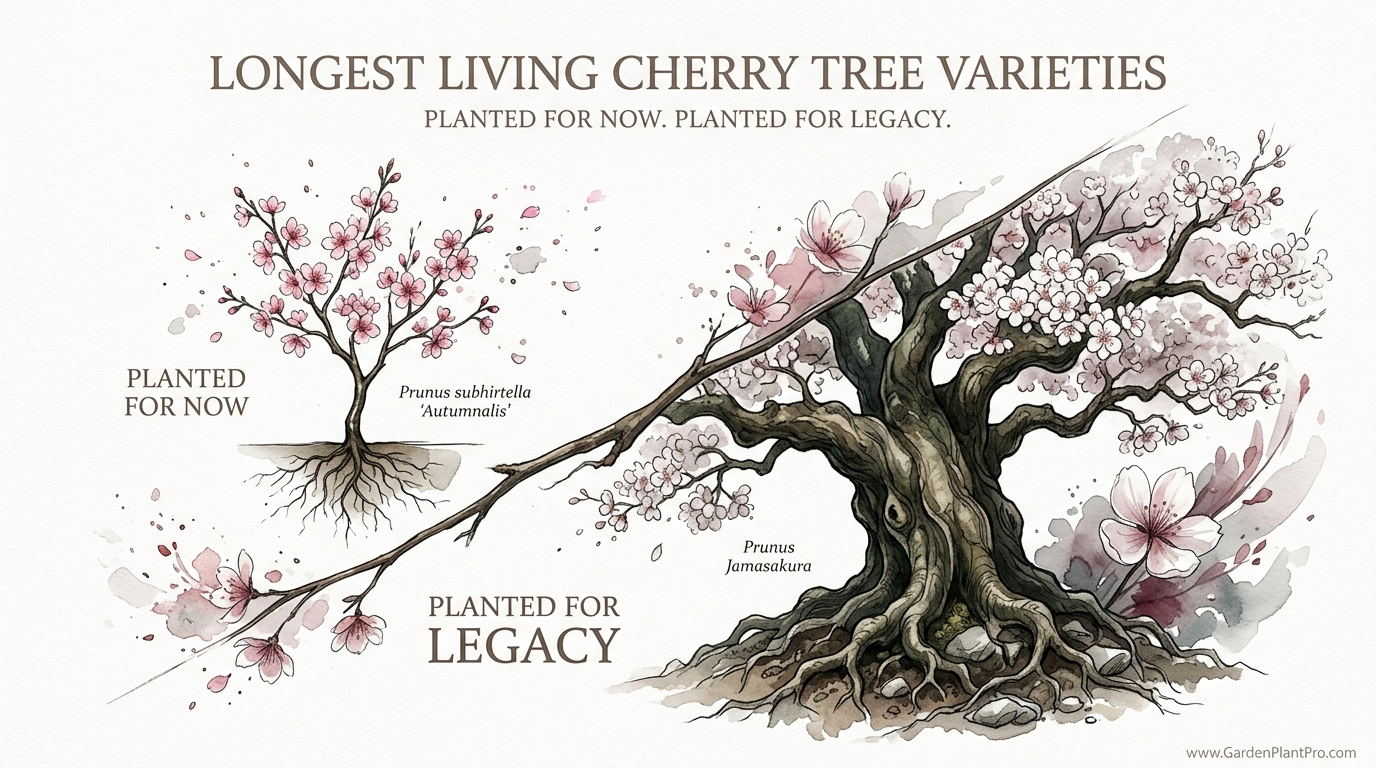
Is your fruit tree a 15-year temporary guest or a 100-year family heirloom? The modern nursery system wants you to buy trees that produce fast and die young. Dwarf hybrids are designed for convenience, but heritage standards are designed for generations. If you want your grandchildren to climb the same tree you planted, you need to change your strategy. Here is why the ‘slow’ tree is the ultimate garden win.
I have spent many afternoons leaning over my garden gate, watching neighbors plant those little “patio” cherry trees. They look great in a pot, and they usually give you a handful of fruit by the second summer. But I have also seen those same neighbors digging out the stumps a decade later because the tree simply ran out of steam. If you are looking to plant something that outlasts your mortgage, you have to look past the shiny labels at the big-box stores and think about the legacy of the soil.
Planting for legacy is a different mindset. It requires patience, a bit of extra space, and an understanding of what makes a tree truly sturdy. While a dwarf tree might give you instant gratification, a standard cherry tree is a structural masterpiece that grows stronger as it ages. It becomes a landmark in your yard, providing not just fruit, but shade, character, and a connection to the past. Let’s look at which varieties actually have the “long-haul” DNA to stick around for a century or more.
Longest Living Cherry Tree Varieties
When we talk about longevity in cherries, we are usually looking at two distinct groups: the sweet cherries (Prunus avium) and the sour or tart cherries (Prunus cerasus). Sweet cherries are the ones you eat fresh, while sour cherries are the kings of the kitchen, perfect for pies and preserves. If you want a tree that lives to see the next century, you are almost always looking for a variety grafted onto Mazzard rootstock, or better yet, a variety that is naturally vigorous and resistant to the common ailments that fell younger trees.
The Black Tartarian is perhaps the most famous example of a long-lived sweet cherry. Originally introduced from Russia in 1794, this heirloom is legendary among orchardists. There is a famous specimen in Eugene, Oregon, that was planted in 1860 and is still thriving today. That is over 160 years of fruit! It is a vigorous, upright grower that can reach 30 feet (9 meters) in height, producing dark, heart-shaped fruit with a rich, wine-like flavor that modern hybrids rarely match.
Another titan of the cherry world is the Napoleon, often called the Royal Ann. This variety has been around since the 18th century and is known for its incredible vigor. On standard rootstock, a Napoleon cherry can easily live 60 to 80 years, and under perfect conditions, even longer. It produces large, yellow-fleshed fruit with a beautiful red blush. Its secret to long life is its sheer physical strength; it builds a heavy, thick-barked trunk that resists many of the trunk-boring insects that plague softer, faster-growing hybrids.
On the sour cherry side, the Montmorency is the undisputed champion. While many sources say sour cherries only live 20 to 25 years, that is often based on commercial orchards where trees are pushed to their limits and then replaced. In a backyard setting, a Montmorency on its own roots or a standard rootstock can easily reach 40 or 50 years. It is incredibly cold-hardy and self-fertile, meaning it doesn’t need a partner to produce fruit, making it a reliable choice for a “one-and-done” legacy planting.
Finally, we cannot ignore the wild Mazzard cherry itself. While often used as a rootstock, the wild sweet cherry is a magnificent forest tree. In its native European and Asian habitats, wild Mazzards can live for 100 to 150 years. If you have the space and want a tree that is essentially “bulletproof,” planting a standard sweet cherry variety on Mazzard rootstock gives you the best of both worlds: high-quality fruit and the genetic durability of a forest giant.
How to Plant for the Next Century
If you want a tree to live for 100 years, you have to treat the planting day like a ground-breaking ceremony for a cathedral. You aren’t just sticking a stick in the mud; you are setting a foundation. The most common mistake I see is people choosing the wrong “standard” rootstock for their specific soil. In the world of long-lived cherries, your choice usually boils down to Mazzard or Mahaleb.
Mazzard is the gold standard for heavy or moist soils. It has a fibrous root system that anchors the tree deeply and provides excellent stability against high winds. If you have clay-heavy soil, Mazzard is your best friend. On the other hand, if you live in a drier climate with sandy, well-draining soil, Mahaleb is a fantastic choice. It is slightly more drought-tolerant and cold-hardy, but it absolutely hates “wet feet.” If a Mahaleb rootstock sits in standing water for even a few days, it can suffer permanent damage that will shorten its life by decades.
Before you even buy the tree, you need to test your drainage. Dig a hole about 2 feet (60 cm) deep and fill it with water. If it hasn’t drained away within 24 hours, you have a drainage problem. You can fix this by planting on a berm—a raised mound of soil about 18 inches (45 cm) high and 4 feet (1.2 meters) wide. This keeps the crown of the tree (where the trunk meets the roots) above the saturation zone during heavy spring rains.
When you actually go to plant, avoid the temptation to dump a bag of “super-growth” fertilizer into the hole. Too much nitrogen early on forces the tree to grow fast, soft wood that is prone to splitting and disease. Instead, focus on soil structure. Mix in a bit of well-rotted compost with your native soil to encourage mycorrhizal fungi. These fungi form a symbiotic relationship with the cherry roots, helping the tree absorb minerals and water more efficiently for the rest of its life. It’s like giving your tree a permanent health insurance policy.
The Practical Benefits of Legacy Trees
Why would anyone want a 30-foot (9-meter) tree when they could have a 10-foot (3-meter) one? The most obvious benefit is the yield. A mature standard cherry tree can produce between 30 and 50 quarts (28 to 47 liters) of cherries every single year. A dwarf tree will give you maybe 10 to 15 quarts (9 to 14 liters) on a good day. If you want to feed your family, give to the neighbors, and still have enough left over for the local birds, you need a standard tree.
Beyond the fruit, there is the microclimate benefit. A large, established cherry tree provides a massive canopy of shade that can lower the temperature in your garden by 5 to 10 degrees during the peak of summer. This protects your smaller understory plants, like currants or hostas, from getting scorched. The root system also goes much deeper than a dwarf tree, which helps with soil stabilization and drawing up minerals from deep in the earth that shallow-rooted plants can’t reach.
There is also an aesthetic and emotional value that you simply can’t put a price on. A 50-year-old cherry tree has a presence. Its bark becomes textured and rugged, its branches form a natural climbing frame for children, and it becomes a centerpiece for the entire landscape. In many cultures, these trees are seen as “witness trees”—they see children grow up, families move in and out, and the seasons turn year after year. They are living history in your own backyard.
Common Pitfalls and How to Avoid Them
The biggest threat to a long-lived cherry tree isn’t usually age; it’s pests and disease that take advantage of a stressed tree. Bacterial canker is the “boogeyman” of the cherry world. You’ll recognize it by the “gummosis”—that amber-colored ooze that leaks from the bark. While a little bit of sap is normal for a stone fruit tree, excessive oozing combined with dying branches is a sign of trouble.
To avoid canker, you have to be careful with your pruning. Never prune your cherry trees in the dead of winter when the air is damp and the tree is dormant. That is an open invitation for bacteria to move in. Instead, prune in late spring or early summer when the tree is actively growing and can seal its own wounds quickly. Also, always use sharp, sterilized shears. I keep a jar of rubbing alcohol handy to dip my blades into between every single cut. It sounds tedious, but it’s the difference between a 15-year life and a 100-year life.
Another mistake is over-watering mature trees. Once a standard cherry tree is established (usually after year 3 or 4), it doesn’t need to be pampered. In fact, keeping the soil constantly wet can lead to root rot. I tell people to water deeply but infrequently. You want the roots to “search” for water deep in the ground. This creates a more resilient tree that won’t keel over the first time there is a two-week dry spell.
Limitations and Realistic Expectations
I’ll be the first to admit that standard cherry trees aren’t for everyone. The most obvious limitation is space. If you have a small urban lot, a 30-foot tree might overwhelm your yard and shade out your vegetable patch. You also have to consider the neighbors; you don’t want your legacy tree dropping a hundred pounds of “bird-processed” cherry pits onto their pristine driveway.
DIY PROJECT: Collect rainwater no matter where you live...
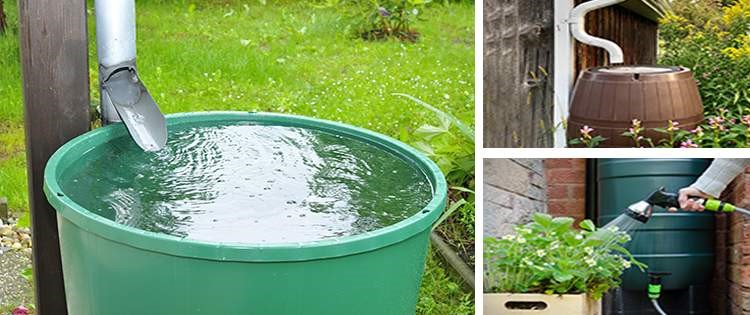
This DIY project is the best way to legally collect rainwater NO MATTER where you live. Get chlorine-free water, cut down on your water bills, and have enough for an emergency situation or to water your garden. Read More Here...
The second challenge is harvesting. Unless you are comfortable on a tall ladder, you are going to lose the top third of your crop to the birds. Some folks find this frustrating, but I’ve always viewed it as a fair tax. The birds get the high stuff, and I get the branches I can reach. If you absolutely must have every single cherry, you’ll need to invest in professional-grade netting and a very long reach-pole, which can be a lot of work as you get older.
Finally, there is the wait time. A dwarf tree will give you fruit in 2 years. A standard tree on Mazzard rootstock might take 6 to 8 years before it really starts producing. If you are 80 years old and just starting a garden, a standard tree might feel like a gamble. But if you are in your 30s or 40s, or if you are planting for your kids, that wait is just a blink in the lifetime of the tree.
Legacy vs. Modern Hybrid Comparison
It helps to see the data side-by-side. When we compare a “Planted for Now” strategy with a “Planted for Legacy” strategy, the differences are stark. A modern dwarf cherry is designed for high-density commercial production, while a heritage standard is designed for ecological stability.
| Feature | Dwarf (Planted for Now) | Standard (Planted for Legacy) |
|---|---|---|
| Average Lifespan | 15–25 Years | 60–100+ Years |
| Years to First Fruit | 2–3 Years | 6–8 Years |
| Max Height | 8–12 ft (2.5–3.6 m) | 25–35 ft (7.6–10.6 m) |
| Root System | Shallow, often requires staking | Deep, self-supporting anchors |
| Disease Resistance | High (short term), but delicate | Moderate, but physically robust |
| Maintenance | Intensive pruning & thinning | Minimal once established |
As you can see, the dwarf tree wins on speed, but the standard tree wins on everything else. If you have the room, the standard tree is actually cheaper in the long run because you aren’t replacing it every 20 years. Plus, a standard tree doesn’t require a permanent stake to keep it from blowing over in a thunderstorm.
Practical Tips for Success
- Choose the “Forever Site”: Standard cherries hate being moved. Pick a spot with full sun (at least 6-8 hours) and away from frost pockets (low spots where cold air settles and kills blossoms).
- Mind the pH: Sweet cherries love a slightly acidic to neutral soil, ideally between 6.3 and 7.2 pH. Sour cherries are more forgiving but prefer 6.0 to 7.0 pH. If your soil is too alkaline, the tree will struggle to absorb iron and turn yellow.
- Mulch Like a Pro: Apply a 3-inch (7.5 cm) layer of wood chips or straw around the base of the tree, but keep it 6 inches (15 cm) away from the trunk itself. This holds in moisture and keeps the roots cool without causing bark rot.
- The 10-Year Plan: For the first three years, focus entirely on “structural pruning.” You want to encourage 4 or 5 main “scaffold” branches that are evenly spaced around the trunk. Once those are set, you can mostly leave the tree alone.
Advanced Considerations: The Rootstock Secret
If you really want to go down the rabbit hole, ask your nursery specifically for Mazzard F12/1. This is a specific clonal selection of the Mazzard rootstock that is even more vigorous and resistant to bacterial canker than the standard seedling version. It was developed in the UK and has become the gold standard for heritage orchards across Europe and North America.
Another thing for the serious gardener to consider is inter-stem grafting. Some growers will put a small piece of a hardy, disease-resistant wood between the rootstock and the fruiting variety. This can help “bridge” the gap between a very vigorous root like Mazzard and a slightly more delicate variety like Bing. It’s an old-school technique that you don’t see much anymore, but it’s a hallmark of a truly custom, high-end legacy tree.
If you’re interested in more advanced orchard techniques, you might also want to explore topics like soil biology, advanced composting, or integrated pest management to keep your trees healthy without heavy chemical use. Understanding the relationship between your tree’s roots and the local fungal networks can truly transform your gardening success.
Example Scenario: The Century Orchard
Imagine a gardener named Sarah who lives on a half-acre lot. She wants to plant a cherry tree that her newborn daughter can enjoy for her entire life. Instead of grabbing the first tree she sees at the local shop, she orders a Black Tartarian grafted onto Mazzard rootstock from a specialist nursery.
In year one, Sarah digs a hole twice as wide as the roots and ensures the graft union is 2 inches (5 cm) above the soil. She doesn’t see a single cherry for five years, but she watches the trunk thicken and the roots take hold. By year ten, the tree is 15 feet (4.5 meters) tall and yielding enough fruit for fresh eating and three dozen jars of jam.
Fast forward thirty years: Sarah’s daughter is now a mother herself, and the tree is 30 feet tall. While the neighbors are replacing their third “dwarf” tree, Sarah’s Black Tartarian is in its prime, providing a massive canopy for family picnics. Because she chose a legacy variety and rootstock, the tree is still only a third of the way through its natural life.
Final Thoughts
Planting a long-lived cherry tree is one of the few truly selfless acts a gardener can perform. You are making an investment that you might not even see the full return on, but someone else will. In a world of disposable products and “quick fixes,” there is something deeply satisfying about putting a 100-year organism into the ground. It forces you to slow down, to think about the soil, and to plan for a future beyond your own.
Remember, the modern nursery system is built on turnover. They want you back in the store every ten years. But by choosing heritage varieties like Black Tartarian or Montmorency on standard Mazzard rootstock, you are breaking that cycle. You are planting a landmark. You are planting a legacy.
I encourage you to reach out to local heritage orchard societies or specialist nurseries. Ask the “annoying” questions about rootstocks and lineage. The extra effort you put in now will be repaid a thousand times over by the shade and fruit that will grace your garden long after we’re all gone. Happy planting, neighbor.