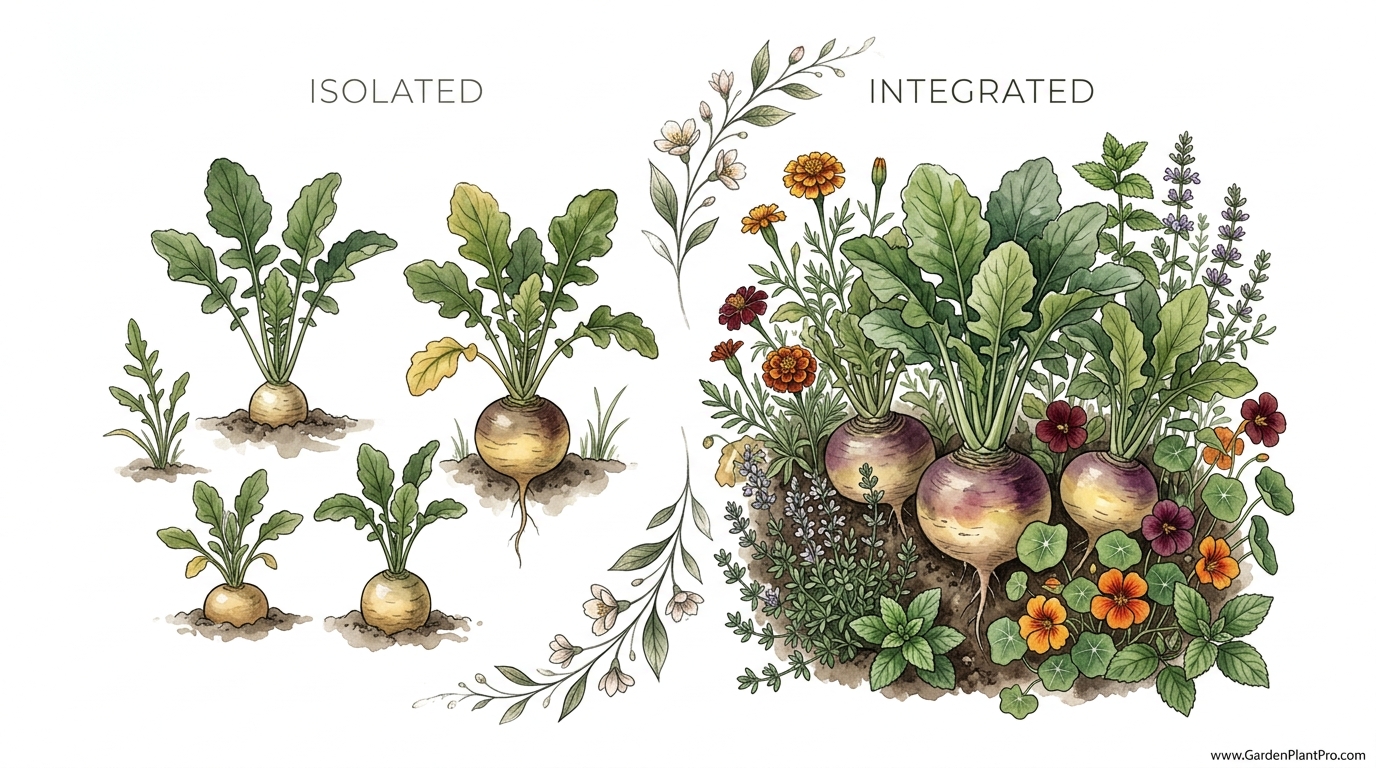
Are you planting a garden or a bullseye for every pest in the neighborhood? Most gardeners treat their swedes like soldiers in a line, but all you’re doing is making it easier for pests to find them. The ‘Isolated’ method is a buffet for the Cabbage Root Fly. Switching to an ‘Integrated’ design allows you to use the pungent scents of onions and herbs to create a biological cloaking device that hides your harvest in plain sight.
For decades, I’ve watched folks struggle with their rutabagas, wondering why their roots are riddled with tunnels or why the leaves look like Swiss cheese before the first frost even hits. Growing these hardy “Swedish turnips” requires a bit more than just sticking them in the dirt and hoping for the best. These plants are the quiet workhorses of the winter larder, but they are vulnerable if left to stand alone in a bare patch of soil.
Gardening is less about individual plants and more about the community you build around them. When you understand how a rutabaga interacts with its neighbors, you stop fighting against nature and start letting the garden protect itself. It’s a shift in perspective that turns a high-maintenance chore into a self-sustaining ecosystem.
Best Companion Plants For Rutabagas And Swedes
Companion planting is the age-old practice of placing different plant species together to take advantage of their natural properties. For rutabagas and swedes (Brassica napus var. napobrassica), this means surrounding them with plants that either repel their enemies, attract their friends, or improve the soil they sit in. This technique exists because, in the wild, plants rarely grow in monocultures. Nature prefers a messy, overlapping web of life where diversity provides stability.
In the real world, you’ll find this method used most effectively in “potagers” or cottage gardens where space is at a premium and organic pest control is the goal. A rutabaga is a member of the brassica family, meaning it shares many of the same vulnerabilities as cabbage and broccoli. However, since we are growing it for its root, the stakes are different. A cabbage looper might ruin a few leaves of kale, but a cabbage root fly maggot will burrow directly into your prize swede, leaving it rot-prone and inedible.
Good companions for these roots fall into several categories. Alliums, such as onions and garlic, are the heavy hitters because of their intense sulfur-based aromas. Aromatic herbs like sage and rosemary provide a secondary layer of scent-based confusion. Flowers like nasturtiums act as sacrificial decoys, and legumes like peas can help manage nitrogen levels without over-stimulating the leafy growth at the expense of the root.
How The Integrated System Protects Your Roots
Integrated planting works through a series of biological mechanisms that confuse, repel, or distract pests. The most critical challenge for any swede grower is the cabbage root fly. This tiny fly finds its host by sensing the chemical signatures—specifically glucosinolates—emitted by the brassica leaves. In an isolated row, that scent is a beacon.
Mixing alliums like leeks or onions into the bed creates a “scent screen.” The pungent volatile organic compounds (VOCs) released by the onions overwhelm the fly’s sensory receptors. It’s like trying to find a single candle in a room filled with heavy incense; the fly simply can’t lock onto the target. Research suggests that intercropping brassicas with alliums can significantly reduce egg-laying by root flies because they find the “landing” environment too confusing.
Trap cropping is another vital pillar of the integrated method. Using nasturtiums as a border is a classic move. These plants are highly attractive to aphids and cabbage white butterflies. Instead of laying eggs on your rutabagas, these pests choose the nasturtiums. You essentially offer a “lesser” plant as a sacrifice to keep the main crop clean. Once the nasturtiums become heavily infested, you can simply pull them out and compost them, removing the pest population from the garden entirely.
Key Benefits Of Companion Planting For Swedes
One of the most immediate benefits is the drastic reduction in the need for chemical interventions. Gardeners who rely on integrated designs often find they can skip the heavy-duty pesticides and floating row covers that make a garden look like a construction site. This approach fosters a healthier population of predatory insects, such as ladybugs and hoverflies, which thrive in a diverse environment and provide free labor by eating your aphids.
Soil health also sees a measurable improvement. Different plants have different root architectures. While the rutabaga is a heavy, deep-swelling root, companions like lettuce or spinach have shallow, fibrous roots. These smaller plants act as a “living mulch,” covering the soil surface to prevent moisture evaporation and suppress weed growth. Keeping the soil cool and moist is essential for swedes, as heat and drought lead to woody, bitter roots that aren’t fit for the dinner table.
Nutrient management becomes more efficient when you move away from isolated rows. Peas and beans are nitrogen fixers, meaning they take nitrogen from the air and store it in nodules on their roots. While you don’t want excessive nitrogen for rutabagas (it makes them grow massive leaves but tiny, spindly roots), having a slow, steady supply from nearby legumes helps maintain steady growth throughout the long 90 to 120-day growing season.
Common Challenges And Pests To Watch For
Growing swedes isn’t all sunshine and ladybugs; there are specific pitfalls that can sink your harvest if you aren’t vigilant. Boron deficiency is a frequent culprit behind “brown heart” or “water core,” where the inside of the root looks glassy and eventually turns brown and bitter. This often happens in soils with a high pH (above 7.0) or in very sandy soils where nutrients leach away quickly. If your soil is too alkaline, your swedes won’t be able to take up the boron they need, no matter how much you add to the dirt.
Clubroot is the boogeyman of the brassica family. This soil-borne fungus causes the roots to swell into grotesque, distorted shapes, preventing the plant from taking up water. Once clubroot is in your soil, it can stay there for over a decade. Planting swedes in the same spot year after year, or “isolated” from a proper rotation, is a surefire way to invite this disaster. Maintaining a four-year rotation cycle is the only real way to keep it at bay.
Flea beetles are the primary leaf-level threat. These tiny black beetles jump like fleas and leave hundreds of small holes in the foliage. While a healthy, mature rutabaga can survive some leaf damage, young seedlings can be stunted or killed overnight. Integrated planting with mint or catnip can help repel them, but you must be careful—mint is invasive and should always be grown in a pot sunk into the ground to prevent it from taking over the entire bed.
When To Avoid Certain Plant Pairings
Not every plant is a friend to the swede. You must avoid planting them near other large brassicas like broccoli, cauliflower, or Brussels sprouts. Putting all these related plants together is like hanging a neon sign for every pest in the county. It concentrates the scent of the host plant and allows pest populations to explode. If a disease like black rot hits one plant, it will sweep through the entire row in a matter of days.
Heavy feeders should also be kept at a distance. Corn, pumpkins, and large indeterminate tomatoes will quickly outcompete rutabagas for both light and soil nutrients. Swedes need full sun to bulk up those big roots, and being shaded by a towering cornstalk will result in a disappointing harvest. Tomatoes are also often cited as poor companions because they require different soil moisture levels and can sometimes harbor soil pathogens that affect root development.
Fennel is a notorious loner in the garden world. It releases allelopathic chemicals that inhibit the growth of most other vegetables, including swedes. I’ve seen many a gardener wonder why their roots stayed the size of golf balls, only to find a lush patch of fennel growing just a few feet away. Keep your fennel in its own isolated corner or in a container far from your main vegetable beds.
Practical Tips For A Successful Integrated Bed
Establishing a successful companion bed requires a bit of planning before you ever pick up a shovel. Start by testing your soil pH. You want to hit that sweet spot between 6.0 and 7.0. If your soil is too acidic, add a bit of garden lime; if it’s too alkaline, use elemental sulfur or well-rotted pine needles to bring the numbers down.
DIY PROJECT: Collect rainwater no matter where you live...
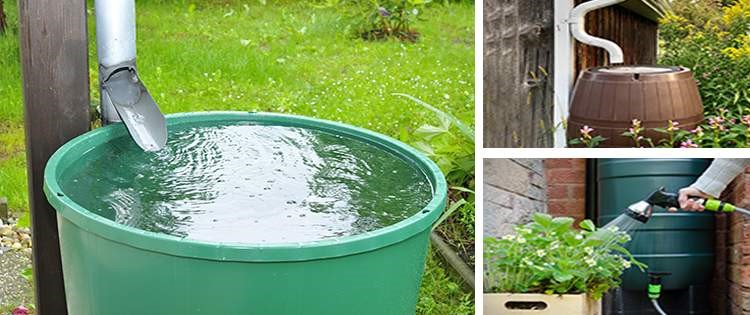
This DIY project is the best way to legally collect rainwater NO MATTER where you live. Get chlorine-free water, cut down on your water bills, and have enough for an emergency situation or to water your garden. Read More Here...
The “Clockwise” Layout
Planting in circles or clusters rather than straight lines can further confuse pests. Imagine a central “hub” of three or four rutabaga plants. Surround this hub with a ring of onions or leeks. On the outermost edge, tuck in a few marigolds or a small patch of thyme. This layering of heights and scents creates a complex environment that is difficult for a fly to navigate.
- Spacing: Give each swede at least 20 to 25 cm (8 to 10 inches) of breathing room. They need the space to expand.
- Sowing Time: In temperate regions, sow in mid-summer (June or July) for a winter harvest. The cooling soil of autumn helps the roots develop their sugars.
- Watering: Consistency is king. Fluctuating moisture causes the roots to crack. Mulching with straw or leaf mold around your companions helps hold that moisture in.
- Thinning: Don’t be greedy. If you leave your swedes too close together, they will fight for nutrients and neither will thrive. Thin them early and eat the greens in a salad.
Advanced Considerations For Serious Growers
Serious practitioners of the integrated method often look deeper into the soil biology. The relationship between rutabagas and mycorrhizal fungi is a fascinating area of study. While many vegetables form symbiotic bonds with these fungi to help them absorb phosphorus, brassicas are actually non-mycorrhizal. This means they don’t help build the fungal network in the soil.
Rotating your swedes with “highly mycorrhizal” crops like onions, legumes, or even certain cover crops like hairy vetch can help rebuild the soil’s fungal health between brassica cycles. This keeps the soil “alive” and ready for the next crop. Some growers even use “nurse crops” of clover in the walkways between beds to act as a permanent reservoir for beneficial microbes and predatory beetles.
Thinking about the micronutrient balance is another hallmark of the advanced gardener. Beyond just Boron, swedes are sensitive to Manganese and Molybdenum levels. Adding a high-quality, kelp-based liquid fertilizer every three weeks can provide these trace minerals in a form the plant can easily absorb. This leads to a denser cell structure in the root, which improves storage life and frost resistance.
A Real-World Example: The “Larder Bed” Plan
I once helped a neighbor set up a 1.2 by 3-meter (4 by 10-foot) raised bed designed specifically for winter storage crops. We didn’t just plant a block of swedes. Instead, we ran a spine of leeks down the center of the bed. These leeks provided the heavy-duty scent masking required to keep the root flies away.
On either side of the leek row, we staggered rutabagas at 25 cm (10-inch) intervals. In the gaps between the young rutabaga seedlings, we sowed quick-growing “cut and come again” lettuce. The lettuce grew fast, providing a green carpet that kept the soil cool during the heat of August. By the time the rutabagas were large enough to need the space, the lettuce had been harvested and eaten.
To finish the bed, we planted French marigolds at each corner and tucked a few sprigs of sage along the windward edge. The results were undeniable. While the neighbor across the street was pulling up swedes that looked like they’d been through a war zone, our “Larder Bed” produced clean, heavy roots with skin as smooth as a baby’s cheek. The combination of scent masking, soil cooling, and space management turned a potential failure into a massive success.
Final Thoughts
Building an integrated garden isn’t about following a rigid set of rules; it’s about observing the patterns of life in your own backyard. Every garden is a little different, and what works in my heavy clay soil might need a slight adjustment in your sandy loam. The key is to stop seeing the rutabaga as an isolated target and start seeing it as part of a vibrant, living community.
Taking the time to interplant with onions, herbs, and flowers might feel like extra work at first, but the payoff comes during harvest. There is a deep satisfaction in pulling a massive, purple-topped swede from the ground and finding it perfectly intact, knowing that you achieved that result by working with nature rather than against it.
Experiment with these pairings and don’t be afraid to try something new. Maybe your local flea beetles hate cilantro, or perhaps your marigolds work better in the middle of the row than on the ends. Keep a garden journal, watch the bugs, and listen to what your plants are telling you. The more you integrate, the more resilient your garden becomes, and the better your winter stews will taste.