
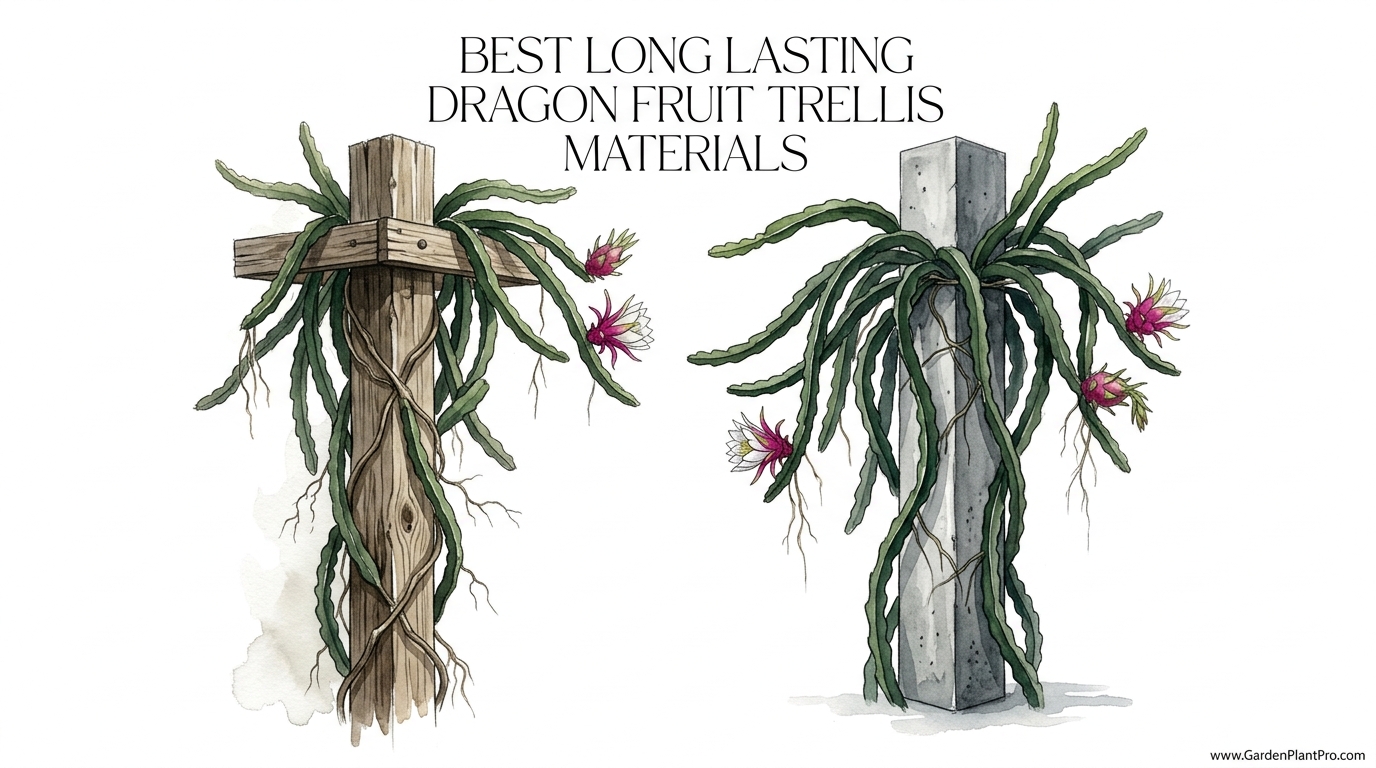
Your dragon fruit can live for 30 years, but will your trellis survive the first three? Dragon fruit vines can weigh hundreds of pounds at maturity. That cheap wooden post might look great today, but once those heavy limbs start producing, the ‘Temporary’ choice becomes a ‘Total Disaster.’ Build a legacy with concrete and never rebuild your trellis again.
Growing dragon fruit is a long game. When you first stick a cutting into the ground, it looks innocent enough—a small, three-sided succulent segment that seems like it wouldn’t hurt a fly. But fast forward four or five years, and you have a massive, sprawling monster that can easily weigh 200 kilograms (about 440 pounds) or more. I’ve seen many neighbors lose their entire crop because they underestimated the sheer gravity of a mature canopy.
The secret to a thriving dragon fruit patch isn’t just the soil or the fertilizer; it’s the skeleton you build for it. A trellis isn’t just a support; it’s the foundation of your plant’s life. If that foundation rots or snaps under pressure, you aren’t just losing a post—you’re potentially losing decades of growth and hundreds of fruits.
Best Long Lasting Dragon Fruit Trellis Materials
Choosing the right material for your dragon fruit trellis is the most important decision you will make in your garden this year. Because dragon fruit is an epiphytic cactus, it wants to climb and then hang. In the wild, they grow up trees. In your backyard, they need something just as permanent.
The best materials for a long-lasting trellis are those that can withstand constant moisture, the weight of the vine, and the intensity of the sun. While wood is the traditional choice for many garden projects, concrete and metal have become the gold standard for serious growers who want to build once and enjoy the harvest for 30 years.
Concrete is the heavyweight champion here. It doesn’t rot, termites won’t touch it, and it provides a cooling thermal mass that can actually help the plant during heatwaves. Metal, specifically galvanized steel or rebar, offers incredible strength but requires a bit of “clothing”—like burlap or vinyl tubing—to prevent it from burning the tender vines during the peak of summer. Wood, if chosen correctly, can still work, but you have to be selective about the species.
How to Build a Permanent Concrete Trellis
Building a concrete pillar might sound like a job for a contractor, but any backyard gardener with a shovel and a bag of mix can do it. The goal is to create a central column that is anchored deep in the earth or at the bottom of a large pot.
Setting the Foundation
Start by digging a hole at least 60 centimeters (24 inches) deep. This depth is crucial because the center of gravity for a mature dragon fruit is high up in the canopy. If the post is shallow, the first high wind or heavy rain will tip the whole thing over.
For the main support, many experienced growers use a 10-centimeter (4-inch) PVC pipe or a specialized orange drain pipe as a “sleeve.” You place a piece of 12-millimeter (1/2-inch) rebar down the center of the pipe, extending from the bottom of the hole to the very top. Then, you pour your concrete mix into the pipe. This creates a reinforced concrete pillar that is practically indestructible.
Creating the Canopy Support
The top of the trellis is where the magic happens. You need a way for the branches to spill over like a fountain. A popular method is to use a 50-centimeter (20-inch) square frame made of durable wood or a recycled motorcycle tire. To attach this to a concrete post, you can leave the rebar sticking out of the top and bend it into “arms” or use heavy-duty bolts cast directly into the concrete.
Benefits of Choosing Concrete Over Wood
When you look at the long-term economics of a garden, concrete almost always wins. While a standard pine post might cost less upfront, its lifespan in damp garden soil is often less than five years.
Concrete provides a permanent home. Dragon fruit vines develop aerial roots that like to “grip” their support. Rough concrete provides the perfect texture for these roots to latch onto, drawing in extra moisture and stability. Unlike wood, which can shrink, swell, and eventually crumble, concrete stays put.
Another major benefit is stability in extreme weather. A mature dragon fruit canopy acts like a sail in the wind. A concrete pillar, anchored 2 feet deep and weighing over 50 kilograms (110 pounds) itself, provides the ballast needed to keep your plants upright during summer storms.
Challenges and Common Mistakes
The biggest mistake I see beginners make is using “untreated” pine. It looks clean and natural, but in a garden environment with regular irrigation, it will rot at the soil line within two seasons. By the time you notice the lean, the vine is already too heavy to move without breaking it.
Another pitfall is making the trellis too tall. It’s tempting to want a 2-meter (7-foot) trellis, but remember: you have to harvest those fruits. A trellis height of about 1.5 meters (5 feet) is the “sweet spot.” It allows the plant to grow another foot above the support and then drape down to eye level, making pruning and harvesting much easier on your back.
Failure to protect the vine from the support itself is also common. If you use metal or even rough-cut wood, the weight of the hanging branches can cause the edges to “saw” into the fleshy stems of the cactus. Always round off your edges or cover them with a bit of old garden hose or burlap.
When Wood is Still a Valid Choice
I won’t tell you that you can never use wood. If you live in a very dry climate or you’re growing in a smaller container that you might want to move eventually, wood can be a practical option. However, you must use Redwood or Cedar. These woods contain natural oils that repel rot and insects.
Avoid pressure-treated wood if you are worried about chemical leaching. While modern treatments (like copper-based solutions) are much safer than the arsenic-filled lumber of thirty years ago, many organic gardeners still prefer to avoid them. If you do use redwood or cedar, you can extend its life by coating the part that goes into the soil with a bit of food-safe linseed oil or wrapping it in a pond liner to prevent direct contact with wet earth.
Maintenance and Long-Term Considerations
A “permanent” trellis still needs a little look-see every spring. Check the top support—whether it’s a tire, a wooden frame, or metal mesh—to make sure the weight of the vine hasn’t caused it to shift.
DIY PROJECT: Collect rainwater no matter where you live...
This DIY project is the best way to legally collect rainwater NO MATTER where you live. Get chlorine-free water, cut down on your water bills, and have enough for an emergency situation or to water your garden. Read More Here...
Pruning is your best friend for trellis longevity. Don’t let the canopy become a tangled mess. A good rule of thumb is to keep the canopy only one or two layers thick. This reduces the weight load on your post and ensures that sunlight and airflow can reach the inner branches, which prevents fungal issues like cactus rust.
If you’re using a wooden top on a concrete post, that wood will eventually need replacing even if the post doesn’t. Design your top frame so it can be unbolted and swapped out without having to tear down the entire plant.
Materials Comparison Table
| Material | Expected Lifespan | Max Weight Capacity | Resistance to Rot |
|---|---|---|---|
| Concrete Pillar | 30+ Years | Extremely High | Immune |
| Redwood / Cedar | 10–15 Years | Moderate | High |
| Galvanized Metal | 20+ Years | High | High (Rust Resistant) |
| Standard Pine | 2–4 Years | Low | Very Low |
Practical Tips for a Sturdier Setup
If you’re planting in the ground, always use a single central post rather than a flimsy lattice. Dragon fruit doesn’t “weave”; it “hangs.” A single 4×4 post (10×10 centimeters) or a concrete pillar is the most efficient shape for this growth habit.
Wrap your post in burlap or coconut coir. This is a pro-move that many new growers skip. The burlap gives the aerial roots a place to hide and hold onto, which significantly increases the plant’s growth rate. It also acts as a “buffer” to keep the main stem of the cactus from getting too hot against the concrete or metal on a 40°C (104°F) day.
When you’re first training the vine up the post, use stretchy garden tape or old strips of t-shirt. Avoid thin wire or zip ties that can bite into the skin of the plant as it expands. You want something that will give a little as the vine fattens up.
Final Thoughts
Building a dragon fruit trellis is a true “measure twice, cut once” project. It’s the difference between a garden that produces buckets of fruit for decades and one that breaks your heart during a summer storm. By investing the time to set a concrete pillar or use high-quality redwood, you are giving your plants the security they need to reach their full potential.
Remember that gardening is often about what you can’t see—the foundations, the root systems, and the structural integrity of your supports. Don’t be afraid of a little heavy lifting now; your future self, standing in the shade of a 30-year-old canopy with a ripe dragon fruit in hand, will thank you.
If you’re looking to expand your garden knowledge further, consider diving into the world of soil health or looking into efficient irrigation methods like drip systems. A great trellis is just the beginning of a beautiful, productive backyard orchard.