Most people have never actually tasted the ‘sugar-flesh’ tubers our ancestors grew. We traded 50% of the flavor and 40% of the Vitamin A just so sweet potatoes could survive a 2,000-mile truck ride in a shipping container. If your homegrown harvest tastes like watery wood, you are likely growing for the shipping industry instead of your dinner table. Discover how to reclaim the high-sugar, nutrient-dense varieties that turn every meal into a gourmet experience.
Best Tasting Sweet Potato Varieties For Home Gardens
The “grocery store” sweet potato is often a variety called Covington or Beauregard. While these are reliable and store for a long time, they are bred for the mechanical harvester and the long-haul truck. For the home gardener, the goal is often different: we want a root that melts like candy when roasted.
The Cream of the Crop: Heritage Orange Varieties
Nancy Hall is perhaps the most famous “lost” variety. Often called a “yellow yam,” it was the dominant variety in the American South for decades before the shipping industry demanded tougher skins. It has a light yellow flesh that is remarkably moist and sweet. Because the skin is thin and delicate, you will almost never find it in a store, but in a backyard patch, it is a champion of flavor.
Porto Rico (specifically the ‘Bush’ or ‘Bunch’ variety) is a favorite for those with limited space. This variety offers a copper-colored skin and a light orange flesh that is exceptionally sugary. It has a creamy, almost cake-like texture when baked, which is why it remains a staple for heirloom enthusiasts who prioritize the dinner table over the shipping crate.
Georgia Jet is the go-to for gardeners in northern climates or regions with short summers. It can reach maturity in as little as 90 days, compared to the 120 days required by most southern types. It is famous for its moist, deep orange flesh and high yields. However, its skin is prone to “cracking” if watering is inconsistent, which is why commercial growers avoid it—but for us, those cracks are just a sign of a fast-growing, sugar-packed tuber.
The Nutty and Exotic: White and Purple Varieties
Murasaki is a Japanese variety that has gained a cult following. Unlike the moist orange types, Murasaki has a purple skin and a white, starchy flesh. The flavor is often described as nutty or chestnut-like. It is drier than an orange potato, making it perfect for roasting into fries or “wedges” that actually stay crispy.
Hayman is a legendary white-fleshed variety from the Eastern Shore of Virginia. It is incredibly sweet and has a unique “greenish” tint to the flesh when cooked. It is a late-maturer, often needing 130 days of heat, but for those who can grow it, the Hayman is considered the “gold standard” of white sweet potatoes.
Stokes Purple and Okinawan varieties offer deep violet flesh packed with anthocyanins—the same antioxidants found in blueberries. These are generally denser and less sugary than the orange “sugar-flesh” types, but they provide a rich, earthy flavor and a nutritional profile that modern hybrids cannot match.
How the “Sugar-Flesh” Process Works
The secret to that syrupy, candy-like texture isn’t just in the genetics; it is in the chemistry of the root itself. Sweet potatoes are unique because they contain a high concentration of an enzyme called amylase. When the root is heated or cured, this enzyme begins to break down complex starches into maltose, a simple sugar.
Freshly dug sweet potatoes are actually quite starchy and bland. To unlock the “sugar-flesh” experience, the roots must undergo a process called curing. This is where the magic happens. During curing, the skin toughens up, and the starch-to-sugar conversion begins.
To cure your harvest at home, you need to mimic a tropical environment. This means keeping the roots at a temperature of approximately 80°F to 85°F (27°C to 29°C) with a relative humidity of 85% to 90%. This process usually takes about 7 to 14 days. Without this step, even the best heirloom variety will taste like a regular potato rather than a gourmet treat.
Benefits of Growing Ancestral Varieties
When we step away from the commercial varieties, we gain more than just flavor. Ancestral heirlooms were selected over centuries for their performance in local soils and their ability to provide dense nutrition for families.
- Superior Nutrition: Many older orange varieties contain significantly higher levels of Beta-carotene (Vitamin A). Deep purple heirlooms are loaded with antioxidants that are largely bred out of “table-stock” white varieties.
- Culinary Versatility: Because you can choose between “dry” (starchy) and “moist” (sugary) types, you can grow specific potatoes for specific dishes. A dry Murasaki makes the world’s best fries, while a moist Nancy Hall makes a pie that needs almost no added sugar.
- Genetic Diversity: Growing heirlooms helps preserve a gene pool that is disappearing. Modern agriculture relies on a handful of varieties, making the global crop vulnerable to specific pests or diseases. Your backyard garden acts as a sanctuary for these heritage lines.
Common Challenges and Pitfalls
The most common mistake new growers make is planting too early. Because sweet potatoes are tropical perennials, they have zero tolerance for cold soil. If you plant your slips into soil that is cooler than 60°F (15°C), the plants will “pout.” They will sit there for weeks without growing, often becoming stunted or susceptible to soil-borne fungi.
Another pitfall is “The Stringy Potato.” This often happens when gardeners use too much nitrogen-heavy fertilizer. If you feed your plants like you feed your corn, you will get 20-foot (6-meter) vines and tiny, hairy, stringy roots. Sweet potatoes prefer a “leaner” soil with higher potassium and phosphorus to encourage root bulking rather than leaf production.
Pests like the Sweet Potato Weevil or Wireworms can be a nightmare. Commercial growers use heavy fumigants, but home gardeners must rely on crop rotation and timing. Avoiding planting in areas that were recently sod or grass can help reduce wireworm pressure, as these larvae live in the roots of grasses.
Limitations and Environmental Constraints
While sweet potatoes are hardy, they have a “hard stop” when it comes to the calendar. They require a long, frost-free growing season. Most high-sugar heirloom varieties need at least 100 to 120 days of consistent heat. If you live in a region where the summers are short or the nights are cool, you may find it difficult to get large, well-developed tubers.
Soil type is another boundary. Sweet potatoes thrive in loose, sandy loam. If your garden is heavy, compacted clay, the roots will struggle to expand. They often come out misshapen, long, and thin. While still edible, they are much harder to peel and process in the kitchen. In such cases, growing in raised mounds or “ridges” is a mandatory adjustment.
Modern Hybrids vs. Ancestral Heirlooms
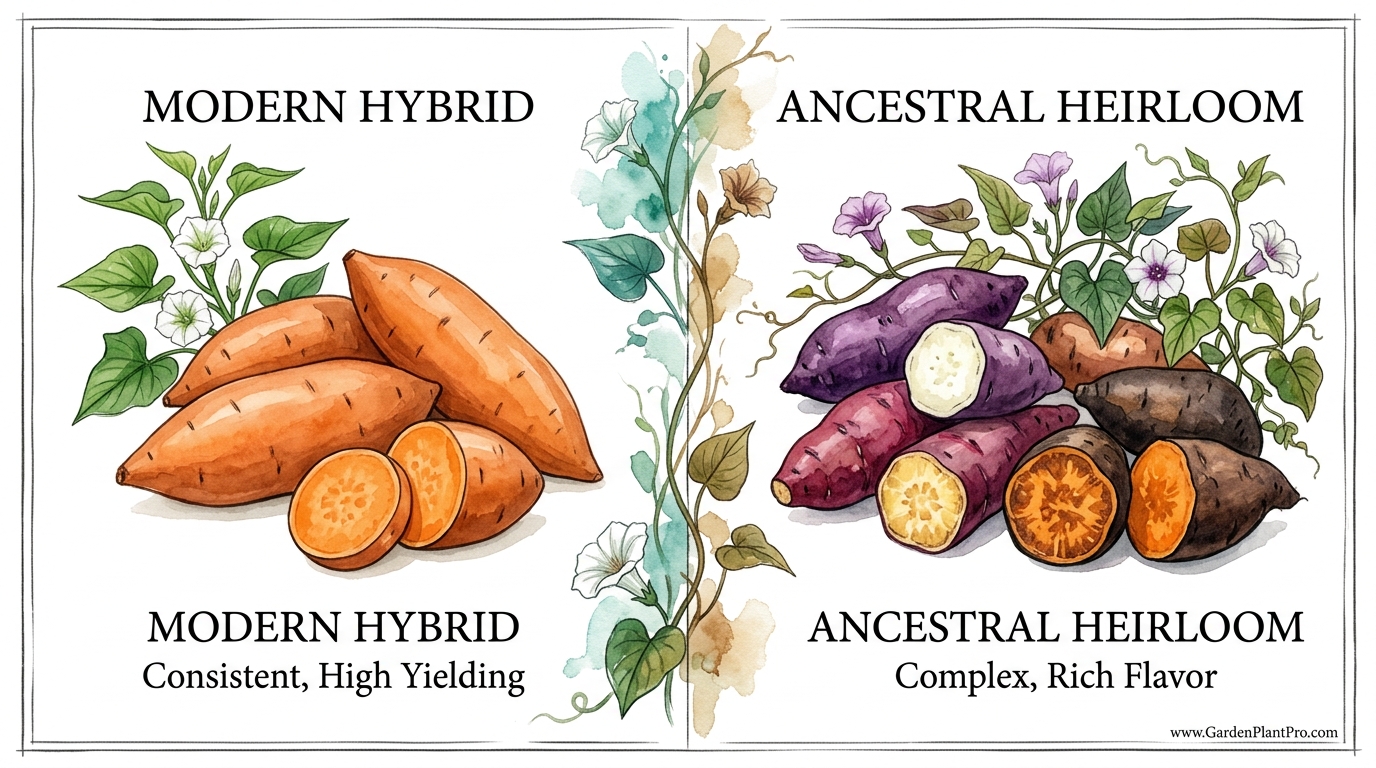
It is helpful to understand exactly what was lost when the industry moved toward modern hybrids. The following table compares the traits of the “Shipping Standard” (like Covington) against the “Garden Heritage” types (like Porto Rico or Nancy Hall).
| Feature | Modern Hybrid (Shipping) | Ancestral Heirloom (Flavor) |
|---|---|---|
| Skin Thickness | Thick, leathery (Resists bruising) | Thin, delicate (Easy to eat) |
| Sugar Content | Moderate (Balanced for storage) | Very High (Syrupy when baked) |
| Nutrition | Standardized | Often 40% higher Vitamin A |
| Shelf Life | 6-10 Months | 3-5 Months |
| Yield Consistency | High & Uniform | Variable shapes and sizes |
Practical Tips for a Gourmet Harvest
To get the most out of your “sugar-flesh” tubers, you need to treat them differently than a standard garden crop. Here are the best practices I have learned from years of trial and error in the dirt.
DIY PROJECT: Collect rainwater no matter where you live...
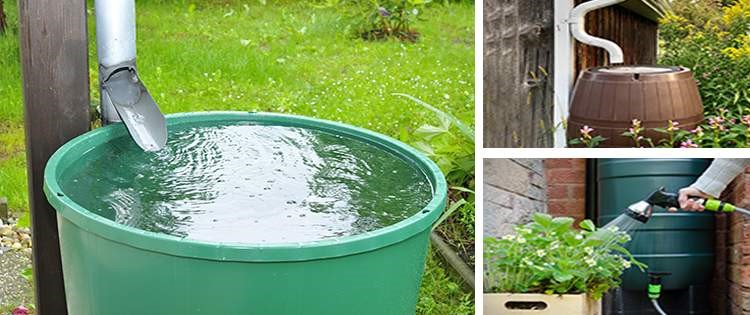
This DIY project is the best way to legally collect rainwater NO MATTER where you live. Get chlorine-free water, cut down on your water bills, and have enough for an emergency situation or to water your garden. Read More Here...
- Wait for the Warmth: Do not plant until the soil temperature is consistently above 65°F (18°C). If the ground feels cold to your bare hand, it is too cold for sweet potatoes.
- Build Ridges: Instead of planting in flat ground, hilling the soil into ridges about 8 to 12 inches (20 to 30 cm) high allows the soil to warm up faster and provides the “loose” environment roots need to swell.
- Stop Watering Early: About two to three weeks before you plan to harvest, stop watering entirely. This “cures” the roots slightly while they are still in the ground and prevents them from splitting during the final swell.
- Handle Like Eggs: Freshly dug sweet potatoes have skin that is almost as fragile as wet tissue paper. Any nick or scrape will lead to rot in storage. Use your hands or a broad-fork, never a shovel, to lift the roots.
Advanced Considerations for Serious Growers
If you want to take your sweet potato game to the next level, consider producing your own slips. Instead of buying plants every year, you can save your best-tasting, healthiest tubers from the previous harvest. In late winter, place the tuber in a jar of water or half-buried in a tray of moist sand in a warm window.
Each tuber will produce dozens of small green shoots (slips). When these are about 6 to 10 inches (15 to 25 cm) long, you “slip” them off the mother potato and root them in water. This allows you to maintain a specific “family strain” of a heritage variety that has adapted over years to your specific backyard climate and soil microbiology.
Another advanced technique is managing the curing humidity at home. Since most of us don’t have a tropical greenhouse, a simple trick is to place your harvested potatoes in plastic grocery bags with a few holes poked in them. Keep these in a warm room (like a laundry room or near a water heater). The bag traps the respiration of the roots, creating a micro-environment of high humidity that perfectly cures the potatoes without much effort.
Real-World Example: The “Small Plot” Strategy
Imagine you have a small 4×8 foot (1.2×2.4 meter) raised bed. If you plant a commercial variety like Beauregard, you might get 30 pounds (13 kg) of uniform, bland potatoes. However, if you plant Vardaman (a bush-type heirloom), you get a stunning ornamental plant with purple-tinged leaves that doesn’t take over the whole yard.
By the end of 110 days, that small bed can yield 25 pounds (11 kg) of deep orange, high-sugar roots that are nutritionally superior and taste better than anything you can buy. For the home gardener, the slight reduction in total “weight” is a small price to pay for the massive increase in “quality.”
Final Thoughts
Reclaiming the “sugar-flesh” sweet potatoes of our ancestors is one of the most rewarding projects a home gardener can undertake. It requires us to slow down, wait for the heat of summer, and respect the ancient chemistry of the curing process. When you finally pull a heritage Nancy Hall or a syrupy Porto Rico out of the oven, the difference is undeniable.
We don’t have to accept the flavorless, watery tubers of the industrial food system. By choosing varieties bred for the palate rather than the pallet, we can turn a humble root crop into the centerpiece of a gourmet meal. I encourage you to experiment with at least one “delicate” heirloom this season—your dinner table will thank you.
Once you master the art of the sweet potato, you might find yourself looking at other “shipping-friendly” crops with a critical eye. Whether it is exploring heritage tomato seeds or building better soil health for your garlic, the journey toward real flavor is a path that every gardener should walk.