
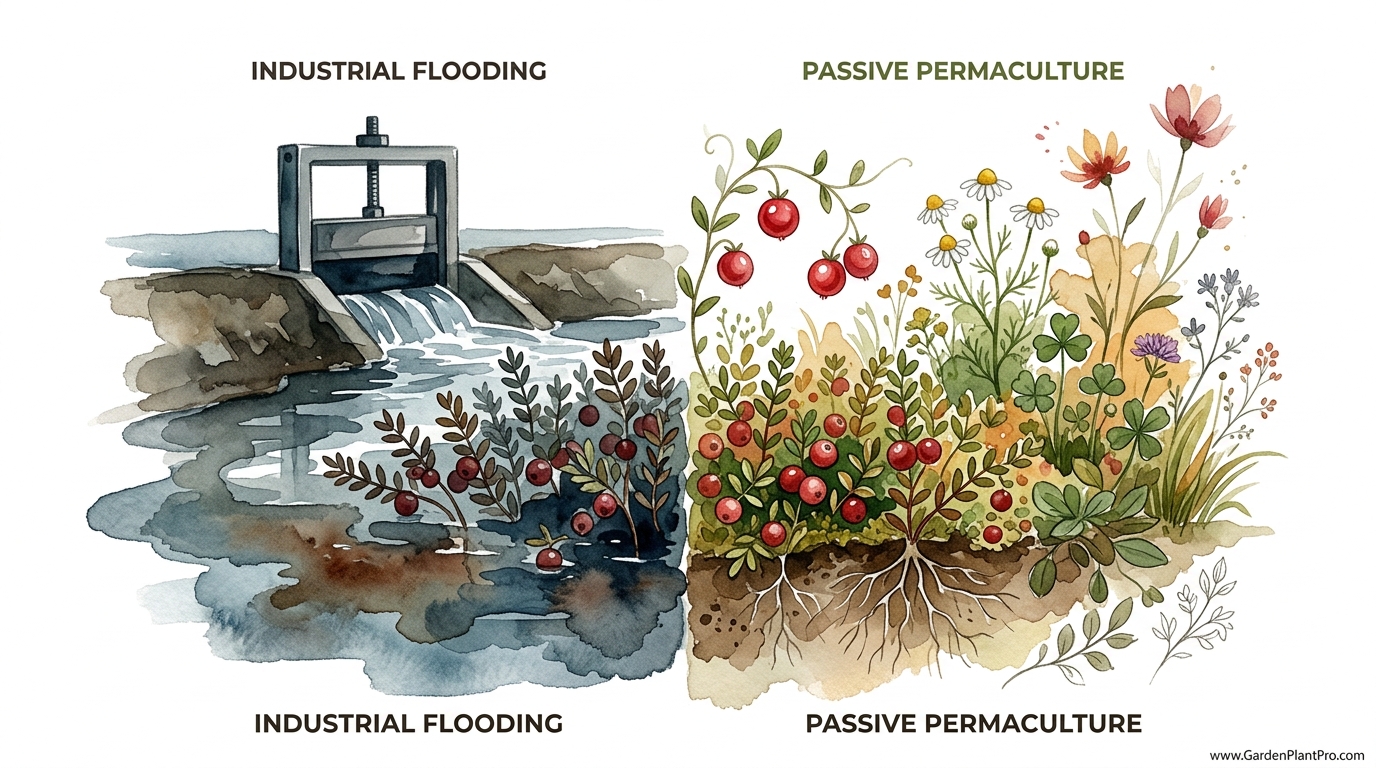
You don’t need a multi-million dollar irrigation system to harvest fresh cranberries in your backyard. Commercial cranberry farming makes it look like an impossible engineering feat, but these hardy little vines actually thrive as a simple, low-maintenance groundcover. Stop waiting for the flood and start planting for a permanent, passive harvest.
Most of us grew up seeing those famous television commercials where farmers in chest-high waders stand in a sea of floating red berries. It is a beautiful image, but it has convinced generations of gardeners that cranberries are aquatic plants. In reality, cranberries are upland-ish wetland plants that grow on dry land for most of the year. The flooding you see on TV is a clever trick used by commercial growers for only two reasons: protecting the plants from winter freezes and making the harvest easier.
If you can grow blueberries or azaleas, you can grow cranberries. These low-growing evergreen vines are tough, beautiful, and incredibly productive once they settle into their environment. They don’t ask for much—just some acidic soil, a bit of sunshine, and consistent moisture. Once established, they form a thick, lush carpet that suppresses weeds and provides a tart, vitamin-rich harvest every autumn without the need for a single gallon of floodwater.
How To Grow Cranberries Without A Bog
Growing cranberries without a bog means treating them like a specialized groundcover rather than a pond plant. A “bog” in the commercial sense is simply a recessed field with a clay liner that holds water when needed. For the home gardener, the goal is to replicate the soil chemistry and moisture of a bog without the complex plumbing. Cranberries (Vaccinium macrocarpon) are native to the cool, temperate regions of North America and are hardy in USDA zones 2 through 7.
The “no-bog” method focuses on creating a “recessed bed” or a highly amended garden patch. Instead of underwater roots, these plants prefer a mix of peat moss and sand that stays damp but allows air to reach the roots. This setup mimics the natural “hummocks” where wild cranberries often grow, perched just above the water line. In a home setting, this might look like a dedicated 4×4 foot (1.2×1.2 meter) garden bed, a large container, or even a border along a walkway where the soil has been properly acidified.
The Step-By-Step Path to a Passive Harvest
Success with cranberries starts with site preparation. Because these plants are perennials that can live for decades, taking the time to get the soil right at the beginning is the best investment you can make. They have shallow root systems, typically staying within the top 6 inches (15 cm) of soil, which makes them very easy to manage once the bed is built.
1. Testing and Preparing the Soil
Cranberries are “ericaceous” plants, meaning they absolutely require acidic soil to thrive. You are aiming for a pH between 4.0 and 5.5. If your soil is naturally alkaline, your plants will struggle to take up nutrients and eventually turn yellow and die. You can lower your pH by mixing in large amounts of sphagnum peat moss or elemental sulfur. A popular “recipe” for a home cranberry bed is 1 part peat moss, 1 part coarse sand, and 1 part aged compost or leaf mulch.
2. Choosing Your Cultivars
Not all cranberries are created equal. Some are better for home gardens than others. “Stevens” is a common commercial variety that is very hardy and productive, but it can be an aggressive spreader. “Pilgrim” is often favored by backyard growers because it produces large berries and has a slightly more manageable growth habit. “Ben Lear” is a great choice if you want deep red, almost black berries that ripen early in the season.
3. Planting and Spacing
Plan to plant in the spring once the ground is no longer frozen but before the summer heat kicks in. Space your plants or “plugs” about 12 to 18 inches (30 to 45 cm) apart. They might look lonely at first, but within two to three years, the horizontal “runners” will knit together to form a solid mat. When planting, ensure the crown of the plant is level with the soil surface—don’t bury the stems too deep, or you risk rot.
4. The Watering Rhythm
Since you aren’t flooding your bed, you must ensure the soil never completely dries out. In the first year, this is critical. A simple drip irrigation line or a soaker hose buried under a light layer of mulch is perfect. During the growing season, aim for about 1 inch (2.5 cm) of water per week. If the weather is particularly hot and dry, you may need to water every other day to keep those shallow roots cool.
Benefits of Growing Cranberries at Home
One of the most immediate benefits is the aesthetic value. Cranberries are evergreen, meaning they provide a lush green carpet all summer. In the autumn, the leaves often turn a beautiful burgundy or bronze color, providing visual interest long after other garden plants have gone dormant. Their delicate, pinkish-white flowers in late spring are also a favorite for native bees and other pollinators.
Beyond the looks, the harvest itself is a nutritional powerhouse. Homegrown cranberries are often much more flavorful than store-bought ones because they can be left on the vine until they reach peak ripeness. They are packed with antioxidants, Vitamin C, and fiber. Because they store so well—up to two months in the refrigerator or a year in the freezer—a small 5×5 foot (1.5×1.5 meter) patch can provide enough berries for your family’s entire holiday season.
Common Challenges and How to Avoid Them
The most frequent mistake gardeners make is failing to maintain the soil’s acidity. Over time, rain and tap water (which is often slightly alkaline) will “wash out” the acidity of your bed. To prevent this, test your soil pH every year and top-dress with a fresh inch (2.5 cm) of peat moss or a light sprinkle of elemental sulfur. If you notice the leaves turning yellow while the veins stay green, that is a classic sign of iron chlorosis caused by high pH.
Another challenge is weed competition. Because cranberry vines are low-growing, they can easily be overtaken by aggressive grasses or broadleaf weeds in their first two years. Hand-weeding is essential until the vines are thick enough to shade out the competition. Avoid using heavy hoes or tillers near your cranberries, as you will likely chop up the shallow runners that are trying to establish the mat.
Limitations of the No-Bog Method
While you don’t need a bog, you do need a specific climate. Cranberries require “chill hours” to set fruit—typically between 1,000 and 1,500 hours of temperatures between 32°F and 45°F (0°C to 7°C) during the winter. This means they are not a good choice for tropical or subtropical climates. If you live in a region with very hot, humid summers, you may find that fungal diseases like fruit rot become a bigger issue than they would in cooler, northern zones.
Space can also be a limitation if you want a massive harvest. While a small bed is great for fresh eating, you would need a significantly larger area to produce enough berries for high-volume juicing or commercial-scale drying. However, for most home gardeners, a few square meters is more than enough to satisfy the “permanent, passive harvest” goal.
Cranberry Growing Comparisons
| Feature | Commercial Bog | Backyard Bed (No-Bog) |
|---|---|---|
| Setup Cost | Very High (Pumps, liners, dikes) | Low (Peat, sand, timber) |
| Maintenance | High (Water management) | Minimal (Weeding, light watering) |
| Harvest Method | Flooding and Skimming | Hand-picking or Small Rake |
| Water Usage | Extremely High (Seasonal) | Low (Same as a typical garden) |
Practical Tips for Success
- The Sanding Secret: Every two or three years, sprinkle about half an inch (1.25 cm) of clean, sharp sand over your cranberry mat in early spring. This encourages the runners to root more deeply and keeps the “uprights” (the fruiting branches) fresh and productive.
- Mulch with Pine: Use pine needles or sawdust as a light mulch. As these materials break down, they help maintain the acidic environment the plants love.
- Winter Protection: If you live in an area with harsh, drying winter winds and no snow cover, toss a layer of evergreen boughs or a heavy frost cloth over your bed. This prevents “winter burn” on the leaves while the ground is frozen.
- Bird Netting: Birds love the bright red berries just as much as you do. Once the berries start to blush in late summer, consider using a simple lightweight net to protect your crop.
Advanced Considerations: Container Growing
For those with limited space or alkaline garden soil that is too difficult to amend, growing cranberries in containers is a fantastic alternative. Use a wide, shallow pot rather than a deep one—something like a “half wine barrel” is ideal. Fill it with a mix of 60% peat moss and 40% perlite or sand. This allows you to control the pH perfectly and move the plants into the shade if a heatwave hits. Because the roots are contained, you may need to water daily during the height of summer, as containers dry out much faster than the ground.
In a container, the runners will eventually drape over the edges, creating a beautiful trailing effect. While this is decorative, remember that the fruit is produced on “uprights” that grow from runners rooted in the soil. To maximize your harvest in a pot, occasionally pin the runners down onto the soil surface with small U-shaped landscape staples so they can take root and produce more fruiting branches.
A Real-World Harvest Scenario
Imagine a small 4×8 foot (1.2×2.4 meter) raised bed. After three years of growth, this patch should be a solid mat of vines. In a typical year, you can expect to harvest about 1 pound (0.45 kg) of berries for every 5 square feet (0.46 square meters). For this bed, that is roughly 6 to 8 pounds (2.7 to 3.6 kg) of cranberries. That is enough for several batches of sauce, a few loaves of cranberry-orange bread, and plenty left over to dry for snacks. The best part? Once you finish picking, your work is done for the year. No pumps to shut off, no bogs to drain—just a quiet, evergreen bed waiting for next spring.
DIY PROJECT: Collect rainwater no matter where you live...
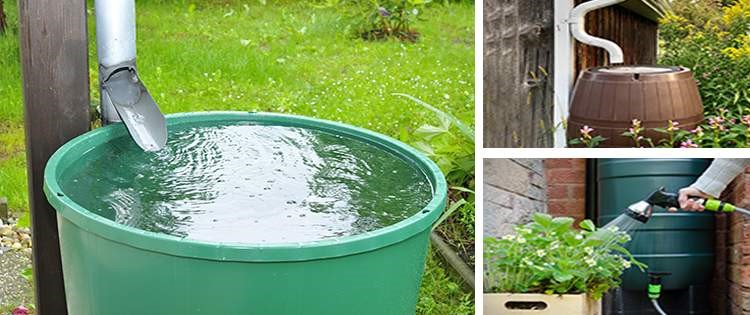
This DIY project is the best way to legally collect rainwater NO MATTER where you live. Get chlorine-free water, cut down on your water bills, and have enough for an emergency situation or to water your garden. Read More Here...
Final Thoughts
Growing cranberries without a bog is one of the most rewarding “set it and forget it” projects for the home gardener. It turns a piece of your yard into a productive, edible landscape that requires far less work than a traditional vegetable patch or an orchard of fruit trees. By focusing on soil health and consistent moisture, you can bypass the complexity of industrial farming and enjoy the simple pleasure of a backyard harvest.
Start small, perhaps with just a few plants in a corner of your garden or a large pot on the patio. As you watch the runners slowly colonize the soil and the berries turn from pale green to deep ruby red, you will realize that you don’t need to be a commercial farmer to grow this iconic fruit. Whether you are interested in self-sufficiency or just want a beautiful, low-maintenance groundcover, the cranberry is a perfect addition to any cool-climate garden. Experiment with different varieties, keep your soil acidic, and enjoy the tart rewards of your labor for years to come.