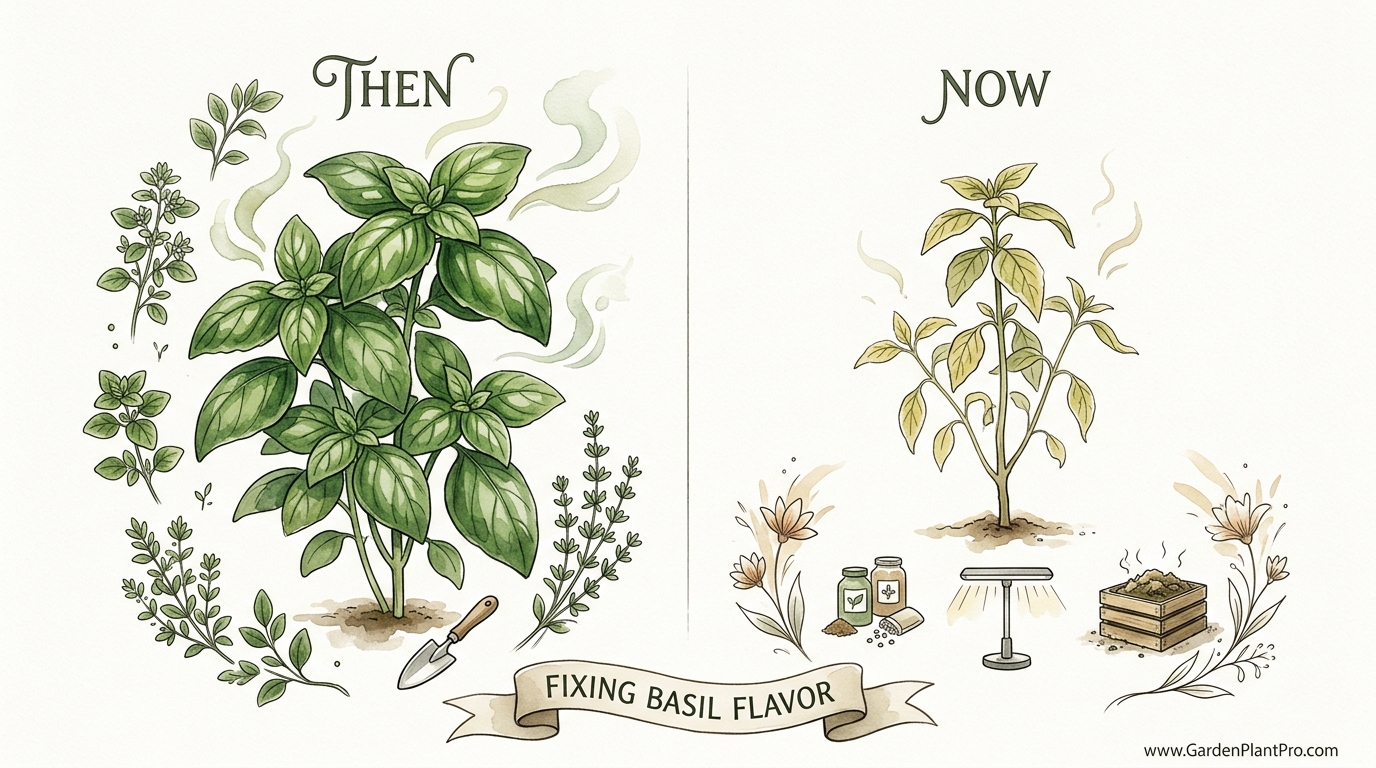
We traded 50% of basil’s aromatic oils just so the leaves could survive a three-day truck ride in a plastic box. Ever wonder why your store-bought basil tastes more like grass than herbs? Modern agricultural basil has been bred for ‘logistics’—thick stems and a long shelf life—at the expense of the volatile oils that give basil its soul. If you want that legendary flavor from decades ago, you have to stop buying convenience and start growing heritage varieties. Here is the difference between a plant bred for a truck and a plant bred for a plate.
Growing basil at home is about reclaiming a sensory experience that has been stripped away by the supply chain. When you walk past a patch of heritage Genovese or Thai basil in the late afternoon sun, the scent should hit you like a physical wave. That fragrance is the result of thousands of tiny glandular trichomes—microscopic “oil balloons”—on the surface of the leaves. In the world of industrial farming, those balloons are seen as a liability because they make the leaf delicate and prone to bruising during mechanical harvesting and shipping.
The reality of modern gardening is that most “big box” nursery starts are still leaning toward these logistics-friendly varieties. They look great on the shelf, with their stiff, upright stems and dark, thick leaves. But when you tear a leaf into a sauce, the flavor is flat. Reclaiming the true spirit of this herb requires understanding the botany of flavor and how to manipulate the environment to force the plant to produce its highest concentration of essential oils.
The Decline Of Basil Flavor And How To Fix It
The loss of basil flavor is not an accident; it is an engineering choice. Commercial varieties like ‘Nufar’ or certain ‘Italian Large Leaf’ cultivars were developed to resist Fusarium wilt and handle the rigors of being cooled to 10°C (50°F) for transport without turning black. While these traits are miracles for global trade, they often suppress the production of linalool and methyl chavicol, the two primary compounds responsible for that classic “sweet” and “spicy” basil profile.
Heritage varieties, on the other hand, prioritize the “volatile organic compounds” (VOCs). These are the chemicals the plant uses to communicate with insects and protect itself from the sun. In a garden setting, these oils act as a natural defense mechanism. When we grow basil in a way that encourages these defenses, we end up with a plant that is significantly more delicious than anything found in a grocery store.
Fixing the flavor gap starts with seed selection. You want to look for “heirloom” or “heritage” designations, particularly those with a history in specific culinary regions. Varieties like ‘Bolloso Napoletano’ with its massive, crinkled leaves, or the authentic ‘Genovese’ (Ocimum basilicum), are structurally different from their commercial cousins. Their leaves are thinner, more tender, and packed with a much higher density of oil glands per square centimeter.
How the Physiology of Flavor Works
Every basil leaf is a chemical factory. On the underside and surface of the leaves are peltate glands—specialized cells that synthesize and store essential oils. The chemical makeup of these oils defines the “chemotype” of the basil. For instance, Mediterranean basils are usually rich in linalool (which smells like flowers and citrus) and eucalyptol (which provides a cool, minty undertone).
Environmental factors act as the “on” switch for these factories. Research shows that light quality is the most significant factor in oil production. Specifically, UV-B radiation—the same stuff that gives you a sunburn—triggers the plant to build more oil glands as a form of “sunscreen.” This is why basil grown indoors under standard LED lights often tastes weaker than basil grown in the full, unshielded sun of a backyard garden.
Nitrogen levels also play a critical role. While you might think “more is better” for a leafy herb, over-fertilizing with nitrogen can lead to rapid, watery growth. This dilutes the concentration of oils. A seasoned gardener knows that a slightly stressed plant often produces the most intense flavor. When the plant has to work for its nutrients and defend itself against the sun, it pours its energy into those aromatic secondary metabolites.
The Heritage Variety Guide
Selecting the right variety is half the battle. If you are chasing a specific flavor profile, you need to understand the genetic lineage of what you are planting.
Genovese: The Culinary Gold Standard
This is the variety most people think of as “classic basil.” True Genovese basil is characterized by its “spoon-shaped” leaves that curve inward. It is high in linalool and low in camphor, making it incredibly sweet. If you want to make a traditional pesto, this is the only choice. It is delicate, however, and will wilt the moment the temperature drops below 10°C (50°F).
Thai Basil (var. thyrsiflora)
Thai basil is a completely different beast. It contains high levels of methyl chavicol (estragole), which gives it a distinct licorice or anise flavor. The stems are often purple, and the leaves are sturdier, allowing them to stand up to the high heat of stir-fries and soups. This variety is also more resistant to the heat of mid-summer compared to its Italian relatives.
Lemon and Lime Basils (Ocimum americanum)
These varieties contain citral and limonene. They are much smaller plants with narrower leaves. They are perfect for fish dishes or herb teas. In the garden, they tend to be a bit more “wild” and can handle slightly poorer soil than the pampered Genovese.
Purple Varieties (Dark Opal, Red Rubin)
Purple basils are beautiful, but they often have a more “clove-heavy” scent due to higher concentrations of eugenol. They are excellent for vinegars because the anthocyanins (the purple pigments) bleed into the liquid, creating a stunning ruby-red infusion.
Cultivation Practices for Maximum Oil Content
Once you have chosen your heritage seeds, how you grow them determines the final “volatiles” count.
- Full Sun Exposure: Basil needs at least 6 to 8 hours of direct sunlight. The UV-B component of natural sunlight is irreplaceable. If you are growing in a greenhouse, ensure the covering is UV-transparent, or your basil will lack that “zing.”
- Temperature Control: Basil is a tropical plant. It performs best when daytime temperatures are around 25°C to 30°C (77°F to 86°F). If nights are consistently below 15°C (59°F), the plant will slow down oil production and may begin to look stunted.
- Soil Composition: Aim for a well-drained soil with a pH between 6.0 and 7.5. Adding composted organic matter provides a slow release of nutrients. Avoid high-salt synthetic fertilizers, as basil is sensitive to salt buildup which can lead to leaf-tip burn.
- Strategic Water Stressing: While basil hates to be bone-dry and will wilt quickly, allowing the soil to dry out just slightly between waterings can encourage the plant to concentrate its oils. Never let it get to the point of severe wilting, but avoid keeping the soil “mushy.”
Spacing is another overlooked factor. Providing 25 to 30 cm (10 to 12 inches) of space between plants ensures adequate airflow. This is critical for preventing fungal issues, but it also allows light to reach the lower leaves, ensuring the whole plant—not just the top—is productive.
Harvesting: The Art of the Pinch
How and when you harvest is just as important as how you grow. Most beginners make the mistake of “plucking” individual leaves. This is the fastest way to end up with a tall, woody plant that wants to flower.
To keep your basil in its “juvenile” state—where oil production is highest—you must use the pinching method. When the plant is about 15 cm (6 inches) tall, pinch off the center stem just above a set of leaves. This forces the plant to branch out into two new stems. Continue this every few weeks, and you will transform a single stalk into a dense, aromatic bush.
The time of day matters significantly. The highest concentration of essential oils is found in the leaves in the early morning, just after the dew has dried but before the midday sun has “cooked” the volatiles off. If you harvest at 2:00 PM on a hot day, you are literally leaving half the flavor behind.
DIY PROJECT: Collect rainwater no matter where you live...
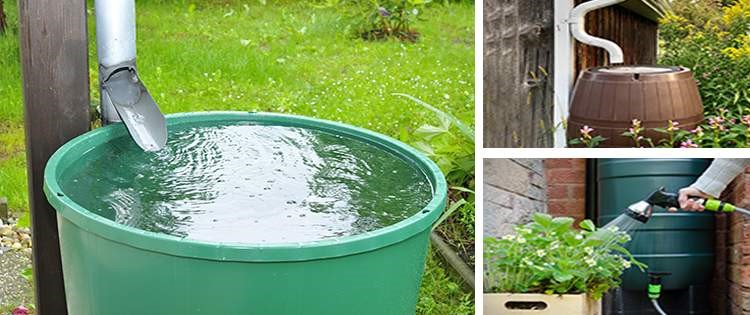
This DIY project is the best way to legally collect rainwater NO MATTER where you live. Get chlorine-free water, cut down on your water bills, and have enough for an emergency situation or to water your garden. Read More Here...
Benefits of Growing Heritage Varieties
Why go through the trouble of sourcing heritage seeds and managing UV exposure? The benefits extend beyond just the dinner plate.
- Superior Culinary Depth: Heritage basils offer a “mid-palate” flavor that commercial varieties lack. You get the initial hit of sweetness, followed by complex peppery, minty, or citrus notes.
- Increased Antioxidants: The same volatile oils that provide flavor are also powerful antioxidants and antimicrobial agents. Homegrown basil is objectively “healthier” because those oils haven’t degraded during a 1,000-mile truck ride.
- Garden Biodiversity: Heritage basils produce flowers that are absolute magnets for bees and beneficial wasps. By letting a few plants “bolt” at the end of the season, you are supporting your local ecosystem.
- Pollinator Support: Unlike some modern hybrids that are sterile or produce little nectar, heritage basils are prolific nectar producers.
Challenges: The Shadow of Downy Mildew
The biggest threat to heritage basil is Peronospora belbahrii, or Basil Downy Mildew (BDM). This pathogen first appeared as a major threat in the US around 2007-2009 and has since spread globally. It thrives in high humidity and cool nights.
The symptoms are often mistaken for a nutrient deficiency. You will see yellowing on the tops of the leaves, often in square patterns defined by the leaf veins. If you flip the leaf over, you’ll see a “dirty” grey fuzz—the spores. Once a plant has BDM, there is no cure.
To fight this, many gardeners are turning to the new “DMR” (Downy Mildew Resistant) varieties like ‘Prospera’ or ‘Rutgers Devotion’. While these are technically modern hybrids, breeders have worked hard to keep the “Genovese flavor profile” intact while inserting the resistance genes. For those in humid climates (like the US South or the UK), these are often the only way to get a harvest.
Limitations of Heritage Varieties
Heritage basil isn’t perfect. It is the “formula one car” of the herb world—high performance, but high maintenance.
- Cold Sensitivity: Unlike commercial varieties that can handle a bit of a “chill,” heritage basils will turn to black mush at the first hint of 4°C (40°F). They cannot be stored in the refrigerator; the cold destroys the cell structure and the oils.
- Short Shelf Life: Once cut, a heritage leaf starts losing its “soul” within hours. It needs to be kept in a glass of water on the counter, not in a plastic bag.
- Lower Yield Potential: If you are looking for pure biomass to sell by the pound, heritage varieties may disappoint. They put more energy into chemistry than into “bulk.”
Comparison: Logistics Basil vs. Heritage Basil
| Feature | Logistics (Store-Bought) | Heritage (Homegrown) |
|---|---|---|
| Volatile Oil Content | Lower (approx. 0.5% – 0.8%) | Higher (approx. 1.2% – 2.5%) |
| Leaf Texture | Thick, leathery, waxy | Thin, tender, velvet-like |
| Shelf Life | 10–14 days (refrigerated) | 2–4 days (countertop) |
| Cold Tolerance | Moderate (down to 7°C / 45°F) | Very Low (stays above 13°C / 55°F) |
| Primary Breeding Goal | Uniformity and Shipping | Aroma and Culinary Use |
Practical Tips for the Home Gardener
If you want to start reclaiming your basil flavor today, follow these rules of thumb from my years in the dirt.
- Stop Using Overhead Water: Water the soil, not the leaves. Wet leaves are an invitation for Downy Mildew spores to land and germinate.
- Companion Plant with Tomatoes: This isn’t just a culinary match. Basil’s strong scent can help confuse tomato pests like hornworms, while the larger tomato plants can provide a bit of mid-day shade in blistering climates.
- Mulch is Your Friend: A thin layer of straw or dried grass clippings keeps the soil moisture consistent. Basil hates “dry-wet-dry” cycles, which can cause the leaves to become bitter.
- Pot Size Matters: If growing in containers, use at least a 10-liter (approx. 3-gallon) pot per plant. Basil has a surprisingly large root system, and a cramped plant is a stressed plant.
For those interested in long-term care, don’t forget about soil health. Adding a handful of worm castings around the base of the plant every month can provide the micronutrients that complex oil production requires. If you notice your leaves turning pale or yellow between the veins, it’s usually a sign that your nitrogen or magnesium levels have bottomed out.
Advanced Considerations: The Stress-Flavor Connection
For the serious practitioner, you can actually “tune” the flavor of your basil in the final two weeks of its life. Commercial essential oil producers often withhold water slightly in the 14 days before harvest. This causes the plant to increase the density of its oil glands as a survival mechanism.
Another advanced trick is the use of supplemental UV-B lights in a greenhouse setting. Even just 3 hours of exposure in the early morning can double the amount of eugenol and linalool in the leaves. This is why “mountain-grown” herbs often have a much more intense flavor—the atmosphere is thinner, and the UV exposure is naturally higher.
Finally, consider the irrigation method. Drip irrigation is far superior to hand-watering for basil. It keeps the roots consistently hydrated without ever saturating the foliage, which is the single most effective way to keep your heritage varieties healthy into the late summer.
Example Scenario: The “Perfect Pesto” Harvest
Let’s look at how this works in practice. Suppose you are growing ‘Genovese’ in a temperate climate. It is mid-July, and the forecast says it will be 28°C (82°F) with high humidity.
Instead of waiting for the weekend, you go out on Tuesday morning at 7:30 AM. You have already pinched the plants twice over the last month, so you have a bushy 45 cm (18 inch) plant. You take your sharpest shears and cut the top 10 cm (4 inches) of several stems, making sure to leave at least two nodes of leaves below the cut so the plant can regrow.
You immediately take the cuttings inside. You don’t wash them—you’ve kept them clean by mulching the soil to prevent splash-back. You process them into pesto immediately with high-quality olive oil. By not washing and not waiting, you have captured 95% of the volatile oils. This pesto will be a vibrant, electric green and will have a floral aroma that fills the entire house. This is the “plate-bred” experience that a plastic box in a grocery store can never provide.
Final Thoughts
Reclaiming the flavor of basil is a quiet rebellion against a food system that prioritizes “ship-ability” over “eat-ability.” By choosing heritage seeds and respecting the plant’s tropical origins, you can experience an herb that is a far cry from the bland, grass-like leaves found in modern supermarkets. It requires a bit more attention to light, temperature, and harvesting technique, but the results are measurable in every bite.
Remember that gardening is an ongoing conversation with the soil. Your specific microclimate—the way the sun hits your patio or the way the wind moves through your garden—will slightly alter the “chemotype” of your basil. Embrace these variations. A “Lemon Basil” grown in the shade of a fence will taste different than one grown in the center of a sun-baked field.
I encourage you to experiment. Plant three different varieties this year. Try a traditional Genovese, a spicy Thai, and a citrus-heavy Lemon. Notice the differences in leaf thickness and scent. Once you have tasted basil that was grown for the plate, you will never be able to go back to the truck-bred version again. For further reading, look into crop rotation and pest management to ensure your basil patch remains productive year after year.