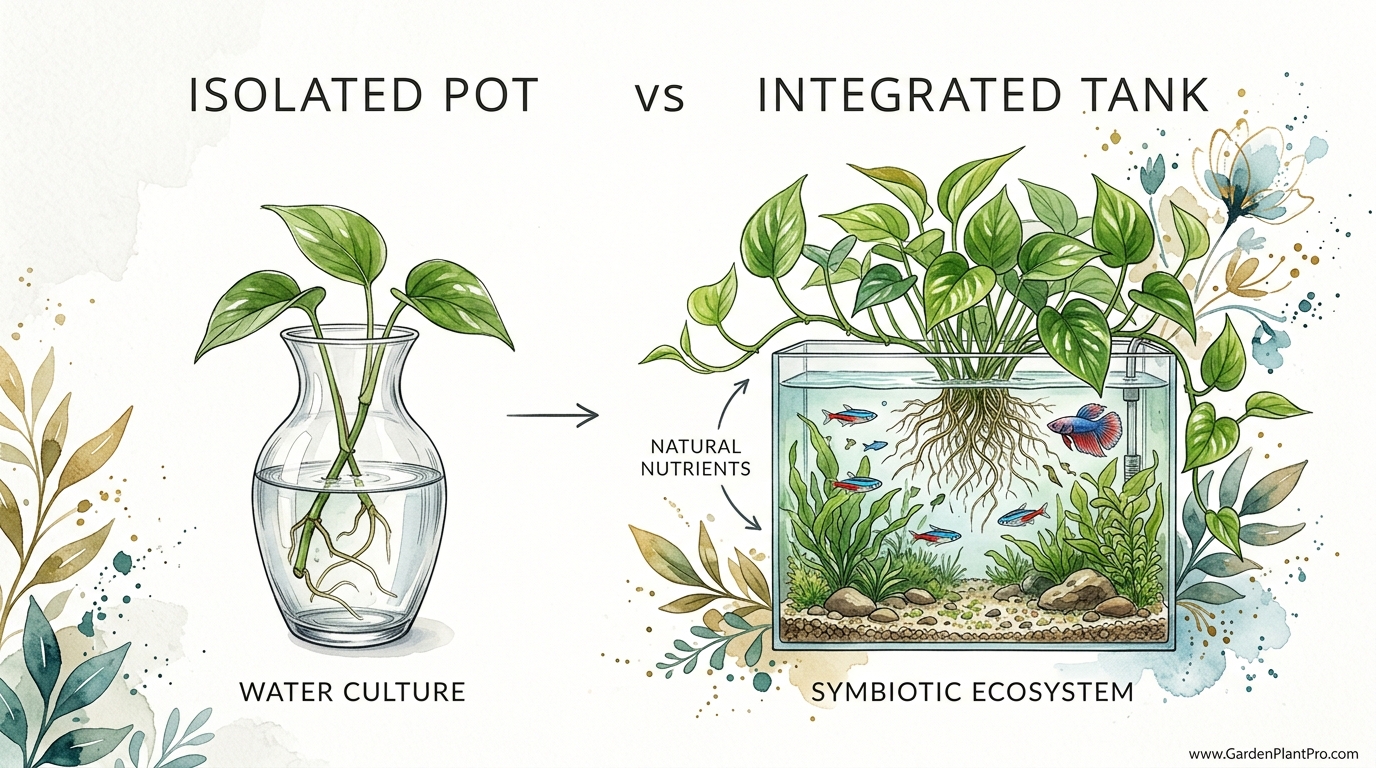
Stop buying fertilizer and let your fish feed your Pothos instead. A Pothos in a pot is just a prisoner on life support. A Pothos in an aquarium is a high-speed biological engine. In this integrated system, the fish waste becomes the plant’s favorite super-food, and the plant’s roots act as a ‘living filter’ that keeps the water crystal clear. No chemicals, no waste, just nature doing the heavy lifting.
I remember the first time I tucked a stray vine of Golden Pothos into the back of my old 29-gallon (110-liter) goldfish tank. I was tired of scrubbing algae and struggling with nitrate spikes that wouldn’t quit. Within a few weeks, those tiny brown nubs on the stem exploded into a white, hairy root system that looked like a lightning bolt frozen in the water. The fish loved it, the water stayed clear, and that Pothos grew faster than any plant I had in soil. It was a lightbulb moment for me as a gardener—sometimes the best way to grow a plant is to stop treating it like an ornament and start treating it like a part of a living system.
How To Grow Pothos In Water With Fish
Growing Pothos in water with fish is a method of aquaponics where a terrestrial plant, Epipremnum aureum, is adapted to live with its roots submerged in an aquarium while its foliage remains in the air. This setup creates a symbiotic relationship. Fish produce waste, primarily ammonia, which bacteria convert into nitrates. While high levels of nitrates are toxic to fish and fuel unsightly algae blooms, they are essentially liquid gold for a hungry Pothos plant.
This technique exists because it solves two problems at once: it provides an effortless source of nutrients for the plant and offers high-capacity biological filtration for the aquarium. In the real world, you see this used in professional aquaponics facilities, but it is just as effective in a small bedroom fish tank or a large living room display. It works because the plant has access to the carbon dioxide in the air, which is much more abundant than the CO2 dissolved in water. This allows the Pothos to grow at a much faster rate than typical submerged aquarium plants, making it a “nitrate sponge” that keeps your water parameters stable.
The “Living Filter” Mechanism
Understanding the nitrogen cycle is the first step to mastering this system. Fish eat food and release waste through their gills and excrement in the form of ammonia (NH3). This ammonia is highly toxic; even small amounts can burn a fish’s gills. In a healthy aquarium, beneficial bacteria living on the gravel and filter media convert that ammonia into nitrite (NO2), and then into nitrate (NO3).
Nitrate is far less toxic, but it still builds up over time. Most fish keepers rely on weekly water changes to physically remove these nitrates. However, a Pothos plant sees nitrate as its primary nitrogen source. Because the leaves are out of the water, the plant can perform photosynthesis much more efficiently than a fully submerged plant. It “sucks” the nitrogen out of the water to build new leaves and stems, effectively purifying the water for the fish. This process is often called Biological Nutrient Export. When you eventually trim the overgrown vines, you are literally taking the waste products out of your house in the form of green foliage.
How to Do It: Step-by-Step Setup
Transitioning a Pothos from a soil-filled pot to a fish tank requires a bit of care. You cannot simply pull a plant out of the dirt and toss it in; the shock would likely kill the roots and foul your water. Follow these steps to ensure a smooth transition.
1. Select Your Pothos Variety
Golden Pothos is the classic choice for its legendary hardiness, but other varieties like Marble Queen, Neon, or Jade Pothos work just as well. Avoid plants that have been heavily treated with systemic pesticides or leaf shines, as these chemicals can be lethal to fish and sensitive invertebrates like shrimp.
2. Prepare Your Cuttings or Plantlets
You have two main options here. You can take a 6-to-12-inch (15-to-30 cm) cutting from a healthy vine, or you can use a small rooted plantlet. If you use a cutting, make sure to include at least two or three nodes—those little brown bumps where roots grow. Snip the stem at a 45-degree angle just below a node using sterilized garden shears. If you are using a plant that was previously in soil, you must be extremely thorough. Rinse the roots in lukewarm water until every single grain of soil is gone. Soil contains fertilizers and terrestrial bacteria that can cause a massive ammonia spike in your aquarium.
3. The “Healing” Phase
Freshly cut stems leak sap that contains calcium oxalate crystals. While the risk to fish is generally low at normal pH levels, it is a good practice to let the cutting “callous” or heal for a few hours before putting it in the tank. Alternatively, you can root the cutting in a separate jar of dechlorinated water for a week until you see the first signs of white water roots emerging.
4. Positioning the Plant
Place the roots or nodes into the water while keeping all the leaves above the surface. Submerged Pothos leaves will eventually rot, which adds more waste to the water—the exact opposite of what we want. You can secure the vines using suction cups, specialized 3D-printed plant holders, or even by simply tucking them into the gaps of your aquarium lid. Another popular method is placing the plant inside a “Hang-on-Back” (HOB) filter. The flowing water provides high levels of oxygen to the roots, which supercharges the plant’s growth.
Best Fish Species for a Pothos System
The success of this system depends on the “bioload,” or the amount of waste your fish produce. Different fish offer different levels of “fuel” for your plant engine.
- Goldfish: These are the heavyweights of waste production. They are messy eaters and produce high amounts of ammonia, making them the perfect companions for a large Pothos.
- Bettas: A single Betta in a 5-to-10-gallon (19-to-38-liter) tank produces enough waste to support a modest vine. Bettas especially love to rest among the dangling roots near the surface.
- African Cichlids: These fish are known for being destructive to underwater plants, but they can’t reach the Pothos leaves above the water. They are excellent candidates for this setup.
- Livebearers (Guppies, Mollies, Platies): These fish breed quickly and provide a steady, moderate stream of nutrients.
Benefits of the Integrated System
Integrating Pothos into your aquarium offers several practical advantages that go beyond just looking nice. These benefits are measurable and can significantly reduce the workload of maintaining a healthy tank.
Superior Nitrate Control: Most aquarium plants are limited by the amount of CO2 available in the water. Because Pothos has access to unlimited atmospheric CO2, its growth isn’t throttled. This makes it much more efficient at removing nitrates than many fully aquatic species.
Algae Suppression: Algae thrives on excess light and nutrients. By aggressively consuming the nitrates and phosphates in the water, the Pothos starves the algae. You will likely notice that your glass stays cleaner for much longer once the plant is established.
Natural Shelter and Stress Reduction: The thick root mats provide a complex environment for fish to explore. Shyer species use the roots as a sanctuary, which lowers their stress levels and boosts their immune systems. For breeders, these roots are an ideal place for fry to hide from hungry adults.
Aesthetic Appeal: A lush green vine cascading down the side of an aquarium cabinet creates a “jungle” look that brings the whole room to life. It softens the hard edges of the tank and makes the indoor environment feel more connected to nature.
Challenges and Common Mistakes
Even though Pothos is one of the easiest plants to grow, a few common pitfalls can ruin your setup if you aren’t careful.
The Transition Rot: When you move a Pothos from soil to water, the existing “soil roots” often struggle. They are structurally different from “water roots” and may turn brown and mushy. If you see the roots becoming slimy or smelling foul, you are dealing with root rot. Pull the plant out, trim away the mushy parts with clean scissors, and let it sprout new, white water roots.
DIY PROJECT: Collect rainwater no matter where you live...
This DIY project is the best way to legally collect rainwater NO MATTER where you live. Get chlorine-free water, cut down on your water bills, and have enough for an emergency situation or to water your garden. Read More Here...
Nutrient Deficiencies: Pothos is a nitrogen hog, but it also needs micronutrients like iron, potassium, and magnesium. In a tank with a light fish load, the plant might eventually turn yellow or develop holes in its leaves. This usually means it has exhausted the trace minerals in the water. Using a fish-safe liquid fertilizer or adding more fish can solve this issue.
Filter Clogging: If you grow Pothos in your filter box, the roots can eventually grow so thick that they block the water flow or get tangled in the motor’s impeller. Check the filter every few weeks and trim the roots back if they start to look like a solid brick of white hair.
Limitations and Constraints
This system is not a “magic bullet” that eliminates all maintenance. There are realistic boundaries to what a Pothos plant can do for an aquarium.
Water Changes are Still Necessary: While Pothos removes nitrates, it does not remove other dissolved organic compounds, hormones, or minerals that can build up or deplete over time. You should still perform regular water changes, though you may be able to do them less frequently.
Toxicity to Land Pets: Pothos leaves are toxic to cats and dogs if chewed. The calcium oxalate crystals cause intense oral irritation and swelling. If you have curious pets, make sure the vines are tucked away or kept out of reach.
Light Competition: If the Pothos canopy becomes too thick over the top of the tank, it can block the light reaching your submerged aquatic plants. You may need to prune the leaves or reposition your aquarium light to ensure everything gets its fair share of energy.
Comparison: Isolated Pot vs. Integrated Tank
Deciding how to grow your Pothos depends on your goals. Here is a comparison of the two methods based on common gardening factors.
| Factor | Isolated Pot (Soil) | Integrated Tank (Water) |
|---|---|---|
| Growth Speed | Moderate | High (due to constant nutrient access) |
| Maintenance | Requires regular watering and fertilization | Automatic watering and feeding by fish |
| Nutrient Source | Soil minerals and added fertilizer | Fish waste (Ammonia/Nitrate) |
| Root Health Visibility | Hidden in soil | Clearly visible for monitoring |
| Risk of Overwatering | High (root rot is common) | Low (adapted to water roots) |
Practical Tips for Success
Experience has taught me that a few small adjustments can make a big difference in how well your system performs.
- Use Bright Indirect Light: While Pothos can survive in low light, it won’t do much “filtering” if it isn’t growing. Place the tank near a window or use a dedicated LED grow light (6500K spectrum is best) to maximize nutrient uptake.
- Mind the Temperature: Pothos is a tropical plant. It thrives in water temperatures between 70°F and 85°F (21°C to 29°C). If your tank is in a cold basement, the plant’s growth will stall.
- Keep the Crown Dry: The “crown” is the area where the stems meet the roots. While the roots love water, the crown is susceptible to rot if it stays submerged. Try to keep it just a few millimeters above the water line.
- Monitor Evaporation: Pothos can drink a surprising amount of water. In an open-topped tank, you might notice the water level dropping faster than usual. Keep an eye on the level to ensure your heater and filter stay submerged.
Advanced Considerations for Serious Practitioners
If you want to take your biological engine to the next level, consider how it interacts with the rest of your garden. The water you remove during water changes is essentially a premium, organic fertilizer. I use my “fish tea” to water my outdoor tomatoes and roses, and the results are consistently better than anything I get from a bottle.
Serious hobbyists often use Pothos to “cycle” a new tank. The plant acts as a safety net, absorbing ammonia while the beneficial bacteria colonies are still establishing themselves. You can also experiment with other riparian plants like Peace Lilies, Spider Plants, or even Monstera to create a diverse “living wall” above your aquarium.
Example Scenario: The 20-Gallon Overstocked Tank
Imagine a 20-gallon (75-liter) long aquarium with a dozen fancy guppies. Even with a good filter, the nitrates hit 40 ppm (parts per million) every week, requiring a 50% water change to keep the fish healthy.
By adding three 4-foot (1.2-meter) vines of Golden Pothos and a small 10-watt LED grow light, the nitrate levels might stay below 10 ppm for two or three weeks at a time. This reduces the labor for the gardener and provides a more stable environment for the fish. The guppies will often pick at the micro-organisms living in the root mat, which provides them with supplemental nutrition and enrichment.
Final Thoughts
Integrating Pothos into your fish tank is one of those rare “win-win” situations in gardening. It simplifies your aquarium maintenance while providing your houseplant with a consistent, organic food source that most soil-grown plants can only dream of. It reminds us that nature doesn’t work in isolation; it works in cycles.
Start small with a single cutting and watch how the roots behave. Once you see that first bright white root tip, you’ll know the engine has started. Don’t be afraid to experiment with different varieties or placement methods. Over time, you’ll find that the line between “fish keeper” and “gardener” starts to blur, and that’s exactly where the most rewarding discoveries happen.
Whether you are looking to improve your garden planning or just want a more beautiful living space, letting your fish feed your Pothos is a practical, sustainable step forward. It turns a chore into a self-sustaining ecosystem, proving once again that when we work with nature instead of against it, everything thrives.