Are you throwing away 80% of your pumpkin’s value before the season even ends? We have been trained to grow pumpkins for one night in October, but the true master gardener sees a high-output resource. From the nutrient-dense blossoms to the soil-building vines and protein-rich seeds, here is how to transform your patch into a zero-waste powerhouse.
Over the years, I have seen too many neighbors wheel a perfectly good harvest to the curb once the frost hits. It breaks my heart because that orange globe is just the final chapter of a story that starts way back in the spring. If you only wait for the fruit, you are missing out on months of harvests that could be filling your kitchen and feeding your soil.
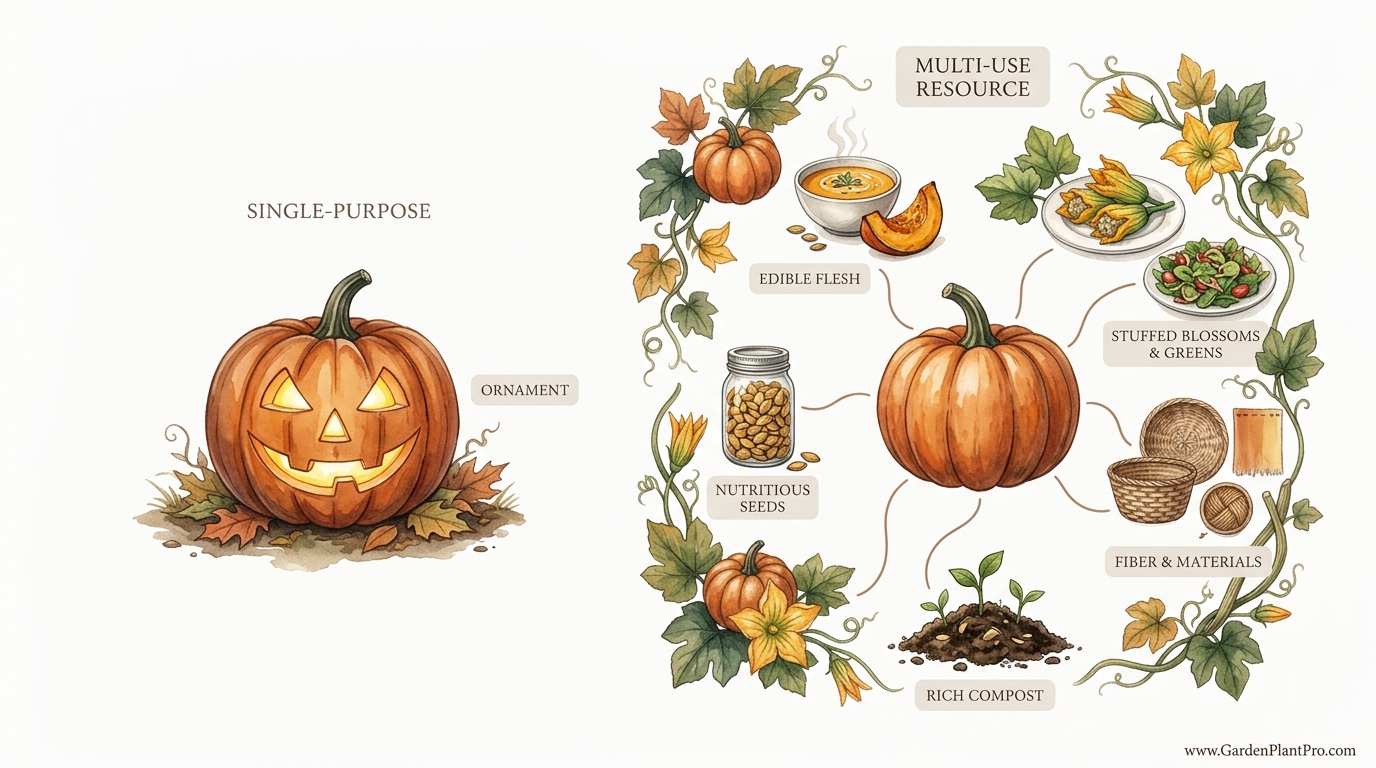
Thinking about a pumpkin as a single-purpose ornament is a habit we need to break. When you look at it as a multi-use resource, the garden suddenly becomes twice as productive without you planting a single extra seed. Let’s walk through the patch together and look at what we’ve been missing.
How To Use Every Part Of The Pumpkin Plant
Every single piece of a pumpkin plant is useful if you know what to do with it. This is not just about being thrifty; it is about realizing that this plant is one of the hardest-working residents in your garden. While we usually focus on the flesh for pies or carving, the leaves, blossoms, stems, and seeds are packed with nutrition and practical value.
In the real world, gardeners use these different parts to bridge the gap between early summer and late autumn. For instance, the blossoms provide a delicate harvest long before the first pumpkin is even the size of a tennis ball. The leaves and vines, often seen as a tangled mess, are actually a massive source of biomass that can rejuvenate tired soil or provide high-energy feed for backyard livestock.
Think of the pumpkin plant as a solar-powered factory. The leaves catch the sun and turn it into vitamins and minerals. The vine transports those nutrients, and the fruit stores them. Throwing away the vine or the skin is like throwing away the machinery after the product is finished.
The Secret Harvest: Leaves and Stems
Most folks are surprised to learn that pumpkin leaves are a staple in many parts of the world, particularly in African and Asian cuisines. They have a flavor that sits right between spinach and asparagus, but with a bit more substance. You don’t want the old, leathery leaves near the base of the plant. Instead, look for the young, tender leaves at the growing tips of the vines.
To prepare them, you have to deal with the tiny “spines” or hairs on the stems and the back of the leaves. I usually pinch the end of the stem and pull downwards, peeling away the outer fibrous layer like you would with celery. Once those fibers are gone, the leaves are soft and creamy when cooked. They are loaded with Vitamin K, iron, and even a surprising amount of protein for a green vegetable.
The very tips of the vines, often called “pumpkin shoots,” are another delicacy. I love to toss these into a quick stir-fry. Taking the tips actually helps the plant, too. It encourages the vine to branch out and can help focus the plant’s energy on developing the fruit rather than just growing longer and longer vines that eventually head over the fence into the neighbor’s yard.
Blossoms: The Garden’s Edible Gold
Pumpkin blossoms are a short-lived treat that you have to catch early in the morning. They are traditionally stuffed with cheese, battered, and fried, but they are just as good sliced thin into a salad or a frittata. The key here is to know the difference between male and female flowers so you don’t accidentally stop your pumpkin production.
Male flowers grow on long, thin stalks and provide the pollen. Female flowers have a small, rounded “bulb” at the base, which is actually the baby pumpkin. I always tell folks to harvest mostly the male flowers. You only need one or two males to stay in the patch for the bees to do their work. The rest of those males are fair game for the kitchen.
Harvesting blossoms is best done right after they open at dawn. By midday, they usually wilt and close up. If you pick them early and keep them in a damp paper towel in the fridge, they will stay fresh for a day or two. They have a mild, slightly sweet pumpkin flavor that is unlike anything you can buy at a grocery store.
Seeds: A Protein-Rich Harvest Beyond the Flesh
We all know about roasting pumpkin seeds, but most people treat it as a once-a-year novelty. In a zero-waste garden, those seeds are a primary source of plant-based protein and healthy fats. They are particularly rich in magnesium, zinc, and tryptophan, which is great for heart health and sleep.
When you scoop the “guts” out of a pumpkin, don’t just rinse the seeds and throw the stringy pulp away. That pulp is full of flavor and can be simmered with other vegetable scraps to make a rich stock. For the seeds themselves, I’ve found that a low-and-slow approach works best for roasting.
I usually wash them thoroughly to remove the slime, pat them dry, and then roast them at around 250°F to 300°F (121°C to 149°C). If you go too hot, the delicate oils in the seeds can turn bitter. A little olive oil and sea salt are all you need, though some smoked paprika or cinnamon can really take them to the next level.
How It Works: Processing the Rind and Flesh
The way you handle the main body of the pumpkin depends on the variety you grew. There is a big difference between a “Jack-o-lantern” type and a “Pie” or “Sugar” pumpkin. The carving types are often stringy and watery, while the pie types have thick, dense, and sweet flesh.
However, even the “lesser” pumpkins have their uses. If you find the flesh too stringy for a smooth pie, it is still perfect for dicing into soups or stews. I’ve even seen folks grate the raw flesh into muffins or pancakes, much like you would with zucchini.
Making Pumpkin Skin Chips
One of my favorite tricks is making “chips” out of the skin. Most people peel the pumpkin and toss the rind, but the skin is where a lot of the fiber and minerals live.
- Clean the pumpkin thoroughly with a brush to remove any soil.
- Use a sharp knife or a heavy-duty peeler to remove the skin in long strips.
- Toss the strips with a bit of oil and salt.
- Bake at 350°F (175°C) for about 10 to 15 minutes until they are crispy.
These chips are surprisingly savory and make a great topper for a creamy pumpkin soup. Just make sure you are using organic pumpkins if you plan to eat the skin, as it is the part most likely to have any garden dust or residues.
DIY PROJECT: Collect rainwater no matter where you live...
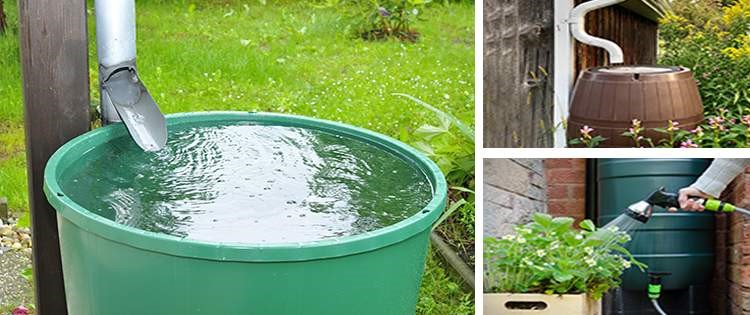
This DIY project is the best way to legally collect rainwater NO MATTER where you live. Get chlorine-free water, cut down on your water bills, and have enough for an emergency situation or to water your garden. Read More Here...
Maintenance and Long-Term Storage
If you want your pumpkins to last through the winter, you can’t just hack them off the vine and put them in the cellar. They need to be “cured.” Curing is the process of letting the skin harden and any small nicks or scratches heal over.
I recommend leaving about 3 to 4 inches (7 to 10 cm) of stem attached when you harvest. A pumpkin without a stem is like a house without a roof; it will rot much faster. Place your pumpkins in a warm, sunny spot—ideally between 80°F and 85°F (26°C to 29°C)—for about 10 days.
Once they are cured, move them to a cool, dry place. The sweet spot is around 50°F to 55°F (10°C to 13°C) with moderate humidity. Never store them directly on a concrete floor, as the cold and moisture can seep in. I like to put mine on wooden pallets or a layer of dry straw to keep the air circulating around them.
Livestock Integration: The Animal Feed Secret
If you have chickens, pigs, or goats, a pumpkin patch is basically a free pharmacy and buffet. Chickens, in particular, benefit from the high beta-carotene content in the flesh and skin, which turns their egg yolks a deep, rich orange.
There is also an old-timer’s theory that pumpkin seeds act as a natural dewormer. The seeds contain a compound called cucurbitacin, which may help paralyze certain parasites in the digestive tract of livestock. While it isn’t a replacement for modern veterinary care if you have a serious infestation, many of us use it as a regular preventative.
When feeding pumpkins to animals:
- Smash the pumpkins open for chickens; they usually can’t break through a tough rind on their own.
- Check for rot. A little soft spot is fine, but if it’s moldy or smells fermented, toss it in the compost instead.
- Remove the “handle” or woody stem, as it can be a choking hazard for larger animals like goats or cows.
Composting: Returning the Vine to the Earth
When the season finally ends, you are left with a massive pile of vines. This is where many gardeners make a mistake. They either haul them to the landfill or leave them in a tangled heap that takes years to break down.
Pumpkin vines are “greens” in the world of composting, meaning they are rich in nitrogen. However, they are also very bulky. To make them work for you, you need to chop them up. I often run over my old vines with a lawnmower or chop them with a spade before adding them to the pile.
A good compost pile needs a balance of “greens” (nitrogen) and “browns” (carbon). Since pumpkins and their vines are so high in moisture and nitrogen, you need to mix them with plenty of dry leaves, straw, or wood chips. A ratio of about 2 parts brown to 1 part green is ideal. If your pile starts to smell like a swamp, you have too much pumpkin and not enough carbon; just toss in some more dry leaves and give it a turn.
Challenges and Common Mistakes
The biggest mistake I see is people trying to eat pumpkins that have already been carved and sat on a porch for a week. Once you cut into a pumpkin, it becomes a breeding ground for bacteria and mold. If you want to use your pumpkin for food, don’t carve it. Use a marker to draw a face on it instead, or better yet, just enjoy its natural beauty.
Another pitfall is “Toxic Squash Syndrome.” It sounds scary, but it is very rare. Some wild or stressed squash plants produce high levels of cucurbitacin, which makes the fruit extremely bitter. If you take a bite of your pumpkin and it tastes like a bottle of aspirin, **stop eating it immediately**. Do not try to mask the bitterness with sugar or spices. Extreme bitterness is a sign of toxicity that can cause severe stomach upset.
Lastly, watch out for “volunteer” pumpkins that grow from last year’s seeds. Because pumpkins cross-pollinate so easily, a volunteer might look like a beautiful pumpkin but taste like a gourd or have a stringy, inedible texture. Always test a small piece before committing to a whole recipe.
Limitations: When This May Not Be Ideal
While using every part of the plant is great, there are times when it’s better to let some parts go. If your vines were heavily infested with Squash Vine Borers or Squash Bugs, do not compost them at home. The eggs and larvae can survive in a cool compost pile and haunt you next year. In that case, it is better to burn the vines or send them to a municipal composting facility that reaches much higher temperatures.
Also, if you are growing pumpkins in a very small space, you might not want to let the vines run wild just to get a few extra leaves. Sometimes, pruning the vine to keep it manageable is the more practical choice, even if it means sacrificing some of that extra biomass.
Practical Tips for Maximum Yield
If you want enough blossoms and leaves to eat without hurting your pumpkin harvest, follow these simple rules:
- Wait for established growth: Don’t start harvesting leaves until the vine is at least 4 to 5 feet (1.2 to 1.5 meters) long.
- The 10% Rule: Never take more than 10% of the leaves or blossoms from a single plant at one time. The plant needs those leaves to photosynthesize and grow that big fruit.
- Water at the base: Pumpkins have massive leaves that are prone to powdery mildew. Use a soaker hose or drip irrigation to keep the leaves dry.
- Heavy Feeders: Pumpkins are “hungry” plants. If you are taking leaves and fruit, you are removing a lot of nutrients from the soil. Always amend your patch with well-rotted manure or compost before planting.
Advanced Considerations: Seed Saving and Purity
For the serious gardener, saving seeds is the ultimate way to close the loop. However, pumpkins are “promiscuous.” They will cross-pollinate with other members of the same species. If you grow a Zucchini (Cucurbita pepo) next to a Jack-o-lantern (also Cucurbita pepo), the seeds you save will produce a “Zumpkin” next year—a weird hybrid that usually isn’t good for much.
To save pure seeds, you either need to isolate your varieties by at least half a mile (800 meters) or learn the art of hand-pollination. This involves taping the male and female flowers shut the night before they open, then manually transferring the pollen the next morning before the bees can get to them. It sounds like a lot of work, but it is the only way to ensure that the “Sugar Pie” you loved this year stays a “Sugar Pie” next year.
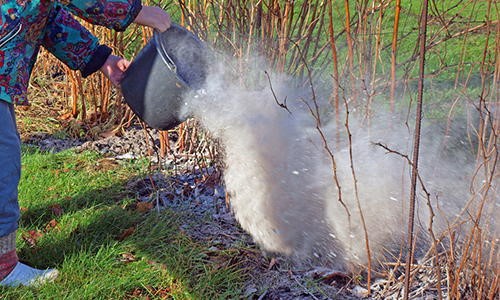
Do you have some charcoal in your house right now? We call charcoal a “miracle leftover” for anyone who wants to be a little more self-sufficient and cut costs. That’s because it can help you with so many different things around the house and garden. You can even use it to make an energy-free fridge. Read More Here...
Final Thoughts
Transforming your pumpkin patch into a zero-waste resource is one of the most rewarding shifts you can make as a gardener. It changes your perspective from being a consumer of a seasonal decoration to being a steward of a complex, high-output system. Every leaf you sauté and every seed you roast is a small victory for sustainability and a testament to the incredible generosity of the soil.
Start small this season. Maybe just roast the seeds and save the vines for your compost. Next year, you might find yourself out there at dawn, harvesting blossoms for breakfast and looking at those sprawling vines as the valuable asset they truly are.
Nature doesn’t waste anything, and as gardeners, we shouldn’t either. The more we use, the more we understand, and that understanding is what turns a backyard hobby into a lifelong craft. Now, get out there and see what your patch has to offer!