
Most gardeners chop these flowers off to keep the plant ‘neat,’ but they are actually destroying their garden’s best defense system. We are taught to ‘deadhead’ herbs to keep the leaves coming, but with marjoram, those flowers are more valuable than the harvest. In a balanced garden, marjoram blooms are a high-octane fuel station for predatory wasps and hoverflies—the very insects that eat the aphids and caterpillars attacking your vegetables. Stop fighting for a tidy garden and start growing a functional one.
Attracting Beneficial Insects With Marjoram
When we talk about marjoram (Origanum majorana), most folks think about a jar of dried herbs in the pantry or a sprig of green tossed into a tomato sauce. But if you step out of the kitchen and into the dirt, you will find that marjoram is one of the hardest-working “biological assets” you can put in the ground. While its cousin oregano is often the loud, aggressive relative that takes over the bed, sweet marjoram is the quiet, reliable partner that brings in the heavy hitters of the insect world.
The magic happens when you let those tiny, knotted buds open into clusters of pale pink or white flowers. These blooms might look insignificant to us, but to a parasitoid wasp or a hoverfly, they are the equivalent of an all-you-can-eat buffet with a neon sign. These insects have very short mouthparts, meaning they cannot reach the nectar inside deep, tubular flowers like foxgloves or lilies. They need shallow, accessible nectar, and marjoram provides exactly that in abundance.
In a real-world garden, this means you are essentially hiring a free security force. Hoverfly larvae are voracious predators that can clear an aphid colony in a matter of days. Predatory wasps, which are far too small to sting humans, seek out the caterpillars that are currently chewing holes in your kale and cabbage. When you grow marjoram and let it flower, you aren’t just growing an herb; you are building a habitat for the creatures that keep your garden in balance.
The Mechanics of Nectar: Why Marjoram Blooms Work
To understand why marjoram is so effective, you have to look at the biology of the insects we are trying to invite. Many of our best “garden guardians” are quite small. For instance, the Braconid wasp is often no larger than a grain of rice. Because they are so tiny, they have limited energy reserves. They need to “refuel” frequently on sugar-rich nectar to have the strength to hunt for pests or lay their eggs.
Marjoram belongs to the Lamiaceae (mint) family, which is famous for its nectar production. However, unlike some mints that have long, deep throats in their flowers, marjoram’s blossoms are clustered in “knots” (hence the name “Knotted Marjoram”) that open into very shallow, two-lipped flowers. This structural design is perfect for:
- Syrphid Flies (Hoverflies): These look like tiny bees or wasps but only have two wings. They hover over flowers like helicopters. While the adults drink nectar, they lay eggs near aphid colonies. When the larvae hatch, they look like little green slugs and can eat hundreds of aphids before they pupate.
- Parasitoid Wasps: These are the “special ops” of the garden. They don’t build nests or bother humans. Instead, they lay their eggs inside or on other insects. You might have seen a tomato hornworm covered in what looks like white rice—those are the cocoons of Braconid wasps that were fueled by the nectar of plants like marjoram.
- Solitary Bees: While honeybees get all the credit, native solitary bees are often better pollinators. They are highly attracted to the concentrated nectar in marjoram clusters.
When you keep marjoram trimmed to a “tidy” green mound, you are essentially closing the gas station. The pests—the aphids, the mites, and the caterpillars—don’t need flowers to survive. They just need your vegetables. By letting the marjoram flower, you level the playing field by feeding the “good guys.”
How to Integrate Marjoram into Your Garden Layout
Integrating marjoram into your garden requires a shift in how you think about “herbs.” Instead of keeping it in a separate herb spiral or a pot on the porch, you should treat it as a tactical tool. I have found the best results come from “interplanting”—placing the marjoram directly among the crops you want to protect.
Standard practice in my garden involves planting a marjoram plant at the corners of every raised bed or every 3 feet (about 1 meter) along a row of vegetables. This creates a “safety net” of beneficial activity throughout the entire plot. Since marjoram stays relatively small—usually reaching about 12 to 24 inches (30 to 60 cm) in height and width—it doesn’t crowd out your main crops. It acts as a living mulch, shading the soil and suppressing weeds while its roots work alongside your veggies.
Some of the best companion pairings for marjoram include:
- Tomatoes and Peppers: The aromatic oils and the wasps attracted to the flowers help deter tomato hornworms and aphids.
- Brassicas (Broccoli, Kale, Cabbage): Cabbage white butterflies are often confused by the strong scent of marjoram, and the wasps will make quick work of any loopers that manage to hatch.
- Squash and Cucumbers: While it won’t stop a massive squash bug invasion on its own, it certainly makes the environment more hostile for them.
- Potatoes and Eggplants: Marjoram is known to improve the vigor of these plants and help keep flea beetles at bay.
Maintenance and Long-Term Considerations
One of the most common questions I get is how to balance the culinary harvest with the biological benefit. It is true that once marjoram flowers, the stems become woody and the leaves can take on a slightly more bitter, less “sweet” profile. If you want the best of both worlds, I suggest a “half-and-half” approach.
Dedicate half of your marjoram plants to the kitchen. Keep these pinched back, never letting them see a flower bud. This will keep the foliage tender and the oils concentrated for your cooking. Let the other half go completely wild. These are your “biological assets.” Allow them to bolt, flower, and eventually go to seed. You will notice a distinct difference in the amount of “buzz” around the flowering plants versus the trimmed ones.
Marjoram is a tender perennial, meaning it loves the sun and hates the frost. In warmer climates (USDA Zones 9 and 10), it will live for years, eventually forming a semi-woody base. In colder regions, you have to treat it as an annual. You can try to bring it indoors over the winter, but in my experience, it often gets spindly and sad without the intense summer sun. It is usually easier to start fresh with new seeds or cuttings each spring once the soil has warmed to at least 60°F (15°C).
The Benefits of Growing Marjoram as a Biological Asset
Choosing to let marjoram flower offers several practical, measurable benefits that go beyond just “looking nice.” These advantages are what transform a hobby garden into a self-sustaining ecosystem.
Natural Pest Suppression: This is the big one. Every hoverfly that visits your marjoram flowers is a potential mother to a hundred aphid-eating larvae. This reduces your reliance on organic sprays like neem oil or insecticidal soap, which, while safer than chemicals, can still harm beneficial insects if used incorrectly.
Increased Pollination Rates: Marjoram is a “magnet” plant. It draws pollinators into the general area. Once they finish with the marjoram, they are much more likely to visit your nearby squash, beans, or strawberries, leading to better fruit sets and higher yields.
Soil Health and Aroma: Marjoram has a shallow but dense root system that helps hold the top layer of soil in place. Its aromatic foliage also acts as a “masking agent.” Pests like the carrot rust fly or the onion fly often find their host plants by smell. The sweet, piney-citrus scent of marjoram can confuse these pests, making it harder for them to find your crops.
Challenges and Common Mistakes
Even a hardy herb like marjoram has its limits. The most frequent mistake I see gardeners make is overwatering. Marjoram is native to the Mediterranean and Western Asia; it likes its feet dry. If you plant it in heavy clay soil that stays soggy, it will succumb to root rot before it ever gets a chance to bloom. Always ensure your soil is well-drained. If you have heavy soil, consider growing marjoram in raised beds or adding plenty of coarse sand and compost to the planting site.
Another pitfall is planting it too early. Because “Sweet Marjoram” is much more sensitive to cold than “Wild Marjoram” (Oregano), a late spring frost will turn your beautiful seedlings into black mush. Wait until the danger of frost has completely passed—usually two weeks after your last frost date—before putting them in the ground.
DIY PROJECT: Collect rainwater no matter where you live...
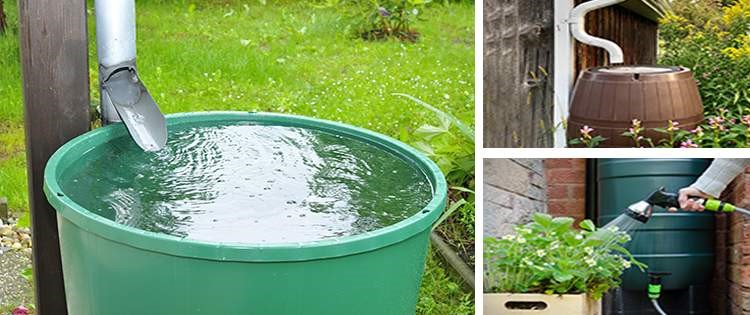
This DIY project is the best way to legally collect rainwater NO MATTER where you live. Get chlorine-free water, cut down on your water bills, and have enough for an emergency situation or to water your garden. Read More Here...
Finally, don’t forget that marjoram needs full sun. It requires at least 6 to 8 hours of direct sunlight to produce the high concentrations of nectar and essential oils that attract beneficial insects. If you plant it in the shade of a large tomato plant, it will become leggy, the flowering will be sparse, and its effectiveness as a biological asset will plummet.
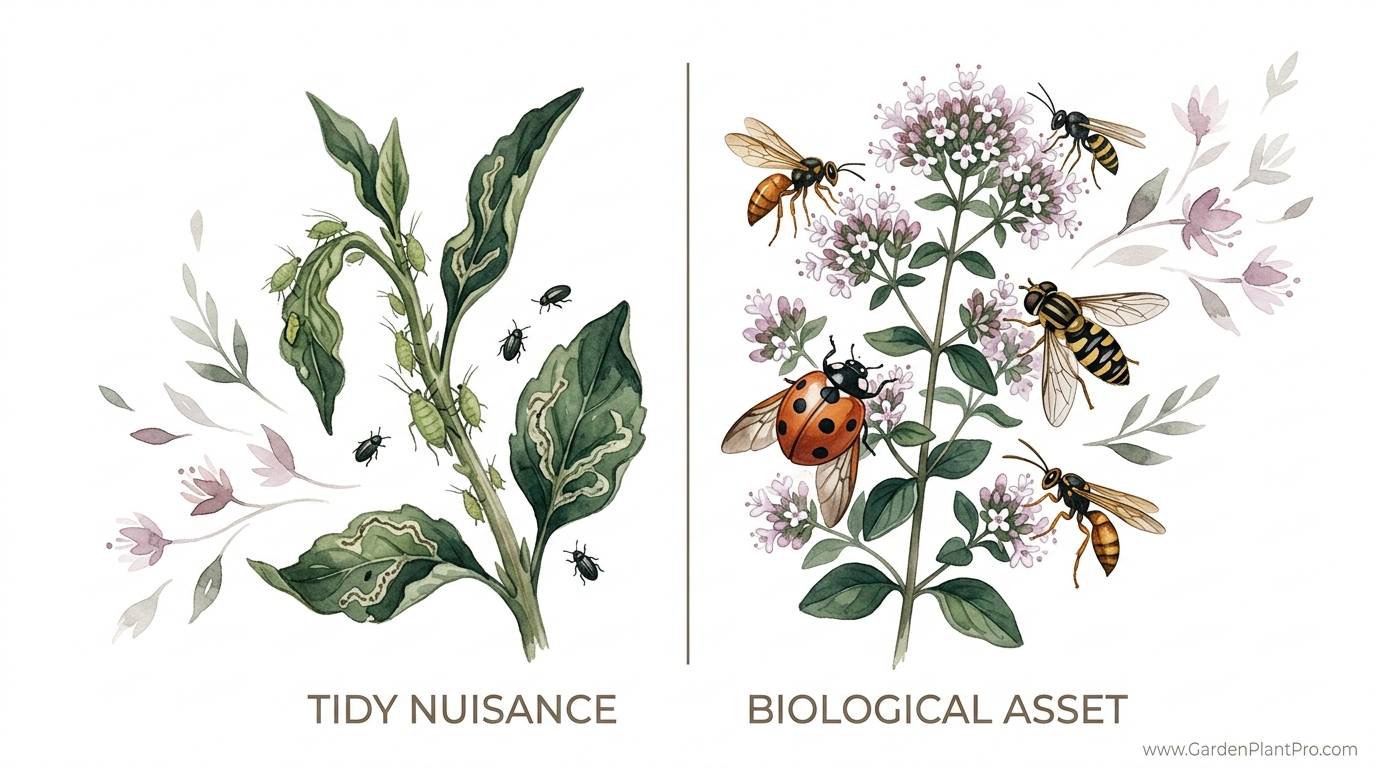
Comparison: Tidy Nuisance vs. Biological Asset
To help visualize the difference in gardening philosophies, look at the table below. It compares the traditional “tidy” approach to the “biological asset” approach when growing marjoram.
| Feature | Tidy Nuisance (Traditional) | Biological Asset (Functional) |
|---|---|---|
| Pruning Strategy | Constant deadheading to prevent flowers. | Allowing full bloom cycles in mid-to-late summer. |
| Primary Goal | Maximizing leaf harvest and “neat” appearance. | Supporting predatory insects and ecosystem balance. |
| Pest Management | Requires manual intervention (sprays/picking). | Relies on attracted wasps and hoverflies for control. |
| Biodiversity | Low; supports very few insect species. | High; acts as an “insectary” for dozens of species. |
| Culinary Use | Tender leaves available all season. | Best for drying or using flowers in infusions. |
Practical Tips for Best Results
If you are ready to put this into practice, here are a few things you can do right now to make your marjoram work harder for you.
- Sow in Successions: If you have the space, plant marjoram in two-week intervals. This ensures that as one group of plants finishes flowering and goes to seed, another group is just beginning to bloom, providing a constant food source for beneficials throughout the season.
- Keep the Soil Lean: Do not over-fertilize your marjoram. High-nitrogen fertilizers will give you lots of lush green growth but can actually reduce the concentration of the essential oils that attract insects. A little compost at the beginning of the season is usually all they need.
- Provide a Water Source: Beneficial insects need more than just nectar. On hot days, they need water. Place a shallow saucer with a few pebbles in it near your marjoram. The pebbles give the tiny wasps a place to land so they don’t drown while they drink.
- Use the Flowers in the Kitchen: Don’t think the flowers are just for the bugs! Marjoram flowers are edible and have a concentrated, spicy-sweet flavor. They make a beautiful garnish for salads or can be steeped into a soothing tea that is great for digestion.
Advanced Considerations: The Science of “Insectary” Plants
For the gardener who wants to go deeper, marjoram is part of a larger strategy known as “Farmscaping.” This is the practice of designing a landscape specifically to increase the populations of beneficial insects. Research from various agricultural extensions shows that “insectary” plants like marjoram can significantly reduce the need for external pest control in commercial settings, and the same principles apply to our backyards.
One interesting thing to watch for is the “hovering” behavior. If you see an insect that looks like a bee but stays perfectly still in mid-air before darting to a marjoram flower, you are looking at a member of the Syrphidae family. These flies are often more effective at aphid control than ladybugs because they are much more mobile. They can find an aphid outbreak before you even notice it. By providing the fuel (marjoram nectar) for the adults, you are ensuring they stay in your garden to lay their eggs rather than wandering off to the neighbor’s yard.
Also, consider the pH of your soil. Marjoram prefers a neutral to slightly alkaline soil (pH 6.5 to 7.5). If your soil is very acidic, the plant might struggle to take up the minerals it needs to produce high-quality nectar. A light dusting of garden lime can make a big difference in how much “traffic” your marjoram flowers receive.
Example Scenario: The Tomato & Marjoram Defense
Let’s look at how this plays out in a real garden situation. Imagine you have a row of six tomato plants. In a “tidy” garden, you might plant them alone, keeping the ground around them bare. Within a few weeks, aphids might appear on the new growth, followed shortly by the dreaded tomato hornworm.
Now, imagine a garden where marjoram is allowed to flower at the base of every second tomato plant. In mid-July, the marjoram is in full bloom. A female Braconid wasp, looking for a meal, is attracted by the scent and the shallow nectar of the marjoram. While she is there, she detects the chemical signals given off by the tomato plant being chewed on by a hornworm. She follows the scent, finds the hornworm, and lays her eggs. Within days, the hornworm stops eating, and soon, a new generation of wasps emerges to continue the cycle. You didn’t have to spray anything. You didn’t even have to find the hornworm yourself. The marjoram did the work for you.
Final Thoughts
Gardening is often presented as a battle—me against the bugs, me against the weeds. But when you start viewing plants like marjoram as biological assets rather than just culinary herbs, the dynamic changes. You stop being a soldier and start being a manager of an ecosystem. Letting those “messy” flowers bloom is a small act of trust in nature’s ability to heal and protect itself.
The next time you reach for the garden shears to “clean up” your herb bed, take a second to look closer. If you see the glint of tiny wings or the hovering dance of a syrphid fly, put the shears away. Those flowers are the heartbeat of your garden’s defense. Experiment with leaving a few patches of marjoram to go wild this season. You might find that the “messy” corner of your garden is actually the most productive part of the whole yard.
If you enjoyed learning about the hidden power of herbs, you might want to look into other ways to support your soil health or explore how irrigation methods can impact your garden’s biodiversity. There is always more to learn when you start listening to what the plants are trying to tell you.