
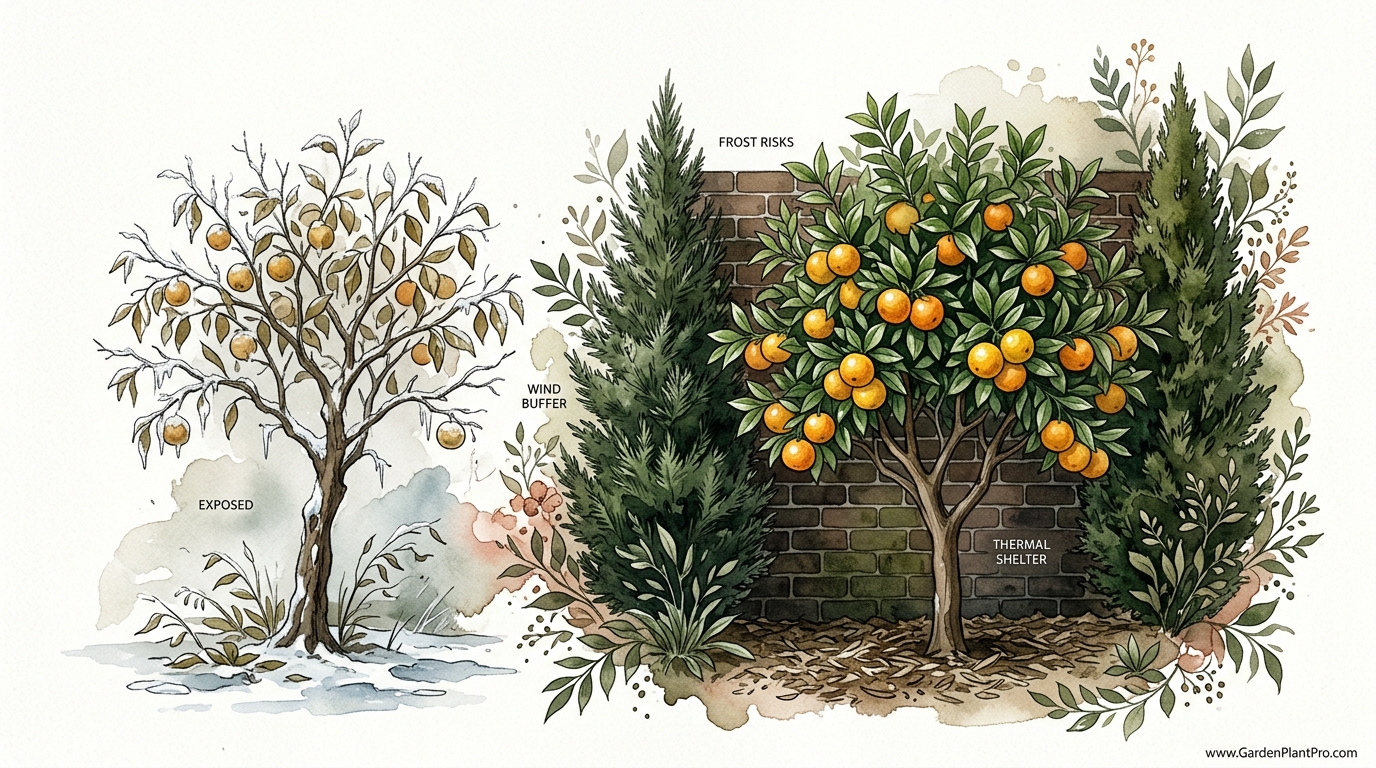
The secret to citrus success isn’t just the soil; it’s the shield you build around it. Mandarins are the delicate cousins of the citrus world, highly sensitive to cold snaps. Plant them in the open, and you’re gambling with every winter. By strategically using microclimates like heat-holding walls and natural windbreaks, you can harvest sweet fruit while your neighbors have frozen twigs.
Over the years, I have seen many a gardener lose their prize mandarin tree to a single frosty night. It is a heartbreak that stays with you, seeing those glossy green leaves turn to a sodden, black mush. Most folks think citrus is just for the tropics, but that is not the whole truth. If you understand how cold moves through your yard, you can grow these sweet treats even in places where the grass crunches underfoot in January.
Success comes down to preparation and a little bit of backyard physics. You are not just trying to keep the tree warm; you are managing the heat that the earth itself provides. This guide will walk you through the hard-earned lessons I have gathered from decades of watching the thermometer and the clouds. We will cover everything from the basic blanket to the science of thermal mass, making sure your harvest stays sweet and your trees stay strong.
Mandarin Tree Frost Protection
Mandarin tree frost protection is the practice of safeguarding your citrus from temperatures that cause ice crystals to form inside the plant cells. Unlike deciduous trees that go fully dormant, mandarins keep their leaves all year. This means they are always working and always vulnerable when the mercury drops below freezing.
For most mandarins, the danger zone begins when temperatures dip below 32°F (0°C). While a light frost might only nip the tender new growth, a hard freeze can split the bark and kill the tree down to the roots. Mature trees are tougher than youngsters, but even an old Satsuma has its limits. Protection is about creating a “safety buffer” of a few degrees that keeps the tree just above its breaking point.
Gardeners use these techniques in regions where winter temperatures occasionally fall into the 20s or teens. In places like Northern California, the Gulf Coast, or even sheltered spots in the Pacific Northwest, frost protection is the difference between a productive orchard and a graveyard of stumps. You are essentially building a temporary greenhouse for each tree whenever the weather forecast looks grim.
How to Guard Your Mandarins Against the Cold
The process of protecting a tree starts long before the sun goes down. You have to think about the “heat budget” of your garden. The sun warms the soil all day, and at night, that heat escapes back into the sky. Your job is to trap that rising warmth and keep it wrapped around your tree branches.
Hydrate for Heat Retention
Start by giving your trees a good soak a day or two before a freeze is expected. Moist soil is much better at absorbing and holding heat than dry, dusty earth. Water also helps the tree stay resilient; a dehydrated tree is a stressed tree, and stress makes frost damage much worse. Ensure you soak the ground all the way out to the drip line, which is the edge of the branch spread.
The Art of the Tent
Using a frost blanket or a heavy burlap sheet is the most common method. The goal is to create a “tent” that covers the entire tree and reaches all the way to the ground. Secure the edges with bricks or heavy stones to seal the heat inside. Avoid tying the fabric tightly around the trunk like a lollipop, as this prevents the ground heat from rising into the canopy.
Internal Heat Sources
Sometimes a blanket is not enough, and you need to add a little “engine” of warmth. Old-fashioned incandescent Christmas lights are a gardener’s best friend. These bulbs give off a surprising amount of heat. String them through the inner branches before you put the cover on. Ensure you use the larger C7 or C9 bulbs rather than the tiny modern LEDs, which stay cool and provide no protection at all.
Thermal Mass Boosters
Place large containers of water, like 5-gallon (19-liter) buckets or even 55-gallon (208-liter) drums, near the base of the tree. These act like “heat batteries” that soak up sun during the day and slowly release warmth at night. Painting these containers black helps them absorb even more solar energy. This simple trick can raise the temperature under a frost cover by another 2 to 3 degrees.
The Benefits of a Winter Shield
Building a protective shield around your mandarins offers more than just survival. It ensures the quality of your fruit remains high even when the weather is harsh. Frozen fruit often dries out or develops a “fermented” taste because the juice sacs inside have ruptured. By keeping the canopy warm, you preserve the sugar levels and the juicy texture that makes home-grown mandarins so special.
Consistency is another major advantage. When a tree is repeatedly damaged by frost, it spends all its spring energy trying to regrow leaves and branches instead of producing fruit. A protected tree hits the ground running as soon as the weather warms up. This leads to bigger harvests and a much healthier root system over the long term.
Protecting your trees also opens up the door to growing varieties that might be a “stretch” for your climate. If you are willing to do the work, you can successfully harvest Clementines or Honey mandarins in zones where they would normally struggle. This diversity makes your backyard orchard much more interesting and provides a longer harvest window throughout the winter months.
Challenges and Common Mistakes
One of the biggest mistakes I see is using plastic sheeting incorrectly. Plastic is a terrible insulator because it allows heat to transfer right through it. If a plastic sheet touches the leaves, those leaves will likely freeze and die. Always use a frame—like a tomato cage or wooden stakes—to keep any plastic away from the foliage. Fabric covers like burlap or specialized frost cloths are much safer and more effective.
The “Lollipop” Wrap
Another frequent error is wrapping the tree too tightly around the trunk. Many people think they are “clothing” the tree like a person. But remember, the heat is coming from the soil, not the tree itself. If you tie the blanket around the trunk, you are cutting the tree off from its only source of warmth. Always drape the cover like a bell so it captures the radiant heat from the earth.
Ignoring the Forecast
Waiting until the last minute is a recipe for disaster. Frost protection takes time to set up properly, especially if you have several trees. I always keep my covers and lights organized in the shed starting in late autumn. When the weather report mentions a “clear, still night,” that is your cue. Clouds act like a blanket for the earth; it is those crystal-clear nights that are the most dangerous.
Limitations of Frost Protection
While these methods are powerful, they cannot work miracles. There is a limit to how much warmth you can trap. Most passive systems—like blankets and water barrels—will only give you about 4 to 8 degrees of protection. If the temperature drops to 10°F (-12°C) and stays there for several days, even a well-wrapped tree may suffer significant damage.
Duration Matters
The length of the cold snap is just as important as the temperature. A brief “dip” to 25°F (-4°C) just before sunrise is usually easy to manage. However, if the temperature stays below freezing for 48 hours straight, the ground itself begins to cool down. In these “advective freezes” where cold wind is blowing in, blankets are less effective because the wind strips away the trapped heat.
DIY PROJECT: Collect rainwater no matter where you live...
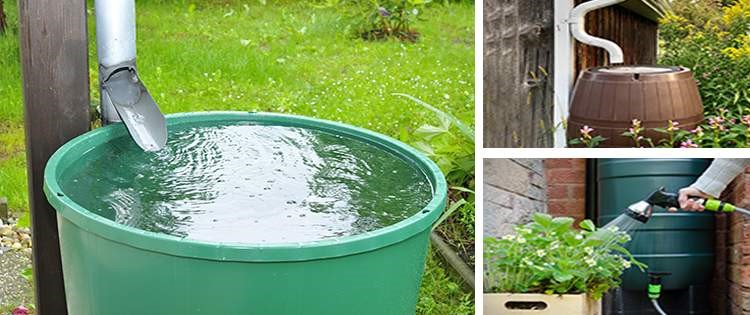
This DIY project is the best way to legally collect rainwater NO MATTER where you live. Get chlorine-free water, cut down on your water bills, and have enough for an emergency situation or to water your garden. Read More Here...
Tree Age and Health
Young trees are much more vulnerable than established ones. A sapling in its first or second year has thin bark and a small root system. It simply does not have the energy reserves to bounce back from a hard freeze. If you live in a very cold area, you might need to accept that some varieties are simply not meant for your climate unless you grow them in large pots that can be moved into a garage or greenhouse.
Satsumas vs. Other Mandarins
Not all mandarins are created equal when it comes to the cold. If you are just starting out, choosing the right variety is half the battle. Satsumas are widely regarded as the kings of cold-hardiness, but other types have their own strengths.
| Mandarin Variety | Cold Threshold (Mature) | Peel Style | Best Feature |
|---|---|---|---|
| Owari Satsuma | 14°F to 18°F (-10°C to -8°C) | Loose, “Zipper” skin | Extreme cold tolerance |
| Clementine | 22°F to 25°F (-5°C to -4°C) | Tight but easy | Sweet, seedless fruit |
| Honey (Murcott) | 24°F to 26°F (-4°C to -3°C) | Thinner, tighter skin | Rich, complex flavor |
| Sugar Belle | 18°F to 20°F (-8°C to -7°C) | Firm, orange skin | Disease resistance |
Satsumas like ‘Owari’ or ‘Brown Select’ are the go-to for gardeners in Zone 8. They can often handle a surprise frost with very little help. Clementines are more sensitive and usually require extra care if the temperature stays below freezing for more than an hour or two. If you are in a borderline climate, the extra investment in a Satsuma is usually worth the peace of mind.
Practical Tips for Winter Success
Maintaining your trees during the cold months requires a shift in how you think about garden chores. Many practices that are good in the summer can actually hurt your trees in the winter.
- Keep the Ground Bare: While we usually love mulching for soil health, you should pull the mulch away from the trunk in winter. Bare soil absorbs more heat during the day and releases it more freely at night. Put the mulch back in the spring to help with irrigation methods and weed control.
- Avoid Late Fertilizing: Stop feeding your trees with nitrogen in the late summer. You do not want the tree putting out tender, “succulent” new growth right when the first frost is about to hit. That soft growth is the first thing to freeze and can lead to rot that spreads to the rest of the tree.
- Prune with Patience: Never prune your mandarins in the fall or winter. Pruning tells the tree to grow, which makes it more sensitive to cold. Also, if your tree does get frost damage, leave it alone until the spring. Those dead, brown leaves actually provide a bit of insulation for the wood underneath.
- Monitor Local Microclimates: Notice where the frost lingers longest in your yard. Cold air is like water; it flows downhill and settles in low spots. Avoid planting your mandarins in “frost pockets.” Instead, plant them on a slope or near a south-facing wall that can radiate heat.
Checking the weather daily is a habit every citrus grower needs to develop. Use a thermometer that records the minimum temperature so you know exactly how cold it got in your specific garden. This data is much more useful than the general forecast from the airport or the local news.
Advanced Considerations: Rootstocks and Banking
For the serious practitioner, success often starts underground. The rootstock your mandarin is grafted onto plays a huge role in its cold tolerance. Poncirus trifoliata, often called the trifoliate orange, is the gold standard for cold-hardy rootstocks. It encourages the scion (the mandarin part of the tree) to go into a deeper state of dormancy, which protects it from mid-winter temperature swings.
Another advanced technique used by commercial growers is “banking.” This involves mounding clean soil or sand around the trunk of a young tree, covering the graft union completely. This protects the most vital part of the tree. Even if the entire top of the tree freezes and dies, the part under the soil bank will survive. In the spring, you pull the soil away, and the tree can regrow from its original variety rather than just sending up wild rootstock suckers.
If you are growing in containers, you have the ultimate “microclimate” control. You can use garden planning to place pots on rolling dollies. When a freeze is predicted, simply roll them into a garage or under a porch. Just be careful not to keep them in a dark, heated house for too long, as the sudden change in environment can cause the tree to drop its leaves and fruit in shock.
Example: Managing a Cold Snap
Imagine the forecast predicts a low of 22°F (-6°C) on a Tuesday night. Here is how a seasoned gardener would handle the situation starting on Monday morning.
First, check the soil moisture. If it hasn’t rained lately, run the irrigation methods to ensure the ground is thoroughly damp. On Tuesday afternoon, while the sun is still out, gather your supplies. Drape the frost blankets over the trees, using long wooden stakes to keep the fabric from touching the leaves. Ensure the fabric reaches the ground and is weighed down with heavy rocks to trap the warmth.
Inside the tent, string a line of incandescent C9 lights. Plug them in just as the sun starts to set. By 10:00 PM, the air temperature outside might be 30°F (-1°C), but under your blanket, the radiant heat from the moist soil and the warmth from the bulbs should keep the canopy at a cozy 35°F (2°C).
On Wednesday morning, wait until the sun has fully risen and the temperature is above freezing before removing the covers. If you leave them on during a sunny day, the temperature inside the tent can skyrocket, causing the tree to “wake up” and become even more vulnerable to the next night’s frost.
Final Thoughts
Protecting your mandarin trees is a labor of love that pays off in the sweetest possible way. While it can feel like a chore to go out in the dark and cold to tuck in your trees, that effort is what separates the successful citrus grower from the rest. Every year you successfully navigate the winter, your tree becomes more established and more resilient.
Remember that gardening is a conversation with nature. Some years will be easy, and others will test your patience with record-breaking chills. By focusing on plant care, understanding microclimates, and using the right tools, you can turn your backyard into a productive oasis regardless of the winter weather.
Don’t be afraid to experiment with different covering materials or heat sources to see what works best in your specific yard. Share your findings with your neighbors, and soon enough, the whole street might be filled with the scent of orange blossoms in the spring. There is nothing quite like the pride of handing a guest a perfectly ripe mandarin that you grew yourself against all odds.