The most toxic part of your rhubarb plant might actually be your garden’s best friend. You can’t eat them, but your garden loves them. Rhubarb leaves are packed with oxalic acid—a natural deterrent for pests. Instead of tossing them, learn how to turn this ‘nuisance’ into a powerful organic insecticide and a heavy-duty weed barrier that feeds the soil as it breaks down.
I’ve been growing rhubarb for more decades than I care to admit, and if there’s one thing I’ve learned, it’s that Nature doesn’t make mistakes; she just gives us puzzles to solve. For years, I did what everyone else did: I’d harvest those beautiful ruby stalks for a strawberry-rhubarb pie and toss the massive, elephant-ear leaves straight onto the compost pile. Then one summer, after a particularly nasty aphid invasion on my roses, an old neighbor leaned over the fence and asked why I was throwing away my best “bug medicine.”
That conversation changed how I look at garden waste forever. We often talk about the difference between garden waste and an organic asset, and the rhubarb leaf is the perfect example of the latter. While the high concentration of oxalic acid makes these leaves dangerous for us to eat, that very same chemistry provides a built-in defense mechanism that we can harness to protect our more vulnerable plants.
In this guide, I’m going to walk you through exactly how I use rhubarb leaves in my own garden. Whether you’re looking to get rid of aphids without synthetic chemicals or you’re tired of pulling weeds around your fruit bushes, those big green leaves are about to become your favorite tool in the shed.
Is Rhubarb Leaf Organic Pest Spray Effective?
The short answer is a resounding yes, though it works differently than the heavy-duty synthetics you might find at a big-box store. Rhubarb leaf spray is a botanical insecticide, and its primary “active ingredient” is oxalic acid.
In the natural world, rhubarb produces this acid to stop animals and insects from devouring its foliage. When we concentrated this into a spray, we are essentially weaponizing the plant’s own survival strategy. It is particularly effective against soft-bodied insects. If you’re dealing with a sudden explosion of aphids (or “greenfly” as some of us call them), leaf-mining flies, or certain types of caterpillars, this spray can be a real lifesaver.
It works through two main pathways. First, it acts as a stomach poison for insects that ingest treated foliage. The oxalic acid disrupts their digestive systems, often shutting them down entirely. Second, when applied with a bit of soap, it acts as a contact irritant for soft-bodied pests.
I’ve used this on everything from my prize-winning roses to the brassicas in my kitchen garden. On my roses, I’ve seen it clear up a greenfly infestation in about two weeks of consistent application. It’s not an “instant kill” like a chemical neurotoxin, but it is a persistent, natural way to nudge the balance of your garden back in favor of your plants.
One of the things I appreciate most about this brew is its impact—or lack thereof—on our friendly neighborhood pollinators. Research has shown that oxalic acid is remarkably safe for honeybees; in fact, many beekeepers actually use a form of it to treat hives for Varroa mites. This means you can manage your pests without worrying that you’re harming the very creatures that help your garden grow.
How to Make Your Own Rhubarb Leaf Insecticide
Making this spray is more like brewing a tea than a lab experiment. I prefer the “boiling method” because it’s faster and extracts the acid more efficiently, but I’ll mention the “cold steep” version too for those who have a bit more patience.
The Boiling Method
For this recipe, you’ll need about 1 pound (approximately 500 grams) of fresh rhubarb leaves and about 1 quart (1 liter) of water.
- Chop the leaves: Use a sharp knife to roughly chop your leaves. You don’t need to be precise; we just want to increase the surface area so the water can get to that oxalic acid.
- Simmer: Place the leaves in a large stainless steel or enamel stockpot. Cover them with the water and bring it to a boil. Once it’s bubbling, turn the heat down and let it simmer for about 20 to 30 minutes.
- Cooling: Take the pot off the heat and let it sit until it’s completely cool. I usually leave mine sitting on the porch overnight with a lid on it.
- Strain: Use a fine-mesh sieve or a piece of cheesecloth to strain the liquid into a clean container. You want to remove all the leafy bits so they don’t clog up your spray bottle later.
- The Secret Ingredient: Add about 1 teaspoon (5 ml) of liquid dish soap to the mixture. This acts as a surfactant, helping the spray “stick” to the waxy leaves of your plants and the bodies of the bugs.
The Cold Steep Method
If you’re not in a hurry, you can simply chop the leaves, put them in a bucket, weigh them down with a brick, and cover them with water. Let this sit for 3 to 7 days. Warning: this will get a bit smelly as the leaves begin to break down, but the resulting liquid is just as potent.
Pro Tip: Always label your spray bottles clearly. I mark mine with a big “POISONOUS – DO NOT DRINK” and a skull and crossbones. Even though it’s organic, you don’t want a curious grandchild or a thirsty guest taking a sip of “garden tea.”
Using Rhubarb Leaves as a Heavy-Duty Weed Barrier
If you have a large rhubarb patch, you’ll likely have more leaves than you could ever use for spray. This is where their physical size becomes a massive asset. I call these my “living rugs.”
The sheer size of a rhubarb leaf—sometimes reaching 18 inches (45 cm) or more in width—makes them a perfect natural weed suppressant. I use them extensively around my raspberries, strawberries, and fruit trees.
To use them as a barrier, simply lay the fresh leaves directly on the soil, overlapping them like shingles on a roof. This blocks out nearly 100% of the sunlight, which prevents weed seeds from germinating. Because the leaves are thick and leathery, they take longer to break down than grass clippings, giving you a solid few weeks of weed control before they begin to melt back into the earth.
As they decompose, they return valuable organic matter and nitrogen to the soil. Many folks worry that the oxalic acid will “poison” the soil or make it too acidic, but in my experience, that simply isn’t the case. Oxalic acid is a simple organic compound (C2H2O4) that soil microbes break down quite quickly into carbon, hydrogen, and oxygen. It doesn’t accumulate or leave behind a toxic residue like synthetic herbicides do.
The Benefits of Going the Rhubarb Route
Why bother with this when you could just buy a bottle of neem oil or an insecticidal soap? For me, it comes down to three things: cost, circularity, and specificity.
- Zero Cost: If you’re already growing rhubarb, these leaves are a byproduct you’ve already paid for in water and compost. Making your own spray turns “waste” into a value-added product.
- Garden Circularity: There is a deep satisfaction in using one part of the garden to protect another. It feels right to keep those nutrients and protective compounds within your own fence line.
- Pollinator Safety: As I mentioned earlier, the fact that this is relatively safe for bees is a huge “plus” in my book. We have enough things working against our bees; we don’t need our pest control to be one of them.
Challenges and Common Mistakes
Even the best methods have their pitfalls. The most common mistake I see gardeners make is using the spray on edible crops too close to harvest time.
While the spray is “organic,” oxalic acid is still a toxin. I never spray my lettuce, spinach, or ripening berries with rhubarb tea. If I have to use it on something like kale or broccoli, I make sure to do it at least two weeks before I plan to pick them, and I give everything a very thorough wash in the kitchen sink afterward.
DIY PROJECT: Collect rainwater no matter where you live...
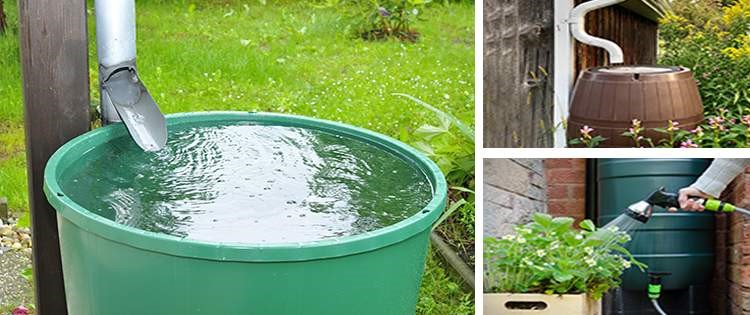
This DIY project is the best way to legally collect rainwater NO MATTER where you live. Get chlorine-free water, cut down on your water bills, and have enough for an emergency situation or to water your garden. Read More Here...
Another mistake is spraying in the heat of the day. Like many homemade sprays, applying this when the sun is high can cause “phytotoxicity”—essentially, the sun’s rays interact with the liquid and the soap to scorch the leaves of your plants. Always aim for early morning or, better yet, just before dusk. This also gives the spray more time to stay wet and work its magic on the bugs before it dries out.
Limitations: When Not to Use Rhubarb Spray
It’s important to remember that rhubarb spray is not a “magic bullet.” It has limitations that every serious gardener should understand.
First, it is a “soft” insecticide. It isn’t going to do much against hard-shelled pests like Japanese beetles or large squash bugs. Their exoskeletons are just too tough for a mild acid and soap solution to penetrate effectively. For those, you’re still better off with hand-picking or more targeted biological controls.
Second, it washes away easily. If you have a summer thunderstorm right after you spray, you’re going to have to do it all over again. It doesn’t have the “residual kill” that some synthetic products boast.
Finally, while it’s great for the soil, don’t use the leaves as mulch in a vermicompost bin (a worm farm). While traditional soil microbes love rhubarb, the high acid content can be very hard on red wiggler worms. Keep the leaves in the garden or the regular compost pile, and away from your worm bins.
Rhubarb Spray vs. Commercial Organic Alternatives
To help you decide when to reach for the rhubarb and when to reach for the wallet, here’s a quick comparison based on my years in the dirt.
| Feature | Homemade Rhubarb Spray | Commercial Neem Oil |
|---|---|---|
| Cost | Free (if you grow rhubarb) | $15 – $25 per bottle |
| Prep Time | 30-60 minutes | Instant (mix with water) |
| Pollinator Safety | High (safe for bees) | Moderate (can affect bees if sprayed directly) |
| Target Pests | Soft-bodied insects, aphids, slugs | Broad spectrum, including some beetles |
| Shelf Life | Short (use within 1-2 weeks) | Long (1-2 years) |
Practical Tips for Success
If you’re ready to start brewing, here are a few hard-won tips to help you get the best results:
- Spot Test First: Not every plant reacts the same way. Before you spray your entire rose garden, apply the mixture to a single leaf and wait 24 hours. If the leaf looks happy, go ahead with the rest.
- Use Rainwater: If you have a rain barrel, use that water for your tea. It’s usually softer than tap water and lacks the chlorine and fluoride that can sometimes interfere with the soap’s effectiveness.
- Storage: If you have leftover spray, keep it in a cool, dark place. The oxalic acid can degrade if left in direct sunlight. However, try to use it up quickly; it doesn’t have the preservatives that commercial sprays do.
- The “Worm” Exception: While I said don’t put it in worm bins, keep an eye on your garden soil. If you use the leaves as mulch, you’ll find that earthworms eventually flock to the area once the leaves start to soften. They love the protection and the moisture they hold.
Advanced Considerations: Soil and Chemistry
For those who want to geek out a bit on the science, the “toxicity” of rhubarb is fascinating. The oxalic acid concentration in the leaves usually ranges between 0.5% and 1.0%. Interestingly, some other garden favorites like spinach and chard also contain oxalic acid—sometimes even more than rhubarb!
The reason we don’t use spinach tea as an insecticide is that rhubarb also contains anthraquinone glycosides. These compounds, combined with the oxalic acid, create a potent “one-two punch” that insects find much more difficult to handle than a bit of spinach.
When you use the leaves as mulch, you are also adding a significant “green” (nitrogen-rich) source to your soil. In a balanced garden, this helps maintain the carbon-to-nitrogen ratio. If you’re worried about acidity, you can sprinkle a little garden lime (calcium carbonate) over the area where you’ve mulched with rhubarb leaves. The lime will react with the oxalic acid to form calcium oxalate, which is even less soluble and completely harmless to your plants.
Example Scenario: The Aphid Emergency
Let’s look at a real-world example. Imagine it’s mid-June, and your nasturtiums are suddenly covered in black aphids. They’re curling the leaves and stunted the growth.
Instead of panicking, you go to your rhubarb patch and harvest four or five large leaves. You chop them, simmer them for 30 minutes, and let the pot cool on the stove while you have dinner. After straining the “tea” and adding a squirt of natural dish soap, you head out at 7:00 PM when the sun is low.
You spray the undersides of the leaves—that’s where the aphids hide—and make sure the stems are well-coated. You repeat this three days later. By the end of the week, the aphid population has crashed, and the ladybugs are moving in to finish the job. Your nasturtiums start putting out new, healthy growth, and you didn’t spend a dime or introduce a single synthetic chemical to your soil. That’s the power of the rhubarb leaf.
Final Thoughts
Gardening is often about seeing the hidden value in things others throw away. The rhubarb leaf, with its intimidating size and toxic reputation, is actually one of the most versatile tools in an organic gardener’s arsenal. Whether you use it as a potent spray or a soil-feeding weed barrier, you’re tapping into a tradition of self-sufficiency that has served backyard growers for generations.
I encourage you to experiment. Start small—maybe just one spray bottle for your flower beds—and see how your plants respond. You might find, as I did, that the most “troublesome” parts of your garden are often the ones with the most to offer.
Remember, a healthy garden isn’t one without any bugs; it’s one where the balance of power is kept in check through natural means. By using rhubarb leaves, you’re not just killing pests; you’re participating in a cycle that builds soil health and protects our essential pollinators. Now, go give that rhubarb patch a little extra love—it’s working harder for you than you might have realized.