Why did the ancient Mayans never struggle with the root rot that is currently killing your indoor dragon fruit? We have been taught to use fluffy, store-bought peat for everything, but for a jungle cactus like the Dragon Fruit, that is a death sentence. Our ancestors grew these on literal rocks and volcanic ash. Learn why your modern ‘convenience’ soil is actually suffocating your harvest and how to return to the mineral-rich roots of the species.
When you walk into a garden center today, you are met with rows of plastic bags filled with “potting mix.” Most of it is just compressed peat moss and a little bit of perlite. It feels soft and holds water like a sponge. For a tomato plant, that might be a paradise. But for a dragon fruit—a plant that evolved to scale the bark of trees in the tropical dry forests of Central America—it is a recipe for a slow, soggy death.
I have spent nearly forty years watching folks try to grow these magnificent cacti in the same dirt they use for their petunias. They always call me when the stems start to turn yellow and the roots become a brown, mushy mess. The truth is, we have forgotten how these plants actually live in the wild. They don’t want a soft bed; they want a mineral-rich, jagged environment that drains faster than you can pour the water in.
By returning to what I call “Ancestral Earth,” we are not just avoiding rot; we are unlocking the plant’s true potential. When you get the soil right, the growth is explosive. Stems become thick and leathery, and the fruit set is far heavier than anything you’ll get in a peat-heavy mix. Let’s look at how our ancestors did it and how you can replicate that mineral magic in your own backyard or living room.
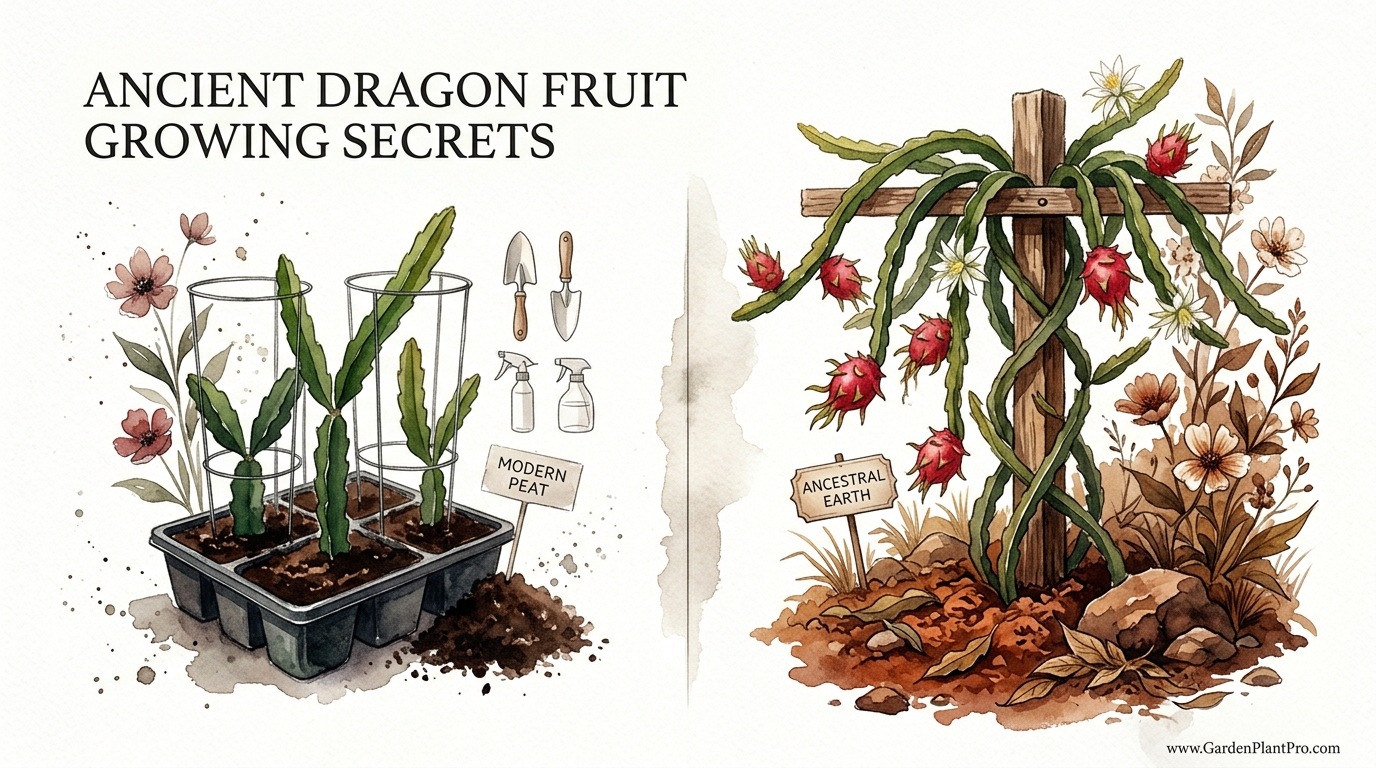
Ancient Dragon Fruit Growing Secrets
To understand how to grow a dragon fruit (Selenicereus undatus), you have to look at where it came from. Long before it was a global supermarket staple, it was a sacred crop for the Maya and Aztec civilizations. In the rocky landscapes of the Yucatán Peninsula and the volcanic highlands of Central America, the dragon fruit didn’t grow in deep, black loam. It grew as a hemiepiphyte—a plant that starts its life on the forest floor but quickly climbs trees or stone cliffs to reach the light.
The “soil” in these regions is often just a thin layer of organic debris trapped in the crevices of limestone or volcanic rock. This environment provides two things that modern potting soil lacks: constant oxygen and a steady supply of trace minerals. The Maya observed that dragon fruit thrived near their stone walls, known as albarradas, where the roots could tuck themselves into the cool, mineral-rich gaps between the rocks.
The secret is that dragon fruit roots are built for “breathability.” They aren’t designed to sit in a stagnant pool of moisture. In the wild, rain falls heavily but drains away instantly. The minerals from the volcanic ash and weathered stone provide the calcium, magnesium, and potassium that fuel those massive, nocturnal blooms. When we use peat, we create a “bog” environment for a plant that is essentially a mountain-climbing cactus.
The Physics of the “Peat Brick” vs. Mineral Flow
Why is peat such a problem? It comes down to structure. Peat moss is composed of partially decomposed organic matter. Over time, as it stays wet, it collapses. It loses the air pockets that the roots need to “breathe.” This leads to anaerobic conditions—environments without oxygen—where pathogens like Phytophthora and Pythium thrive. This is what causes that dreaded root rot.
Furthermore, peat has a nasty habit of becoming “hydrophobic” when it dries out. If you miss a watering, the peat shrinks away from the sides of the pot and forms a hard, water-resistant brick. When you finally water it, the liquid just runs down the sides and out the bottom, leaving the root ball bone-dry. Mineral-based “Ancestral Earth” doesn’t do this. Rocks and sand don’t shrink. They maintain their structure for years, ensuring that every time you water, the moisture reaches the center of the root mass and then drains away safely.
The Anatomy of Dragon Fruit Roots
Dragon fruit plants have two distinct types of roots: terrestrial roots and aerial roots. The terrestrial roots are surprisingly shallow, often staying within the top 5 to 15 centimeters (2 to 6 inches) of the soil. They spread wide rather than deep. This is why a mineral-rich top layer is so much more effective than a deep pot of heavy dirt. The aerial roots, on the other hand, are designed to pull moisture and nutrients directly from the air and the surfaces they cling to. A mineral-heavy mix supports this “climbing” biology by providing a stable, high-friction environment that mimics the bark and stone of the plant’s native home.
How to Recreate Ancestral Earth: The Recipe
You don’t need a volcano in your backyard to get this right. You just need to change your ratios. The goal is a mix that is at least 50% to 70% inorganic (mineral) material. Here is the recipe I’ve used for decades, which closely mimics the conditions the Maya exploited along their stone walls.
- 40% Decomposed Granite (DG) or Coarse Silica Sand: This provides the permanent structure. DG is better because it contains trace minerals, but coarse “builder’s sand” (not fine play sand) works too.
- 30% Pumice or Scoria (Lava Rock): These are porous volcanic rocks. They hold tiny amounts of water and air within their holes, providing a perfect micro-environment for root hairs.
- 20% High-Quality Compost or Leaf Mold: This is your “forest floor” component. It provides the nitrogen and organic biology the plant needs without being too heavy.
- 5% Biochar or Horticultural Charcoal: This acts as a “magnet” for nutrients and provides a home for beneficial microbes. It also helps prevent the soil from becoming too acidic.
- 5% Native Soil or Clay: A small amount of real earth provides the mineral backbone and beneficial local fungi that bagged mixes lack.
To mix this, I like to lay it all out on a tarp and turn it over with a shovel until it’s uniform. When you grab a handful and squeeze it, it should feel heavy and gritty. When you let go, it should fall apart instantly. If it stays in a ball, it’s too wet or has too much organic matter. This mix is designed to last for 5 to 10 years without collapsing—perfect for a plant that can live for over two decades.
Benefits of the Mineral-Rich Approach
When you switch from “Modern Peat” to “Ancestral Earth,” the changes you’ll see in your dragon fruit are not subtle. It’s the difference between a plant that is surviving and one that is thriving.
1. Immediate Drainage: You can water your plant in the middle of a rainstorm, and the water will pass through the pot in seconds. This eliminates the risk of root rot, even in humid or rainy climates. I’ve seen plants in this mix survive weeks of monsoon-level rain because the roots never actually “sat” in water.
2. Thicker Stem Caliber: Because mineral soils provide better anchorage and a steady supply of silica and potassium, the “ribs” of the dragon fruit grow much thicker. A thicker stem can store more water and energy, which leads to larger fruit and better resistance to heat and cold snaps.
3. Enhanced Fruit Flavor: It’s a well-known secret among old-timers that fruit grown in mineral-heavy soil tastes better. The trace elements in volcanic rock and granite—boron, zinc, manganese—contribute to the sugar profile and the “complexity” of the fruit’s taste. Peat is essentially nutrient-bankrupt once the initial fertilizer wash wears off.
4. Longevity of the Substrate: Peat-based soils need to be replaced every 2 years because they decompose and compact. Dragon fruit are heavy, climbing plants that often weigh 50 to 100 kilograms (110 to 220 pounds) when mature. Trying to repot a massive dragon fruit on a trellis is a nightmare. A mineral mix doesn’t break down, meaning you can leave the plant in the same pot for its entire productive life.
Challenges and Common Mistakes
Even with the best intentions, it’s easy to fall back into “modern” habits. Here are the pitfalls I see most often when people try to make the switch.
Using the Wrong Kind of Sand
Many beginners go to the hardware store and buy “Play Sand” for kids’ sandboxes. This is a mistake. Play sand is too fine; it packs together like wet flour and actually *stops* drainage. You need “Coarse Sand,” “Horticultural Sand,” or “Decomposed Granite.” The grains should be large enough that you can see the individual pieces with your naked eye—think 2mm to 4mm (1/16 to 1/8 inch) in size.
DIY PROJECT: Collect rainwater no matter where you live...
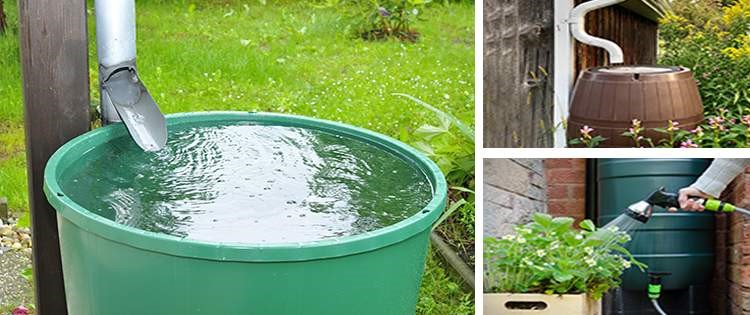
This DIY project is the best way to legally collect rainwater NO MATTER where you live. Get chlorine-free water, cut down on your water bills, and have enough for an emergency situation or to water your garden. Read More Here...
The Overwatering Reflex
Because the mineral mix drains so well, the top of the soil will look dry very quickly. Don’t let this fool you into watering every day. Dragon fruit are still cacti. In the mineral mix, I recommend the “two-knuckle rule.” Stick your finger into the mix up to your second knuckle (about 5 cm or 2 inches). If you feel no moisture at all, it’s time to water. If it’s even slightly cool or damp, leave it alone. During the winter or the dormant season, you might only water once every 3 to 4 weeks.
Neglecting Support
Because this soil is so loose and gritty, it doesn’t “grip” a young cutting as well as heavy potting soil does. You must have a sturdy trellis or post ready from day one. In the wild, they use trees; in the backyard, a 10cm x 10cm (4×4 inch) pressure-treated post or a concrete pillar is best. Tie your plant to the support with soft nursery tape until its aerial roots can take hold of the surface.
Comparison: Modern Peat vs. Ancestral Earth
This table breaks down the measurable differences between the “convenience” soil most people use and the mineral-rich method described here.
| Feature | Modern Peat Mix | Ancestral Earth (Mineral) |
|---|---|---|
| Primary Component | Peat Moss / Coco Coir | Decomposed Granite / Pumice |
| Drainage Speed | Slow (Retentive) | Instant (High Porosity) |
| Lifespan of Mix | 1–2 Years | 5–10+ Years |
| Mineral Content | Low (requires fertilizing) | Naturally High |
| Root Rot Risk | High (especially in winter) | Extremely Low |
| Weight | Lightweight | Heavy (provides stability) |
Practical Tips for Success
Setting up your mineral-rich dragon fruit environment is just the first step. To keep it thriving for years, consider these small adjustments that make a big difference in the garden.
- Terracotta over Plastic: If you are growing in containers, use terracotta or unglazed clay pots. These materials are porous and allow air to pass through the walls, further assisting the mineral soil in keeping the roots oxygenated.
- The Mulch Layer: While the mix itself is mineral-heavy, a thin layer of organic mulch—like pine bark or leaf litter—on the very top can help mimic the forest floor. It protects the shallow terrestrial roots from the baking sun without making the whole pot soggy.
- Monitoring pH: Dragon fruit prefer a slightly acidic to neutral range (6.0 to 7.0). If you use a lot of granite or volcanic rock, the pH usually stays stable. However, if your water is very “hard” (alkaline), you might need to add a splash of apple cider vinegar to your watering can once a month to keep the minerals available to the plant.
- Seasonal Watering: In most regions, dragon fruit goes into a semi-dormant state when temperatures drop below 15°C (59°F). At this time, the mineral mix’s ability to stay dry is your best friend. Only water when the stems look slightly wrinkled.
Advanced Considerations: Rock Dust and Microbes
For the gardener who wants to go beyond the basics, there are ways to “supercharge” your Ancestral Earth. Since we are using an inorganic base, we need to ensure the biological side of the soil is active. Minerals are only useful to the plant if there are microbes there to “unlock” them.
I highly recommend adding Azomite or Basalt Rock Dust to your mix. These are finely ground volcanic minerals that provide over 60 trace elements. Think of it as a multivitamin for the plant. Additionally, inoculating your mix with Mycorrhizal fungi is vital. These fungi form a symbiotic relationship with the dragon fruit roots, effectively extending the root system’s reach and helping the plant pull phosphorus and water from the mineral grains.
Another advanced technique is the use of Biochar. When biochar is “charged” (soaked in compost tea or liquid fertilizer before being added to the soil), it holds onto those nutrients and releases them slowly. In a high-drainage mineral mix, this prevents the nutrients from being washed away too quickly during heavy watering sessions.
Real-World Example: Saving a Dying “Peat” Dragon Fruit
A few years ago, a neighbor brought me a Vietnam White dragon fruit that was in bad shape. It had been in a 20-liter (5-gallon) plastic bucket of standard potting soil. The base of the stem was soft, and the plant hadn’t grown an inch in six months. We pulled it out, and as expected, 80% of the roots had rotted away. They were black and smelled like a swamp.
We followed a three-step rescue plan that you can use too. First, we cut away all the rotten roots and the soft part of the stem with a sterilized knife. Second, we let the plant sit in a dry, shady spot for 5 days to “callous” over. You can’t put a fresh cut into soil—it will just rot again. Third, we planted it in the Ancestral Earth mineral mix (70% mineral, 30% organic) in a terracotta pot.
Within three weeks, new white root tips were visible. Within three months, the plant had put on two feet of new, dark green growth. By the following summer, it produced its first massive white flower and a beautiful red fruit. The plant didn’t need a “magic” chemical fertilizer; it just needed the water to move away so the roots could finally breathe.
Final Thoughts
Returning to the mineral-rich roots of the dragon fruit isn’t just about nostalgia; it’s about biological reality. We have been sold a version of “convenience” gardening that works for annual flowers but fails the long-lived, specialized species of the tropical forest. By moving away from fluffy, peat-heavy mixes and embracing the rocks and ash that the Mayans knew so well, you are giving your dragon fruit a foundation that will last for decades.
Don’t be afraid to experiment with the materials available in your area. If you can’t find pumice, use crushed lava rock. If you can’t find decomposed granite, use coarse river sand. The principle is always the same: drainage, aeration, and minerals. Once you see the health of a plant grown in its ancestral environment, you’ll never go back to a bag of store-bought dirt again.
Take the time to build your soil right the first time. Your dragon fruit will thank you with thicker stems, more frequent blooms, and harvests that truly taste like they came from the volcanic heart of the tropics. Happy gardening, neighbor!