
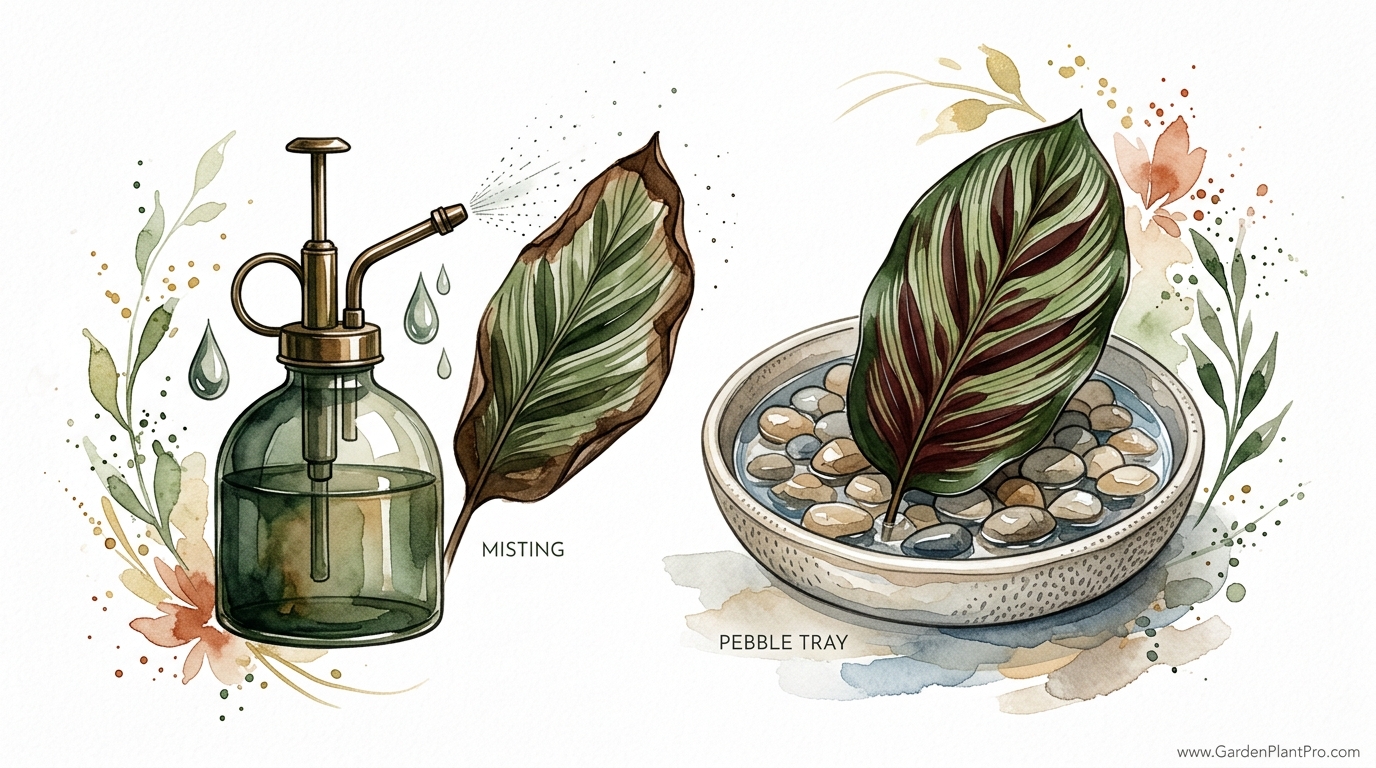
You are spraying your leaves every morning, yet they are still turning brown and crispy; here is why. Most houseplant owners think a spray bottle is the cure for crispy edges. In reality, that 10-second mist evaporates before the plant even notices. Precision humidity—like pebble trays or grouping plants—provides the 24/7 moisture these tropical beauties actually crave. Stop working harder and start growing smarter.
When you walk through the humid understory of a tropical rainforest, the air feels heavy, almost like a warm blanket. That is the environment your Calathea was born for. Back in my early days of gardening, I used to think a quick spritz with a spray bottle was enough to satisfy these “Prayer Plants.” I learned the hard way that a morning misting is about as effective as throwing a cup of water at a forest fire. To truly keep those edges green and supple, we have to look deeper at how these plants breathe and drink.
How To Stop Calathea Brown Edges
Stopping Calathea brown edges starts with understanding that those crispy tips are a distress signal. In the gardening world, we often call this “tip burn” or marginal necrosis. It happens when the plant cannot move enough moisture to the very edges of its leaves, or when it is trying to sweat out toxins it cannot process. Calatheas are part of the Marantaceae family, and unlike a hardy Pothos, they have very thin cell walls in their foliage. When the air gets dry, the moisture inside those cells evaporates faster than the roots can replace it.
Think of a Calathea leaf like a wet sponge sitting in a drafty room. If the air is dry, the edges of the sponge go hard and crusty first while the center stays damp. In a home with central heating or aggressive air conditioning, the humidity often drops below 30%. For a plant that thrives in 60% to 80% humidity, that 30% environment is essentially a desert. Those brown edges are the plant’s way of retreating, sacrificing its borders to protect the core.
Beyond just the air, the water you use plays a massive role. Calatheas are incredibly sensitive to the minerals and chemicals found in standard municipal tap water. Chlorine, fluoride, and various salts are often added to our drinking water for safety, but to a Calathea, they are slow-acting poisons. The plant absorbs these minerals through its roots, moves them up through the stems, and eventually deposits them at the furthest point possible: the leaf tips. As the water evaporates from the leaf, the minerals are left behind, literally burning the delicate tissue from the inside out.
The Mechanics of Leaf Hydration: How It Works
To stop the browning, you must address the three pillars of Calathea health: water purity, ambient humidity, and soil consistency. It is a holistic system where one part cannot function without the others. If you have high humidity but you are watering with liquid chemicals, the edges will still brown. If you use the purest rainwater but keep the plant next to a radiator, the leaves will still crisp up.
Step 1: Switch Your Water Source
The first thing I tell any neighbor struggling with a crispy Calathea is to ditch the tap water. You want to use water that is as close to “empty” as possible. Rainwater is the gold standard because it is naturally soft and slightly acidic, which Calatheas love. If you cannot collect rain, distilled water or reverse osmosis (RO) water is your next best bet. Some folks suggest letting tap water sit out for 24 hours to let the chlorine evaporate. While this works for chlorine, it does nothing for fluoride or heavy minerals. If you want results, go for distilled.
Step 2: Create a Microclimate
Instead of trying to humidify your entire house (which can be expensive and lead to mold on your walls), focus on the 2 feet (60 cm) of space immediately surrounding your plant. This is where techniques like grouping and pebble trays come in. When you group plants together, they undergo a process called transpiration. They release moisture through their pores (stomata), and by huddling together, they trap that moisture in a communal “bubble” of humid air.
Step 3: Stabilize Soil Moisture
Calatheas do not like “wet feet,” but they absolutely loathe “dry ankles.” You want the soil to feel like a wrung-out sponge—damp to the touch but not dripping. If the soil dries out completely, the plant goes into a panic, curling its leaves to reduce surface area and stop evaporation. Each time the plant is forced to curl its leaves in defense, the edges take a hit. Aim to water when the top 1 inch (2.5 cm) of soil feels dry.
Benefits of Precision Humidity
Moving away from the spray bottle and toward consistent humidity offers more than just green edges. It changes the entire growth habit of the plant. When a Calathea feels “safe” in its environment, it stops focusing on survival and starts focusing on expansion.
- Larger Leaf Surface: High humidity allows the plant to fully unfurl its leaves. In dry air, new leaves often get “stuck” or emerge with tears because they didn’t have enough lubrication to slide out of their protective sheath.
- Vibrant Coloration: The intricate patterns on varieties like the Calathea Ornata or Calathea Medallion are much sharper when the plant is hydrated. Dry air leads to a dull, washed-out look.
- Natural Movement: These are called Prayer Plants for a reason. They move their leaves up at night and down during the day. This movement requires turgor pressure—internal water pressure. Proper humidity ensures the plant has the hydraulic power to keep praying.
- Pest Resistance: Spider mites are the arch-nemesis of the Calathea. These tiny pests thrive in hot, dry air. By keeping your humidity high (above 60%), you create an environment that is naturally hostile to mites, saving you a lot of headache in the long run.
Challenges and Common Mistakes
Even with the best intentions, it is easy to overcorrect. I have seen many gardeners turn their living rooms into a swamp only to find their plants rotting from the base.
Mistake 1: The “Standing Water” Trap
When using a pebble tray, many people accidentally fill the water too high. If the bottom of the pot is touching the water, the soil will wick up that moisture through the drainage holes. This leads to waterlogged soil, which prevents the roots from breathing. Root rot will kill a Calathea much faster than dry air will. Always ensure the water level is at least 0.5 inches (1 cm) below the top of the pebbles.
Mistake 2: Over-fertilizing
Because we want our plants to look better, we often reach for the fertilizer. However, fertilizer is essentially a collection of salts. If your plant is already struggling with brown edges due to mineral buildup, adding more fertilizer is like pouring salt on a wound. I generally recommend fertilizing only during the active growing season (spring and summer) and using a dose that is half of what the bottle suggests.
Mistake 3: Ignoring Airflow
In our quest for humidity, we sometimes forget that plants need to breathe. If you have high humidity with zero airflow, you are inviting fungal issues like Botrytis (grey mold). You don’t want a fan blowing directly on the plant (which dries it out), but you do want the air in the room to be moving gently. A ceiling fan on low or an oscillating fan in the corner of the room is usually enough to keep the air from becoming stagnant.
Limitations of Localized Humidity
While pebble trays and grouping are fantastic, they have their limits. A pebble tray might only increase the humidity by 3% to 5% in the immediate vicinity of the leaves. If your home is at 20% humidity in the dead of winter, that extra 5% only brings you to 25%—still far below the 60% your Calathea craves.
In these extreme cases, a mechanical humidifier is the only real solution. If you find that your pebble trays aren’t stopping the browning, it might be time to invest in a small ultrasonic humidifier. This is especially true if you live in a climate where you have to run a furnace or wood stove for several months of the year, as these heating methods strip almost all moisture from the air.
Misting Bottle vs Pebble Tray: A Practical Comparison
I often get asked which “low-tech” method is better. While I’ve already mentioned that misting isn’t a long-term fix, it does have a small place in a larger routine.
| Feature | Misting Bottle | Pebble Tray |
|---|---|---|
| Effect Duration | 5–10 minutes | 24/7 (as long as water is present) |
| Maintenance Level | High (requires daily effort) | Low (refill every 3–5 days) |
| Fungal Risk | Higher (wet leaves attract spores) | Very Low |
| Humidity Increase | Temporary Spike | Consistent Micro-increase |
| Best For | Cleaning dust off leaves | Supporting delicate tropicals |
As the table shows, the pebble tray is the clear winner for ongoing care. Misting is best reserved for when you want to wipe down the leaves to keep them shiny and free of dust, which allows the plant to photosynthesize more efficiently.
Practical Tips for Success
If you are ready to stop those brown edges today, follow this simple checklist I’ve used in my own greenhouse for years:
DIY PROJECT: Collect rainwater no matter where you live...
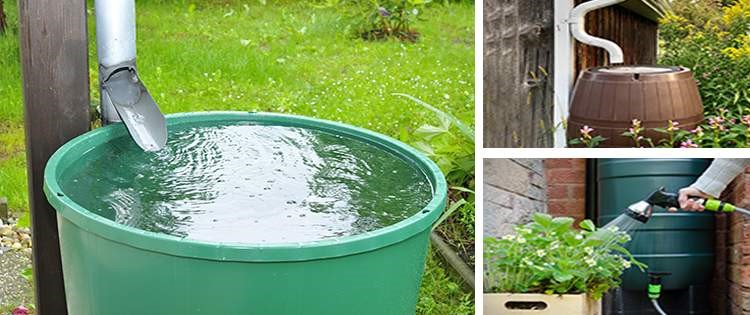
This DIY project is the best way to legally collect rainwater NO MATTER where you live. Get chlorine-free water, cut down on your water bills, and have enough for an emergency situation or to water your garden. Read More Here...
- Invest in a Hygrometer: You can’t manage what you don’t measure. A cheap digital hygrometer will tell you exactly what the humidity is in your plant corner. Aim for 60%.
- The Double Potting Method: Place your plant (in its plastic nursery pot) inside a larger decorative ceramic pot. Fill the space between the two pots with damp sphagnum moss. As the moss dries, it releases moisture directly around the plant’s base.
- Snip the Damage: Brown edges won’t turn green again. You can carefully trim away the brown parts with sterilized scissors. Follow the natural curve of the leaf, but leave a tiny sliver of brown so you don’t cut into the “live” green tissue and cause further stress.
- Watch the Temperature: Calatheas like it between 65°F and 80°F (18°C to 27°C). If the temperature swings wildly, the plant will show its displeasure through browning foliage. Keep them away from drafty windows or doors.
Advanced Considerations: The Role of Water Physics
For those who want to get serious, let’s talk about the Vapor Pressure Deficit (VPD). This sounds like a laboratory term, but it’s a concept every gardener should know. VPD is essentially the difference between how much moisture is in the air and how much moisture the air could hold.
In a warm room, the air has a higher capacity for moisture. If the air is warm but dry, the VPD is high, and the air will “pull” moisture out of your Calathea leaves with incredible force. If you lower the temperature slightly (down to about 68°F or 20°C), the air’s “thirst” decreases, and your plant won’t lose water as quickly. This is why many tropical plants seem to do better in a slightly cooler room than in a hot, dry one.
A Realistic Example: The Winter Rescue
Imagine it is mid-January. You have a beautiful Calathea Rattlesnake that has suddenly developed crispy tips on every leaf. Your hygrometer reads 28%. Here is how you rescue it:
First, move the plant away from any heating vents. Even if the corner is slightly darker, the lack of hot air is more important right now. Second, place the plant on a large tray filled with river stones and water. Third, bring in three other plants—maybe a Fern and a Philodendron—to sit right next to it. Finally, switch to distilled water for all future waterings. Within three weeks, you should see the new leaves coming in perfectly green, even if the old leaves stay a bit scarred.
Final Thoughts
Gardening is often a conversation between you and the soil. Those brown edges on your Calathea are just the plant’s way of telling you that the conversation has become a bit strained. It isn’t a sign of failure; it is an invitation to adjust your environment and learn more about the delicate rhythms of tropical life.
By focusing on water quality and consistent, passive humidity rather than the quick fix of a spray bottle, you are building a sustainable ecosystem. It takes a little more planning up front, but the reward is a lush, vibrant display of foliage that brings the soul of the rainforest into your home. Don’t be afraid to experiment with different groupings or water sources until you find the “sweet spot” for your specific space.
In time, you will find that these “diva” plants aren’t actually that difficult. They just have high standards. Once you meet those standards, they will reward you with years of beautiful, praying leaves that look as healthy as the day they left the nursery. Happy growing!