
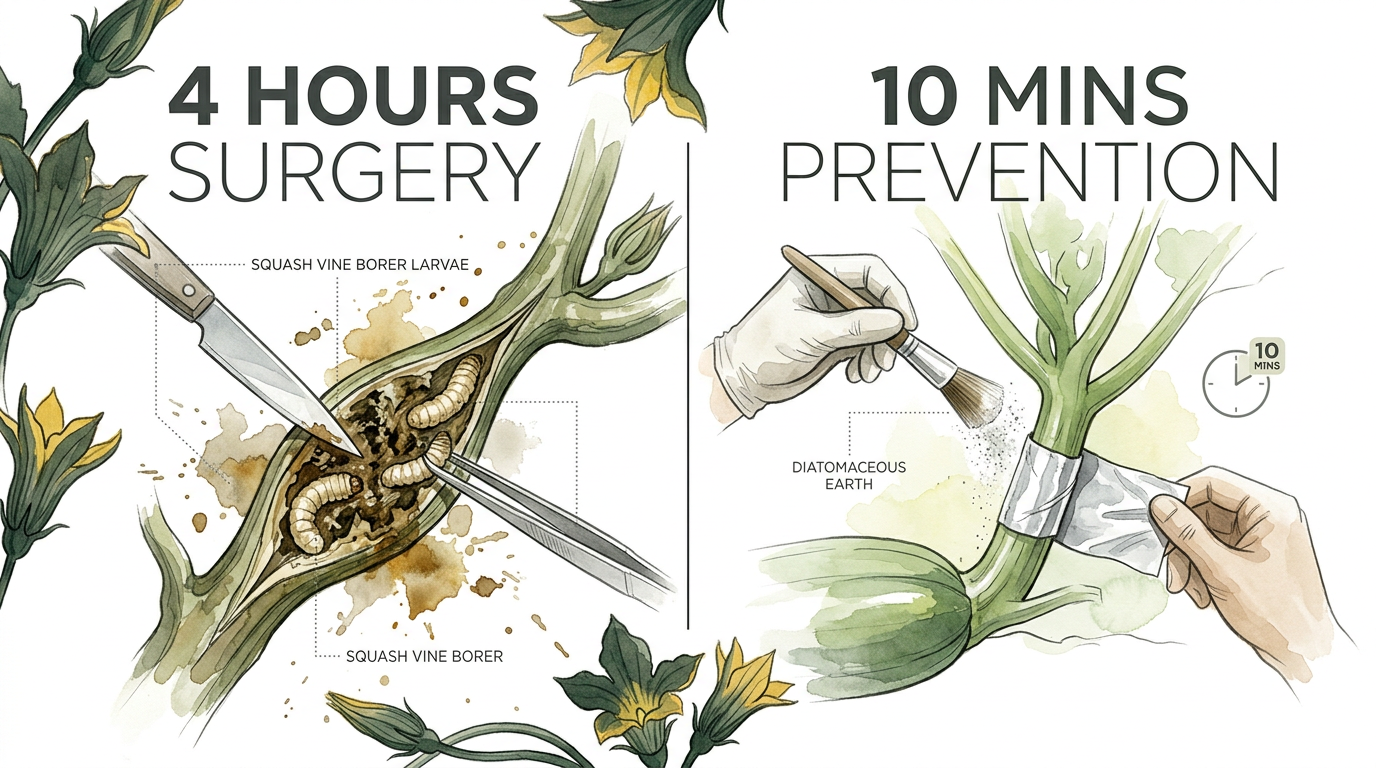
You are performing surgery on your squash stems while the pros are already sitting back with a harvest. Are you spending your weekends digging worms out of squash stems? Stop the manual labor. A simple strategic shift in how you cover your crops can save your entire harvest with 90% less effort.
Most folks treat the squash vine borer like a sudden, unavoidable disaster. They wait until they see a wilted leaf, then they panic. They grab a kitchen knife and start slicing into their prized zucchini like an amateur surgeon, hoping to find that fat, white grub before it eats the heart out of the plant. That is the hard way to garden.
If you are spending four hours on squash surgery to save one plant, you are working against nature instead of with it. A ten-minute prevention plan at the start of the season is worth more than all the tweezers and electrical tape in the world. I have spent decades watching neighbors lose their entire patches while I enjoyed more summer squash than I knew what to do with, all because I focused on the barrier rather than the cure.
This guide is about moving away from the “cut and pray” method. We are going to look at how to stop that orange and black moth from ever getting a foothold in your soil. Whether you are dealing with a small raised bed or a sprawling acre, the principles of organic prevention remain the same: understand the life cycle, block the entry, and choose the right armor for your plants.
How To Prevent Squash Vine Borers Organically
To prevent squash vine borers organically, you must view your garden as a fortress that requires multiple layers of defense. The squash vine borer (Melittia cucurbitae) is not actually a “bug” in the way many think; it is the larval stage of a clearwing moth. Unlike most moths that fly at night, this one is active during the day, looking like a bright orange wasp as it zips around your squash leaves.
The prevention strategy is simple in theory: you must prevent the adult moth from laying her tiny, copper-colored eggs on the base of your squash stems. Once those eggs hatch, the larvae bore directly into the stem, where they are protected from almost every organic spray you can throw at them. Organic prevention relies on physical barriers, biological controls like Bacillus thuringiensis (BT), and strategic plant selection.
Real-world organic prevention starts before the first seed even hits the dirt. It involves knowing when the moths emerge in your specific region—usually when the soil reaches about 62°F (16.7°C)—and having your defenses ready. If you can keep that moth away from the bottom 6 to 12 inches (15 to 30 cm) of your plant’s main stem, you have won 90% of the battle.
The Physical Barrier Process: Aluminum Foil and Row Covers
The most effective way to stop a borer is to make sure it never touches the plant. There are two primary physical barriers that seasoned gardeners use: the “foil wrap” and “floating row covers.”
The Aluminum Foil Hack
This is a favorite among backyard gardeners because it is cheap and incredibly effective for bush-type squash like zucchini. You take a simple strip of aluminum foil, about 4 inches (10 cm) wide, and wrap it loosely around the base of the stem.
- Step 1: Wait until the seedling has its first two true leaves.
- Step 2: Wrap the foil from 1 inch (2.5 cm) below the soil line to about 3 inches (7.5 cm) above it.
- Step 3: Keep the wrap loose so the stem can expand as the plant grows.
The moth is looking for soft, succulent green tissue to glue her eggs onto. When she hits the cold, hard surface of the foil, she usually moves on to find a neighbor’s unprotected plant.
Floating Row Covers
For larger patches, floating row covers (a lightweight, breathable fabric) are the gold standard. You drape the fabric over the entire plant and secure the edges tightly with soil or pins. This creates a literal “no-fly zone.” The trick here is timing. You must have the cover in place the moment you transplant or as soon as the seeds sprout. If the moth gets inside the tent, you’ve just created a protected nursery for the pest.
The most important rule with row covers is that they must be removed once the plants start producing female flowers. Squash require bees for pollination, and if the bees can’t get in, you won’t get any fruit. By the time the flowers appear, the first “flight” of the vine borer moth has often passed in many northern regions.
Choosing the Right Armor: Resistant Varieties
One of the most overlooked organic prevention strategies is simply growing squash that the borers can’t stand. Not all squash are created equal. The borer has a very specific preference for plants in the Cucurbita maxima and Cucurbita pepo families.
The Thick-Stemmed Defense
The Cucurbita moschata family is your best friend if you have heavy borer pressure. Varieties like Butternut and Tromboncino have solid, dense stems. The borer larvae find it much harder to tunnel through these “woody” stems compared to the hollow, succulent stems of a zucchini or a Hubbard squash.
If you absolutely must grow zucchini, look for “parthenocarpic” varieties. These are plants that can produce fruit without pollination. This allows you to keep your row covers on for the entire season, completely isolating the plant from the moth while still getting a harvest. It is the ultimate “lazy gardener” hack for pest management.
The Benefits of Proactive Prevention
The primary advantage of prevention over “surgery” is the preservation of the plant’s vascular system. When a borer tunnels into a stem, it acts like a clog in a straw. It blocks the flow of water and nutrients from the roots to the leaves. Even if you successfully cut the borer out, the plant is left with a massive scar and a weakened immune system.
- Higher Yields: A plant that never experiences the stress of a borer infestation will produce fruit 30% to 50% longer than one that has been surgically repaired.
- Reduced Disease: Borer holes are entry points for bacterial wilt and fungal pathogens. By keeping the stem intact, you are keeping the plant’s natural “skin” sealed against infection.
- Time Freedom: Wrapping a stem with foil takes 30 seconds. Performing a successful vine borer extraction takes 20 minutes of intense focus, often in the heat of the day.
Common Mistakes to Avoid
Many gardeners fail at organic prevention because they miss the small details. The biggest mistake is trapping the borer inside. If you use row covers but don’t rotate your crops, the pupae that spent the winter in the soil will hatch inside your protective tent. You’ve essentially given the moth a private banquet hall with no predators.
Another frequent error is forgetting the secondary flight. In warmer climates (Southern US, parts of Australia, or Southern Europe), there can be two generations of borers per year. Gardeners often relax after the first wave in June, only to find their plants collapsing in August when the second generation hits. You must maintain your defenses until the temperatures start to drop significantly.
Limitations of Organic Methods
While these methods are highly effective, they are not a 100% guarantee in every environment. In areas with extreme wind, floating row covers can tear or blow away, leaving plants vulnerable. Furthermore, if you are growing “giant” pumpkins (C. maxima), their stems grow so fast and so large that foil wraps can become restrictive or difficult to manage.
In very high-pressure areas, physical barriers alone might not be enough. This is where you might need to integrate biological sprays. If you can’t be there to check your plants every day, the “set it and forget it” nature of some organic barriers can lead to a false sense of security if a moth happens to find a gap in your defense.
DIY PROJECT: Collect rainwater no matter where you live...
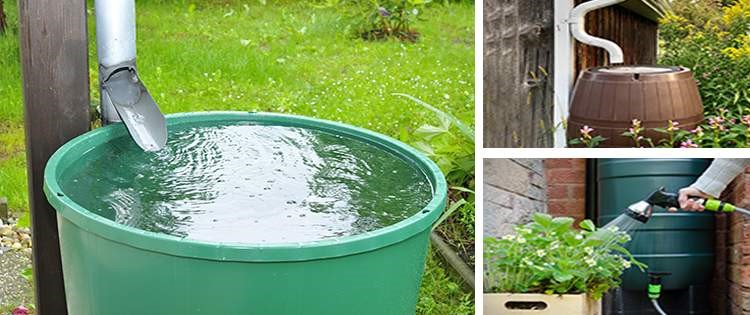
This DIY project is the best way to legally collect rainwater NO MATTER where you live. Get chlorine-free water, cut down on your water bills, and have enough for an emergency situation or to water your garden. Read More Here...
Prevention vs. Surgical Intervention
It helps to see the numbers when deciding how to spend your time in the garden. Here is a quick look at the two different paths you can take.
| Factor | Organic Prevention | Surgical Intervention |
|---|---|---|
| Time Required | 10-15 mins at planting | 1-4 hours per month |
| Cost | Low (Foil/Mesh) | Moderate (Knives/Tape/BT) |
| Plant Stress | Zero | High (Wounding) |
| Success Rate | ~90-95% | ~30-50% survival |
| Skill Level | Beginner | Advanced / Precision |
Practical Tips for Ongoing Care
Even with barriers in place, a good gardener keeps a watchful eye. One of the best habits I’ve developed is the “Morning Stem Wipe.” Every few days, as you walk through the garden with your coffee, take a damp cloth or your thumb and run it along the base of the stems. If any eggs have been laid on the leaves or the stem, you’ll wipe them off before they can hatch.
Mounding soil is another great “insurance policy.” As your squash vines grow along the ground, cover a few “nodes” (the spots where leaves meet the stem) with a shovelful of compost. This encourages the plant to grow secondary roots. If a borer does manage to get into the main stem near the base, the plant can survive because it is drawing nutrients from these extra root systems further down the vine.
Advanced Strategy: The Hubbard Trap Crop
If you have the space, you can play a psychological game with the moths. Squash vine borers love Blue Hubbard squash more than almost anything else. By planting a few Hubbard squash 10 to 15 feet (3 to 4.5 meters) away from your “main” crop of zucchini or summer squash, you can lure the moths away.
The trick is to treat the Hubbard squash as a sacrificial lamb. Once the Hubbard stems are full of borers, you pull the whole plant out, bag it in plastic to kill the larvae, and throw it in the trash. You’ve successfully removed the local population of borers from your garden without ever having them touch the plants you actually want to eat.
Scenario: Saving a Late-Season Crop
Let’s look at a real-world example. Imagine it’s mid-July and you’ve just realized you forgot to protect your second planting of summer squash. You see a few orange moths hovering. Is it too late?
No. In this scenario, you skip the row covers (since the plants are likely already flowering) and go straight to the BT Spray Protocol. Bacillus thuringiensis (BT) is a naturally occurring bacteria that only hurts caterpillars. You mix a liquid concentrate and spray the main stems thoroughly once a week. When the tiny borer larva hatches and takes its very first bite of the stem, it ingests the BT and stops eating immediately. It dies before it can ever tunnel deep into the vine. This is the “shield” you use when physical barriers are no longer an option.
Final Thoughts
The battle against the squash vine borer is often won or lost in the first three weeks of the season. By shifting your focus from “how do I kill the worm inside the plant?” to “how do I keep the moth off the stem?”, you change the entire dynamic of your summer garden. It turns a stressful, labor-intensive chore into a simple, predictable system.
Remember that gardening is a conversation with your local environment. Some years the borer pressure will be light, and some years it will feel like a plague. By using a combination of resistant varieties like Butternut, physical barriers like foil, and the occasional use of BT, you create a resilient garden that can withstand the worst of it.
Stop performing surgery on your weekends. Put in the ten minutes of prevention work now, and spend your harvest season doing what the pros do: figuring out how many neighbors you can give your extra zucchini to before they start locking their doors.