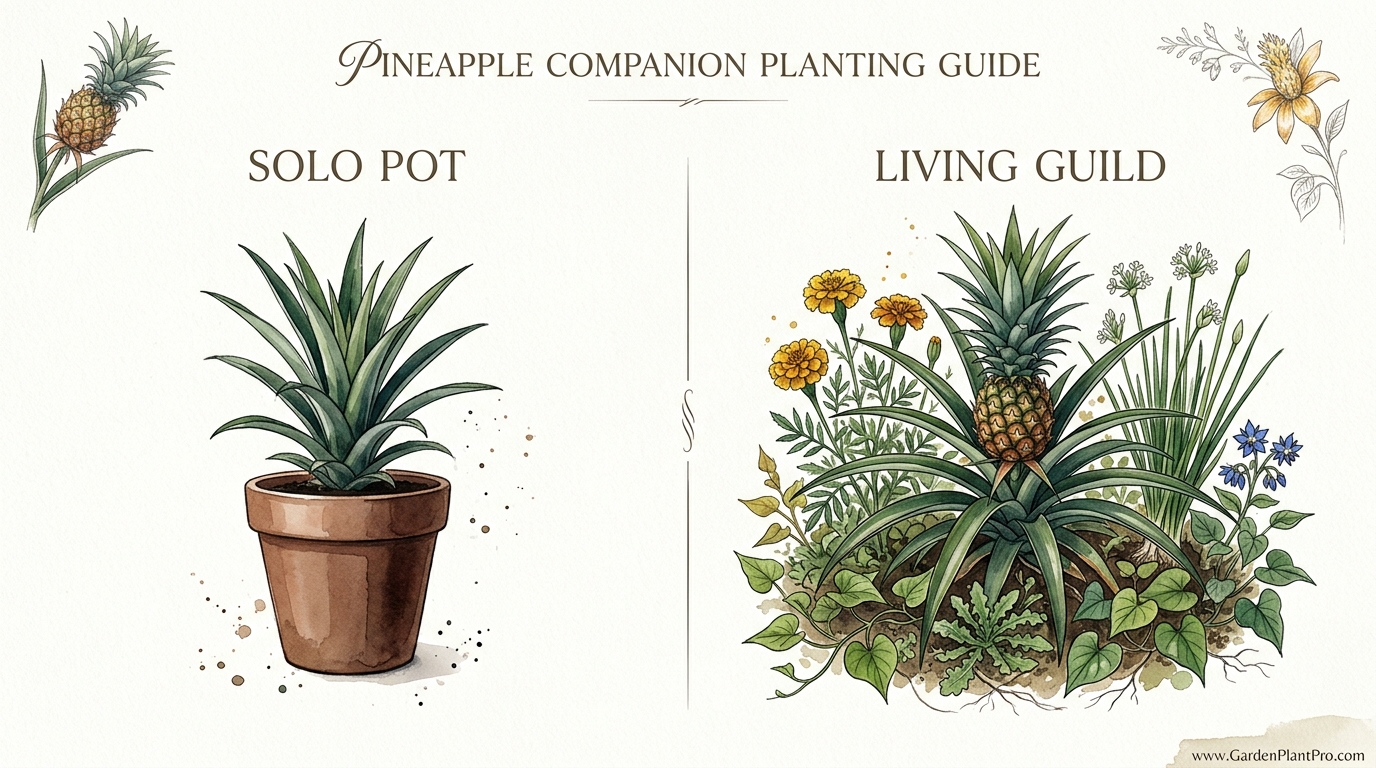
A pineapple grown in a pot is on life support; a pineapple grown in a guild is a self-sustaining powerhouse. In nature, pineapples don’t grow in sterile, isolated pots. They thrive in a ‘guild’—a community of plants that share nutrients, hold moisture, and deter pests. If your pineapple leaves are turning yellow, it’s not looking for more chemical fertilizer; it’s looking for friends. See how an integrated system produces fruit twice the size of the ‘standard’ potted method.
Whenever a neighbor asks me why their potted pineapple looks like a spindly yellow toothpick, I tell them the same thing: you’re treating a social creature like a hermit. Back in the day, we used to just stick a crown in the dirt and hope for the best. But after decades of watching how these plants behave in a real garden setting, I’ve learned that a lone pineapple is a vulnerable pineapple.
Creating a living guild around your pineapple isn’t just about making the garden look “bushy.” It is about mimicry. We are trying to copy the forest floor of South America, where the Ananas comosus first learned to grow. In that world, there are no plastic pots or bags of 10-10-10 fertilizer. There are only falling leaves, nitrogen-fixing neighbors, and aromatic herbs that keep the bugs guessing.
In this guide, I’m going to walk you through how to move past the “solo pot” mentality. We will look at which plants actually pull their weight in a pineapple patch and how to arrange them so they work for you, instead of competing for the same bit of dirt. Whether you have a small tropical corner or a greenhouse in a cooler climate, this integrated approach will change how you look at this royal fruit.
Pineapple Companion Planting Guide
A pineapple companion planting guide is essentially a blueprint for a miniature ecosystem. Instead of a single plant sitting in a sea of woodchips or bare soil, we surround the pineapple with a supporting cast of characters. In the world of permaculture, we call this a “guild.” Every plant in this group must earn its keep by performing at least one of four major jobs: feeding the soil, protecting the plant from pests, managing moisture, or acting as a “trap” for mulch.
Pineapples are unique because they are part of the Bromeliad family. This means their root systems are surprisingly small and shallow compared to the size of the plant. They aren’t great at “reaching out” to find nutrients in the distance. Instead, they rely on what falls into their center rosette and what is available in the top few inches of soil. This is why companion planting is so effective—if you plant a “feeder” nearby, the pineapple can benefit from the nutrient runoff and soil biology created by its neighbor without their roots getting into a wrestling match.
We typically use these guilds in areas where the soil might be a bit sandy or lacking in organic matter. Because pineapples love acidic soil with a pH between 4.5 and 6.5, we choose companions that thrive in those same conditions. You’ll see these guilds used everywhere from commercial organic farms in Costa Rica to backyard “food forests” in Florida and Australia. The goal is always the same: reduce the need for human intervention (like watering and spraying) by letting the plants look after each other.
The Main Roles in a Pineapple Guild
- The Nitrogen Fixer: These are plants that take nitrogen from the air and “fix” it into the soil through their roots. Since pineapples are heavy nitrogen feeders during their vegetative stage (the first 12–18 months), these are non-negotiable.
- The Living Mulch: Ground covers that shade the soil, keeping it cool and moist. This is vital because pineapple roots are sensitive to the intense heat of bare tropical soil.
- The Pest Deterrent: Aromatic plants that confuse mealybugs and thrips, or attract the beneficial insects (like ladybugs) that eat them.
- The Accumulator: Deep-rooted plants that pull minerals like potassium and zinc up from the subsoil. When these plants drop their leaves, they “top-dress” the pineapple with a natural vitamin boost.
How to Build Your Pineapple Guild Step-by-Step
Setting up a guild isn’t complicated, but it does require a bit of planning regarding spacing. You don’t want to crowd your pineapple so much that you can’t reach in to harvest the fruit without getting scratched to ribbons by those spiky leaves. Generally, you want to leave about 30 cm to 60 cm (12 to 24 inches) of “breathing room” directly around the base of the pineapple before the taller companions start.
Step 1: Choose Your Centerpiece
Start with a healthy pineapple crown or a “sucker” (the little pups that grow from the base of an older plant). If you’re using a crown from a store-bought fruit, let it dry out for a few days so the base callouses over. This prevents rot. Plant it in a spot that gets at least 6 to 8 hours of sunlight. In very hot climates, a little bit of afternoon shade from a taller companion—like a banana leaf—can actually prevent the fruit from “sunburning.”
Step 2: Plant the Ground Cover (The Living Mulch)
Once your pineapple is in the ground, plant a low-growing cover around it. Sweet potato is a classic choice. It spreads quickly and creates a thick green carpet that smothers weeds. Another great option is the perennial peanut (Arachis glabrata), which is a fantastic nitrogen fixer and stays very low to the ground. If you’re in a cooler area, white clover works well too. Space these about 45 cm (18 inches) away from the pineapple center so they have room to crawl.
Step 3: Add the Pest Guard (The Aromatics)
Mealybugs are the arch-nemesis of the pineapple. They are often brought in by ants who “farm” them for their sweet honeydew. To combat this, plant garlic, chives, or lemongrass around the perimeter of the guild. The strong scents of these plants can disrupt the ant trails. I like to tuck a few cloves of garlic just outside the reach of the pineapple’s lower leaves. Marigolds are also excellent for deterring soil-borne nematodes that can stunt the pineapple’s growth.
Step 4: Integrate the “Accumulators” and “Feeder” Plants
Around the outer edge of your guild (about 1 meter or 3 feet away), you can plant larger companions like Comfrey or Pigeon Pea. Comfrey is a “dynamic accumulator” with deep taproots that bring up potassium—exactly what a pineapple needs to make its fruit sweet. You “chop and drop” the comfrey leaves, laying them right on top of the soil near the pineapple. Pigeon peas are hardy shrubs that provide light shade and drop nitrogen-rich leaves as natural mulch.
The Measurable Benefits of the Guild Approach
Switching from a pot to a guild isn’t just about philosophy; the results are visible in the harvest. A lone pineapple in a pot often produces a fruit the size of a large grapefruit. In a well-managed guild, I’ve seen fruits reach 2 kg to 3 kg (4.5 to 6.5 lbs) with much deeper, more complex sugar profiles. This happens because the plant isn’t stressed by fluctuating soil temperatures or “hunger pangs” between fertilizing sessions.
One of the biggest advantages is the moisture retention. A pineapple in a black plastic pot can reach root temperatures of 40°C (104°F) on a summer day, which effectively shuts down the plant’s metabolism. In a guild, the living mulch keeps the soil 10 to 15 degrees cooler. This means the plant keeps growing even during the hottest part of the day. You’ll also notice that you spend significantly less time weeding. A thick cover of sweet potato or clover leaves no room for “opportunistic” weeds like nutgrass or crabgrass to take hold.
The biological pest control is another major win. In a monoculture, if one pineapple gets mealybugs, they all do. In a guild, the variety of plants attracts predatory wasps, ladybugs, and spiders. These “good guys” keep the pest population below the threshold where they cause real damage. You’re essentially hiring a full-time security team for your fruit, and all they ask for in return is a little nectar from your companion flowers.
Challenges and Common Mistakes
The most frequent error I see gardeners make is over-crowding the center. Remember that a mature pineapple plant can have a “wing-span” of over 1 meter (3.3 feet). If you plant your companions too close, they will compete for the very limited root space the pineapple has. Always give the pineapple at least a 30 cm (1-foot) radius of clear, mulched space before the other plants take over. If you don’t, you might find the “friends” are actually “strangers” stealing the pineapple’s dinner.
Another pitfall is using invasive companions. While mint is a great pest deterrent, it can be a nightmare in a pineapple guild because its runners will weave right through the pineapple’s base, making it impossible to remove without pulling the fruit out too. Stick to clumping herbs or easy-to-pull ground covers. I also warn people about over-shading. Pineapples are sun-worshippers at heart. If your “tall” companions like bananas or pigeon peas grow too fast and block out the sun entirely, your pineapple will take 3 years to fruit instead of 18 months, and the fruit will be sour.
Finally, watch out for nutrient theft. If you plant “hungry” neighbors like heavy-feeding vegetables (tomatoes or corn) right next to a pineapple, the pineapple will lose every time. The goal of a guild is mutual support, not competition. Choose companions that have different root depths and different peak feeding times than your pineapple.
Limitations: When the Guild Isn’t the Best Choice
There are times when a guild might not be the most practical setup. If you live in a region where you get hard freezes (below 0°C or 32°F), you will likely need to move your pineapples indoors for the winter. In this case, a guild is difficult to manage. Trying to lug a 100-liter (25-gallon) “ecosystem” into a living room isn’t most people’s idea of a good time. For these “fringe” climates, a modified large pot guild is a better compromise—using a wide whiskey barrel instead of a narrow pot to allow for a few small companions like chives and a low succulent ground cover.
DIY PROJECT: Collect rainwater no matter where you live...
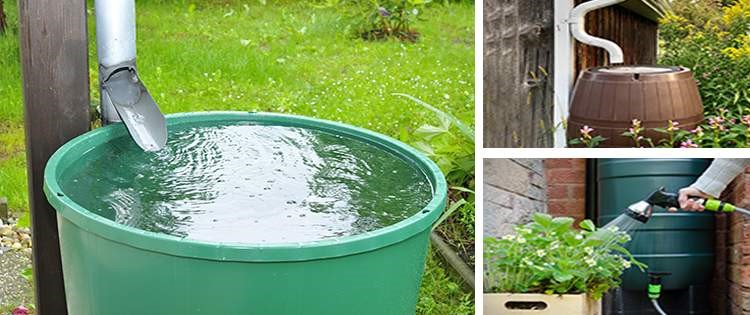
This DIY project is the best way to legally collect rainwater NO MATTER where you live. Get chlorine-free water, cut down on your water bills, and have enough for an emergency situation or to water your garden. Read More Here...
Another limitation is extremely heavy clay soil. Pineapples hate “wet feet” and are prone to root rot (Phytophthora) if the water sits for too long. If your garden is a swamp after a rain, a guild in the ground will likely fail. In these situations, you’re better off building a “raised mound” or a large container system where you can control the drainage. The guild concept still works, but you have to build the “house” (the drainage) before you invite the “guests” (the companions).
Comparing the Systems: Pot vs. Guild
To help you decide which way to go, look at this breakdown of how the two methods usually perform in a home garden setting. This isn’t about which one is “correct,” but which one fits your available time and climate.
| Feature | The Solo Pot (Life Support) | The Living Guild (Powerhouse) |
|---|---|---|
| Fertilizer Needs | High (Requires frequent liquid feeding) | Low (Self-fertilizing via nitrogen fixers/mulch) |
| Watering Frequency | Daily or every other day in summer | Weekly (or less once established) |
| Average Fruit Size | 0.5 kg – 1.0 kg (1.1 – 2.2 lbs) | 1.5 kg – 3.0 kg (3.3 – 6.6 lbs) |
| Pest Management | Manual spraying or picking bugs | Natural balance via predatory insects |
| Maintenance | Low initial setup, high ongoing care | High initial setup, low ongoing care |
Practical Tips for Success
If you’re just starting your first guild, keep these veteran tips in mind. They’ll save you a lot of scratched arms and frustration down the line.
- Use the “Banana Secret”: There is an old gardener’s tale that planting pineapples near bananas makes them sweeter. While there is no magic to it, the bananas provide a perfect micro-climate: high humidity, dappled shade, and a massive amount of organic matter from old leaves. If you have the space, plant your pineapple guild on the sunny south side of a banana clump.
- Control the Ants, Control the Mealybugs: If you see ants marching up your pineapple, the mealybugs aren’t far behind. Instead of using chemicals, try Diatomaceous Earth around the base of the plant or plant a “moat” of peppermint. Peppermint is strong, so keep it in a sunken pot if you don’t want it taking over the whole yard.
- The Zinc Factor: If your pineapple leaves start looking twisted or “crinkly” (a condition called Crookneck), it’s usually a zinc deficiency. You can fix this naturally by using a mulch made of chopped seaweed or by planting companions that accumulate trace minerals, like borage.
- Harvesting Safety: Always wear long sleeves and gloves when working in a pineapple guild. By the time the fruit is ready, the patch will be thick. The “Living Mulch” can hide the fact that you’re stepping into a spiky situation.
Advanced Considerations: Scaling and Successions
For those of you who want to go beyond a single fruit, you need to think about the “Ratoon Crop.” A pineapple plant only fruits once from its main center. However, it will produce “suckers” and “slips” after the harvest. In a guild, you have the space to let one or two of these suckers stay attached to the mother plant. This “ratoon” crop will fruit much faster than a new crown—sometimes in as little as 12 months. In a pot, there’s rarely enough room for this, but in a guild, you can create a perpetual “pineapple patch” that produces fruit every season.
Consider vertical stacking if you have a larger tropical garden. A pineapple guild can actually be the “understory” for a larger fruit tree like an avocado or a mango. The tree provides the canopy, the pigeon peas provide the mid-story, and the pineapples and sweet potatoes provide the ground layer. This is the ultimate expression of the guild concept—maximum calories per square meter with minimum external input. Just ensure the tree’s canopy is pruned enough to let 50% of the sunlight through to the pineapple layer.
Real-World Example: The “South-Side” Guild
Let’s look at a typical successful setup in a subtropical backyard (Zone 10a). A gardener plants three pineapple crowns in a triangle, spaced 50 cm (20 inches) apart. In the center of the triangle, they plant a single Lemongrass plant to keep pests away. Around the outside of the triangle, they scatter Sweet Potato cuttings. On the windy side of the patch, they plant a row of Pigeon Peas to act as a windbreak and a source of nitrogen.
During the first six months, the gardener waters once a week. By month twelve, the sweet potato has covered the ground completely, and the lemongrass is a thick clump. The gardener “chops” the lemongrass twice a year, throwing the leaves right onto the pineapples as mulch. At eighteen months, the gardener harvests three large, sun-ripened pineapples. They remove the old “mother” plants but leave one “sucker” on each. The guild continues, and the next harvest is even larger because the soil has been built up by two years of “living mulch.”
Final Thoughts
A pineapple grown in a guild isn’t just a plant; it is the center of a small, thriving world. By moving away from the isolated pot and embracing the complexity of a plant community, you are working with nature instead of fighting against it. You’ll find that the garden begins to take care of itself. The soil stays richer, the pests stay away, and the fruit—that glorious, golden reward—tastes like nothing you can find in a grocery store.
Don’t be afraid to experiment with your local plants. The best “companion” for your pineapple might be a native herb or a local wildflower that I haven’t mentioned here. The core principle remains: give your pineapple friends that feed it and protect it. Once you see the difference in the health of your plants and the size of your harvest, you’ll never want to go back to “life support” gardening again. Get your hands in the dirt, plant a few neighbors, and watch your pineapple powerhouse take off.