
One harvest or ten? The way you pick your spinach determines how much you’ll eat this season. Don’t kill the golden goose. Learn the strategic ‘Cut and Come Again’ method to keep your spinach bowl full all spring without replanting.
Walking into the garden with a harvest basket is one of the best feelings in the world, but it can also be the end of your spinach patch if you aren’t careful. Most folks think of harvesting as a final act—you plant, you grow, you pull. But spinach is a generous plant if you treat it like a friend rather than a grocery store shelf. When you understand the natural rhythm of how these greens grow, you can turn a single row into a season-long buffet.
Growing spinach is all about managing its desire to finish its life cycle quickly. This plant is a cool-season specialist, thriving when the air is crisp and the soil is damp. If you can master the art of the selective harvest, you aren’t just taking food; you are actually stimulating the plant to produce even more. It’s a bit like a haircut—do it right, and it comes back thicker and stronger.
How To Harvest Spinach For Continuous Growth
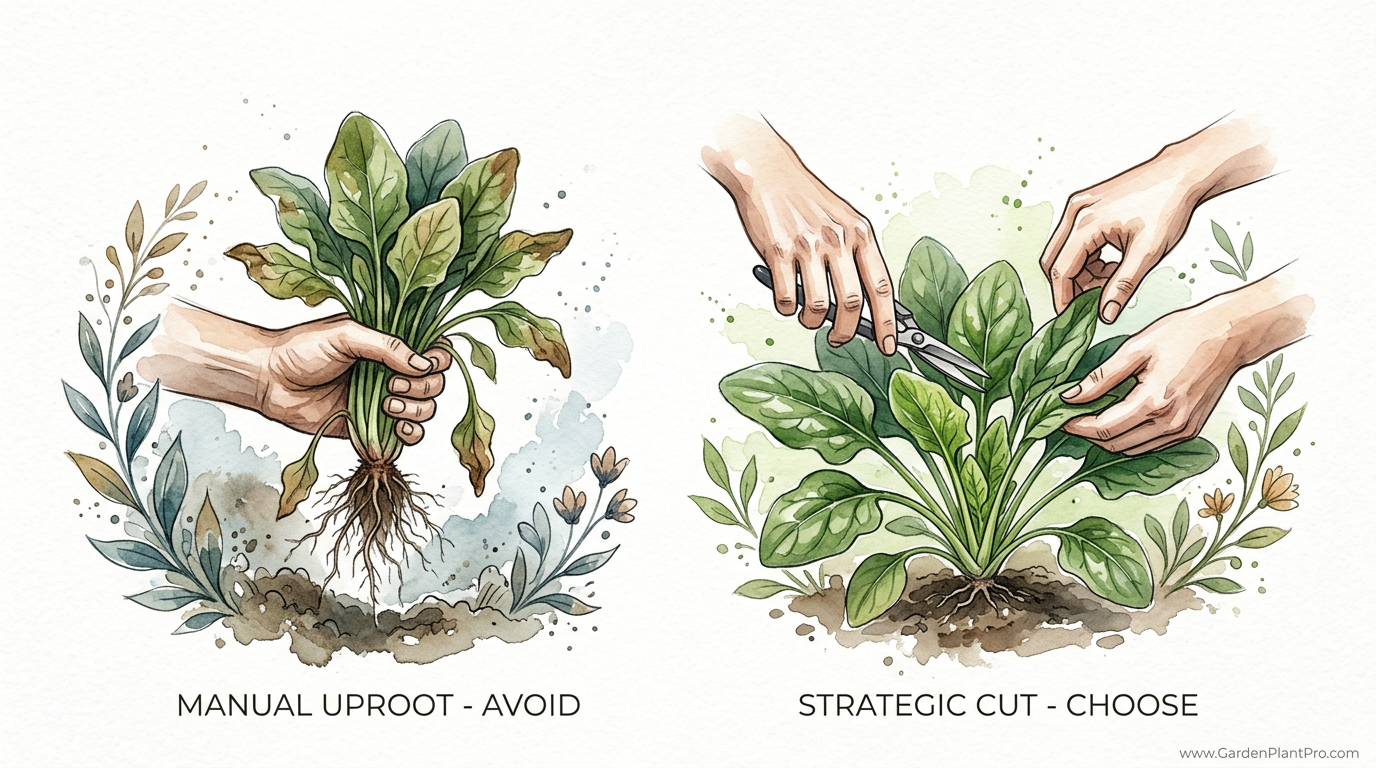
The “Cut and Come Again” method is a strategy where you harvest only the mature, outer leaves of the spinach plant while leaving the central “heart” or crown untouched. This technique exploits the plant’s natural growth pattern, where new leaves emerge from the center of the rosette. By removing the older leaves, you allow the younger ones to receive more light and resources, encouraging the plant to keep pumping out fresh greens.
In a real-world garden setting, this means you can start eating from your plants much earlier than if you waited for the whole head to mature. You might start snipping baby leaves when they are only 2 to 3 inches (5 to 7.5 cm) long, or wait until they are heartier 6-inch (15 cm) leaves. The key is that the plant stays in the ground, its roots remain undisturbed, and its photosynthetic engine keeps running.
This approach is widely used by market gardeners and backyard enthusiasts who want to maximize a small space. Instead of having a “one-and-done” harvest that leaves a bare patch in the garden, you have a steady, manageable supply that fits perfectly into daily cooking. Whether you’re tossing a handful into a morning smoothie or wilting a whole basket for a Sunday dinner, the continuous growth method ensures there is always something ready to pick.
How to Do It: Step-by-Step Selection
To get this right, you need to approach the plant with a little bit of patience and a sharp pair of tools. I’ve seen many a gardener ruin a healthy crop by getting too aggressive with their tugging.
1. Identify the Mature Leaves
Look at your spinach plant as a target. The oldest leaves are on the outside of the circle, lying closest to the soil. These are the ones you want. They have done their job of powering the plant’s early growth and are now ready for the kitchen. The leaves in the very center are tiny, often lighter green, and bunched tightly together. Leave those alone. That is the factory where new growth happens.
2. Use the Right Tools
While you can pinch spinach stems with your fingernails, I always recommend a clean pair of garden snips or sharp kitchen scissors. A clean cut heals faster than a jagged tear. Snapping the stems by hand can sometimes pull on the shallow roots, especially in loose, sandy soil, which stresses the plant and slows down its regrowth.
3. The One-Third Rule
This is the golden rule of harvesting anything leafy. Never take more than one-third (33%) of the plant’s total foliage at one time. The plant needs those remaining leaves to catch sunlight and create the energy required to grow new ones. If you “bald” the plant, it may go into shock or decide it’s time to bolt (produce seeds) because it thinks it’s under attack.
4. Cutting Height
Aim to snip the stem about 1 inch (2.5 cm) above the soil line or the base of the plant. You want to leave enough of the stem to protect the crown but not so much that the leftover “stubs” rot and attract pests. If you are harvesting for baby spinach, you can be a bit more uniform, but for mature leaves, individual selection is best.
Benefits of the Continuous Harvest
Choosing this method over a total uprooting offers several practical advantages that I’ve noticed over years of trial and error in the beds.
- Extended Season: You can keep a single planting productive for several weeks, or even months, depending on the weather.
- Better Flavor: Smaller, younger leaves are naturally sweeter and more tender. When you harvest frequently, you are always eating the plant at its peak quality.
- Space Management: You don’t need to dedicate massive amounts of space to succession planting if your current plants are still producing.
- Freshness: There is no better way to avoid “slimy bag syndrome” than by picking only what you need ten minutes before you eat it.
Regularly thinning the outer leaves also improves air circulation around the base of the plant. This is a big deal in the garden because it helps prevent Downy Mildew and other fungal issues that thrive in stagnant, damp environments.
Challenges and Common Mistakes
Even the best-laid plans can go sideways if you miss a few key details. The most common mistake I see is gardeners waiting too long to start. If the leaves get too big, they can become tough and slightly bitter. Start early and harvest often.
Another pitfall is ignoring the weather. Spinach is sensitive to heat. If you see the central stem starting to stretch upward and the leaves becoming more triangular or “pointed,” the plant is bolting. Once bolting starts, the energy shifts from leaf production to seed production, and the leaves will turn bitter. At that point, the “Cut and Come Again” method won’t help; it’s better to harvest the whole plant and clear the spot for something else.
Inconsistent watering is also a silent killer of regrowth. After you harvest, the plant needs a boost of moisture to recover. If the soil dries out right after a heavy picking, the plant may stall out and fail to produce that second or third flush of leaves you’re looking for.
Limitations: When This May Not Be Ideal
While I love the continuous harvest, it isn’t the solution for every situation. There are times when a whole-plant harvest is the better move.
If you are planning to freeze or blanch a massive amount of spinach for winter storage, the slow-and-steady method might be frustrating. In that case, planting a specific row for “clear-cutting” makes more sense. You wait until the plants are full-sized, cut them all at once, and process them in one big batch.
Environmental factors also play a role. If you are late in the spring and a heatwave is forecasted (temperatures hitting 80°F / 27°C or higher), the plants will likely bolt regardless of how you harvest them. In these “high-stress” windows, it’s often better to take the whole crop while it’s still edible rather than trying to coax more growth out of a plant that is ready to quit.
Comparing Harvest Techniques
It helps to see how the two main methods stack up against each other so you can decide which fits your schedule and kitchen needs.
DIY PROJECT: Collect rainwater no matter where you live...
This DIY project is the best way to legally collect rainwater NO MATTER where you live. Get chlorine-free water, cut down on your water bills, and have enough for an emergency situation or to water your garden. Read More Here...
| Feature | Strategic Cut (Continuous) | Manual Uproot (Whole-Plant) |
|---|---|---|
| Total Yield | Higher over time (multiple flushes) | Lower (single harvest) |
| Effort Level | Moderate (requires regular visits) | Low (one-time job) |
| Kitchen Use | Ideal for salads and daily cooking | Ideal for preserving/bulk recipes |
| Garden Space | Stays occupied for 6-8 weeks | Cleared quickly for next crop |
Practical Tips and Best Practices
If you want to maximize your success, keep these veteran tips in mind during your next garden session:
- Time of Day: Always harvest in the early morning. Overnight, the plants rehydrate and the leaves become turgid (crisp). If you pick in the heat of the afternoon, the leaves will be wilted and won’t last as long in the fridge.
- Post-Harvest Feed: After a significant harvest, consider giving the plants a light dose of high-nitrogen liquid fertilizer, like fish emulsion. This provides the “fuel” needed for the next round of leaves.
- Mulching: Keep a layer of clean straw or shredded leaves around the base. This prevents soil from splashing onto the leaves during rain, which makes cleaning your harvest much easier and keeps the roots cool.
- Clean as You Go: When picking, keep a second “discard” bucket with you. If you see yellowed or damaged leaves, snip them off and toss them in the compost. Don’t leave them on the plant to drain its energy.
I’ve found that variety selection matters just as much as technique. Heirloom varieties like ‘Bloomsdale Long Standing’ are famous for their ability to handle the “Cut and Come Again” method without bolting immediately. If you prefer smooth leaves that are easier to wash, look for ‘Seaside’ or ‘Space,’ which both offer great regrowth potential.
Advanced Considerations for Serious Growers
For those looking to push their spinach patch to the limit, consider succession planting within the same bed. Rather than planting all your seeds at once, sow a new short row every 10 to 14 days. This ensures that as your oldest plants finally reach the end of their lifespan and bolt, your middle-aged plants are in their prime, and your youngest seedlings are just beginning their first harvest.
Another advanced move is overwintering. In many regions, if you plant spinach in late autumn and protect it with a cold frame or heavy frost cloth, the plants will go dormant during the coldest months. When the first hint of spring light returns, these established plants will explode with growth, giving you a “Cut and Come Again” harvest weeks before your neighbors have even started their seeds.
Example Scenario: The Raised Bed Garden
Imagine you have a small 4×4 foot (1.2×1.2 meter) raised bed. Instead of planting the whole thing with spinach, you plant two 4-foot rows.
By the fourth week, the plants are 5 inches (12 cm) tall. You spend ten minutes on a Tuesday morning snipping enough outer leaves for a large family salad. You’ve taken about 25% of each plant. You give them a drink of water and walk away.
Ten days later, those same plants have filled back in. You repeat the process. By the time the weather starts to warm up in late spring, you have harvested from those same two rows four separate times. If you had pulled the whole plants on that first Tuesday, you would have had one meal and an empty bed. Instead, you’ve had a month of fresh greens from the same handful of seeds.
Final Thoughts
Mastering the way you harvest spinach is one of those small shifts that changes your entire gardening experience. It moves you away from the “all or nothing” mentality and into a more sustainable, observant relationship with your plants. When you treat your spinach patch as a living resource rather than a finished product, the rewards are measured in colanders full of greens rather than just a single bag.
Don’t be afraid to experiment. Try the selective harvest on half your crop and compare it to the other half. You’ll quickly see that “not killing the golden goose” is the fastest way to a full plate. Gardening is often about knowing when to take and when to leave, and with spinach, leaving just a little bit behind ensures the harvest continues long into the season.
As you get more comfortable with this, you might find yourself applying the same “Cut and Come Again” logic to other garden favorites like kale, Swiss chard, and even certain herbs. It’s all part of becoming a more efficient, thoughtful grower who works with nature instead of against it. Experiment with different varieties, keep your soil healthy, and enjoy the freshest spinach you’ve ever tasted, one leaf at a time.