
Are you spending hours doing a job that the bees would do for free in seconds? We spent years trying to hand-pollinate every single blossom. Then we realized the ‘Strategic’ way is better for us and the garden. By planting the right companions, you turn your garden into a self-pollinating machine.
Pull up a chair and let’s talk about the secret to those heavy, glossy eggplants you see in the prize-winning photos. Most folks think you just put a plant in the ground and hope for the best, but eggplants are a bit more particular than your average tomato. They have a specific way of “talking” to the wind and the bees that many gardeners miss.
Getting a massive yield isn’t about working harder; it is about working with the plant’s natural rhythm. Once you understand the mechanics of how an eggplant flower actually works, you will stop wondering why your blossoms are hitting the dirt and start wondering where you are going to store all that extra harvest.
Eggplant Pollination Techniques For Massive Yields
Eggplant pollination is the process of moving pollen from the male parts of a flower to the female parts to trigger fruit development. These plants belong to the Solanaceae family, the same group as tomatoes and peppers. This means they produce “perfect” flowers, which contain both male and female reproductive organs in a single blossom.
In a perfect world, eggplants are self-pollinating. A little bit of wind or a passing bee should be enough to knock the pollen loose and get the job done. However, eggplants have a unique challenge: their pollen is tucked away inside tube-like structures called anthers. Unlike many other flowers where the pollen is just sitting out in the open, eggplant pollen only comes out through tiny pores at the tips of these tubes.
This design is why we often see plenty of beautiful purple flowers but very few actual eggplants. If the air is too still, or if the local bee population isn’t the right “type,” the pollen stays trapped inside those tubes. Manual labor often becomes necessary when the strategic design of your garden isn’t quite meeting the plant’s needs. Understanding this biological “lock and key” system is the first step toward ensuring every flower on your plant turns into a heavy, delicious fruit.
The Biology of the Bloom
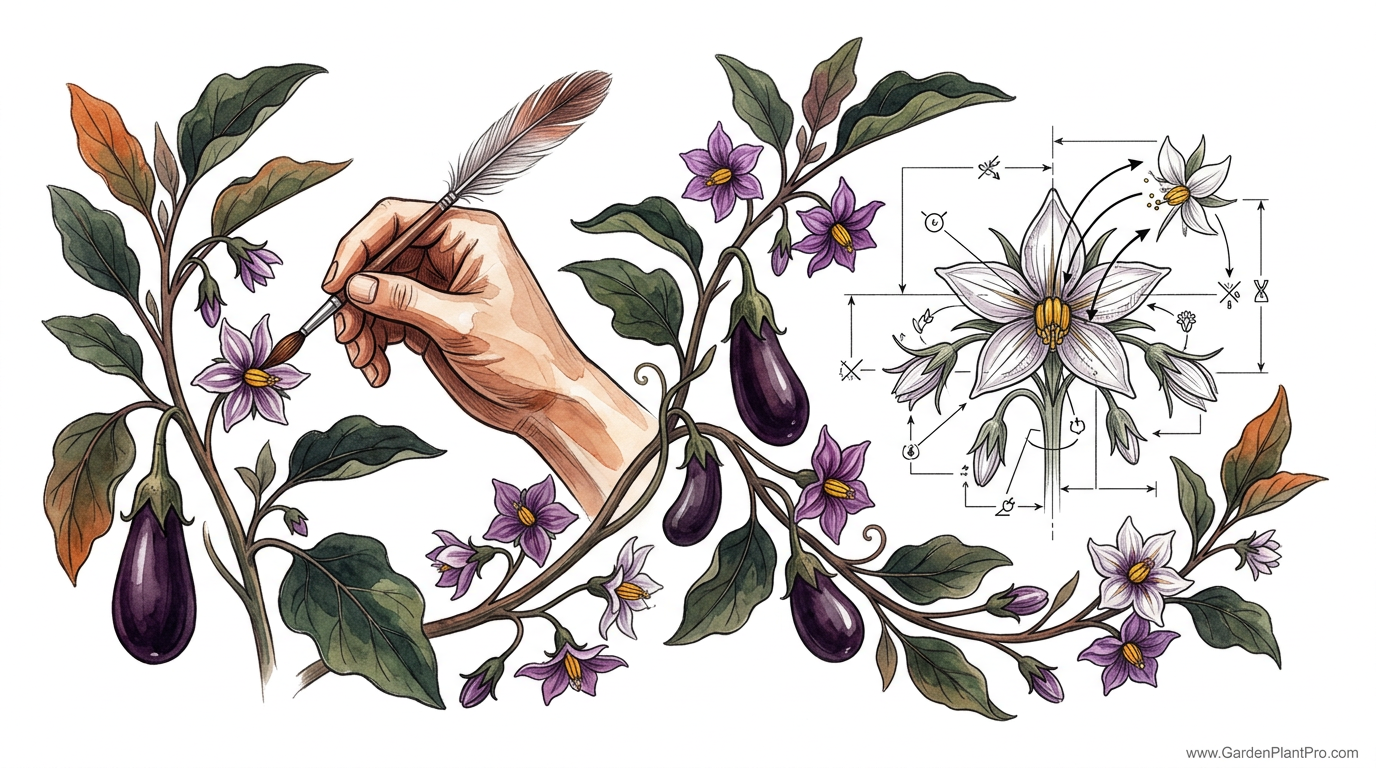
Each eggplant flower consists of a female pistil (the center part) and several male stamens surrounding it. The very tip of the pistil is called the stigma, and this is the landing pad for the pollen. For a fruit to form, the pollen must travel from the pores of the anthers onto that sticky stigma.
Interestingly, not all eggplant flowers are created equal. If you look closely at your plants, you might notice some flowers have a long “tail” (the style) sticking out past the yellow center, while others have a very short one that is tucked away. Research shows that long-styled flowers have a much higher success rate—often between 50% and 100%—whereas short-styled flowers are frequently infertile. When a plant is stressed by heat or lack of water, it starts producing more of those short-styled, “lazy” flowers that will never produce fruit.
The Magic of Buzz Pollination
Nature has a specialized tool for opening the “pollen vault” of an eggplant: the bumblebee. Unlike honeybees, which simply crawl over flowers, bumblebees perform something called “floral sonication” or buzz pollination. The bee grabs the flower and vibrates its wing muscles at a frequency of 200–400 Hz. This high-speed shaking creates a cloud of pollen that bursts out of the anther pores and coats the bee—and the flower’s stigma.
Honeybees generally cannot do this. If your garden is full of honeybees but your eggplants aren’t producing, it is because those bees lack the specific vibration technique needed to release the pollen. This is where strategic design comes in. You want to attract the “shakers” of the insect world, like bumblebees and carpenter bees, rather than just the “sippers.”
How to Hand-Pollinate: Step-by-Step Techniques
When the weather is too hot or the bees are taking a day off, you need to step in and act as the matchmaker. Hand pollination is simple, but timing is everything. Always aim for the morning hours, specifically between 7:00 AM and 10:00 AM. This is when the flowers are freshest and the pollen is most likely to be dry and loose.
The Vibrating Toothbrush Method
This is the most effective way to mimic a bumblebee. An electric toothbrush creates the exact kind of high-frequency vibration that triggers the “sonication” effect.
- Identify a fully open, healthy-looking purple flower.
- Turn on the electric toothbrush and gently touch the back of the flower or the stem right where it connects to the blossom.
- Hold it there for 2–3 seconds. You might actually see a tiny puff of yellow dust fall out.
- Move to the next flower and repeat. This vibration travels through the plant, often helping nearby flowers even if you don’t touch them directly.
The Tapping and Shaking Method
If you don’t have a toothbrush handy, a simple flick of the finger can work wonders. This is the “manual labor” version of a light breeze.
- Gently grasp the main stem of the plant and give it a firm but careful shake.
- Alternatively, use your pointer finger to “flick” the base of each individual flower 3–5 times.
- Do this every morning during the peak flowering season. This helps gravity pull the heavy pollen down from the anthers onto the stigma.
The Paintbrush Transfer
For those who want to be absolutely certain, or for gardeners growing in a completely enclosed greenhouse, the paintbrush method is the gold standard.
- Use a very soft, small artist’s brush or a cotton swab.
- Gently twirl the brush inside the yellow center of the flower to collect the pollen.
- Dab the collected yellow dust onto the very tip of the center pistil (the stigma).
- To encourage genetic diversity and stronger fruit, move the pollen from a flower on one plant to a flower on a different plant.
Environmental Factors and Garden Conditions
Even the best pollination technique will fail if the environment isn’t right. Eggplants are the “Goldilocks” of the garden; they don’t like it too hot, too cold, or too humid.
Temperature Thresholds
Eggplants thrive in heat, but there is a limit. The ideal range for fruit set is between 21°C and 29°C (70°F–85°F). When temperatures climb above 32°C (90°F), the pollen often becomes sterile or “tacky,” and the plant may drop its blossoms to save energy. Conversely, if night temperatures dip below 15°C (60°F), the pollen won’t germinate properly. In regions with extreme heat, providing afternoon shade can keep the plant’s internal temperature in the “sweet spot” for pollination.
Humidity and Moisture
Humidity plays a massive role in how pollen behaves. If the air is too dry (below 50% humidity), the pollen can dry out and fail to stick to the stigma. If it is too humid (above 70%), the pollen gets “clumpy” and won’t fall out of the anther pores. Consistent soil moisture is also vital. A thirsty eggplant will produce short-styled, infertile flowers as a defense mechanism. Aim for at least 5 cm (2 inches) of water per week, delivered in deep soakings rather than light sprinkles.
Benefits of Strategic Pollination
Choosing a strategic approach over simple “hope and pray” gardening offers several measurable advantages:
- Increased Fruit Size: Well-pollinated flowers produce fruits with more seeds, which actually signals the plant to grow a larger, meatier eggplant.
- Better Fruit Shape: Poor pollination often leads to lopsided or stunted fruits. Even distribution of pollen ensures a uniform, “grocery store perfect” look.
- Earlier Harvest: By ensuring the first blossoms of the season set fruit, you can pull your first harvest weeks earlier than if you waited for natural pollinators to find your patch.
- Reliability in Small Spaces: If you are growing on a balcony or in a screened-in porch, hand pollination is the only way to ensure you get a crop at all.
Common Mistakes to Avoid
One of the most frequent errors I see is over-fertilizing with nitrogen. It is tempting to dump “miracle” feeds on the soil, but too much nitrogen tells the plant to grow massive, lush green leaves while completely ignoring the need to make flowers. If your plant looks like a jungle but has no blooms, back off the nitrogen and switch to a fertilizer higher in Phosphorus (P) and Potassium (K).
Another pitfall is ignoring the “first drop.” It is perfectly normal for a plant to drop its very first one or two blossoms. Don’t panic and start changing everything. However, if the drop continues into the second week of flowering, it is time to check your watering schedule or start the manual vibration techniques.
DIY PROJECT: Collect rainwater no matter where you live...
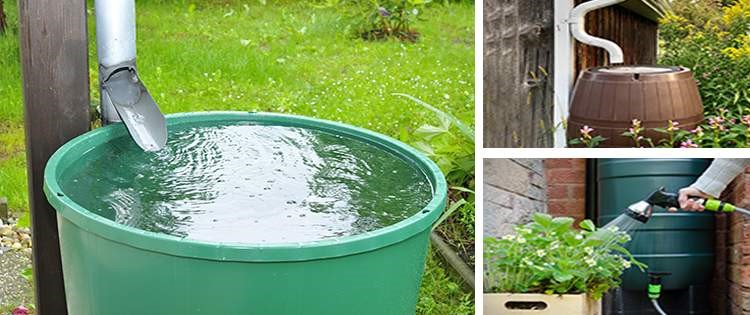
This DIY project is the best way to legally collect rainwater NO MATTER where you live. Get chlorine-free water, cut down on your water bills, and have enough for an emergency situation or to water your garden. Read More Here...
Comparison: Hand Pollination vs. Natural Pollination
| Factor | Natural (Wind/Bees) | Hand Pollination |
|---|---|---|
| Effort Level | Zero manual labor. | Requires 5–10 minutes daily. |
| Reliability | Depends on weather and insects. | Extremely high, even in bad weather. |
| Yield Potential | Variable (2–5 fruits per plant). | High (often 8+ fruits per plant). |
| Cost | Free. | Cost of a brush or toothbrush. |
| Best Use Case | Large, open fields with high bee activity. | Greenhouses, urban gardens, small patches. |
Practical Tips and Best Practices
If you want to maximize your success, think about the “Strategic Design” of your garden layout. Don’t just plant eggplants in a lone corner. Group them together so the vibration of one plant can easily influence another.
Always use mulch. A thick layer of straw or wood chips (about 5–7 cm or 2–3 inches) helps regulate soil temperature and keeps humidity levels around the plant more stable. This prevents the “pollen clumping” that happens during sudden spikes in humidity.
Check your plants every morning. I like to walk through with my coffee and give the stems a little “hello” shake. It takes almost no time and makes a massive difference in how many fruits actually stick.
Advanced Considerations for Serious Growers
For those looking to scale up, consider the variety you are growing. Traditional large Italian varieties like ‘Black Beauty’ can be more sensitive to heat than smaller, slender varieties like ‘Ichiban’ or ‘Fairy Tale.’ These smaller Asian types often set fruit more reliably in difficult conditions because they produce a higher volume of flowers and require less energy to mature each fruit.
You might also look into “hormone sprays,” which some commercial growers use to prevent blossom drop. However, as an experienced gardener, I find that healthy soil and proper hand pollination usually make these chemicals unnecessary. Focus instead on the “Brix” level of your plants—high sugar content in the sap, achieved through mineral-rich soil, makes the flowers more attractive to the bees you want.
Companion Planting for Natural Success
The most “strategic” way to pollinate is to let the garden do the work for you. By surrounding your eggplants with specific companions, you create an irresistible hub for buzz-pollinators.
- Borage: Often called the “bee bread,” borage produces blue flowers that are magnetic to bumblebees. It is the single best plant to have near your eggplants.
- Basil: Not only does it repel certain pests, but its flowers attract a variety of beneficial insects. Many gardeners swear it makes the eggplants taste better, too.
- Marigolds: These are essential for soil health, as they deter root-knot nematodes that can weaken eggplant roots and lead to poor flowering.
- Oregano and Thyme: When these herbs go to flower, they provide a constant source of nectar for small predatory wasps and bees that help with pollination.
Examples and Scenarios
Let’s look at a real-world scenario. Imagine you have a small garden in a city with high walls. Because the walls block the wind, the air in your garden is stagnant. You have beautiful ‘Long Purple’ eggplants, but every flower just dries up and falls off.
In this situation, the “Strategic Design” fix is to add a pot of Borage nearby to lure in the bees. The “Manual Labor” fix is to spend 30 seconds every morning tapping the stems with an electric toothbrush. Within 10 days, you will likely see the base of the flowers starting to swell—that is the sign that the ovary has been fertilized and a fruit is on the way.
Final Thoughts
Mastering eggplant pollination is a journey from being a frustrated observer to a confident participant in your garden’s lifecycle. It starts with understanding that these plants aren’t just looking for water and sun; they are looking for the right kind of movement to unlock their potential.
Whether you choose to act as the “bee” yourself with a toothbrush or design your garden to attract the local bumblebee population, the results will be evident in your kitchen. There is nothing quite like the weight of a basket full of home-grown eggplants, knowing that you worked with nature to make it happen.
Keep experimenting and keep observing. Every garden has its own unique microclimate, and your eggplants will tell you exactly what they need if you know how to look at their flowers. Happy gardening, and may your harvest be the heaviest one yet!