
The biggest secret in gardening is that you never actually have to buy the same plant twice. Your local nursery wants you to believe that a beautiful garden requires a massive credit card limit. By mastering simple propagation techniques like division and layering, you can turn one $15 investment into a lifetime supply of free plants. Here is how to unlock the infinite garden glitch.
Every seasoned gardener eventually realizes that plants are remarkably generous. They want to grow, they want to spread, and they often provide clear signals when they are ready to be multiplied. Most of the perennials and shrubs you see in high-end landscape designs were likely born from just a handful of parent plants. Taking control of this process yourself transforms gardening from an expensive hobby into a sustainable, lifelong craft.
How To Get Free Plants Through Propagation
Propagation is the botanical term for the process of creating new plants. While many people think of seeds when they hear this word, most backyard gardeners find much faster success through asexual propagation. This method uses the existing stems, roots, or leaves of a parent plant to create a genetically identical “clone.” Because these new plants are already mature pieces of a healthy adult, they often establish themselves and bloom much faster than a tiny seedling ever could.
You will find that most plants in your yard fall into two main categories for easy propagation: those that grow in clumps and those that grow with flexible branches. Clump-forming plants, like hostas or daylilies, are perfect candidates for division. Shrubs with long, whippy branches, such as hydrangeas or forsythia, are ideal for layering. Understanding which technique fits which plant is the first step toward a garden that fills itself in for free.
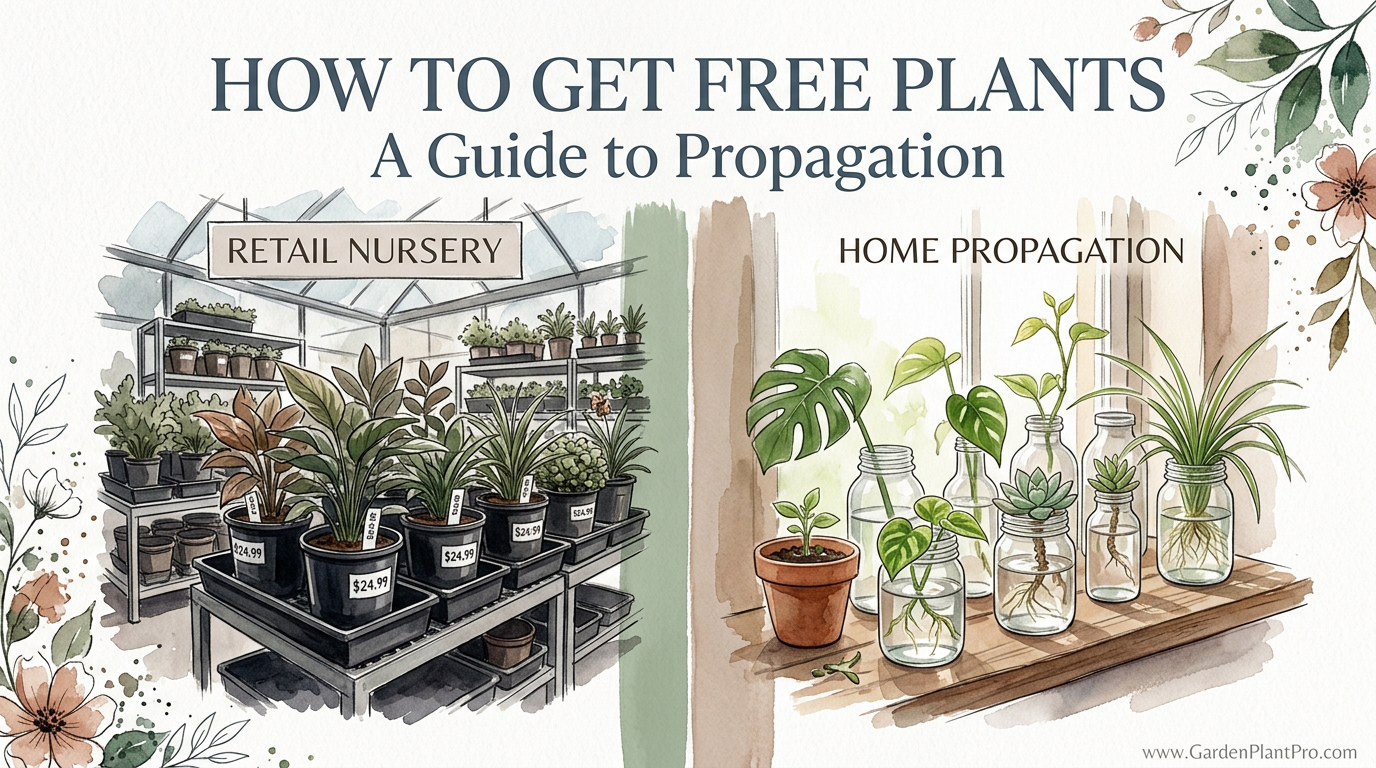
Home propagation allows you to skip the “nursery shock” that often happens when you bring a coddled greenhouse plant into the real-world conditions of your backyard. The plants you propagate on-site are already acclimated to your specific soil, your local pests, and your unique microclimate. This makes them significantly heartier than anything you could buy in a plastic pot.
Mastering the Science of Division
Division is the most immediate way to get two or more large plants for the price of one. This technique involves physically separating a large, established clump into several smaller sections. It is most effective for herbaceous perennials—plants that die back to the ground in winter and return in the spring.
Successful division relies on timing and moisture. You generally want to divide plants when they are not in the middle of their blooming cycle. A plant putting all its energy into flowers has very little left over for repairing root damage. Instead, aim for the “opposite season” rule. If a plant blooms in late summer or fall, divide it in early spring. If it blooms in the spring, wait until the flowers fade or the cooler temperatures of autumn arrive to split it.
Follow these steps for a clean, successful division:
- Water the parent plant thoroughly 24 to 48 hours before you plan to dig. This ensures the root tissues are fully hydrated and easier to separate.
- Dig a wide circle around the base of the plant using a sharp spade. Aim for the “drip line”—the area directly under the outermost leaves—to ensure you capture as much of the root mass as possible.
- Lift the entire root ball out of the ground. Gently shake off excess soil so you can see the “eyes” or growth points on the crown.
- Separate the plant. For soft-rooted plants like coral bells, you can often pull them apart with your hands. For tough, fibrous roots like ornamental grasses or old hostas, you may need to use two garden forks inserted back-to-back, prying them apart to leverage the roots open.
- Replant the new sections immediately at the same depth they were originally growing. Never let the roots dry out in the sun or wind during this process.
The Art of Simple and Tip Layering
Layering is perhaps the most beginner-friendly propagation method because it carries almost zero risk of losing the plant. Unlike cuttings, which are severed from the parent and must survive on their own while trying to grow roots, a layered stem remains attached to the mother plant. It continues to receive water and nutrients through the original root system while it slowly develops its own.
Simple layering works best for shrubs and vines with flexible stems that can reach the ground. To perform this, select a healthy, one-year-old branch. Bend it down until a section about 6 to 12 inches (15 to 30 cm) from the tip touches the soil. Use a sharp knife to make a shallow, 1-inch (2.5 cm) “wound” on the underside of the stem where it hits the dirt. This minor injury triggers the plant to release rooting hormones called auxins.
Pin the wounded section into the soil using a landscape staple or a heavy rock. Ensure the very tip of the branch remains above ground, pointing toward the sky. Within a few months, or sometimes a full growing season, roots will emerge from the wounded area. Once a strong root system is visible, you can sever the new plant from its mother and move it to its permanent home.
Tip layering is a natural variation often seen in blackberries and raspberries. In this case, you simply bury the very tip of a long cane about 3 to 4 inches (7 to 10 cm) deep in the soil. The tip will stop growing leaves and start producing a massive root system and a new “crown.” This is why a single blackberry bush can take over a corner of the yard so quickly if left unmanaged.
Benefits of Propagating Your Own Garden
Choosing home propagation over a retail nursery trip offers several measurable advantages that go beyond the obvious financial savings. While a single gallon-sized perennial might cost between $15 and $25 at a store, a home-propagated plant costs virtually zero. Over a few years, this can save a dedicated gardener thousands of dollars in landscaping costs.
Acclimation is another major factor. Commercial nurseries often grow plants in highly controlled environments with specialized fertilizers and constant irrigation. When you bring those plants home, they frequently struggle to adapt to the “rougher” conditions of a backyard. Propagated plants, however, are born and raised in your specific soil. They are already tuned into your local fungal networks and beneficial insect populations, leading to a much higher long-term survival rate.
Sustainability plays a huge role in the “free plant” philosophy. Every time you propagate at home, you eliminate the need for plastic nursery pots, the carbon emissions from transporting plants across the country, and the risk of introducing “hitchhiking” pests or diseases into your yard. You are essentially creating a closed-loop system where your garden provides its own future generations.
Common Mistakes and How to Avoid Them
Even the most experienced gardeners run into trouble with propagation from time to time. The most frequent error is neglecting moisture levels in the weeks following a division. Because you have physically cut the roots, the plant has a much harder time absorbing water. Check the soil daily and provide a deep soak whenever the top inch (2.5 cm) feels dry. Wilting is a sign of distress that should be addressed immediately with water and, if necessary, temporary shade.
Using blunt or dirty tools is another recipe for disaster. A jagged cut from a rusty spade creates more surface area for bacteria and fungi to enter the plant. Always sharpen your blades before a big day of dividing. Wiping your tools down with 70% isopropyl alcohol between different plants prevents the spread of diseases like mosaic virus or crown rot.
Timing is often the difference between a thriving new plant and a dead clump of roots. Attempting to divide a plant in the middle of a record-breaking heatwave or right before the ground freezes solid in winter puts immense stress on the root system. Aim for those “goldilocks” windows in early spring or mid-autumn when temperatures are mild and rainfall is more consistent.
Limitations of Home Propagation
While the “infinite garden glitch” is powerful, it does have realistic boundaries. Not every plant can be easily divided or layered. Trees with a single, central taproot—like oaks or walnuts—cannot be divided. Shrub varieties that are grafted, such as many high-end roses or fruit trees, will not “come true” if you layer a branch from below the graft union. You might end up with the hardy rootstock plant rather than the beautiful flowering variety you intended to clone.
Environmental constraints also matter. If you live in an extremely arid climate, layering might require constant attention to keep the buried stem moist enough to root. In very cold regions (USDA Zones 1-3), divisions performed in the autumn might not have enough time to establish themselves before the “heaving” effect of frost-thaw cycles pushes them out of the soil. Always factor in your local frost dates when planning your propagation schedule.
DIY PROJECT: Collect rainwater no matter where you live...
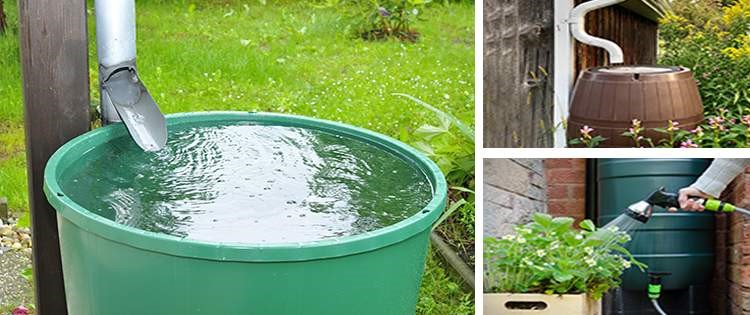
This DIY project is the best way to legally collect rainwater NO MATTER where you live. Get chlorine-free water, cut down on your water bills, and have enough for an emergency situation or to water your garden. Read More Here...
Home Propagation vs. Retail Nursery
| Feature | Home Propagation | Retail Nursery |
|---|---|---|
| Cost per Plant | $0 to $1 (Soil/Water) | $15 to $45+ |
| Acclimation | Perfect; already adapted to local soil | Variable; requires hardening off |
| Risk of Pests | Very Low; you know your garden’s health | Moderate; can bring in “hitchhikers” |
| Speed of Results | Slower (months for roots to form) | Instant (pre-grown and blooming) |
| Skill Required | Moderate; requires practice | Low; just buy and plant |
Practical Tips for Propagation Success
Maximizing your success rate involves a few small “tricks of the trade” that seasoned gardeners use to stack the deck in their favor. One such technique is the use of rooting hormone. While many plants will root just fine without it, a light dusting of auxin powder on a wounded stem or a fresh root division can cut the rooting time in half. If you prefer natural methods, willow water (made by soaking young willow branches in water) contains natural rooting stimulants that work wonders on stubborn shrubs.
Labeling is the most underestimated part of the process. A year after you bury a stem for layering, you might completely forget why there is a rock sitting in the middle of your hydrangea bush. Use durable, weatherproof labels to mark the date and the method used. This helps you track which techniques work best for specific plants in your yard.
Think about the “doughnut” effect when dividing older perennials. As plants like hostas or Siberian irises age, the center of the clump often becomes woody and stops producing leaves. This is a clear signal that the plant needs division. When you split these, discard the tough, old center and only replant the vigorous, young growth from the outer edges of the clump.
Advanced Techniques: Air Layering
Air layering is the perfect solution for plants with woody stems that are too high up or too stiff to bend to the ground. This method is frequently used on fruit trees, camellias, and even large houseplants like the Fiddle Leaf Fig. Instead of bringing the branch to the soil, you bring the “soil” to the branch.
First, select a branch about the thickness of a pencil. Use a sharp knife to remove a 1-inch (2.5 cm) ring of bark, exposing the green “cambium” layer underneath. Wrap this wounded area in a handful of damp sphagnum moss. Secure the moss in place with plastic wrap and tie the ends tightly with twine or zip ties. Covering the plastic with a layer of aluminum foil helps keep the light out and prevents the moss from overheating.
Roots will eventually fill the moss “pouch.” Once the roots are clearly visible through the plastic, you can cut the branch off below the new root mass and pot it up. This technique allows you to create a 2-foot (60 cm) tall, semi-mature tree in a single season, bypassing the years it would take to grow one from a small cutting or seed.
Real-World Scenarios and Examples
Imagine you have a single, beautiful “Annabelle” Hydrangea that you bought three years ago. It has grown into a large, 4-foot (1.2 m) shrub. By mid-summer, several branches are long and touching the mulch. If you perform simple layering on four of those branches in July, you will have four new, well-rooted hydrangea shrubs ready for transplanting by the following spring. At $25 per plant, you just generated $100 in value with ten minutes of work.
Consider a patch of daylilies that has become so crowded they no longer bloom well. In the early autumn, you dig up the entire 2-foot (60 cm) wide clump. You find that it naturally pulls apart into 12 individual “fans” or small plants. Replanting three of them back in the original spot and moving the other nine to a bare fence line gives you a massive floral display for the following summer. This type of “garden math” is how huge estates are landscaped on shoestring budgets.
Final Thoughts
The true joy of propagation lies in the shift of perspective it provides. You stop seeing your garden as a collection of static objects and start seeing it as a living, breathing resource. Every healthy plant becomes a potential source of dozens more. This knowledge gives you the freedom to experiment, to share plants with neighbors, and to fill every corner of your property with greenery without ever worrying about the cost.
Mastering division and layering takes a bit of patience, but the rewards are permanent. You will find that the plants you’ve “made” yourself carry more sentimental value than anything pulled from a nursery shelf. They represent a direct connection to the cycles of growth in your own backyard.
Start small this season with a single clump of hostas or a flexible branch of a favorite shrub. Once you see those first new roots forming on a plant you helped create, the “infinite garden glitch” will become your favorite tool in the shed. Continue to observe your soil, track your local weather patterns, and let your plants tell you when they are ready to multiply.